
Palantir stock is once again at the center of the artificial-intelligence investment debate after the company delivered another extraordinary quarter, while Cathie Wood’s ARK funds continued trimming their Palantir position. But the more important question for long-term investors is not whether one prominent investor is selling shares. It is whether Palantir’s revenue growth, free cash flow and expanding commercial AI business can justify the valuation investors are paying for the company.
Palantir reported second-quarter 2026 revenue of approximately $1.94 billion, up 93% year over year, while U.S. commercial revenue jumped 149%. The company subsequently raised its full-year revenue outlook to approximately $8.15 billion–$8.16 billion, up substantially from its previous forecast.
That growth is difficult to ignore. But neither is the valuation. Palantir has become one of the market’s most expensive large-cap software companies on conventional valuation measures, meaning investors are already pricing in years of exceptional growth. The latest earnings report therefore creates an interesting tension: the business is performing extraordinarily well, but expectations are extraordinarily high too.
Palantir’s Revenue Growth Is the First Number Investors Should Watch
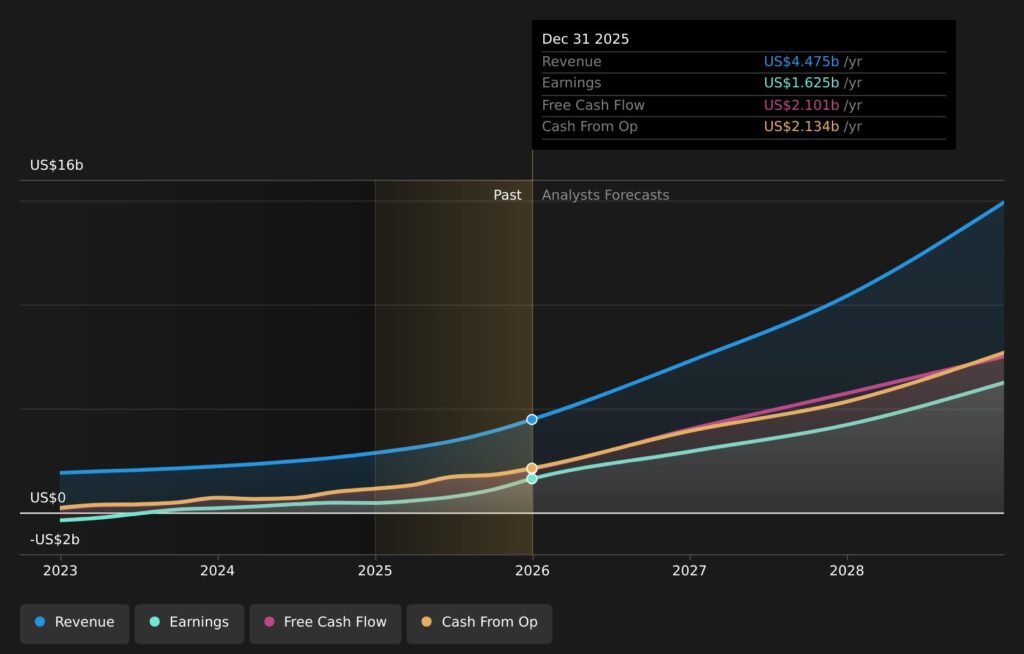
Palantir’s second-quarter results dramatically strengthened the company’s growth narrative. Revenue increased 93% year over year to roughly $1.935 billion, while U.S. commercial revenue surged 149% to approximately $764 million. The company also reported strong government growth, with U.S. government revenue rising about 90% to $809 million.
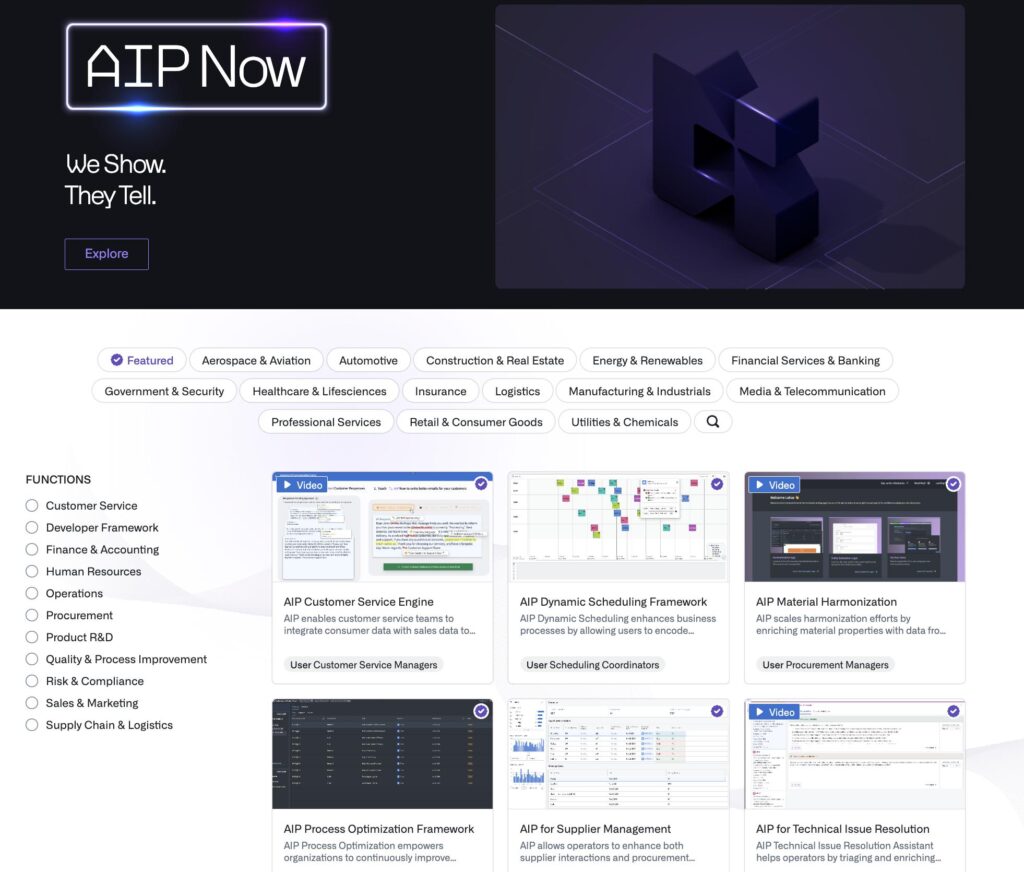
That commercial acceleration is particularly important because Palantir was historically known primarily as a government and defense software company. The newer investment thesis is that its Artificial Intelligence Platform, or AIP, can turn Palantir into a much broader enterprise software provider. Current industry analysis expects commercial revenue to become an increasingly large portion of Palantir’s overall business as corporate AI adoption expands.
The numbers suggest that this transition is already underway. Palantir said U.S. commercial remaining deal value exceeded $6.2 billion, more than doubling from the prior year, while total remaining deal value was approximately $13.1 billion according to earnings-call summaries.
For investors, this matters because a larger commercial business could diversify Palantir’s revenue base and potentially create a much bigger addressable market than government contracts alone.
But revenue growth needs context. A 93% growth rate is exceptional, yet maintaining such a rate becomes progressively harder as the revenue base expands. The critical question is whether Palantir can continue growing at extraordinary rates after the company moves from a roughly $4 billion business toward the $8 billion-plus revenue scale it now expects.
Free Cash Flow Shows Whether AI Growth Is Economically Real
What this means for you: revenue tells investors how quickly Palantir is expanding, but free cash flow provides another perspective on how much economic value the business is producing.
Palantir generated approximately $1.22 billion of adjusted free cash flow in the second quarter, according to earnings-call reporting, while management expects approximately $4.5 billion–$4.7 billion of adjusted free cash flow for full-year 2026.

That is one of the strongest aspects of the Palantir story.
Unlike many young AI companies that require substantial outside financing to support expansion, Palantir has been generating significant cash internally. That gives the company flexibility to invest in research and development, expand its sales organization, build AI capabilities and potentially make strategic investments without depending heavily on debt markets.
However, investors should distinguish between reported free cash flow and the economic cost of stock-based compensation.
Palantir has historically used stock-based compensation as part of its employee compensation structure. That expense is included in GAAP earnings but treated differently in many non-GAAP profitability measures and free-cash-flow analyses. Investors therefore need to examine both cash generation and dilution when evaluating the quality of the company’s profits.
This doesn’t invalidate Palantir’s free cash flow. It simply means shareholders should ask a more sophisticated question: How much of the cash generated ultimately represents economic value per existing share after considering stock compensation and dilution?
That question becomes increasingly important when a stock trades at a very high valuation.
Government Contracts and Commercial AI Are Creating Two Growth Engines
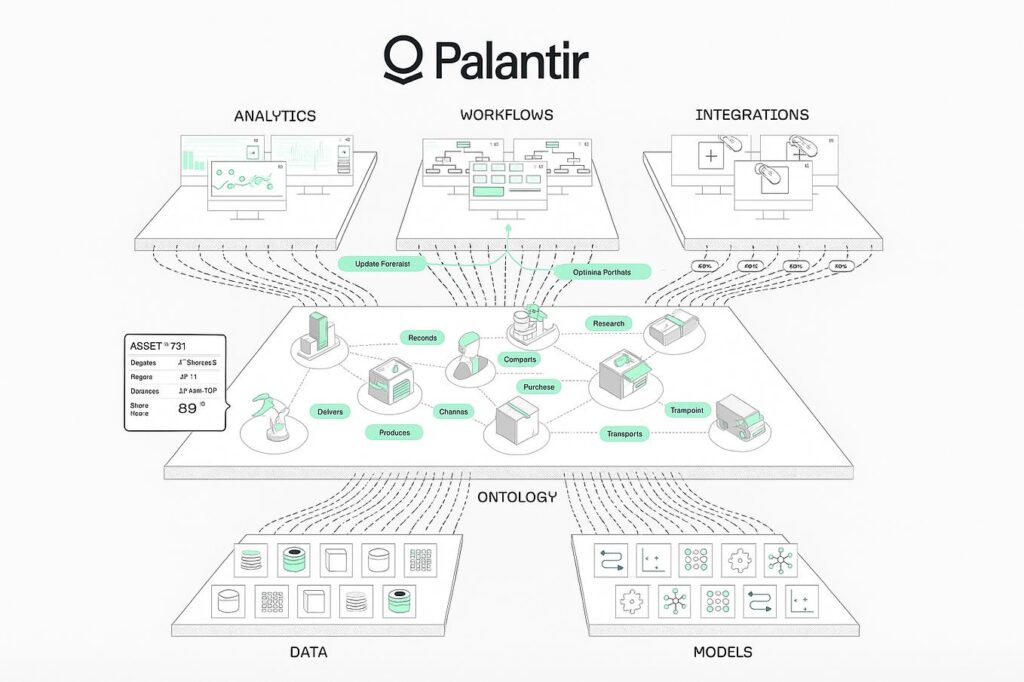
Palantir’s government business remains an important part of the investment thesis. The company sells software to U.S. defense, intelligence and other government agencies, where its ability to integrate large amounts of data and deploy AI into operational environments can create significant demand.
The U.S. government’s increasing use of commercial AI technologies is also helping companies such as Palantir. Reuters previously reported that demand for Palantir’s software was benefiting from growing government interest in AI applications, including defense-related uses.
Government contracts can provide long-duration revenue opportunities, but they can also be influenced by procurement cycles, budgets, political priorities and changes in defense spending.
That is why Palantir’s commercial acceleration may be even more important for the long-term valuation.
The company’s U.S. commercial revenue grew 149% year over year in Q2, and management raised its 2026 U.S. commercial revenue expectation to at least $3.42 billion, representing growth of approximately 134%.
This creates a powerful potential combination: government customers provide a durable base while commercial customers expand the company’s total addressable market.
The commercial market could ultimately become the larger growth engine. S&P Global’s Visible Alpha analysis projected commercial revenue could represent approximately 51% of Palantir’s total revenue in 2026 and potentially 61% by 2030.
If that transition occurs while government revenue continues growing, Palantir’s addressable market could expand considerably.
Valuation Is the Biggest Question for Palantir Investors
Investor takeaway: a great company is not automatically a great stock at every price.
This may be the most important point in any Palantir stock analysis.
Palantir’s financial performance is exceptionally strong. But investors have already recognized much of that strength. Market data available before the latest earnings cycle showed Palantir trading at extremely elevated price-to-sales and forward P/E multiples.
That means the stock needs more than good results.
It needs results that are better than the expectations already embedded in the share price.
Consider the difference.
If Palantir grows revenue 70% when investors expect 50%, the stock can potentially respond positively.
If Palantir grows revenue 70% when investors expect 80%, the company may have delivered phenomenal growth while the stock still falls.
This is why investors should avoid judging PLTR simply by asking whether revenue is increasing.
The better framework is:
Revenue growth + free cash flow + margin expansion + customer growth + valuation
All five matter.
The company has already demonstrated extraordinary revenue growth. It has demonstrated significant free cash flow. Its U.S. commercial business is expanding rapidly. The remaining question is whether those achievements are enough to justify the valuation.
That is a much harder question.
What This Means for You: The Palantir Bull and Bear Cases
What this means for you: Palantir’s investment case can reasonably be divided into a powerful bull scenario and an equally important valuation-driven bear scenario.
The bull case
The bullish argument is that Palantir’s recent growth is not a temporary AI boom but the beginning of a much larger enterprise software cycle.
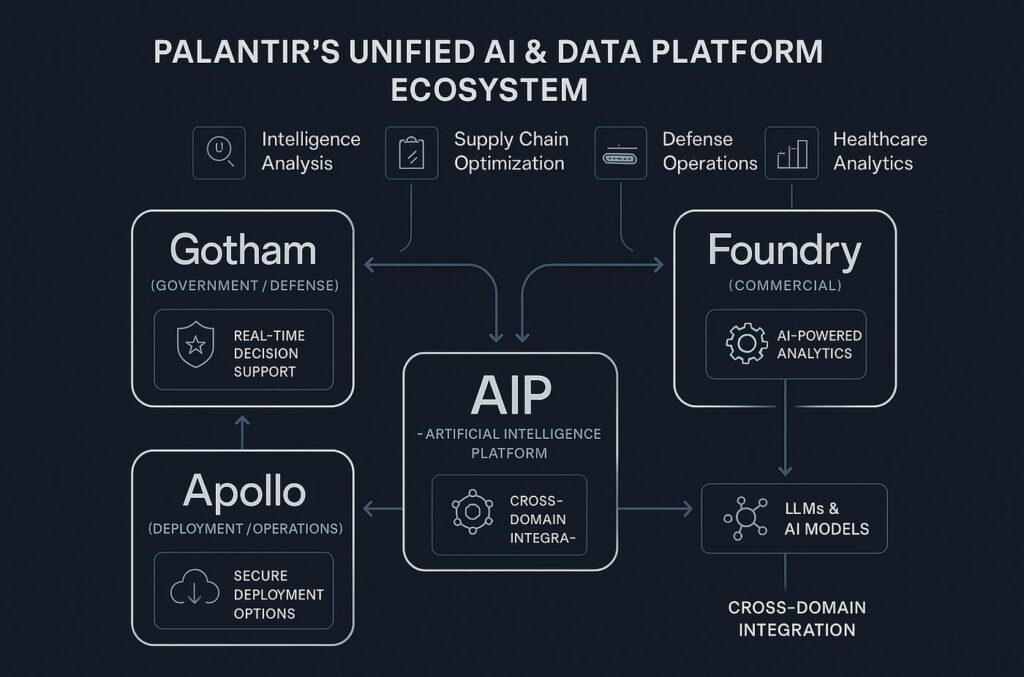
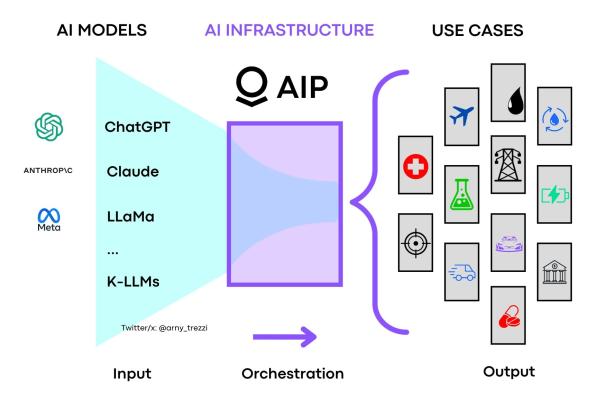
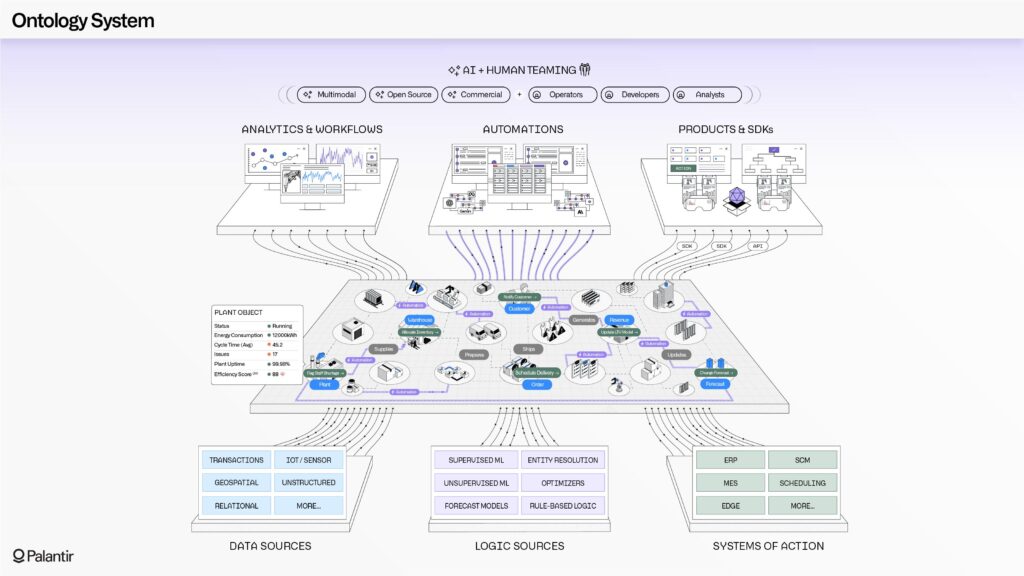
Under this scenario, AIP becomes an essential layer between companies’ data and the increasingly powerful AI models they use.
Companies may want to use multiple AI models rather than depend on one provider. Palantir’s positioning around data integration, governance, security and operational deployment could become more valuable as enterprises move AI from experimentation into production.
The company’s concept of AI sovereignty could also become increasingly important. Management argues that enterprises and governments need greater control over their data, models and operational systems rather than simply handing valuable information to external AI providers. Current reporting indicates that this message is resonating with customers.
If commercial adoption continues accelerating, Palantir could maintain unusually high growth while expanding its already strong cash generation.
The bull case therefore isn’t simply “AI is growing.”
It is that Palantir becomes an important operating system for enterprise AI adoption.
The bear case
The bearish argument begins with expectations.
Palantir’s valuation leaves little room for ordinary execution.
If growth falls from 90% toward 50% or 40%, investors could eventually demand a substantially lower valuation multiple even if the underlying business remains healthy.
Competition is another risk. Microsoft, Amazon, Google, Snowflake, Databricks and numerous specialized AI software companies are all competing for enterprise AI spending. Palantir’s technology may be differentiated, but enterprise customers have many options.
Government concentration also creates risk. A change in defense priorities, procurement practices or political spending could affect certain growth assumptions.
Finally, stock-based compensation and dilution deserve continued attention. Strong free cash flow is valuable, but shareholders should evaluate how much of that value is offset by growth in the share count.
Cathie Wood’s Palantir Sales Matter—but Not as Much as the Fundamentals
Cathie Wood and ARK Invest remain closely associated with Palantir as a high-conviction technology investment, which is why every reported sale attracts attention.
Recent ARK trade reports indicate that ARK funds have continued trimming PLTR positions.
But investors should be careful about interpreting a fund’s daily transactions as a direct prediction of Palantir’s future.
ARK funds rebalance portfolios for many reasons. A fund may sell a position because it has grown too large, because the manager wants to raise cash, because another opportunity has become more attractive or because the fund has portfolio-weight constraints.
A sale does not necessarily mean that Cathie Wood believes Palantir’s business is deteriorating.
More importantly, one investor’s trade does not change Palantir’s revenue, cash flow, contract pipeline or customer adoption.
That is why the headline “Cathie Wood sells Palantir” is weaker than the broader investment question.
If Palantir continues growing revenue near 90%, generates billions in free cash flow and expands its commercial customer base, an ARK sale becomes a relatively minor data point.
If growth slows sharply, margins weaken and valuation remains extreme, however, those sales could appear more significant in hindsight.
The fundamentals should therefore come first.
Future Outlook: What Should Palantir Investors Watch Next?
Future outlook: Palantir enters the rest of 2026 with an unusually high level of investor expectations.
Management now expects full-year revenue of approximately $8.15 billion–$8.16 billion, compared with the previous forecast of approximately $7.65 billion–$7.66 billion. U.S. commercial revenue is expected to exceed $3.42 billion, while adjusted free cash flow guidance stands at approximately $4.5 billion–$4.7 billion.
Those figures give investors a clear scorecard for upcoming quarters.
The first question is whether revenue continues to exceed expectations.
The second is whether U.S. commercial growth remains dramatically higher than the overall company growth rate.
The third is whether free cash flow continues scaling alongside revenue.
The fourth is whether Palantir can maintain strong margins while investing heavily in sales, research and development.
And the fifth is valuation.
The company’s future stock performance may increasingly depend on whether earnings growth can catch up with the expectations already reflected in the share price.
That is a different challenge from simply growing the business.
A Practical PLTR Investor Dashboard
| Metric | Why it matters |
|---|---|
| Total revenue | Measures overall growth |
| U.S. commercial revenue | Shows enterprise AI adoption |
| Government revenue | Measures defense/intelligence demand |
| Remaining deal value | Indicates future contracted opportunity |
| Free cash flow | Measures cash-generating ability |
| Operating margin | Shows scalability |
| Stock-based compensation | Measures potential dilution |
| Share count | Shows value per existing share |
| Customer growth | Measures market expansion |
| Valuation | Determines how much growth is already priced in |
This framework is more useful than attempting to predict PLTR’s next daily move.
The Bottom Line: Palantir’s Business Is Strong, but the Stock Still Has to Prove Its Price
The latest Palantir results have made the company’s fundamental story harder to dismiss.
Revenue increased approximately 93% year over year to $1.94 billion, U.S. commercial revenue jumped 149%, and management raised full-year revenue guidance to roughly $8.15 billion–$8.16 billion.
Free cash flow is also a major strength, with approximately $1.22 billion of adjusted free cash flow generated in Q2 and full-year guidance of roughly $4.5 billion–$4.7 billion.
Those numbers explain why investors remain enthusiastic about Palantir.
But they do not eliminate valuation risk.
The stock is priced as though Palantir can sustain extraordinary growth for a long time. That creates a high bar. If the company keeps beating expectations, the premium valuation may remain defensible. If growth normalizes faster than expected, multiple compression could overwhelm otherwise strong operating results.
That is why Cathie Wood’s latest stock sales should not be the centerpiece of the investment decision.
The better question is whether Palantir can continue to deliver the combination that has made it one of the market’s most closely watched AI software companies:
rapid revenue growth + commercial AI adoption + government demand + strong free cash flow + expanding margins.
If those metrics remain exceptional, Palantir could continue to justify a premium valuation.
If they weaken, the valuation could become the dominant issue.
For long-term investors, that makes the next few earnings reports more important than any individual ARK trade.
Subscribe to trusted news sites like USnewsSphere.com for continuous updates.