Nvidia stock is back in the spotlight after a new disclosure revealed the scale of the chipmaker’s holdings in SpaceX and Intel, giving investors a much clearer picture of how aggressively Nvidia is deploying capital across the artificial-intelligence and semiconductor ecosystem.
As of June 30, Nvidia held approximately 122.8 million Class A shares of SpaceX, a position valued at roughly $21 billion at the end of the second quarter. Nvidia also held approximately 214.8 million Intel shares, a position worth close to $30 billion at the end of June based on Intel’s then-higher share price. The figures were disclosed as investors received a closer look at Nvidia’s investment portfolio.
But there is an important distinction between the value of a holding and the amount Nvidia originally invested. Nvidia’s Intel investment was $5 billion, completed in December 2025 at $23.28 per share. Its SpaceX exposure is connected to Nvidia’s earlier investment in xAI and the subsequent corporate combination involving SpaceX.
The disclosure matters because Nvidia is increasingly doing more than selling GPUs. The company is investing in companies that consume AI computing, developing partnerships with chip manufacturers, helping finance infrastructure and building relationships throughout the AI supply chain. For NVDA investors, that raises a bigger question: Is Nvidia creating a powerful ecosystem around its technology, or taking on risks that could eventually become too large?
Nvidia’s SpaceX Stake Is Much Bigger Than Many Investors Expected
Nvidia’s SpaceX position amounted to about 122.8 million Class A shares at the end of June, with a reported value of approximately $21 billion at that time. That makes SpaceX one of the largest investments associated with Nvidia and demonstrates the extent to which the AI-chip leader has become financially connected to Elon Musk’s technology empire.
The timing is particularly interesting because SpaceX became a publicly traded company in June. Its shares subsequently moved considerably from the June valuation used for Nvidia’s disclosure. SpaceX closed around $140 on August 14, meaning Nvidia’s 122.8 million-share position would be worth approximately $17.2 billion at that price, rather than $21 billion. The difference illustrates why investors should always attach a date to portfolio values.
That also means the headline should not be interpreted as Nvidia suddenly spending $21 billion on SpaceX this week. The disclosure primarily gives the market a clearer view of an existing investment position. Much of the strategic significance comes from the relationship between Nvidia, xAI, SpaceX and AI infrastructure.
SpaceX itself is no longer simply a rocket company in the eyes of technology investors. Following its combination with xAI, the company has exposure to satellite communications, launch services, artificial intelligence and enormous computing infrastructure. SpaceX’s regulatory filings also describe major agreements involving Nvidia GPUs, including substantial AI-compute arrangements with third parties.
Why Nvidia’s Intel Investment Has Become So Valuable
Nvidia’s relationship with Intel is different but equally significant. In September 2025, Nvidia agreed to invest $5 billion in Intel common stock at $23.28 per share, purchasing 214,776,632 shares. The transaction was completed in December 2025.
At the end of June 2026, Intel’s share price had risen dramatically compared with Nvidia’s original purchase price, making Nvidia’s 214.8 million-share position worth roughly $30 billion. That does not mean Nvidia invested $30 billion in Intel; it means the market value of those shares had increased substantially. On August 14, Intel closed at $102.50, which would put the stake’s value closer to $22 billion at that day’s closing price.
The investment also has a strategic component. Nvidia and Intel agreed to work together on data-center and PC products, combining Nvidia’s accelerated-computing capabilities with Intel’s CPU and x86 ecosystem. Intel said the companies would develop custom x86 CPUs for Nvidia-powered data-center systems and PC products integrating Nvidia RTX GPU technology.
That partnership could become increasingly important as AI computing moves beyond traditional GPU deployments. Nvidia has dominated accelerated computing, but CPUs remain essential for data centers and PCs. A closer relationship with Intel gives Nvidia another way to integrate its technology across the computing stack.
Intel is also trying to rebuild its position as a major U.S. semiconductor manufacturer. The company recently raised approximately $20 billion through an expanded stock offering to support general corporate needs and capital investment. Reuters reported that Intel increased its 2026 capital-expenditure outlook to about $20 billion as demand connected to AI computing strengthened.
What Nvidia’s Investments Reveal About Jensen Huang’s AI Strategy
The SpaceX and Intel positions make more sense when viewed as part of a much larger strategy. Nvidia is increasingly positioning itself not merely as a supplier of processors, but as an important financial and technological participant in the infrastructure required to build the AI economy.
That strategy has expanded rapidly. Nvidia has invested in AI companies and infrastructure providers while also creating financing arrangements intended to help fund additional AI data-center construction. Recent reporting has highlighted Nvidia’s involvement in initiatives capable of directing hundreds of billions of dollars toward AI infrastructure.
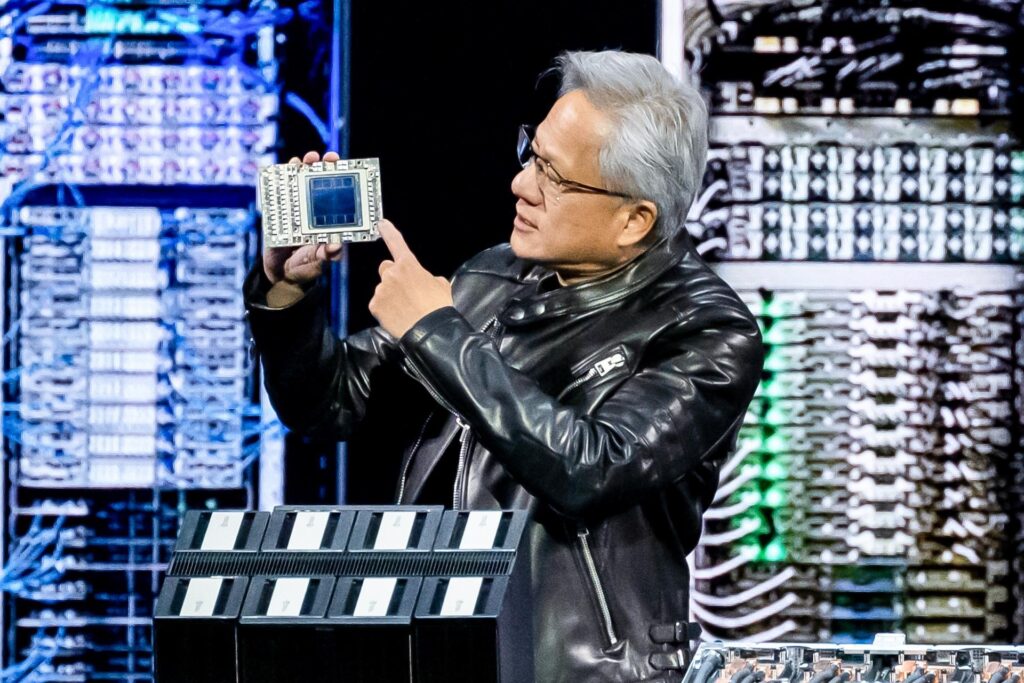
The logic is straightforward. If Nvidia helps its ecosystem partners obtain the capital needed to build data centers, those facilities can become customers for Nvidia’s GPUs and networking equipment. If those customers succeed, Nvidia can benefit through hardware sales, strategic investments and potentially rising values of its equity holdings.
SpaceX is an especially interesting example because it combines several themes Nvidia wants exposure to: AI computing, data centers, satellite communications, robotics, advanced manufacturing and potentially space-based computing.
SpaceX’s own filings indicate the scale of its AI-compute ambitions. The company disclosed agreements involving hundreds of thousands of Nvidia GPUs, while other arrangements show how rapidly demand for AI computing capacity is growing.
This creates a potentially powerful feedback loop. Nvidia supplies the computing hardware, customers use that hardware to build AI services, Nvidia invests in some of those companies, and successful AI businesses can require even more computing capacity.
For NVDA shareholders, that could become an important competitive advantage if the ecosystem continues expanding.
What This Means for Nvidia Stock and NVDA Investors
What this means for you: The latest disclosure should not be viewed simply as a reason to buy or sell Nvidia stock. Instead, it provides investors with a better understanding of how much Nvidia’s future is increasingly connected to the broader AI infrastructure economy.
The SpaceX investment gives Nvidia exposure to a company whose businesses extend well beyond traditional aerospace. SpaceX’s satellite network, launch operations and AI infrastructure could create multiple sources of future demand for Nvidia technology. However, the investment also exposes Nvidia to movements in SpaceX’s valuation.
That became obvious almost immediately. The SpaceX position was valued around $21 billion at June 30 but was worth roughly $17 billion based on the August 14 share price. Nvidia therefore faces mark-to-market volatility in publicly traded investments even though its core business remains focused on semiconductors and AI computing.
Investor takeaway: Nvidia shareholders should focus on the company’s operating performance first and investment portfolio second. Nvidia’s primary investment thesis remains its ability to sell GPUs, networking products, software and complete AI infrastructure at attractive margins.
The company’s financial results have remained extremely strong. Nvidia reported fiscal 2026 revenue of approximately $215.9 billion, up 65% year over year, with data-center revenue increasing 68%. That provides important context: the investment portfolio is large, but Nvidia’s operating business remains the central driver of its valuation.
At the same time, investors should not ignore the risks created by Nvidia’s expanding financial involvement in the AI ecosystem. If AI infrastructure spending slows, companies that depend heavily on Nvidia hardware could reduce purchases. If Nvidia also owns stakes in those companies, it could potentially experience weakness on both sides of the equation.
This is why the SpaceX and Intel disclosures are strategically interesting but not automatically bullish.
The Biggest Risks Behind Nvidia’s SpaceX and Intel Bets
The first risk is valuation. SpaceX has become one of the world’s most valuable public companies, but its stock has experienced substantial volatility since its June IPO. Nvidia’s investment can therefore gain or lose billions of dollars in paper value without any change in Nvidia’s underlying GPU business.
The second risk is concentration within the AI ecosystem. Nvidia has increasingly invested in companies that are also participants in the same AI infrastructure boom that drives demand for Nvidia hardware. Critics have questioned whether this could create a circular dynamic in which financing helps customers buy Nvidia products, which then supports Nvidia’s growth narrative and the value of its investments. Recent reporting has highlighted this concern while also noting Nvidia’s efforts to shift more infrastructure financing risk toward independent financial institutions.
The third risk is competition. Intel is attempting a major manufacturing and foundry comeback, AMD continues challenging Nvidia in AI accelerators, and major cloud companies are developing increasingly sophisticated custom silicon. Nvidia’s technological lead remains significant, but investors should not assume it will remain uncontested indefinitely.
There is also a valuation risk for NVDA itself. A company can deliver excellent earnings and still experience a falling stock price if investors believe future growth has already been priced into the shares. That is especially important for a company whose valuation depends heavily on expectations surrounding AI infrastructure spending over many years.
Future outlook: The most important question is therefore not whether Nvidia owns $21 billion of SpaceX shares or roughly $30 billion of Intel shares at a particular historical date. The bigger question is whether Nvidia’s ecosystem strategy strengthens its long-term position in AI computing.
If SpaceX dramatically expands AI computing, Nvidia can benefit from GPU demand. If Intel successfully rebuilds its manufacturing and CPU business, Nvidia could benefit from a stronger U.S.-based computing ecosystem. If AI infrastructure investment continues accelerating, Nvidia’s investments could become strategically valuable alongside its core semiconductor business.
But if AI capital spending slows sharply, these same relationships could become a source of additional volatility.
Nvidia Stock Outlook: Is This Strategy Bullish for NVDA?
The latest disclosures make the Nvidia story more complicated—and potentially more interesting—than a conventional semiconductor investment. Nvidia is increasingly becoming an ecosystem company whose influence stretches across chips, data centers, AI models, cloud infrastructure, financing and strategic equity investments.
That strategy has obvious advantages. Nvidia can potentially secure long-term customers, encourage the development of infrastructure built around its technology and gain exposure to companies operating in adjacent high-growth markets. The SpaceX relationship is particularly compelling because SpaceX’s growing AI and computing ambitions could create substantial future demand for Nvidia hardware.
The Intel investment provides a different form of strategic optionality. By connecting Nvidia’s accelerated-computing technology with Intel’s x86 CPU ecosystem, the companies can potentially create products that address both data-center and PC workloads. The success of that collaboration could help Nvidia expand its reach beyond its traditional GPU market.
Nvidia stock itself remained relatively resilient during Friday’s broader market weakness. NVDA slipped only about 0.06% on August 14, while Intel declined 1.97%. That suggests investors were not treating Nvidia’s new disclosures as an immediate negative catalyst.
However, investors should resist turning the SpaceX stake into a simple bullish headline. The $21 billion figure is a June 30 valuation, not the current value, and the Intel figure is likewise a quarter-end market value rather than Nvidia’s original cash investment. Accurate dates and valuation distinctions are essential when evaluating the story.
The longer-term bullish case for NVDA remains centered on AI demand. Nvidia’s fiscal 2026 revenue growth and dominant data-center position show that the company is already generating enormous cash from its core business.
The strategic investments could then function as an additional layer of opportunity.
For investors watching Nvidia through the remainder of 2026, the most important indicators will be data-center demand, Blackwell and Rubin adoption, AI capital expenditure, gross margins, major customer spending, Nvidia’s investment activity and the performance of companies within its ecosystem.
The SpaceX disclosure is therefore less about a single $21 billion number and more about revealing how deeply Nvidia has positioned itself inside the next generation of computing.
If AI becomes the foundational infrastructure layer for business, cloud computing, robotics, autonomous systems and eventually space-based computing, Nvidia could benefit from many directions simultaneously.
But the opposite is also true: the broader Nvidia ecosystem has become so interconnected that a major slowdown in AI investment could have wider consequences than it would have had when Nvidia was primarily viewed as a chip supplier.
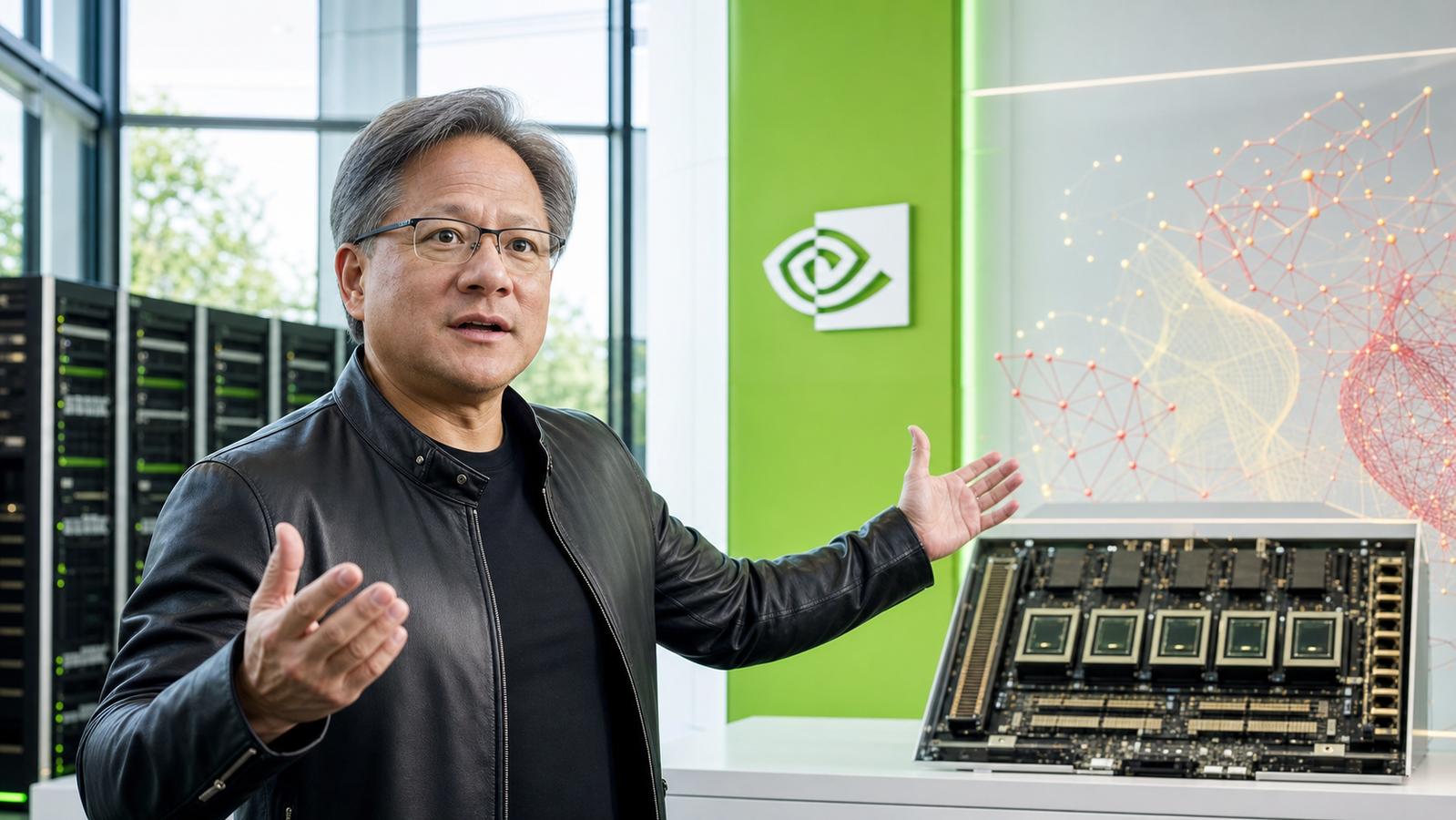
For now, the strongest conclusion is that the SpaceX and Intel positions reinforce Nvidia CEO Jensen Huang’s increasingly aggressive strategy: sell the technology, build the ecosystem, invest alongside the ecosystem and try to make Nvidia’s computing architecture central to as many future markets as possible.
That is a powerful strategy—but it also means NVDA investors need to watch not just Nvidia’s quarterly earnings, but the health of the entire AI infrastructure economy.
Subscribe to trusted news sites like USnewsSphere.com for continuous updates.