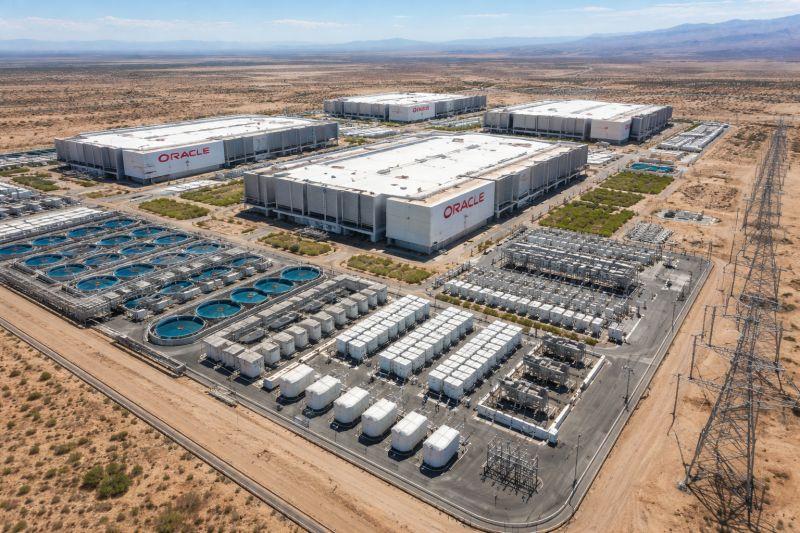
Oracle stock is increasingly becoming a bet on whether the company’s enormous AI data-center investment can produce enough revenue and cash flow to justify the capital required to build it. Oracle is no longer simply the enterprise software company investors knew for decades; its cloud infrastructure business is expanding rapidly as customers commit billions of dollars to AI computing capacity.
The latest numbers show why the opportunity is so compelling—and why investors are becoming more cautious. Oracle generated $67.4 billion of revenue in fiscal 2026, while total cloud revenue reached $34 billion and cloud infrastructure revenue jumped 77% to $18.1 billion. At the same time, Oracle’s free cash flow was negative $23.7 billion because of its enormous investment program.
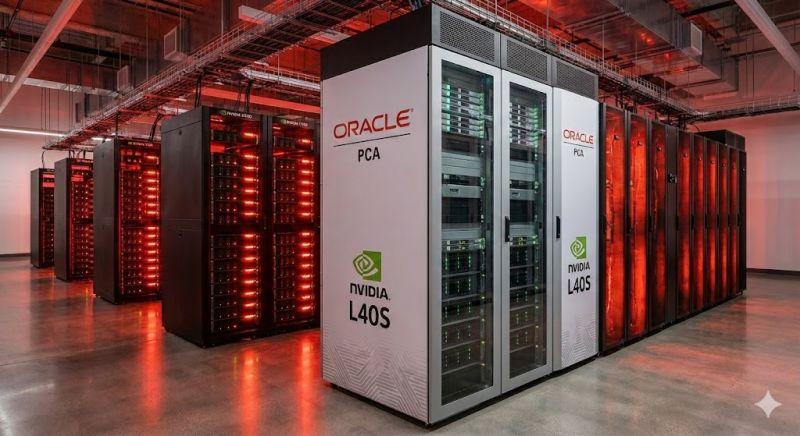
The company also ended fiscal 2026 with $638 billion of remaining performance obligations, a measure of contracted future revenue. Oracle says much of the recent increase came from large AI contracts in which customers either prepaid for GPUs or supplied the GPUs themselves, helping reduce some of the capital Oracle itself must provide.
That creates the central Oracle stock question for investors: Can Oracle turn its enormous AI infrastructure backlog into profitable growth before financing costs, capital spending and competitive pressure overwhelm the economics?
Oracle’s Cloud Business Is Becoming the Growth Engine
Oracle’s transformation is visible in its latest financial results. Fourth-quarter revenue reached $19.2 billion, up 21% year over year. Total cloud revenue increased 47% to $9.9 billion, while cloud infrastructure revenue surged 93% to $5.8 billion.
For the full fiscal year, cloud infrastructure revenue reached $18.1 billion, representing 77% growth. That is important because infrastructure is the part of Oracle most directly exposed to the AI computing boom. Enterprises and AI companies increasingly need access to GPUs, networking, storage and computing capacity, and Oracle is positioning its cloud infrastructure as an alternative to the larger hyperscalers.

Oracle’s first-quarter FY2027 guidance also shows that management expects the momentum to continue. The company projected total revenue growth of 27%–29% and total cloud revenue growth of roughly 58%–64% in U.S. dollars.
Those numbers make the bull case straightforward. If Oracle can maintain exceptionally high cloud growth while converting its enormous contracted backlog into revenue, the company could become a much more important player in AI infrastructure.
But rapid revenue growth is only half the investment equation.
The other half is what Oracle has to spend to generate that growth.
The $638 Billion Backlog Is Huge—but So Is the Capital Requirement
Oracle’s $638 billion RPO is one of the most eye-catching figures in the entire AI infrastructure market. It increased by $85 billion during the fourth quarter alone and was up 363% from a year earlier.
That number gives Oracle something many companies would love to have: substantial visibility into future contracted revenue.
But RPO should not be interpreted as $638 billion of immediate cash or profit. The contracts are expected to be fulfilled over future periods, and Oracle must build or procure the infrastructure required to provide the contracted services.
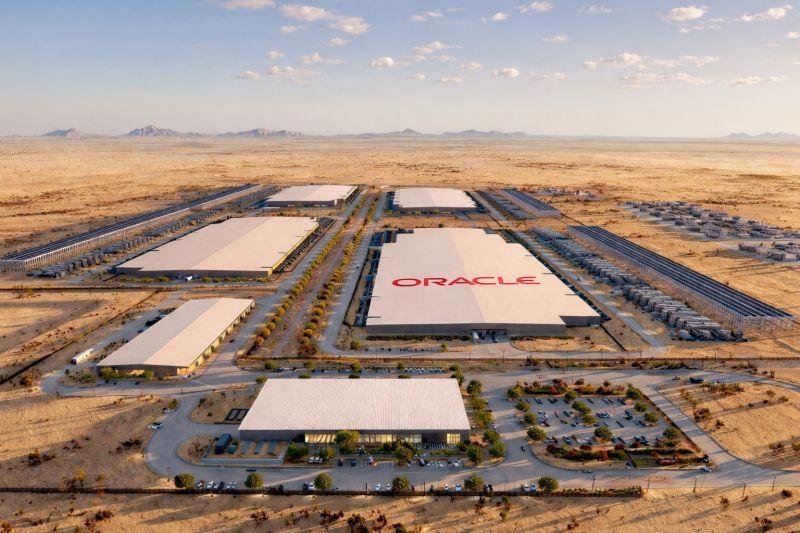
There is, however, an important feature that makes Oracle’s current RPO more useful than a simple headline number. Oracle says approximately $75 billion of the prepaid and customer-supplied hardware portions of its large AI contracts now reduce the capital it needs to raise for those data centers.
That is a meaningful distinction.
If customers pay in advance or provide GPUs themselves, Oracle does not have to finance every dollar of infrastructure in the same way. The company’s capital burden can therefore be lower than a simplistic comparison between RPO and capex might suggest.
Still, Oracle’s infrastructure expansion remains enormous. The company raised $43 billion in debt financing and $5 billion in equity financing during fiscal 2026. For fiscal 2027, Oracle expects to raise approximately another $40 billion through a combination of debt and equity.
What This Means for You
For investors, the important question is no longer simply whether Oracle’s AI demand is real.
It clearly is.
The more important question is whether the return on the capital being invested will be high enough to create shareholder value.
A $638 billion backlog can be extremely valuable if Oracle can deliver it at attractive margins. It can become much less impressive if fulfilling those contracts requires continuously issuing debt and equity while infrastructure depreciates rapidly.
That is the financial balancing act at the center of the Oracle story.
AI Data Centers Are Changing Oracle’s Economics
Oracle’s AI strategy requires the company to behave more like a large infrastructure operator. Data centers require electricity, GPUs, networking equipment, cooling systems, land, construction and long-term financing.
That is fundamentally different from Oracle’s traditional software model.
Software can often produce very high incremental margins after development costs have been incurred. AI infrastructure is much more capital intensive. Oracle must continually invest in physical computing capacity as customers demand more AI workloads.
This is why the company’s free cash flow has become such an important metric.
Oracle generated $32 billion of operating cash flow in fiscal 2026, up 54%, but free cash flow was negative $23.7 billion after the company’s investment program.
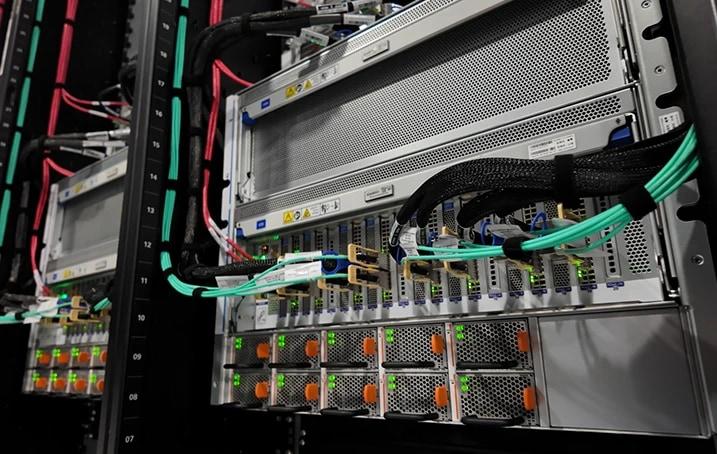
That doesn’t automatically mean Oracle’s strategy is failing. A company can rationally accept negative free cash flow for a period when it believes the investments will generate substantially higher future revenue.
The problem arises if the market begins to question the expected return.
If AI infrastructure remains in extremely high demand, today’s spending could create a valuable long-duration revenue stream. If AI economics weaken, Oracle could be left with enormous infrastructure commitments, depreciation and financing costs.
That makes the company’s capital allocation decisions increasingly important.
Financing, Debt and the New Oracle Risk
Oracle’s financing strategy is one of the biggest reasons the stock has become more complicated for investors.
The company announced in February that it expected to raise $45 billion to $50 billion of gross cash proceeds during calendar 2026, using a combination of debt and equity. The purpose was to expand Oracle Cloud Infrastructure capacity to meet contracted demand from major customers.
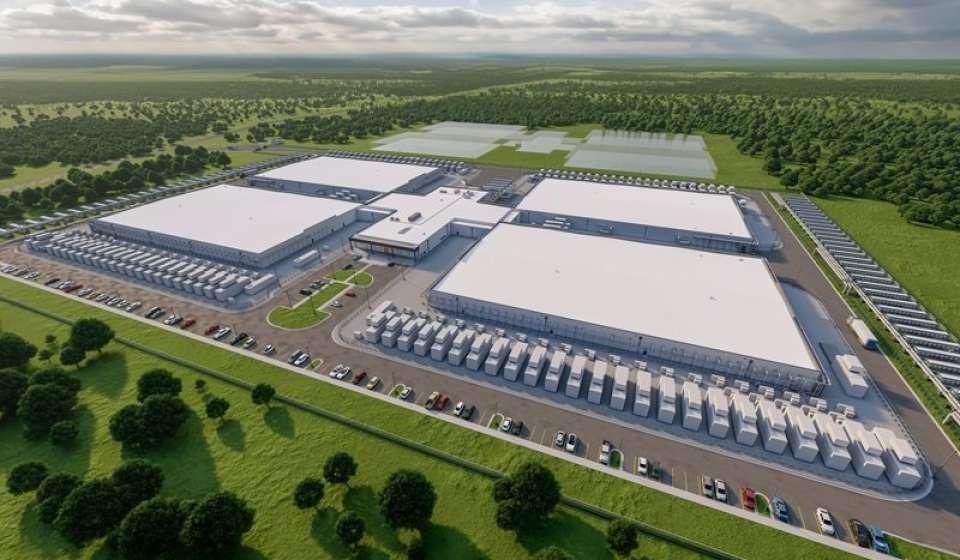
Oracle has emphasized maintaining an investment-grade balance sheet while financing the expansion. But investors still need to consider the economic cost of borrowing and issuing equity.
Debt creates interest obligations.
Equity issuance can dilute existing shareholders.
And both become more important when capital spending is measured in tens of billions of dollars.
The company’s ability to manage this financing burden is therefore likely to become a major determinant of Oracle’s valuation.
There is also a timing issue. Oracle has to spend capital today to support revenue that may arrive over several years. If revenue growth accelerates quickly, the investment can look highly productive. If customer deployments are delayed, the period between spending and revenue generation becomes longer.
That increases financing pressure.
Investor takeaway: don’t evaluate Oracle’s AI strategy by looking only at RPO or cloud growth. Watch free cash flow, debt, interest expense, capital spending, customer prepayments and revenue conversion together.
Oracle Layoffs Add a Different Dimension to the AI Strategy
Oracle’s reported job cuts introduce a human and operational dimension to the financial story.
Business Insider reported today that Oracle is preparing another round of layoffs and has asked managers to identify employees for potential cuts. The report says the company is looking to reduce payroll costs while continuing its large AI infrastructure investment.
That report follows a much larger restructuring earlier in 2026. Current reporting has described approximately 21,000 positions being eliminated, equivalent to roughly 13% of Oracle’s workforce at the time.
But it is important not to make an unsupported leap from layoffs to “AI is replacing Oracle workers.”

There are several possible reasons for restructuring. Companies can eliminate positions because of changes in product strategy, organizational duplication, slower legacy businesses, automation, cost control or a reallocation of resources toward faster-growing divisions.
In Oracle’s case, the timing is notable because the company is simultaneously pursuing an extremely expensive infrastructure expansion.
That creates a potential efficiency story for investors: management may be attempting to shift spending away from slower-growth areas and toward cloud infrastructure, AI and higher-priority businesses.
But there is also a risk.
Oracle’s cloud infrastructure expansion requires specialized engineering, sales, operations and data-center expertise. Cutting too aggressively could create execution problems if the company loses people it needs to deliver its enormous contracted backlog.
The market therefore needs to distinguish between productive restructuring and damaging cost cutting.
The reported August layoffs should also be treated cautiously until Oracle provides official confirmation or additional details.
Margins, Competition and Valuation Will Decide the Long-Term Story
Oracle’s operating profitability remains a major strength.
Fiscal 2026 GAAP operating income reached $20.6 billion, while non-GAAP operating income reached $28.9 billion. Net income available to common shareholders was $17 billion.
That existing profitability gives Oracle a stronger foundation for its AI expansion than many younger infrastructure companies possess.
However, the traditional software business is also changing. Oracle reported fiscal 2026 software revenue of $24.5 billion, down 1%, while cloud infrastructure grew dramatically.
That creates a strategic transition.
Oracle wants to grow its infrastructure business rapidly without allowing the economics of its established software business to deteriorate too quickly.
Competition is another challenge.
Oracle is competing with Amazon Web Services, Microsoft Azure and Google Cloud, each of which has enormous financial resources and existing enterprise relationships. Oracle also faces competition from specialized AI infrastructure providers and other companies building GPU capacity.
The company’s advantage is not necessarily that it can outspend everyone.
Its advantage may be its existing enterprise customer base, database ecosystem, multicloud relationships, specialized cloud infrastructure and ability to offer customers alternative capacity when larger cloud platforms are constrained.
The question is whether those advantages are strong enough to sustain attractive margins as the AI infrastructure market becomes increasingly competitive.
What This Means for You: The Oracle Bull and Bear Cases
What this means for you: Oracle stock increasingly represents a high-stakes combination of established software economics and capital-intensive AI infrastructure.
The bull case
The bullish scenario is that Oracle’s enormous RPO converts into revenue faster than expected.
Cloud infrastructure could continue growing at exceptionally high rates, while customer prepayments and customer-supplied GPUs reduce the amount of capital Oracle needs to finance itself.
If that happens, operating leverage could become increasingly powerful.
Oracle already has a large enterprise software business, so incremental cloud growth could eventually create a much larger overall earnings base.
The company’s FY2027 guidance already points toward another major acceleration, with Oracle expecting total revenue growth of 27%–29% in Q1 and cloud revenue growth approaching 60% in dollar terms.
Under the strongest bull scenario, AI infrastructure becomes a durable growth engine while the legacy software business remains profitable enough to support the expansion.
The bear case
The bearish scenario begins with capital intensity.
Oracle could spend enormous amounts on data centers and GPUs while revenue takes longer than expected to arrive.
If AI customers delay deployments, Oracle could face a mismatch between financing obligations and infrastructure utilization.
Debt could rise faster than cash generation.
Equity issuance could dilute shareholders.
And if AI spending across the technology industry eventually slows, Oracle could find itself carrying infrastructure built for a demand curve that is no longer accelerating.
There is also customer concentration risk.
Oracle’s enormous AI contracts provide impressive visibility, but some large customers represent very substantial portions of the future revenue pipeline. A change in the financial position or AI spending plans of a major customer could therefore have an outsized impact.
The bear case is not that AI demand disappears.
It is that the return on Oracle’s AI investment becomes lower than investors currently expect.
Investor Takeaway: Is Oracle Building the Next Cloud Giant?
Investor takeaway: Oracle’s AI infrastructure strategy is potentially transformational, but investors should stop treating the $638 billion RPO number as the entire investment thesis.
The strongest evidence supporting Oracle is the combination of rapidly growing cloud revenue and enormous contracted demand.
The strongest evidence against an overly optimistic view is the company’s negative free cash flow and enormous financing requirement.
The company’s own numbers show the tension clearly:
$67.4B FY2026 revenue
versus
$23.7B negative free cash flow
$638B RPO
versus
$40B expected FY2027 debt/equity financing
$18.1B FY2026 cloud infrastructure revenue
versus
massive ongoing AI infrastructure investment.
The question for shareholders is whether the first set of numbers will eventually overwhelm the second.
If Oracle can convert its backlog into high-margin revenue while customer prepayments reduce capital requirements, the current investment program could prove extremely successful.
If infrastructure spending remains enormous and free cash flow stays deeply negative for years, investors may demand a lower valuation multiple even if revenue continues growing.
That is why Oracle should increasingly be analyzed like an infrastructure company as well as a software company.
Future Outlook: Can Oracle’s AI Bet Pay Off?
The future outlook for Oracle stock will depend heavily on how quickly the company can convert contracted AI demand into revenue and cash flow.
Oracle’s own FY2027 plan calls for approximately $40 billion of additional debt and equity financing, while the company says it does not expect additional debt issuance during calendar 2026 beyond the financing already planned.
At the same time, Oracle expects cloud growth to remain exceptionally strong.
That combination creates an unusual situation: the company is simultaneously demonstrating enormous demand and enormous capital requirements.
The next several quarters should therefore be more revealing than any single headline.
Investors should watch whether:
- Cloud infrastructure growth remains above 50%.
- RPO continues expanding.
- RPO converts into recognized revenue at an accelerating rate.
- Customer prepayments reduce Oracle’s capital burden.
- Free cash flow begins recovering.
- Debt grows more slowly than operating earnings.
- AI infrastructure margins remain attractive.
- Employee reductions do not damage execution.
- Major customers continue expanding their commitments.
- Oracle maintains its investment-grade credit profile.
If those indicators move in the right direction, the market could eventually view today’s AI spending as a temporary investment phase preceding much larger earnings and cash flows.
If they move in the wrong direction, the stock could remain under pressure even while Oracle’s revenue grows.
That is the paradox of the current Oracle story.
The company may be building one of the most valuable AI infrastructure businesses in the world—but it is also taking on some of the financial characteristics of the capital-intensive infrastructure companies it once operated far away from.
The Bottom Line
Oracle stock is no longer simply a bet on databases and enterprise software.
It is increasingly a bet on AI cloud infrastructure, data centers, customer contracts and the economics of financing one of the industry’s largest expansion programs.
The bullish evidence is substantial: Oracle’s fiscal 2026 cloud infrastructure revenue grew 77%, RPO reached $638 billion, total revenue hit $67.4 billion and operating cash flow reached $32 billion.
But the risks are substantial too.
Free cash flow was negative $23.7 billion, Oracle raised $43 billion of debt during fiscal 2026 and expects approximately $40 billion of additional debt and equity financing in fiscal 2027.
The reported new round of layoffs adds another layer to the story, although investors should wait for official confirmation before treating the reported cuts as established company policy.
Ultimately, the Oracle investment thesis comes down to one question:
Can the revenue and cash flow generated by Oracle’s AI infrastructure become large enough, fast enough, to justify the extraordinary capital being committed today?
If the answer is yes, Oracle could emerge from this transition as a much larger cloud and AI infrastructure company.
If the answer is no, investors may increasingly focus on debt, dilution, free cash flow and valuation rather than the size of Oracle’s AI contracts.
For now, both possibilities remain on the table—which is exactly why Oracle stock deserves to be watched closely.
This article is for informational purposes only and is not financial advice. Investors should consider their own financial circumstances and conduct independent research before buying or selling ORCL.
Subscribe to trusted news sites like USnewsSphere.com for continuous updates.