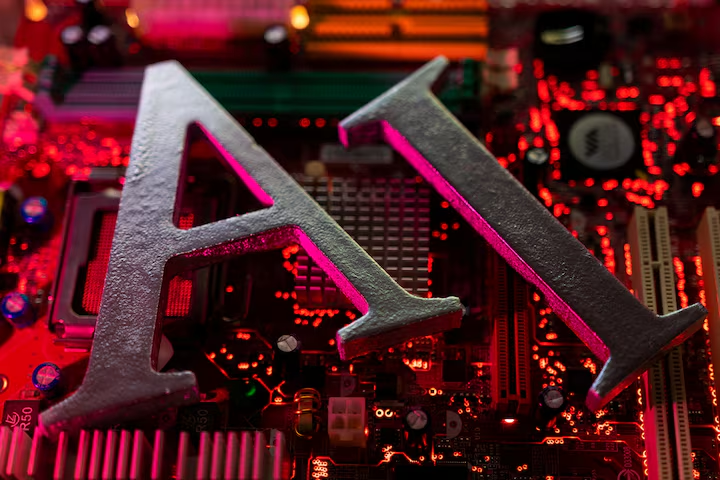
AI Bubble Warning Grows Louder: Are Tech Stocks Headed for a Major Correction? This question is now dominating Wall Street conversations in 2026 as investors weigh explosive growth in artificial intelligence against rising concerns of overvaluation, excessive spending, and fragile market expectations.
The AI-driven rally has pushed major technology stocks to record levels, but recent data suggests cracks are beginning to appear. From declining software stocks to warnings from top analysts, the debate is shifting from “how high can AI stocks go?” to “how sustainable is this growth?”
Why AI Is Driving One of the Biggest Market Booms in Decades
Artificial intelligence has become the most powerful growth engine in global markets. Tech giants are investing hundreds of billions of dollars into AI infrastructure, cloud computing, and data centers, expecting long-term returns from automation and digital transformation.
Recent earnings reports from companies like Amazon, Microsoft, and Alphabet show strong revenue growth driven by AI adoption, particularly in cloud services. These results have reinforced investor confidence and fueled the belief that AI represents a long-term structural shift rather than a short-term trend.
However, this optimism comes with a cost. Massive capital expenditures—projected to exceed hundreds of billions annually—are raising questions about profitability and return on investment. Investors are beginning to ask whether current valuations are justified or driven by hype.

The Warning Signs: What Experts Are Saying About a Potential Bubble
Several warning signals are emerging that resemble past speculative bubbles, particularly the dot-com era. Analysts point to extreme valuations, heavy reliance on future growth expectations, and increasing leverage across the tech sector.
Goldman Sachs has noted that around 75% of the S&P 500’s value is now tied to long-term growth expectations—levels similar to previous market bubbles. Even small changes in these expectations could significantly impact stock prices.
Economists and market strategists are also highlighting classic bubble characteristics:
- Overinvestment in AI infrastructure
- Overvaluation of tech companies
- High levels of debt financing
- Excessive investor optimism
Some analysts believe the current AI boom could lead to a sharp correction, especially if growth fails to meet expectations or macroeconomic conditions tighten.
The Reality Check: Falling AI Stocks and Market Volatility
Recent market movements suggest that the first signs of stress are already appearing. AI-related stocks, including semiconductor and hardware companies, have experienced declines amid broader market volatility.
At the same time, rising oil prices and geopolitical tensions are adding pressure to the market, highlighting how external factors can quickly shift investor sentiment. This combination of internal and external risks is creating a more uncertain environment for tech stocks.
Importantly, not all declines signal a bubble burst. Markets often experience corrections after rapid growth, and these pullbacks can be part of a healthy adjustment process. The key question is whether these declines are temporary or the بداية of a deeper trend.
AI Spending vs Profitability: The Biggest Risk Factor
One of the most critical issues facing the AI sector is the gap between spending and profitability. Companies are investing heavily in data centers, GPUs, and AI infrastructure, often financed through debt.
Research suggests that while AI adoption is growing rapidly, its immediate impact on productivity and revenue is still limited in many industries. This disconnect between expectations and reality is a key characteristic of speculative bubbles.
Additionally, the scale of investment is unprecedented. Estimates suggest that global spending on AI infrastructure could reach trillions of dollars over the next few years, increasing financial risk if returns do not materialize as expected.
Bull vs Bear Case: Is This a Bubble or a New Economic Era?
The debate over the AI bubble is far from settled. There are strong arguments on both sides.
Bull Case (Why AI May Not Be a Bubble)
- Major tech companies are generating real revenue and profits
- AI adoption is accelerating across industries
- Long-term productivity gains could justify high valuations
Bear Case (Why a Correction May Be Coming)
- Valuations are based on future expectations, not current earnings
- Heavy debt and capital spending increase financial risk
- Market sentiment appears overly optimistic
Some analysts believe the AI rally could continue in the short term, potentially leading to even higher valuations before a correction occurs. Others warn that the current environment resembles a late-stage bubble that could eventually unwind.
Market Signals Investors Should Watch Closely
For investors, identifying key signals is essential in navigating this environment:
- Earnings growth vs expectations: Are companies delivering real results?
- Interest rates: Higher rates can pressure high-growth stocks
- Capital spending trends: Are investments sustainable?
- Market breadth: Is the rally driven by a few companies or the broader market?
Another important factor is investor sentiment. When optimism reaches extreme levels, markets often become more vulnerable to corrections.
What this means for you
If you are an investor or even a casual market observer, the AI boom directly affects your financial future. Pension funds, ETFs, and retirement portfolios are heavily exposed to tech stocks.
Understanding whether the current rally is sustainable can help you make better financial decisions, manage risk, and avoid being caught in a potential downturn.
Investor takeaway
The AI-driven market rally presents both opportunity and risk. While the long-term potential of artificial intelligence is undeniable, current valuations suggest that expectations may be running ahead of reality.
A balanced approach—combining growth opportunities with risk management—is essential in this environment. Diversification and careful analysis can help navigate potential volatility.
Future outlook
Looking ahead, the AI sector is likely to remain a key driver of market performance. However, volatility is expected to increase as investors reassess valuations and economic conditions evolve.
If AI delivers strong productivity gains and revenue growth, the current rally could be justified. But if expectations prove too optimistic, a correction may be inevitable.
A Critical Moment for Tech Stocks
The growing warnings about an AI bubble highlight a critical moment for financial markets. While innovation is driving unprecedented growth, the risks associated with overvaluation and excessive optimism cannot be ignored.
For investors, the challenge is not just identifying opportunities but understanding the underlying dynamics that drive market movements. By staying informed and thinking strategically, it is possible to navigate this complex landscape with confidence.
Subscribe to trusted news sites like USnewsSphere.com for continuous updates.