Mortgage rates today remain stuck around the mid-6% range, leaving many U.S. homebuyers caught between wanting lower borrowing costs and worrying that waiting could mean losing the right house or facing higher prices later.
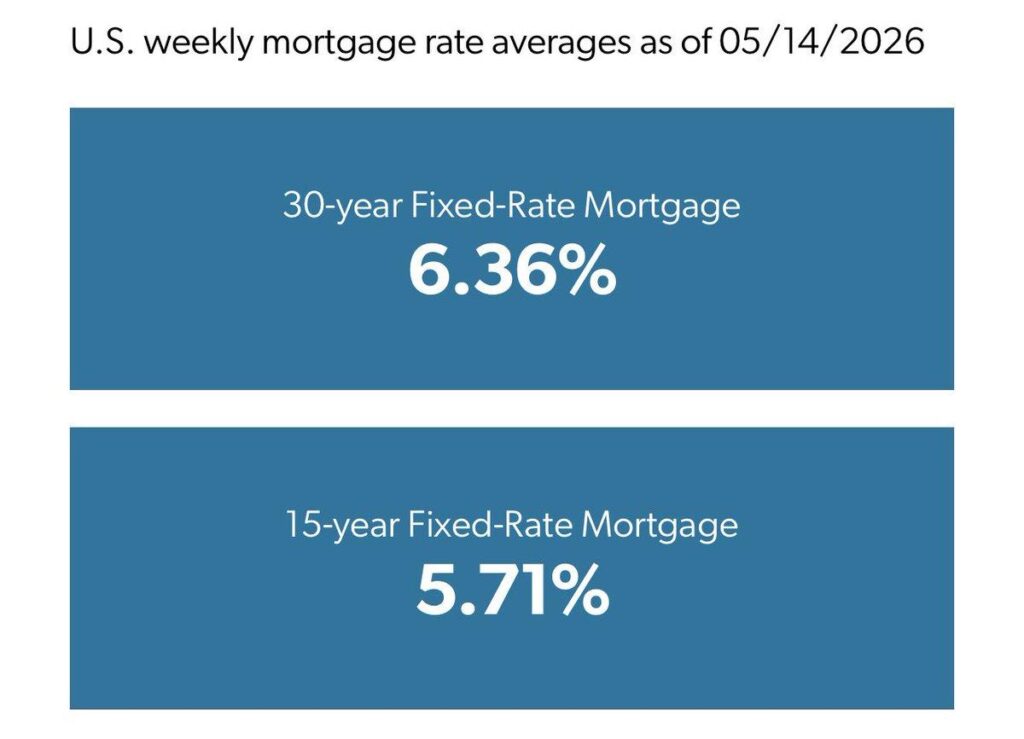
On Aug. 18, 2026, the average U.S. 30-year fixed conforming mortgage rate was reported at 6.668%, according to Mortgage Research Center data reported by Fortune. The average 15-year fixed conforming rate was 5.841%. Forbes, using the same underlying Mortgage Research Center source, rounded the 30-year rate to 6.67% and the 15-year rate to 5.84%.
The numbers explain why mortgage affordability continues to dominate the housing conversation. A rate that looks only slightly different on a percentage chart can translate into hundreds of dollars a month and tens of thousands of dollars over the life of a loan. At the same time, mortgage rates are not controlled directly by the Federal Reserve’s policy rate. They are heavily influenced by the bond market, inflation expectations, economic growth and the 10-year Treasury yield.
For buyers, therefore, the bigger question is no longer simply “When will mortgage rates fall?” It is whether today’s payment fits the household budget, whether a better loan can be found by shopping lenders and whether waiting for a lower rate is actually worth the potential cost of delaying a purchase.
Mortgage Rates Today: 30-Year, 15-Year, FHA, VA, Jumbo and Refinance
The 30-year fixed mortgage remains the benchmark most buyers watch. Today’s Mortgage Research Center reading of 6.668% is slightly above the previous day’s level, while the 15-year fixed average was 5.841%. Forbes reported that the 30-year average was down from roughly 6.73% a week earlier, showing that rates can move even when the broader market still feels expensive.

There is an important reason readers should avoid treating every mortgage-rate table online as directly interchangeable. NerdWallet’s Aug. 18 data, for example, showed a 6.60% 30-year fixed APR, 5.94% 15-year APR, 5.38% FHA APR and 5.96% VA APR. Those figures are based on Zillow data and are expressed as APR, which includes certain loan costs, rather than being identical to the Mortgage Research Center interest-rate figures above.
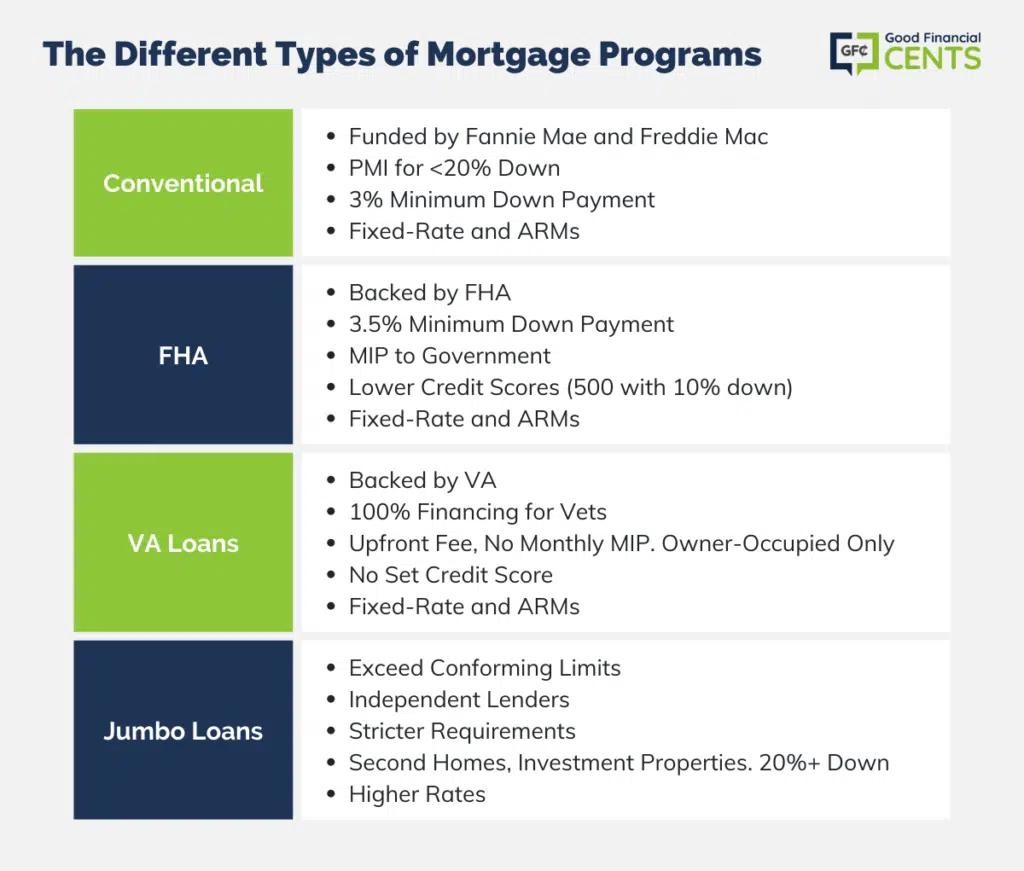
For jumbo borrowers, Forbes reported an average 30-year jumbo rate of 6.77% on Aug. 18. A jumbo loan generally exceeds the 2026 conforming loan limit of $832,750 in most areas, although high-cost counties can have higher conforming limits.
Refinance borrowers are facing a similar environment. The average 30-year fixed refinance rate reported by Fortune on Aug. 18 was 6.723%, slightly above the purchase-loan figure. That means homeowners with substantially higher existing mortgage rates may still find refinancing worth investigating, but the decision has to account for closing costs, remaining loan balance, time in the home and the difference between the old and new rate.
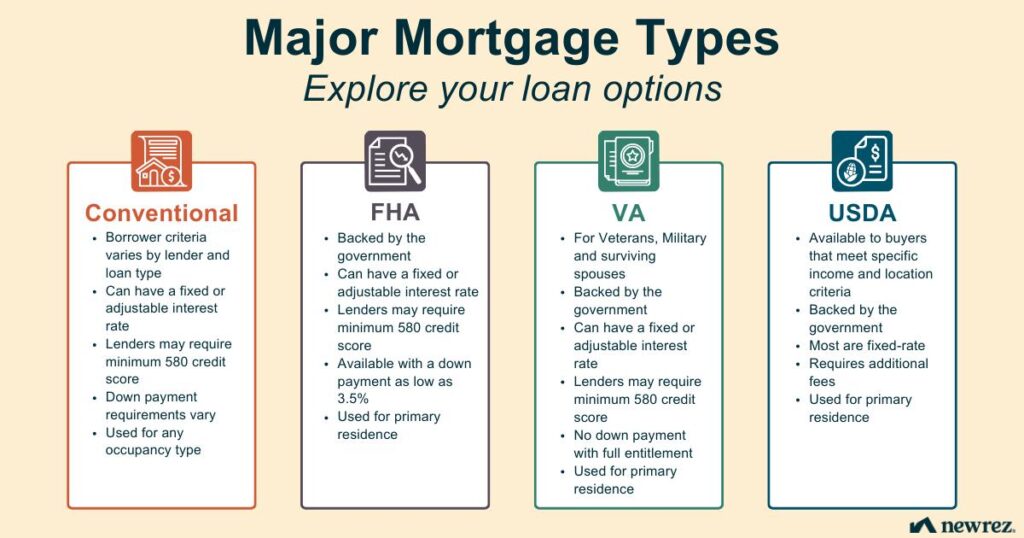
FHA and VA borrowers should also remember that the advertised rate isn’t the entire cost of borrowing. FHA loans have mortgage-insurance requirements, while VA loans have their own funding-fee rules and lender-specific pricing. The Department of Veterans Affairs emphasizes that the lender—not VA—sets the interest rate, discount points and closing costs, so eligible borrowers should compare offers rather than assuming every VA lender will provide the same deal.
For FHA borrowers, HUD’s 2026 nationwide one-unit loan limits range from a $541,287 floor to a $1,249,125 ceiling, depending on location. That distinction matters because the amount a buyer can borrow through FHA financing depends on the property’s county and applicable loan limit.
What a 6.668% Mortgage Rate Means for Monthly Payments
The easiest way to understand today’s mortgage market is to look beyond the percentage and calculate the payment.
At 6.668%, a hypothetical $400,000 30-year fixed mortgage would have a principal-and-interest payment of approximately $2,573 per month. That does not include property taxes, homeowners insurance, HOA dues or mortgage insurance. The actual payment for a buyer could therefore be considerably higher.
For comparison, if the same $400,000 loan were available at 6.168%—a decline of exactly 0.50 percentage point—the principal-and-interest payment would fall to approximately $2,442 per month. That is a monthly difference of about $131, or roughly $1,572 per year. Over 30 years, assuming the loan remained outstanding for the entire term and ignoring refinancing or early repayment, the difference in scheduled interest would be approximately $47,200.
| Example | Rate | Approx. monthly principal & interest |
|---|---|---|
| $300,000, 30 years | 6.668% | $1,929 |
| $400,000, 30 years | 6.668% | $2,573 |
| $500,000, 30 years | 6.668% | $3,216 |
| $400,000, 30 years | 6.168% | $2,442 |
| $400,000, 15 years | 5.841% | $3,341 |
These are illustrative calculations using the stated rates and do not represent lender quotes. Taxes, insurance, PMI/MIP, HOA charges, points and closing costs can substantially change the actual monthly housing expense.
The 15-year mortgage demonstrates the other side of the affordability equation. A lower interest rate and shorter repayment period can dramatically reduce lifetime interest, but the monthly payment is much higher. Forbes’ Aug. 18 calculation showed approximately $835 per month per $100,000 borrowed on a 15-year mortgage at 5.84%, compared with about $643 per $100,000 for a 30-year loan at 6.67%.
This is why buyers should compare mortgages according to their own cash flow rather than automatically choosing the loan with the lowest advertised rate. The Consumer Financial Protection Bureau recommends comparing the rate, APR, monthly payment, points, lender fees, closing costs and other terms across multiple lenders.
What This Means for You
For a homebuyer who can comfortably afford today’s payment, waiting exclusively for a specific mortgage-rate target could be risky. Mortgage rates can fall, but they can also rise unexpectedly. The housing market can change at the same time, meaning a buyer who waits six months could potentially face a different combination of rates, home prices, inventory and competition.

Today’s housing data provides a reason for buyers to remain selective rather than simply optimistic. Reuters reported on Aug. 18 that U.S. single-family housing starts fell 9.9% in July to a 3.5-year low, while contract signings for existing homes declined 2.3%. Total housing starts fell 12.4% to a seasonally adjusted annual rate of 1.239 million units. The report linked housing weakness partly to mortgage rates around the high-6% range and broader economic uncertainty.
That slowdown can create an advantage for some buyers. A less aggressive market may provide more negotiating room, more time to inspect a property and fewer bidding wars in certain locations. But the effect is highly local. A buyer in a supply-constrained city could face very different conditions from someone shopping in a market with rising inventory.
For first-time buyers, the most important number may not be the national mortgage rate at all. It is the total monthly housing cost relative to household income. A seemingly attractive 6.5% loan can still be unaffordable if property taxes, insurance, HOA fees and maintenance push the total payment beyond the household’s comfortable budget.
Buyers should also shop multiple lenders. The CFPB notes that borrowers can compare loan offers on an apples-to-apples basis and even ask lenders whether they can improve their offer. A lender may reduce a fee or rate, but borrowers should make sure that one lower cost isn’t being offset somewhere else.
Investor Takeaway
Mortgage rates matter to investors because housing finance affects more than individual buyers. Higher borrowing costs can reduce the number of households able to qualify for homes, slow transaction volumes and make homeowners with older low-rate mortgages less willing to sell.
The so-called mortgage-rate “lock-in” effect can restrict existing-home supply because homeowners with unusually cheap mortgages may hesitate to replace them with loans near 6% or 7%. That can produce an unusual market in which high rates weaken demand while limited supply helps prevent a dramatic collapse in prices.
The latest construction numbers reinforce the importance of watching supply. Reuters’ Aug. 18 report showed single-family starts falling sharply in July. If high financing costs continue to discourage builders, housing supply could remain constrained even if buyer demand is weak.
Mortgage applications are also showing sensitivity to borrowing costs. The Mortgage Bankers Association reported on Aug. 5 that total mortgage applications declined 2.9% in the week ending July 31, while the purchase index fell 4% and the refinance index dropped 2% from the prior week. MBA said the 30-year fixed rate had reached 6.81% around that period, its highest level in more than a year.
For investors watching banks, mortgage lenders, homebuilders, real estate companies or housing-related consumer spending, the important signal is not simply whether rates move down by 10 or 20 basis points. It is whether mortgage rates fall enough, and remain low enough, to meaningfully revive transaction activity.
Future Outlook: Will Mortgage Rates Fall in 2026?
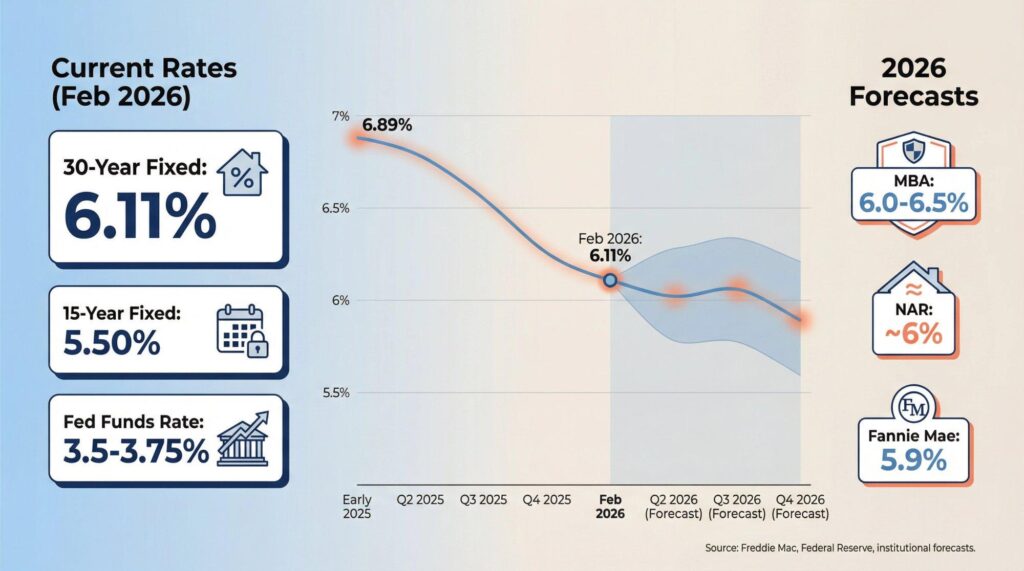
The Federal Reserve remains central to the discussion, but it is important to understand the relationship correctly. At its July 29 meeting, the Fed maintained the federal funds target range at 3.50% to 3.75%. Three voting members preferred a 25-basis-point increase. The Fed also said inflation remained elevated relative to its 2% goal and pointed to supply shocks, including energy prices, as one factor.
The federal funds rate is a short-term policy rate; a 30-year mortgage is priced largely through longer-term market expectations, mortgage-backed securities and Treasury yields. Consequently, even a future Fed cut would not guarantee that mortgage rates immediately fall by the same amount.
Recent market conditions illustrate that disconnect. Mortgage rates have remained elevated despite the Fed holding its policy rate steady. MBA chief economist Mike Fratantoni said after the July FOMC meeting that higher inflation and the possibility of a shift toward tighter monetary policy had contributed to higher mortgage rates, while MBA’s outlook called for mortgage rates to remain close to 6.5% for the foreseeable future.
At the same time, the outlook is not universally bearish. Earlier Fannie Mae forecasts anticipated mortgage rates moving lower during 2026, with its September 2025 forecast projecting a 5.9% year-end rate. MBA’s April 2026 forecast showed a 30-year mortgage rate around 6.2% in the fourth quarter of 2026. These forecasts demonstrate why readers should treat projections as scenarios rather than promises.
The more immediate question for the remainder of 2026 is inflation. Reuters reported that July consumer prices increased 0.1% month over month, while annual CPI inflation was 3.4% and core CPI inflation was 2.5%. That combination gives policymakers some evidence of moderating price pressure, but inflation remains well above the Fed’s 2% objective.
For homebuyers, that creates two competing possibilities. If inflation continues cooling and Treasury yields decline, mortgage rates could gradually move lower. If energy prices, geopolitical developments or renewed inflation pressure push bond yields higher, mortgage rates could remain elevated or even rise.
The most sensible strategy is therefore not to build a home purchase around a prediction that mortgage rates will hit a specific number. A buyer who can comfortably afford the house at today’s rate may choose to buy and potentially refinance later if market conditions improve. A buyer who is already stretching the household budget may be better served by waiting, increasing the down payment, improving credit, reducing debt or searching for a less expensive property.
Bottom line: The Aug. 18 mortgage market offers some movement, but not the major relief many U.S. buyers have been waiting for. The 30-year fixed rate remains near 6.67%, the 15-year rate is around 5.84%, refinance rates remain above 6.7%, and jumbo rates are also elevated. The Fed’s policy rate matters, but mortgage rates ultimately depend on a much broader financial-market picture.
For buyers, the winning strategy is to focus on affordability, compare several lenders, understand the complete APR and closing-cost picture, and avoid assuming that waiting automatically guarantees a lower mortgage rate. The next meaningful shift could come from inflation, Treasury yields, employment data, geopolitical developments or a change in Federal Reserve expectations—not simply from the Fed’s next meeting.
Subscribe to trusted news sites like USnewsSphere.com for continuous updates.