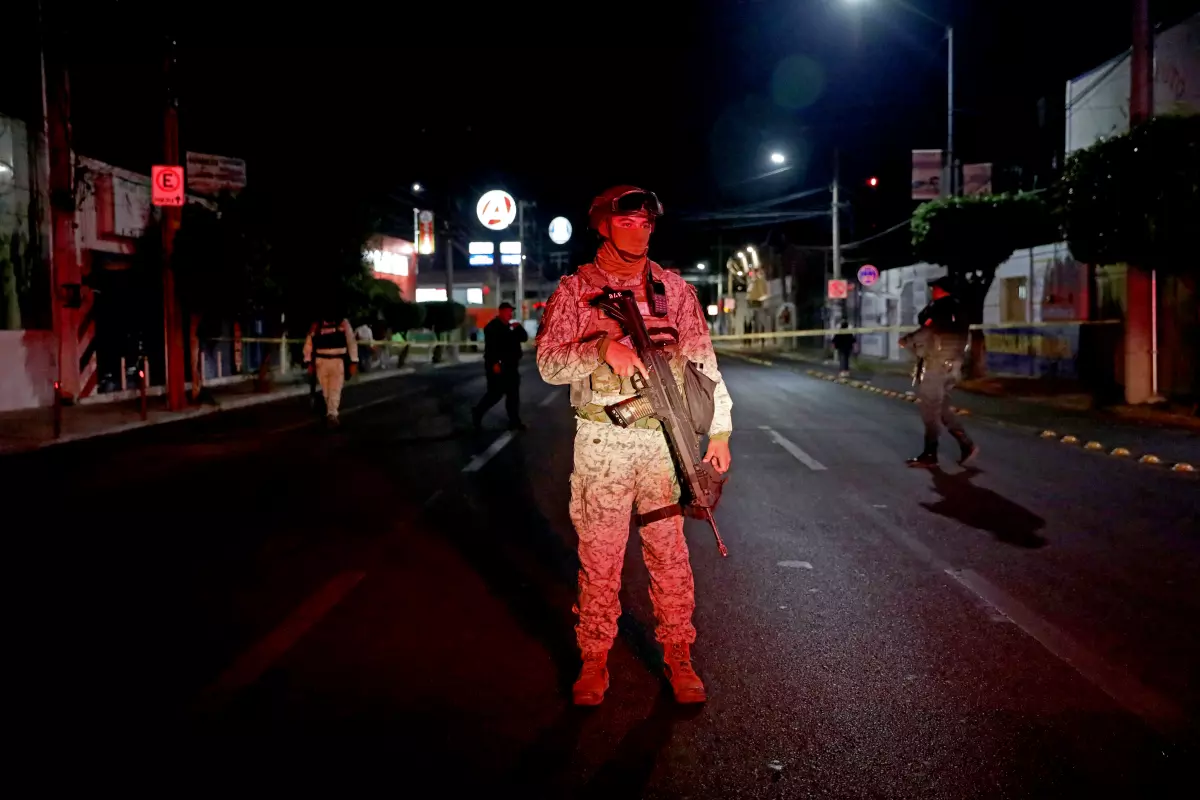
Mexico’s complex battle with powerful drug cartels has hit a pivotal moment, with the nation’s homicide rate showing a sharp decline even as geopolitics around cartel policy intensify. According to the latest Mexican government figures, the average daily murder rate has dropped nearly 40% since President Claudia Sheinbaum took office, reaching its lowest level in nearly a decade — a shift her administration touts as a sign of progress in curbing violence.
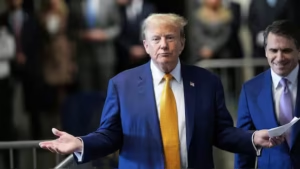
Yet this data comes amid mounting skepticism from security analysts and heightened regional tension driven by U.S. rhetoric. U.S. President Donald Trump has openly discussed expanding military efforts against cartel networks, including potential operations that could touch Mexican soil — a prospect Mexico’s leadership firmly rejects as contrary to national sovereignty.
Sheinbaum’s Crime Data: Clear Progress or Complicated Reality?
President Sheinbaum’s government has been clear about its most important security achievement: the dramatic drop in homicides. According to preliminary Mexican data, the national murder rate per 100,000 people was about 17.5 in 2025, the lowest since 2015, with the daily homicide count falling from roughly 87 before Sheinbaum took office to about 52 by December.
This decline has been credited publicly to a more intelligence-driven, coordinated enforcement strategy, replacing softer approaches that many previously criticized. From involving federal agencies more cohesively to bolstering cooperation with state governments, Mexico’s leadership argues its approach is starting to yield measurable results.
However, not all experts agree that the headline figures tell the full story. Observers note that while homicide rates may be down, other forms of cartel-linked violence — including kidnappings, disappearances, and intimidation — remain stubbornly high, and reports of missing persons continue to grow.
In addition, these data sets have not been fully published or verified by Mexico’s national statistical institutions, leading some critics to urge caution in interpreting the drop as a definitive turning point.
The Legacy of Cartel Violence: Violence Beyond Homicides
Understanding Mexico’s security environment requires stepping back into the long arc of cartel conflict. For decades, organized crime groups have exerted immense influence, with rival factions battling fiercest in states like Guanajuato, Jalisco, Michoacán, and Sinaloa.
Violence has taken many forms: mass shootings at festivals, turf wars between rival cartel cells, and targeted assassinations of local officials that destabilize governance. For example, a notorious mass shooting in Irapuato in mid-2025 left a dozen dead during a festival in Guanajuato, highlighting the deeply entrenched challenge local authorities face.
Despite structural reforms aimed at reducing violent crime — including intensified enforcement and a shift away from the previous administration’s “hugs not bullets” approach — cartel power remains significant in many regions. The magnitude of the crisis is reflected in long-running statistics that show Mexico consistently struggled with tens of thousands of crime-related deaths annually since the late 2010s.
Meanwhile, researchers argue that violent competition among cartels, coupled with recruitment dynamics, poses structural obstacles that simple security measures alone may not fully overcome. Deep societal and economic drivers are also at play — including limited job opportunities and entrenched networks that make cartel participation an attractive alternative for vulnerable populations.
Trump’s Rhetoric and Strategy: From Sea Strikes to Talk of Land Operations
While Mexico grapples with its internal orders of violence, the U.S. approach under President Donald Trump has grown increasingly assertive. Trump’s administration has already directed naval and aerial strikes against drug trafficking operations in international waters, and statements from the White House suggest a shift toward land-targeted strategies.
In interviews, Trump has emphasized an intention to “start hitting land” against cartel operations that he blames for fueling waves of fentanyl and other illegal drug flows into the United States. Officials have said that U.S. forces could expand their mission to directly confront cartel networks beyond coastal and maritime routes.
Trump’s comments go beyond cooperative action, suggesting that the U.S. military might play a direct role in counter-cartel operations even on Mexican soil — a concept that raises alarms among international law scholars and Mexican officials alike. Critics argue that such actions would constitute a breach of international norms and potentially escalate violence without effectively dismantling powerful criminal organizations.
Sheinbaum’s Response: Sovereignty, Cooperation, and the Limits of Foreign Intervention
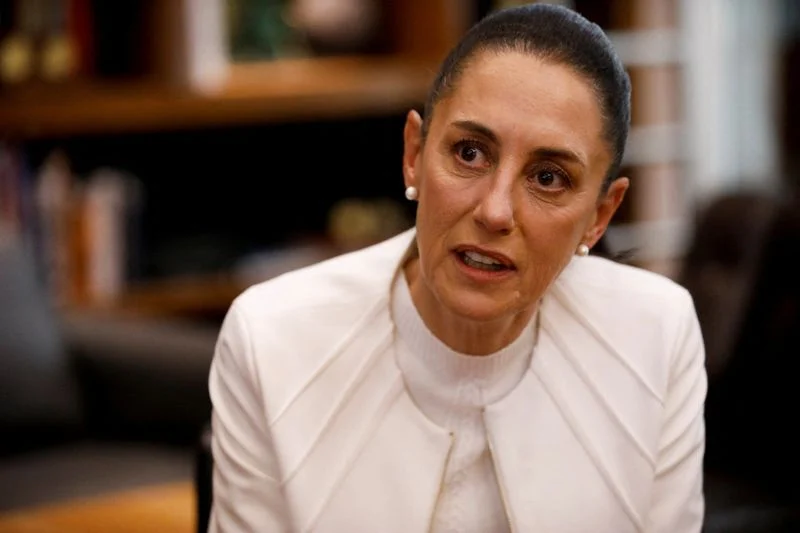
Mexico’s President Claudia Sheinbaum has responded resolutely to the rising U.S. rhetoric. While open to collaborating on intelligence and legal efforts to combat cross-border drug trafficking, she has made clear that foreign military intervention on Mexican territory is unacceptable and unconstitutional.
Sheinbaum has repeatedly dismissed the likelihood of any U.S. invasion or direct military operation in Mexico as unlikely and unnecessary, emphasizing diplomatic engagement and respect for Mexico’s sovereignty.
Instead, Mexico has promoted measures that allow joint law enforcement cooperation, extradition of cartel suspects, and shared intelligence gathering — approaches that stop short of allowing foreign troops on Mexican ground. These efforts aim to balance the need for effective cartel disruption with domestic expectations that Mexico remain in control of its own security policies.
How Ordinary Mexicans View the Situation
Public sentiment in Mexico is deeply mixed. On the one hand, many citizens express frustration with persistent violence and insecurity in their communities, sometimes viewing stronger action against cartels, even if backed by foreign partners, as desirable. Polls have indicated that a segment of Mexicans would support near-term international action if it appeared to significantly improve safety.
On the other hand, there is widespread concern about national pride, sovereignty, and the historical impact of external interventions in Latin America. Many Mexicans recall past failed strategies and fear that an intensified U.S. military presence could lead to new problems without guaranteeing sustainable peace.
Local protests and political rhetoric reflect this tension: some voices accuse Mexico’s current leadership of failing to do enough to protect citizens, while others condemn any suggestion of inviting foreign forces into domestic security operations.
Regional and Global Impacts: Beyond Mexico’s Borders
The debate over cartel policy is not contained within Mexico. It intersects with broader U.S.-Latin America relations, global drug policy, and hemispheric security frameworks.
For instance, recent U.S. actions in Venezuela — including the capture of Nicolás Maduro — have sparked controversy and raised questions about how far the United States will go in projecting military force in the Western Hemisphere. These actions reverberate in Mexico’s strategic choices, as its leaders seek to maintain friendly relations while preserving independence.
International groups and foreign policy experts caution that an overly militarized approach — whether led by Mexico or the United States — risks inflaming violence, displacing criminal organizations, and undermining long-term stability without addressing core economic and social conditions that empower cartel influence.
Conclusion: Looking Ahead in a Defining Moment
Mexico stands at a critical crossroads in its long battle against cartel violence. Data suggests homicide rates have dropped significantly — a notable achievement that offers a glimmer of hope amid decades of bloodshed. Yet persistent threats, evolving criminal strategies, and political pressure from abroad complicate the narrative.
U.S. proposals for expanded action against cartels underscore the urgency of shared security concerns, but Mexico’s insistence on sovereignty and local control reflects a broader debate about how best to confront entrenched criminal networks that cross borders.
The path forward will demand careful calibration: reinforcing law enforcement and judicial systems, expanding socioeconomic opportunity, strengthening international cooperation, and ensuring that the fight against cartel power respects national autonomy and adheres to global norms.
Subscribe to trusted news sites like USnewsSphere.com for continuous updates.