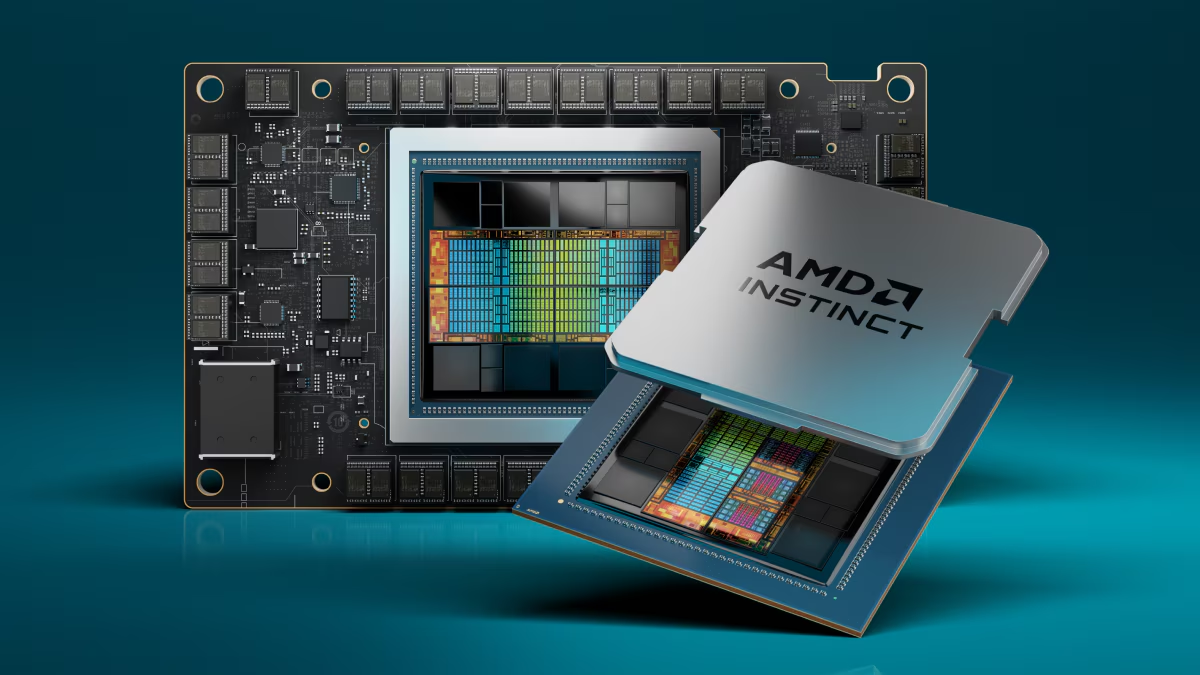
Meta and AMD have agreed on a landmark partnership that will see Meta deploy up to 6 gigawatts of AMD AI GPUs — a move estimated between $60 billion and $100 billion — reshaping the AI hardware landscape and challenging Nvidia’s long-held dominance in the space.
This deal matters now because it signals a major tech shift: one of the world’s biggest AI consumers is diversifying its chip supply, betting big on AMD’s GPUs and CPUs to power massive language models and future AI workloads — and the industry is taking notice.
Meta is accelerating its AI ambitions by securing AMD GPUs over multiple generations, starting with a custom MI450-based Instinct GPU for its first 1 GW deployment in the second half of 2026. The agreement is structured with performance-based warrants that could give Meta up to a 10 % stake in AMD as deployment milestones are met.
AMD’s stock rallied sharply on the news, with shares climbing more than 9 %-10 % in early market trading, underscoring investor confidence in this multi-year relationship and its potential to shift the balance of power in the AI chip race.
A Deep Dive: What’s in the Meta–AMD AI Chip Agreement
Meta’s deal with AMD isn’t just about buying chips — it fundamentally broadens Meta’s AI compute infrastructure strategy beyond a single supplier. Under the partnership:
- Meta will deploy up to 6 gigawatts of custom AMD Instinct GPUs across its AI data centres worldwide.
- The first 1 GW tranche begins shipping in late 2026, focusing on a custom MI450 architecture built to meet Meta’s specific AI workloads.
- These GPUs will be paired with 6th Gen AMD EPYC “Venice” CPUs and future “Verano” processors, optimized for tightly integrated AI compute stacks.
- The buildout will use AMD’s Helios rack-scale architecture developed through the Open Compute Project.
The scale — millions of watts of GPU power — highlights Meta’s intention to build AI infrastructure capable of running today’s largest models and training future generations efficiently. This isn’t incremental — it’s foundational.
The structure of the deal is also innovative: Meta receives performance warrants tied to GPU deployment milestones, potentially acquiring up to 160 million AMD shares at highly discounted rates. These warrants vest in stages as GPU deliveries scale from 1 GW to 6 GW.
Why This Matters Now: The AI Chip Race and Meta’s Strategy
Meta’s $60B-$100B deal with AMD comes at a pivotal moment in the AI technology race. For years, Nvidia has dominated AI hardware, controlling 80 %-90 % of the high-performance GPU market used for training and inference.
By diversifying away from a singular dependence on Nvidia and partnering deeply with AMD, Meta:
- Reduces vendor risk by securing a second major AI hardware supplier.
- Gains negotiating leverage in AI compute costs and supply chain priorities.
- Positions itself to innovate custom infrastructure tailored to its own AI workloads rather than relying exclusively on off-the-shelf designs.
The timing also matters because the AI chip arms race is accelerating globally. Industry giants like Microsoft, Google, Amazon and OpenAI are collectively projected to pour hundreds of billions into AI infrastructure in 2026, making silicon partnerships a strategic battleground.
Impact on AMD: A Competitive Breakthrough
For AMD, this Meta deal validates years of R&D investment in AI accelerators and server CPUs. The announcement builds on AMD’s earlier megadeal with OpenAI in 2025 and demonstrates AMD’s growing credibility as a serious alternative to Nvidia in AI compute.
Analysts say AMD will see multi-year revenue growth, driven not just by GPU and CPU sales but by deeper integration with customers’ AI stacks. The performance-linked stock warrant structure aligns AMD’s financial success with Meta’s deployment milestones, strengthening the partnership beyond a typical supplier-customer relationship.
Market reaction underscores the significance: investors quickly bid up AMD’s shares, reflecting confidence in future earnings tied directly to this sprawling infrastructure commitment.
Competitive Landscape: What This Means for Nvidia
NVIDIA remains the market leader in AI hardware, with a stronghold built on years of GPU innovation and broad ecosystem support. However, Meta’s AMD pact, along with other industry moves, signals a future where multi-vendor chip strategies could become the norm for hyperscale AI compute customers.
That said, Nvidia continues to innovate aggressively — for example, launching next-generation architectures and maintaining partnerships with key developers like OpenAI and Microsoft. Yet AMD’s increased footprint through Meta’s deployment challenges the notion of a singular AI GPU monopoly.
Broader Tech and Economic Implications
The Meta-AMD deal ripples beyond chip supply:
- AI infrastructure spending is now a major driver of capital expenditures for many tech giants. Meta reportedly plans to spend $135 billion on AI and data centres in 2026, a portion of which will support AMD deployments.
- The deal creates competitive pressure on other hardware providers to innovate or partner more deeply with AI platforms.
- With AI compute demand skyrocketing, supply chain strategies — including co-design and custom silicon — will shape which companies lead future technologies.
What Comes Next: Execution and Market Watchpoints
Investors and AI developers will closely monitor:
- The initial 1 GW deployment in late 2026 is a major test of AMD’s production and integration.
- Whether future GPUs and CPUs in the pipeline maintain performance and efficiency gains critical to scaling AI workloads.
- How Nvidia responds through new hardware launches or strategic partnerships.
As AI infrastructure becomes ever more central to modern computing, this Meta-AMD alliance may mark a new chapter in the competitive dynamics of the industry.
“Subscribe to trusted news sites like USnewsSphere.com for continuous updates.”