


Chip Stocks Rally: Wall Street’s latest technology rebound is revealing a growing divide inside the US stock market. Semiconductor companies attracted buyers on Tuesday, November 3, as Nvidia, Micron, AMD and other AI-related stocks recovered from recent losses. Apple moved in the opposite direction, highlighting how investors are becoming increasingly selective about which technology businesses deserve premium valuations.
The Nasdaq Composite advanced 0.83% to close at 25,372.01, while the S&P 500 gained 0.36% to finish at 7,568.92. The Dow Jones Industrial Average slipped 0.38% to 51,786.72. Although the technology-heavy indexes ended higher, declining stocks outnumbered advancing shares across much of the S&P 500, suggesting that the rebound was not a broad market recovery.
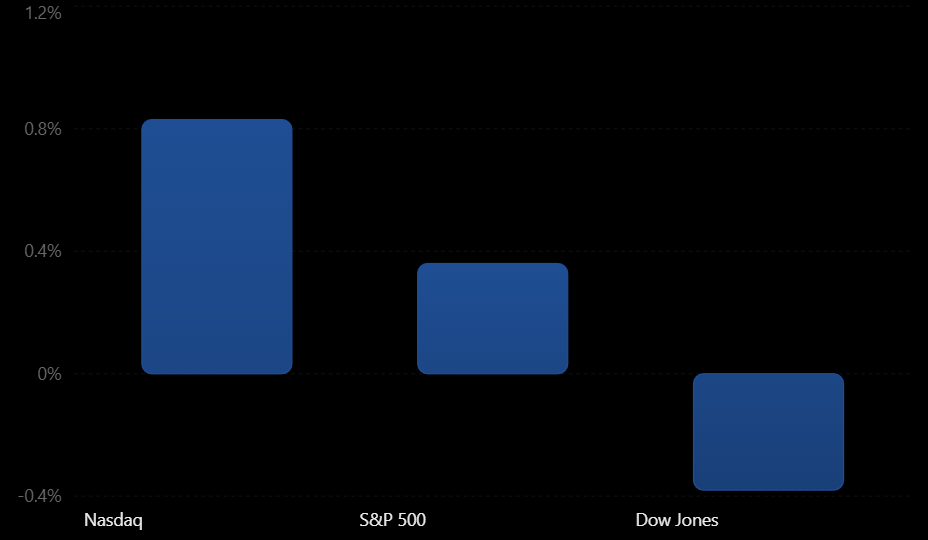
The contrast is particularly important because it comes during a period of uncertainty surrounding AI infrastructure spending, corporate earnings, borrowing costs and the US midterm elections. Investors are not simply asking whether technology will continue to grow. They are increasingly asking which companies can turn that growth into sustainable profits.
Semiconductor Stocks Lead Wall Street’s Technology Rebound
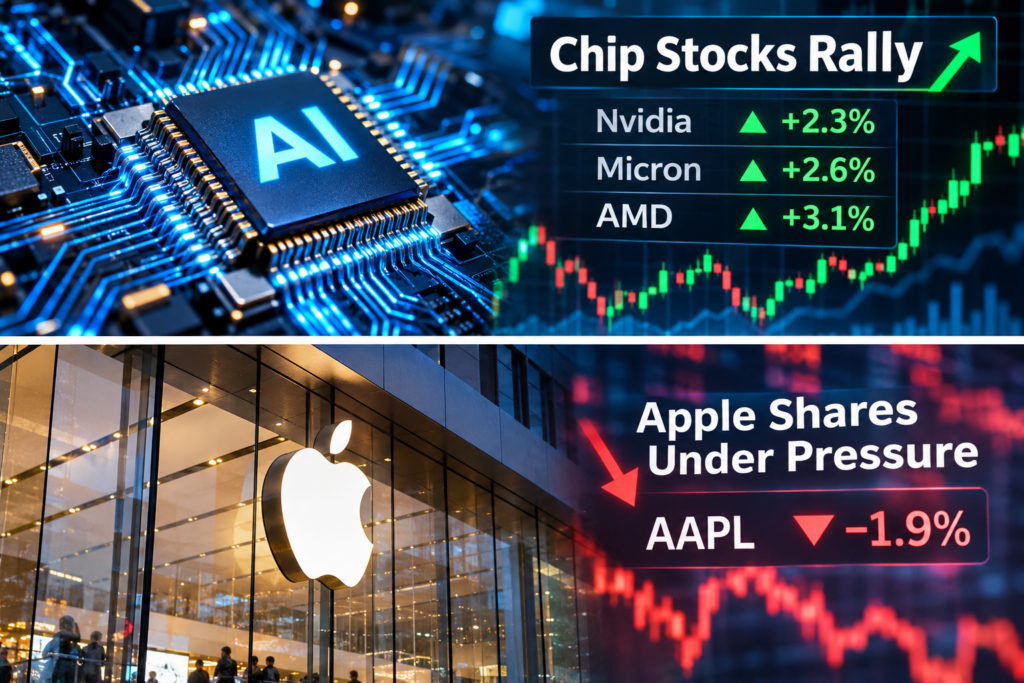
Semiconductor shares were among the strongest performers during Tuesday’s trading session. The Philadelphia Semiconductor Index jumped approximately 3%, while Nvidia gained around 2.3% and Micron Technology advanced approximately 2.6%. AMD also rallied ahead of its quarterly earnings announcement, with its shares rising sharply during the session.
The rebound followed recent selling pressure in technology shares, as investors questioned whether the enormous investments being made in artificial intelligence infrastructure could generate sufficient returns. When heavily traded growth stocks decline, even modest improvements in sentiment can attract bargain hunters. Some investors may have viewed semiconductor stocks as opportunities after the pullback, while others may have been positioning ahead of earnings and new corporate guidance.
AI infrastructure demand remains an important long-term investment theme. Advanced processors, memory chips, networking components and supporting systems are essential to expanding computing capacity. However, demand alone does not guarantee attractive shareholder returns. Semiconductor businesses also face competitive pressures, production costs, customer concentration risks and potential changes in technology spending. Investors need to distinguish between companies benefiting from current demand and those capable of sustaining profitable growth over several years.
Why Apple Stock Fell Despite Strong Quarterly Results
Apple’s decline illustrates why investors can react negatively to an earnings report even when a company beats financial expectations. Apple shares fell approximately 1.9% on November 3 after the company warned that rising memory-chip costs could put pressure on its holiday-quarter gross margin. The company reported a gross margin of 47.9% for its September quarter and indicated that its December-quarter margin could decline to approximately 45%–46%, according to Reuters’ reporting on its results and outlook.
The pressure reflects an important change in the technology supply chain. Memory chips are increasingly important for sophisticated devices and AI-related computing applications. Stronger demand for memory products can benefit semiconductor manufacturers, but it can also increase component costs for companies purchasing those chips. Apple’s experience shows how the same underlying industry trend can create winners and losers across technology markets.
The company’s challenges extend beyond component costs. Product development, artificial intelligence capabilities, competition and consumer purchasing decisions all influence its longer-term outlook. Investors must assess whether pricing power, product demand and operational efficiencies can offset margin pressure. A decline in a single trading session does not establish that Apple’s long-term business prospects have deteriorated, but it does show how closely markets are watching profitability.
AI Spending, Earnings Expectations and the Changing Technology Trade
The semiconductor rally comes at a time when investors are reassessing the economics of the artificial intelligence boom. Technology companies are investing heavily in data centers, computing infrastructure, networking equipment and energy capacity. These investments could support substantial future growth, but the benefits may arrive over different time horizons and vary considerably between businesses.

Meta’s reported $15 billion bond offering adds context to the scale of financing involved in the AI expansion. Borrowing can help companies fund infrastructure while maintaining financial flexibility, but debt also brings interest expenses and refinancing risks. Investors should examine capital expenditure plans alongside operating cash flow, depreciation, margins and balance-sheet strength rather than assuming every AI investment will generate attractive returns. (Reuters financing coverage).
Valuations are another major consideration. Even a company delivering impressive earnings growth can experience share-price pressure if investors had anticipated even stronger results. Meanwhile, stocks that have suffered substantial declines may recover when expectations become less pessimistic. This helps explain why market leadership can rotate quickly between semiconductor companies, consumer technology businesses and other growth stocks. Investors should compare forward earnings expectations, free cash flow generation and valuation multiples before drawing conclusions about which stocks offer the most attractive opportunities.
What This Means for You
For individual investors, the divergence between semiconductor stocks and Apple offers a useful reminder that owning technology stocks does not necessarily mean holding a single, uniform investment theme. Semiconductor manufacturers, device makers, software businesses and cloud providers face different cost structures, competitive environments and earnings drivers. Diversification within a sector can therefore matter just as much as diversification across sectors.
Investors holding semiconductor shares should monitor customer demand, earnings guidance, inventory trends, capital spending and valuation risks. A strong rally can improve sentiment, but it can also make expectations more demanding. Buying after a sharp advance without examining financial fundamentals may expose investors to unnecessary volatility, particularly when a stock’s valuation already reflects optimistic growth assumptions.
For investors holding Apple, the key questions include whether memory-cost pressures persist, how the company’s margins evolve and whether product demand supports future earnings growth. Long-term shareholders may prefer to assess quarterly results in the context of the company’s broader financial performance instead of reacting exclusively to daily price changes. People investing through retirement accounts should also consider their overall exposure to concentrated technology holdings.
Investors in Europe and other international markets should consider currency fluctuations, global semiconductor supply chains and the role of US technology companies in their portfolios. Movements in the dollar can affect returns for international investors, while changes in global trade policy and manufacturing conditions can influence technology businesses operating across borders.
Investor Takeaway: The Risks Behind the AI Stock Rally
The most important lesson from Wall Street’s latest session is that a semiconductor rebound does not automatically confirm a sustainable recovery across the entire technology sector. Tuesday’s gains came alongside weakness in Apple and declines across much of the broader market. This suggests that investor confidence remains uneven and that market leadership is still evolving.

Several risks deserve attention. First, AI infrastructure spending could disappoint if customers reduce investment or expected returns take longer to materialize. Second, higher borrowing costs may affect financing decisions and equity valuations. Third, semiconductor demand can be cyclical, and periods of supply shortages can eventually give way to increased capacity or slower orders. Finally, geopolitical developments, export restrictions and trade policy changes could alter the competitive environment for chip manufacturers and technology companies.
Investors should also consider the difference between company performance and share-price performance. A strong business is not necessarily an attractive investment at every price. Reviewing earnings growth, cash flow, competitive advantages, valuation and downside scenarios can help investors make more informed decisions. Neither a market rally nor a bearish headline should replace a consistent investment process.
Future Outlook: What Could Move Chip Stocks, Apple and the Nasdaq Next?
The coming trading sessions will depend on corporate earnings, management guidance, economic releases and developments surrounding the US midterm elections. Investors will be watching whether semiconductor companies can demonstrate that AI demand remains strong enough to support their growth expectations. Earnings reports and updated capital expenditure plans may provide important clues about the sustainability of the technology investment cycle.
For Apple, the next key signals will include gross-margin performance, memory component costs, product demand and the company’s ability to manage expenses while investing in new technologies. If input costs continue rising faster than selling prices, margins could face additional pressure. If pricing power, product mix and operational improvements provide a meaningful offset, investor concerns may ease. These are scenarios to monitor, not guaranteed outcomes.
For semiconductor investors, the outlook will also depend on competition, supply availability, customer concentration and valuations. A more durable rally would ideally be supported by stronger earnings visibility and improving market participation rather than a temporary recovery in a small group of influential stocks. Treasury yields and Federal Reserve expectations may further influence how investors value future earnings.
Wall Street’s latest split between chipmakers and Apple demonstrates that the AI investment story is becoming more complex. Investors may continue to reward companies with visible demand and convincing financial results while scrutinizing businesses facing rising costs or uncertain returns. The most useful approach is to follow verified financial data, distinguish temporary market sentiment from structural changes and evaluate each business on its own fundamentals.
Conclusion
The semiconductor rally and Apple’s decline highlight a changing dynamic across the US technology sector. Nvidia, Micron and other chip-related shares benefited from renewed buying interest, while Apple’s margin outlook reminded investors that rising AI-related demand can create cost pressures elsewhere in the industry.
For investors, the opportunity is not simply to chase the strongest-performing stock. It is to understand where earnings growth is sustainable, where valuations have become demanding and which businesses can convert technological progress into long-term financial results. As earnings, economic developments and election-related uncertainty continue shaping markets, careful analysis remains more valuable than short-term excitement.
Subscribe to trusted news sites like USnewsSphere.com for continuous updates.