


US stock market outlook is back in focus as investors confront a volatile combination of expensive artificial intelligence (AI) stocks, earnings expectations, Treasury yields, unpredictable oil prices and fresh political uncertainty following the U.S. midterm elections.
Wall Street’s latest market swings reveal an important distinction: a rally in major indexes does not necessarily mean investors have become confident about the entire market. On November 3, 2026, the S&P 500 and Nasdaq Composite finished higher, while the Dow Jones Industrial Average declined. The following election-related trading developments then put pressure on U.S. stock futures, demonstrating how quickly sentiment can change.
According to the Associated Press, the S&P 500 gained 0.36% to close at 7,568.92, and the Nasdaq Composite advanced 0.83% to 25,372.01. The Dow fell 0.38% to 51,786.72. Despite the gains in two headline indexes, most S&P 500 stocks declined during that session.
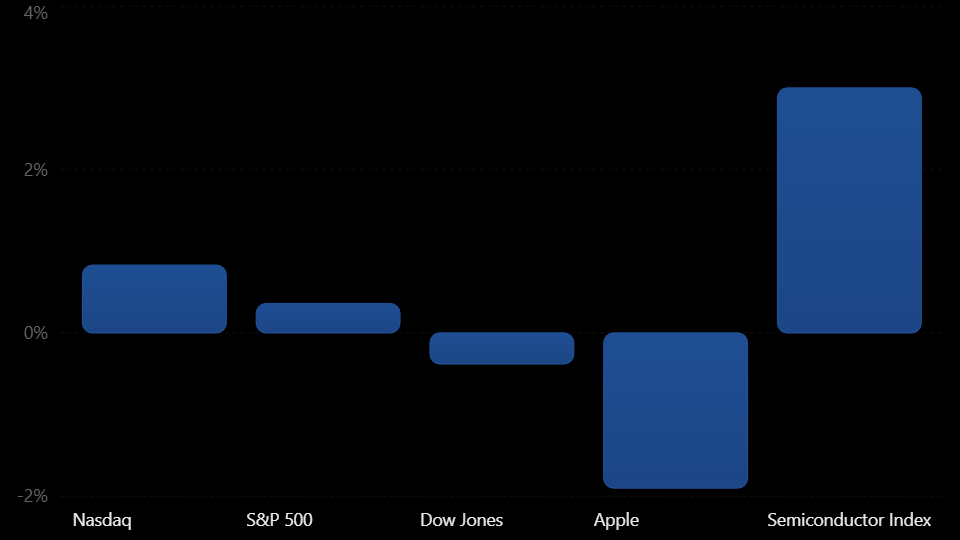
The market’s recovery attempt followed a technology-led selloff that had pushed the Nasdaq-100 into correction territory, defined as a decline of at least 10% from a recent high. On November 4, early U.S. election results added another source of uncertainty. Reuters reported that S&P 500 futures dropped approximately 0.8%, while Nasdaq futures fell 1.8% in one early snapshot. Those figures were intraday futures movements, not confirmed closing returns.
For investors in the United States and international markets, the central question is no longer simply whether stocks can recover. It is whether corporate earnings, economic conditions and future cash flows can justify the prices investors are paying.
Here are five important developments investors should monitor as Wall Street navigates its next phase.
US Stock Market, AI Stock Valuations: Can the Technology Boom Deliver Enough Profits?
Artificial intelligence remains one of the strongest long-term investment themes in global markets, but the latest volatility highlights a growing challenge. Investors are becoming more selective about which companies may actually turn enormous AI investments into sustainable profits.

The Nasdaq-100 recently entered correction territory after falling more than 10% from its October 6 record close, according to reporting published around the November 3 rebound. Concerns about hyperscaler spending, financing requirements and the timing of AI-related returns have weighed on technology sentiment. Investors are increasingly examining whether the projected revenue growth of leading AI businesses can support their substantial valuations.
The distinction between AI infrastructure suppliers and companies purchasing that infrastructure also matters. Chipmakers may benefit from demand for processors, memory and networking equipment, while cloud companies must absorb considerable capital expenditures before realizing returns. If AI adoption generates stronger productivity, customer demand and operating margins, the investment cycle could remain supportive. If returns arrive more slowly than expected, expensive stocks could face additional repricing.
For investors, valuation is not simply about whether a company is growing quickly. It also concerns how much future growth is already reflected in its share price. Even an impressive earnings report can disappoint shareholders when expectations are exceptionally high.
Corporate Earnings: Strong Results Must Meet Higher Expectations
Corporate earnings are the next major test for the U.S. stock market outlook. Company results can provide a stronger indication of business health than short-term political headlines, particularly when markets are struggling to determine whether recent valuations are sustainable.
Apple provides a useful example of how earnings and stock performance can diverge. On November 3, Apple shares fell approximately 1.9%, even though the company had beaten quarterly revenue and earnings expectations. Concerns about higher memory-chip costs and the potential effect on future profit margins overshadowed its results.

Apple’s reported September-quarter gross margin was 47.9%, while its December-quarter margin forecast was approximately 45% to 46%, according to Reuters coverage. The company faces an important balancing act: maintaining profitability while managing component expenses, product demand and competition.
Meanwhile, AMD offered a contrasting signal for the semiconductor industry. Its results and forward growth outlook provided encouragement to investors concerned about the durability of AI-related demand. However, one company’s strong performance cannot establish that the entire semiconductor industry will deliver similar growth.
Investors should monitor several earnings indicators: revenue growth, operating margins, free cash flow, inventory levels, customer concentration and management guidance. AI-related capital expenditure deserves particular attention because rising spending is valuable to shareholders only when it produces attractive returns over time.
The upcoming earnings calendar may reveal whether recent weakness represents a temporary adjustment in expectations or a deeper reassessment of corporate profitability.
Treasury Yields and Interest Rates: Why Bond Markets Matter for Stocks
Treasury yields remain a critical factor for equity valuations because they influence borrowing costs, financing decisions and the return investors can earn from relatively lower-risk government securities.
When Treasury yields rise, future corporate profits may become less valuable in today’s dollars. Higher borrowing costs can also pressure businesses investing heavily in data centers, equipment, research and expansion. Growth stocks with valuations based on profits expected many years into the future can be particularly sensitive to changes in interest rates.
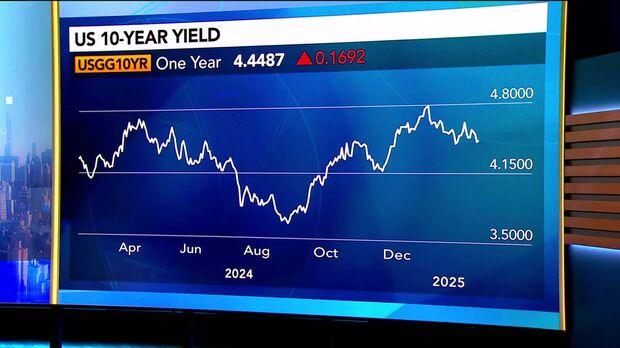
The 10-year Treasury yield has recently traded near historically elevated levels compared with the low-rate environment of previous years. On November 3, stronger job-opening data contributed to upward pressure on yields, with reporting placing the benchmark around 4.96% in that session. Following early election developments, Reuters reported that the yield subsequently declined to approximately 4.906% in an early November 4 snapshot.
These figures represent different market observations, not contradictory closing statistics.
Falling yields can support stock valuations, but the reason behind the decline is essential. A reduction driven by easing inflation or improving expectations for monetary policy could be constructive. A sharp decline caused by investors fearing weaker economic growth or rising financial stress could send a less encouraging message.
Investors should watch upcoming inflation releases, employment figures, Federal Reserve communications and Treasury issuance. These developments could influence whether financial conditions become more supportive or restrictive.
Oil Prices: An Energy Shock Could Complicate the Inflation Outlook
Oil prices represent another significant risk for Wall Street because energy costs affect inflation, transportation, manufacturing, household budgets and corporate margins.
Brent crude settled near $103.60 per barrel on November 3, down approximately 1.1% in that session, while West Texas Intermediate crude settled around $96.09, according to market reporting. Prices have experienced substantial volatility amid geopolitical developments, negotiations involving Iran and concerns about potential supply disruptions.

The Strait of Hormuz is particularly important because it serves as a major route for global oil shipments. Disruptions to shipping through this corridor could tighten supplies and push energy costs higher, although the ultimate effect would depend on the duration of any disruption, available inventories and alternative supply routes.
Higher oil prices could create a difficult environment for the Federal Reserve. If energy costs contribute to persistent inflation, policymakers may have less room to ease monetary policy. That could keep borrowing costs elevated and pressure valuations across technology, consumer discretionary and other interest-sensitive sectors.
Energy producers could benefit from higher commodity prices, but the broader economic consequences may be negative for many businesses and households. Airlines, logistics providers and manufacturers could experience margin pressure, while consumers may have less money available for discretionary spending.
Investors should monitor Brent crude, WTI, energy inventories, shipping conditions and developments affecting major producing regions. A sustained decline in oil prices could relieve some inflation pressure, but short-term movements should not be mistaken for a confirmed change in the underlying supply outlook.
Election-Related Policy Uncertainty: What Washington Could Mean for Markets
The U.S. midterm elections have introduced another variable into an already unsettled market environment. Investors are evaluating how potential changes in congressional control could affect fiscal policy, regulation, taxation, energy development and artificial intelligence infrastructure.
Early November 4 reporting indicated Democratic gains in important races, while control of Congress was still being assessed. Reuters reported that election-related developments unsettled financial markets as investors considered whether a change in political balance could reduce expectations for additional fiscal stimulus or increase scrutiny of AI and Big Tech.

For technology investors, the implications extend beyond political headlines. Data-center construction requires land, electricity, grid connections, permitting, financing and substantial capital. Changes in regulatory requirements, energy policy or development approvals could influence project costs and investment timelines.
Policy uncertainty can also affect other sectors. Healthcare, financial services, defense, energy and digital assets may respond differently depending on legislative priorities and the details of any proposed changes. A change in congressional control does not automatically translate into immediate policy implementation, however. Legislative procedures, executive authority, court decisions and political negotiations can all shape the outcome.
Historical market performance after midterm elections can offer perspective, but it should not be treated as a reliable prediction. Markets have often performed positively in the six months following midterms, yet historical averages cannot eliminate risks from inflation, recession, earnings disappointments or geopolitical shocks.
The important question for investors is whether actual policy changes materially alter corporate cash flows, investment incentives or economic growth.
What This Means for You, Investor Takeaway and Future Outlook
For everyday investors, the latest Wall Street selloff reinforces the importance of separating short-term price movements from long-term investment fundamentals. A declining index does not automatically mean every company has become cheaper relative to its earnings prospects. Likewise, a rebound does not prove that market risks have disappeared.

Investors reviewing their portfolios may want to examine concentration in expensive technology companies, exposure to interest-rate-sensitive assets and dependence on a narrow group of market leaders. Diversification across sectors, regions and investment types can help manage concentration risk, although it cannot eliminate losses during broad market declines.
Investor Takeaway: Focus on evidence rather than headlines. Evaluate business quality, earnings durability, balance-sheet strength, free cash flow and the price paid for future growth. Avoid making rushed decisions based exclusively on election-night futures movements, isolated analyst forecasts or dramatic market commentary. Any investment strategy should reflect personal circumstances, risk tolerance and investment time horizon.
Future Outlook: Three broad scenarios deserve attention. In a constructive scenario, earnings remain resilient, AI spending produces stronger commercial returns, inflation moderates and oil prices stabilize. That combination could improve investor confidence and support a recovery in equities.
In a more difficult scenario, elevated valuations collide with disappointing guidance, persistent inflation or renewed energy disruptions. Higher financing costs and weaker earnings expectations could intensify selling pressure. A third possibility is continued market rotation, where some companies and sectors perform well while expensive growth stocks struggle to regain leadership.
The next major signals will include employment and inflation reports, Treasury yield movements, corporate earnings guidance, oil-market developments and confirmed policy decisions following the elections. Technical price levels can also help investors monitor market momentum, but they are not guarantees of support or resistance.
Ultimately, the U.S. stock market outlook will depend on whether profits and economic fundamentals can justify investor expectations. The latest volatility is a reminder that opportunities and risks can coexist, especially when valuations are demanding and market leadership is concentrated.
For long-term readers and investors, the most useful approach is to follow the evidence, understand the risks and avoid confusing a temporary market bounce with a lasting improvement in fundamentals.
Subscribe to trusted news sites like USnewsSphere.com for continuous updates.