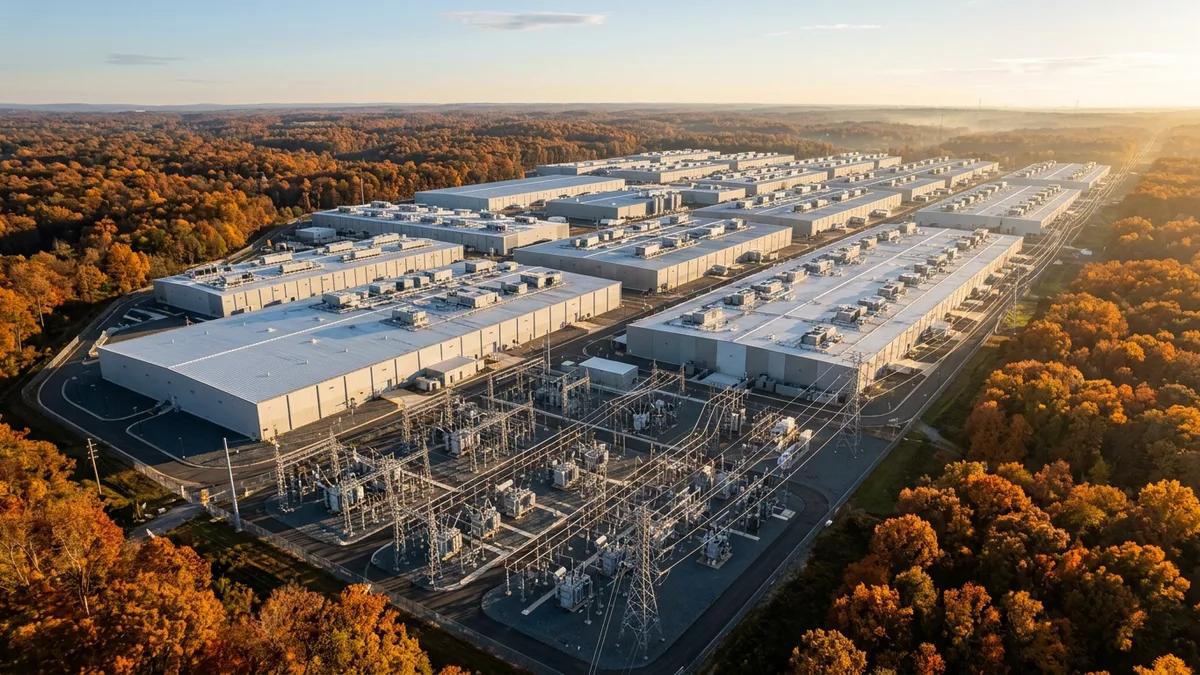
AI power demand is becoming one of the biggest challenges facing America’s electricity system as data centers race to expand artificial-intelligence computing capacity. The extraordinary growth of AI is no longer only a story about Nvidia chips, cloud platforms and software. It is increasingly a story about where the United States can find enough electricity, transmission capacity and reliable generation to keep thousands of energy-hungry machines running.
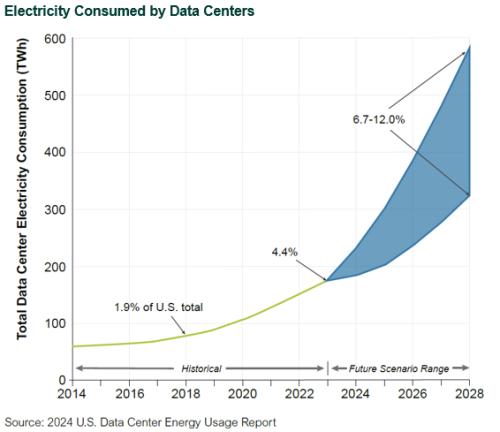
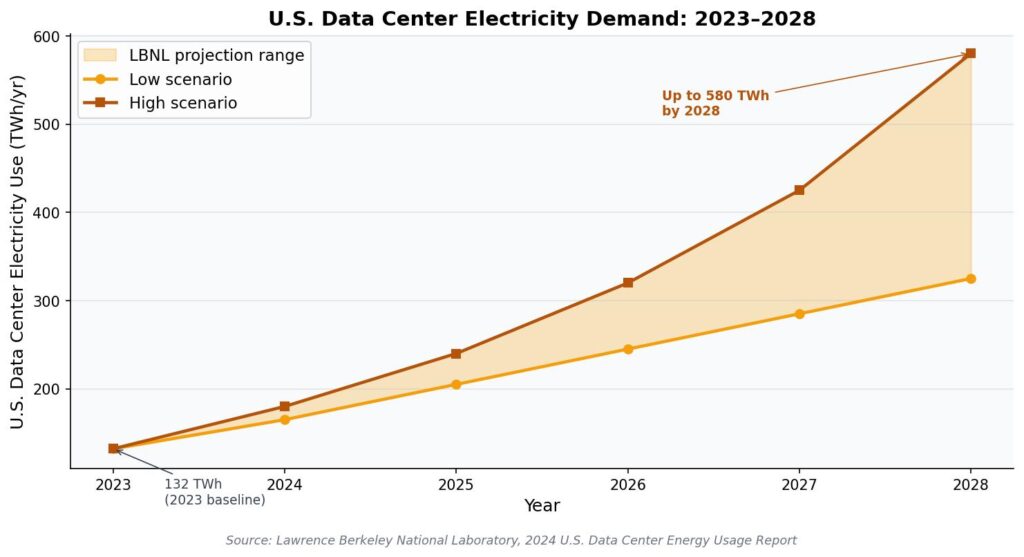
The latest numbers show why investors are paying attention. The U.S. Energy Information Administration says electricity demand is continuing to rise as data centers expand, while generation growth is increasingly coming from natural gas and renewable energy. Meanwhile, a new Lawrence Berkeley National Laboratory assessment estimates that U.S. data centers could consume 11.8% of total U.S. electricity by 2030, with a possible range of 9.5% to 15.3% depending on how quickly the sector expands.
That creates a potentially enormous infrastructure opportunity—but also a serious bottleneck. The companies that generate electricity, manufacture turbines, build transmission equipment, provide onsite power and operate nuclear plants could become important beneficiaries of the AI buildout. At the same time, investors must distinguish between businesses already producing revenue from this trend and speculative companies whose biggest projects may still be years away.
America’s AI boom is turning into an electricity problem
The basic problem is surprisingly simple: AI data centers need enormous amounts of electricity, and they need it reliably. Training and running advanced AI models requires large clusters of high-performance processors operating around the clock. As more companies deploy AI services, the electricity requirement moves from an abstract technology issue into a physical infrastructure constraint.
The latest EIA outlook, released August 11, says U.S. electricity generation has been increasing to meet growing demand from data centers. EIA also expects new solar projects and increased natural-gas generation to remain important sources of electricity growth. During the first half of 2026, U.S. power-sector generation increased by 37 billion kilowatt-hours, or 1.8%, compared with the same period in 2025. Solar generation rose 21%, while wind generation increased 6%.
The longer-term numbers are even more significant. The June 2026 LBNL data-center report estimates that data centers could account for 11.8% of U.S. electricity consumption by 2030, compared with the much smaller share they represented only a few years ago. That does not mean every forecast will be achieved, but it demonstrates how quickly data centers have moved from a niche electricity customer to a major source of expected load growth.
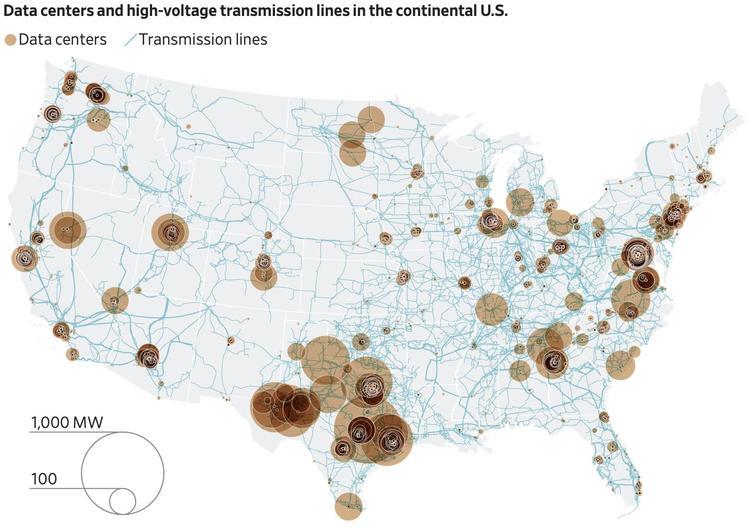
The pressure is particularly visible in regions with large concentrations of new data centers. PJM, the largest U.S. regional transmission organization, has been dealing with growing demand and tighter capacity conditions. Reuters reported in July that PJM expected electricity demand from large new customers such as data centers to contribute roughly 70 gigawatts of additional demand by 2038, while the grid operator was developing measures to address supply shortfalls.
The grid itself may be the next AI bottleneck
Generating more electricity is only part of the solution. That electricity also has to reach the data center. America’s transmission system was not designed around clusters of extremely large, concentrated loads appearing in a short period of time, which means developers can encounter long interconnection queues and transmission constraints even when generation exists elsewhere.
That problem has attracted federal attention. In June, the Federal Energy Regulatory Commission ordered all six regional grid operators under its jurisdiction to justify or reform tariffs governing the connection of data centers and other very large electricity users. FERC said faster integration of large loads was necessary while also emphasizing reliability and protections for consumers.
The situation is also showing up in wholesale electricity markets. Reuters reported on August 21 that transmission-congestion costs in PJM reached about $6 billion during the first half of 2026, up 43% from the comparable period. Higher congestion can increase electricity prices because inexpensive generation cannot always be delivered to locations where demand is strongest.
That is one reason the AI energy opportunity is broader than simply owning an electricity producer. Transmission equipment, transformers, switchgear, grid software, generators, cooling equipment and backup-power systems can all become critical infrastructure as data-center developers try to secure power.
There is also a growing push toward onsite generation. Reuters reported August 24 that businesses are increasingly considering larger behind-the-meter power systems because of grid constraints and delays in obtaining utility capacity. The trend is especially relevant to data centers, which place an unusually high value on uninterrupted electricity.
Which energy stocks could benefit from the AI power race?
One group worth watching is GE Vernova, whose gas turbines and power-generation equipment are directly connected to the need for new electricity capacity. Gas-fired generation has an important advantage in this race: it can provide dispatchable electricity and can generally be deployed faster than a brand-new nuclear plant. Recent market analysis has highlighted GE Vernova’s large turbine backlog as a potential beneficiary of AI-related power demand.
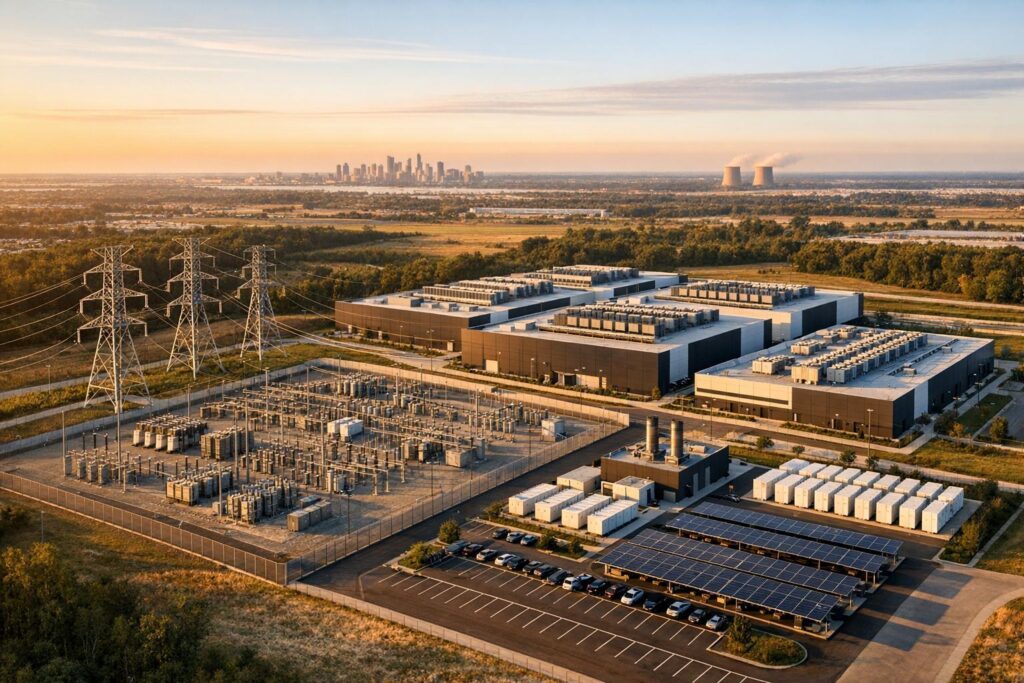
Constellation Energy is another major name because nuclear power offers something data-center operators increasingly value: dependable, around-the-clock generation with very low operational carbon emissions. Nuclear plants can operate continuously rather than depending on whether the sun is shining or wind speeds are high. The U.S. Department of Energy has specifically highlighted nuclear’s potential role in supplying data centers that operate continuously.
Vistra is also relevant because of its large power-generation portfolio and exposure to competitive electricity markets. In an environment where reliable generation becomes more valuable, power producers with existing operating assets can potentially benefit before newer technologies are commercially ready.
Then there is Bloom Energy, which approaches the problem differently. Rather than waiting for transmission upgrades or large centralized power projects, fuel-cell systems can provide electricity closer to the customer. Recent market coverage has focused on Bloom’s role in supplying onsite power solutions for data centers. The opportunity is compelling because speed matters when a technology company has billions of dollars invested in computing equipment that cannot be fully utilized until electricity is available.
Investors should also watch companies involved in generators and backup power. Generac, for example, is expanding its commercial generator manufacturing capacity as data-center demand grows. Reuters reported that the company is investing $250 million in additional production and had a $1.6 billion backlog, illustrating how the AI boom is spreading beyond traditional utility stocks.
The important distinction is that these businesses have very different risk profiles. A company selling equipment today is not the same investment proposition as a startup hoping to commercialize a new nuclear reactor several years from now.
What this means for you
For households, the AI electricity boom could eventually affect more than technology stocks. The central question is who pays for the new generation and grid infrastructure required to serve huge industrial customers. If utilities build expensive infrastructure and recover those costs broadly through regulated rates, residential customers could potentially face some of the burden.
Policymakers are increasingly aware of that issue. The Department of Energy’s current data-center resource hub says large technology companies are expected to help support new power supplies and infrastructure under the administration’s ratepayer-protection framework. The objective is to make sure rapid data-center growth does not simply shift infrastructure costs onto ordinary electricity customers.
Some utilities are already changing how they treat data centers. TVA recently approved a new rate structure that increases costs for data-center customers over several years, with the goal of protecting other customers and supporting grid reliability as electricity demand rises.
Consumers should therefore watch three things: electricity rates, utility infrastructure spending and local data-center development. A new hyperscale facility can create jobs and investment, but it can also increase competition for electricity and transmission capacity.
There is another important consumer angle: efficiency. AI companies are increasingly looking for ways to make computing workloads more flexible. Google said in March that it had reached 1 gigawatt of data-center demand-response capacity through agreements with utilities, allowing some machine-learning workloads to be shifted or reduced when the grid needs flexibility.
That suggests the future grid may not be based entirely on building more power plants. Better software, demand response, storage and flexible computing could allow existing infrastructure to serve more customers.
Investor takeaway
The AI power story is becoming a much broader investment theme than simply buying traditional energy companies. The opportunity potentially extends across generation, transmission, natural gas, nuclear, fuel cells, generators, electrical equipment, cooling systems and grid modernization.
Among established companies, GE Vernova, Constellation Energy, Vistra and Generac are examples of businesses exposed to different parts of the power-infrastructure chain, while Bloom Energy represents a more specialized onsite-generation approach. These are not equivalent investments, however. Their earnings drivers, valuations, debt levels, project pipelines and sensitivity to AI spending are different, so investors should evaluate each company independently rather than treating “AI energy” as a single trade.
The nuclear opportunity deserves particular attention but also requires patience. Nuclear provides the reliable electricity that data centers want, yet building new reactors remains difficult and time-consuming. Small modular reactors could eventually change that equation, but investors face regulatory, construction, financing and commercialization risks. Reuters recently reported that SMRs are gaining momentum in the U.S., while emphasizing that commercial deployment at scale remains unproven.
The same caution applies to the broader AI infrastructure trade. Some investors are already questioning whether data-center construction forecasts could prove too aggressive. A July McKinsey analysis reached an interesting conclusion: although overbuilding is a legitimate concern, the more immediate risk for the power sector may actually be underbuilding rather than excessive capacity.
That creates an important investment distinction. Companies with existing assets, equipment orders or contracted projects may have a clearer path to monetizing AI-driven demand than companies whose business case depends on a technology that has not yet reached commercial scale.
Future outlook
The next phase of the AI boom could therefore look very different from the first. The early AI investment cycle focused on chips, servers and software. The next phase increasingly depends on physical infrastructure: electricity generation, transformers, transmission lines, cooling systems, backup generation and the land required to build it all.
The U.S. is already responding. EIA expects electricity demand and generation to continue rising, while natural gas and renewable generation remain important contributors. Federal regulators are working to accelerate large-load interconnections, and utilities and technology companies are experimenting with new approaches to pricing, demand response and onsite power.
Yet the biggest question may be whether electricity supply can expand quickly enough without creating unacceptable costs for consumers or locking the country into infrastructure that eventually becomes uneconomic. The sharp increase in proposed gas generation for data centers illustrates the trade-off: gas can help provide power relatively quickly, but environmental concerns, fuel costs and long-term policy risks remain relevant.
For investors, that means the AI electricity story should be treated as a long-term infrastructure cycle rather than a guaranteed stock-market shortcut. Demand may be enormous, but valuations still matter. A company can operate in a fantastic industry and still be a poor investment if the market price already assumes years of flawless growth.
The companies most worth watching may ultimately be those that solve the hardest physical problems: delivering reliable megawatts quickly, expanding transmission capacity, improving grid efficiency, supplying backup power and providing dependable generation while keeping costs manageable.
The bigger lesson is becoming difficult to ignore: AI may be a digital revolution, but its next major constraint is physical. America’s ability to build enough electricity infrastructure could determine how quickly the country’s AI ambitions become reality—and that puts the power industry much closer to the center of the AI investment story.
Research sources: The latest EIA electricity outlook is available through EIA’s August 2026 Short-Term Energy Outlook, while the latest U.S. data-center electricity estimates are published by Lawrence Berkeley National Laboratory. For federal grid policy, see FERC’s large-load integration announcement. A useful recent market video covering AI’s growing need for electricity and nuclear power.
Subscribe to trusted news sites like USnewsSphere.com for continuous updates.