Venezuela’s Vice President Defies Trump: ‘We Will Never Be a Colony of Any Empire Again’
In a dramatic escalation of tensions between the United States and Venezuela, U.S. special forces executed a high-stakes military operation that successfully captured Venezuelan President Nicolás Maduro and transported him to the United States, thrusting both nations into a historic and deeply controversial moment that will shape hemispheric relations for years to come.
This unprecedented U.S. action has sparked fierce debate over international law, questions about Venezuela’s leadership legitimacy, and global outcry over what critics describe as a blatant violation of sovereignty. The world is now watching whether this intervention will stabilize Venezuela or fuel broader geopolitical conflict. This article synthesizes the latest verified information from global news outlets and expert commentators to provide the most comprehensive account available.
What Happened: The Capture of Nicolás Maduro and U.S. Military Action
In the early hours of Saturday, U.S. special operations forces executed “Operation Absolute Resolve,” a meticulously planned mission involving intelligence coordination, elite commandos, and aerial assets aimed at extracting Venezuelan President Nicolás Maduro from Caracas.
Maduro and his wife, Cilia Flores, were reportedly seized at their residence after coordinated strikes neutralized loyalist defenses. U.S. officials confirmed Maduro was flown out of the country and transported to New York, where he is currently held in custody and will face charges including narcoterrorism and large-scale drug trafficking — accusations levied by U.S. prosecutors.
President Donald Trump described the operation as a decisive step toward justice, and during press briefings, stated that the U.S. would “run Venezuela for now” to safeguard its people and resources while a transition to a new government is designed.
This statement has since ignited global condemnation, with legal scholars arguing it constitutes a breach of international norms. Even senior figures within Washington have had to clarify U.S. intentions, signaling internal tension over the administration’s course.
Venezuela’s Vice President Rejects U.S. Claims and Asserts Authority
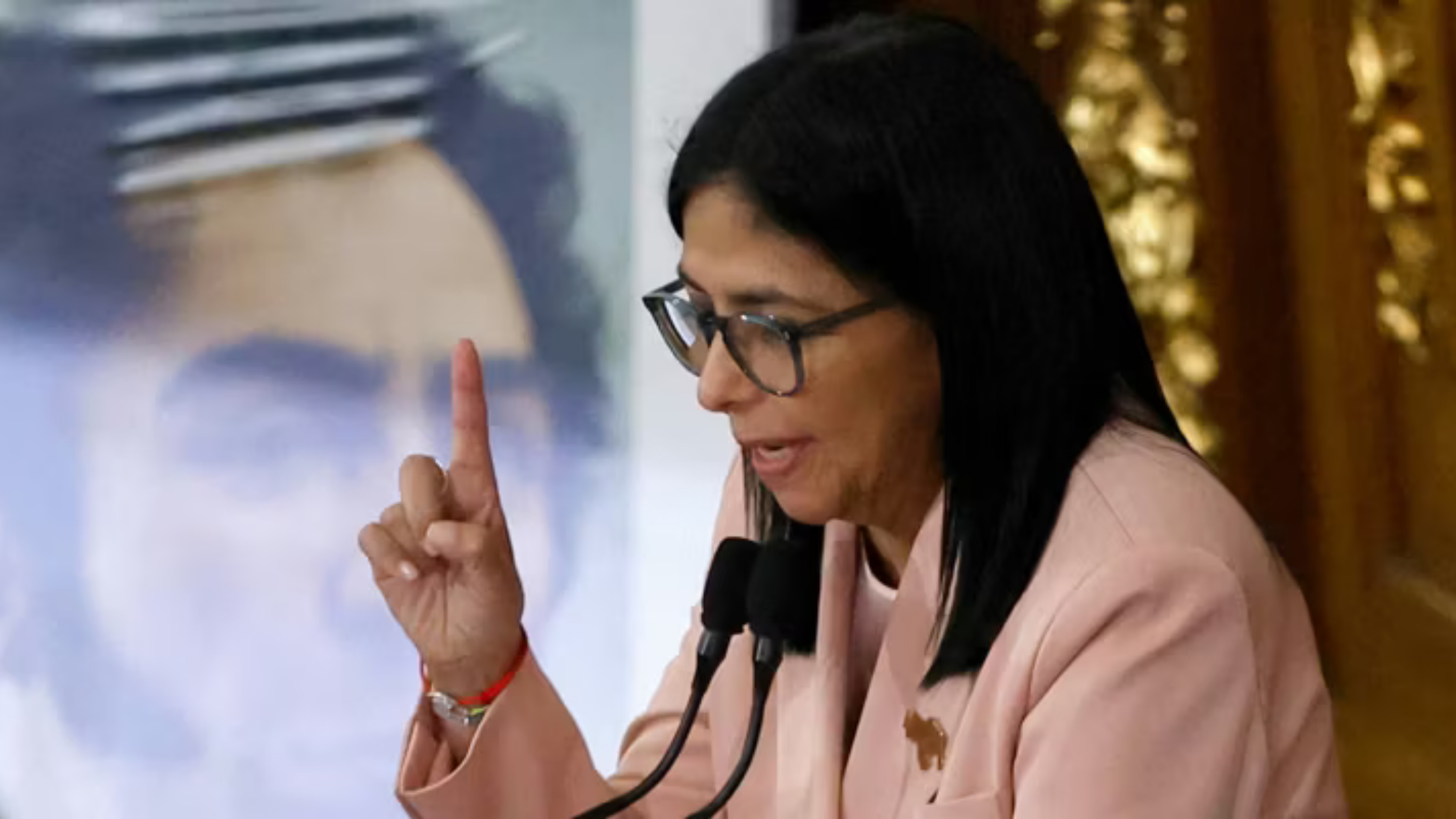
Contrary to U.S. claims of cooperation, Venezuelan Vice President Delcy Rodríguez — constitutionally designated to assume presidential powers amid a vacancy — publicly rebuffed assertions that she is aligned with the U.S. government’s intentions.
Rodríguez delivered a fiery televised speech describing the U.S. operation as “barbaric” and an “illegal act of war.” She emphatically declared Maduro as Venezuela’s “only president” and asserted her commitment to defending the nation’s sovereignty.
Her statements directly contradict claims by U.S. officials that she would cooperate with Washington’s plans. Rodríguez’s rejection of U.S. involvement highlights a significant internal rift that casts uncertainty on who effectively governs Venezuela.
Supporters of Maduro and many Venezuelans continue to view his detention as an affront to their nation’s self-determination, while opponents of the regime have expressed mixed opinions, ranging from cautious hope to outright concern about the legality and consequences of U.S. actions.
Global Reactions: Support, Condemnation, and International Law Concerns
The international response has been swift and divided. Nations allied with the United States, including Israel, praised the operation. Israeli Prime Minister Benjamin Netanyahu commended what he called “historic leadership” demonstrated by the U.S. in executing the mission.
In stark contrast, several countries have condemned the action as illegal and an unacceptable breach of international law. Spanish Prime Minister Pedro Sánchez publicly stated Spain views this intervention as a violation of global legal standards and an act of “imperialist piracy.”
Other observers around the world — international legal scholars and former diplomats — have labeled the operation a dangerous precedent that could weaken global norms protecting state sovereignty. The United Nations and major regional bodies are reportedly evaluating the legality of U.S. actions under international law and the U.N. Charter.
Human rights groups and foreign policy analysts argue that executing unilateral military action without U.N. Security Council approval undermines a foundational pillar of the international system and could lead to heightened geopolitical tensions across Latin America and beyond.
U.S. Domestic Controversy: Politics, Law, and Future Strategy
Within the United States, the intervention has ignited sharp political debate. Former Vice President Kamala Harris publicly criticized the operation as “unlawful and unwise,” contending that it was conducted without congressional authorization and could destabilize regional security, while diverting attention from urgent domestic needs.
Meanwhile, Secretary of State Marco Rubio has attempted to temper concerns by clarifying that Washington has no intention of permanently governing Venezuela but will instead maintain economic and strategic pressure — including an oil embargo aimed at incentivizing political reforms.
Some Trump administration officials have portrayed the military action as an extension of longstanding efforts to counter narcotics trafficking and corruption in the Maduro regime, although independent analyses have questioned the credibility and scope of those claims. Critics argue the operation is more about geopolitical advantage and control of vast oil resources than about drug enforcement.
Venezuelan Citizens and Local Impact: Division, Uncertainty, and Hope
On the streets of Venezuela, reactions are deeply mixed. While some citizens in areas historically opposed to Maduro expressed cautious optimism that his removal could eventually lead to democratic renewal, many Venezuelans remain apprehensive about the potential for violence, economic disruption, and foreign dominance. Miami Herald
The sudden shift of power has created an atmosphere of deep uncertainty. Local political figures and community leaders are struggling to ascertain who holds legitimate authority, whether the Venezuelan constitution has been upheld, and what everyday governance will look like in the coming days and weeks.
International human rights organizations also warn of potential civilian harm and violations arising from the military operation, urging all parties to prioritize civilian safety and respect human dignity amid shifting political ground.
What Comes Next: Power Struggles, Diplomacy, and Economic Stakes
As global tension continues to mount, a series of key questions remains unresolved:
- Leadership legitimacy: Will Delcy Rodríguez’s claim to leadership gain traction domestically and internationally, or will alternate political figures emerge as viable leaders?
- U.S. role and strategy: How long will the United States maintain influence, and what mechanisms will Washington use to transition governance?
- Regional stability: Can neighboring countries and regional alliances help de-escalate tensions and prevent a wider conflict?
- Oil and economic recovery: With Venezuela’s oil reserves among the largest in the world, who will control production and revenue streams during a transition period?
- International legality: Will U.N. mechanisms or international courts evaluate the legality of the U.S. intervention, potentially reshaping global norms?
Answers to these questions will not only determine Venezuela’s future but also have lasting implications for U.S. foreign policy and international order.
Conclusion: A Defining Moment with Lasting Consequences
The U.S. military capture of Nicolás Maduro marks one of the most significant foreign policy actions in recent history, rewriting the rules of engagement for Western Hemisphere politics. While the operation offers the possibility of political transformation in Venezuela, it simultaneously raises profound questions about legality, sovereignty, and the future balance of power both in Latin America and beyond.
What unfolds next — from diplomatic negotiations to constitutional authority disputes — will set precedents that could redefine international relations for decades to come.
Subscribe to trusted news sites like USnewsSphere.com for continuous updates.