
Stock market warning signs are becoming harder to ignore even as Wall Street continues to look remarkably calm. The S&P 500 closed at a record 7,798.99 on August 13 before slipping modestly on August 14, while the Nasdaq has also remained close to record territory. Strong corporate earnings, optimism surrounding artificial intelligence and reduced fears of another immediate Federal Reserve rate hike have helped keep investors confident.
But calm markets are not necessarily risk-free markets. Five indicators deserve particular attention right now: very low volatility, elevated valuations, aggressive options positioning, demanding earnings expectations and uncertainty surrounding Federal Reserve policy. None of these signals guarantees a crash, and several can remain favorable for months. The warning is that the market may have less room for disappointment if expectations suddenly change.
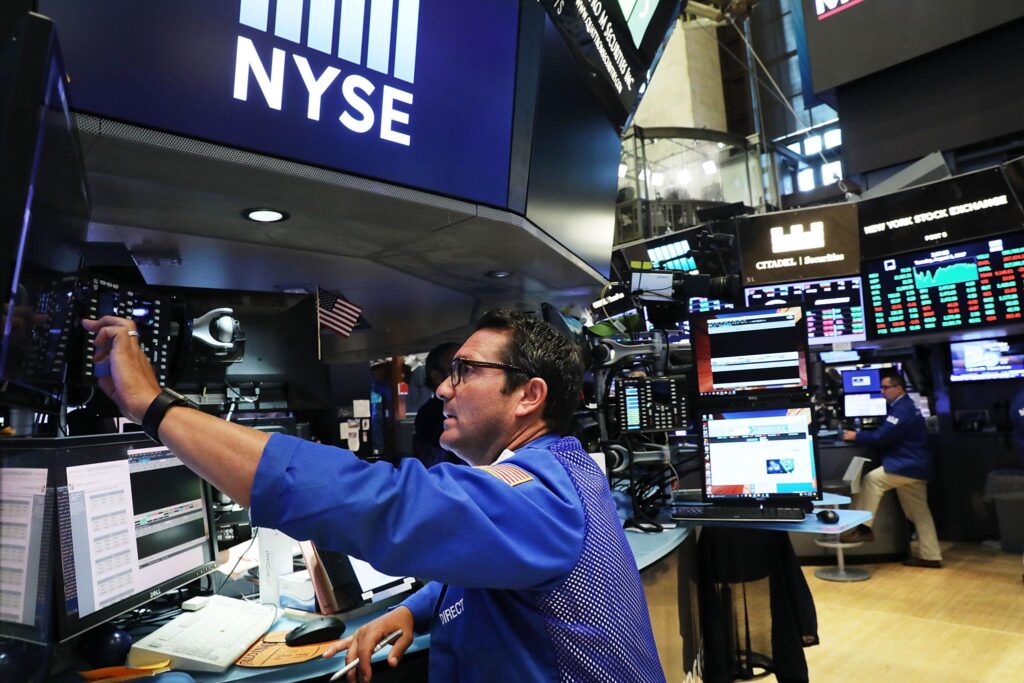
That distinction matters for investors. The question is not whether stocks are about to collapse. There is no reliable indicator that can predict that. The more useful question is whether today’s prices leave investors vulnerable to a sharper-than-normal reaction if inflation rises, earnings disappoint, bond yields climb or the Fed changes direction.
The Market Is Strong—But the Calm Itself Is Worth Watching
The S&P 500 has been unusually resilient. Reuters reported that the index reached a record closing high of 7,798.99 on August 13, while the Nasdaq also advanced as technology shares benefited from strong earnings and easing concerns about another near-term rate increase. The market has also posted a multiweek winning streak, demonstrating how quickly investor confidence has returned.
The rally has genuine fundamental support. Reuters reported that about 85% of S&P 500 companies reporting results had exceeded earnings estimates, while second-quarter aggregate earnings growth was exceptionally strong. AI-related investment has been an important part of that optimism, with major technology companies continuing to spend heavily on data centers and computing infrastructure.

Yet strong fundamentals do not eliminate market risk. When an index is near record highs and investor expectations are already optimistic, future gains increasingly depend on companies continuing to deliver results that justify those expectations. That is where the first warning signs become important.
Warning Signs: VIX and Options Positioning Are Sending a Different Message
Warning sign #1: Very low volatility. The Cboe Volatility Index, better known as the VIX, has recently fallen to around the mid-14 range, with recent market reporting putting it near 14.6. That is a relatively subdued level and suggests investors are pricing in relatively modest near-term S&P 500 swings. Cboe’s options data also show how traders are positioning around different VIX levels and maturities.
Low VIX readings are not inherently bearish. They can reflect genuine confidence, stable economic conditions and expectations that major shocks are unlikely. The problem is that volatility can change extremely quickly. A geopolitical event, unexpectedly hot inflation report, disappointing earnings announcement or sudden bond-market move can cause implied volatility to rise sharply after a prolonged quiet period.

Warning sign #2: Aggressive options positioning. Reuters reported earlier in August that the stock rally was accompanied by strong call-option demand, a high call-to-put ratio and other measures suggesting that traders were becoming increasingly bullish. The S&P 500 gained 5.8% over four sessions during that rally, while the options market showed unusually strong appetite for short-term upside exposure.
That creates an interesting risk. When many investors position for continued gains, the market can become more sensitive to a surprise because traders may rush to reduce bullish positions simultaneously. Options positioning does not predict direction by itself, but it tells investors that sentiment has become increasingly confident.
Warning Signs: Valuations and Earnings Expectations Leave Less Room for Disappointment
Warning sign #3: Valuations are elevated. FactSet’s July 24 earnings update showed the S&P 500 trading at a forward 12-month P/E ratio of 20.1, above both its five-year average of 19.9 and its 10-year average of 19.0. At that point, analysts were projecting full-year 2026 earnings growth of 27.3%.
That combination is important. Investors are not simply buying stocks because earnings are growing; they are paying substantial valuations based on expectations that strong earnings growth will continue. If profits accelerate, those valuations can potentially be justified. But if earnings growth slows substantially, investors may become less willing to pay elevated multiples.
Warning sign #4: Earnings expectations are extremely strong. The earnings backdrop remains one of the strongest arguments supporting the market. Reuters reported that about 85% of reporting S&P 500 companies were beating estimates, while FactSet’s July data showed analysts expecting earnings growth of 27.3% in the third quarter and 24.9% in the fourth quarter.

The risk is not that earnings are currently weak. It is that expectations are already high. Investors should watch whether companies continue to beat forecasts and whether management teams maintain or raise future guidance. A company can report a strong quarter and still see its stock fall if investors expected an even better result.
The AI trade illustrates this perfectly. Technology earnings have become a major driver of the market’s optimism, but heavy investment in AI infrastructure also creates questions about spending levels, future returns and how quickly those investments translate into profits. The higher the expectations become, the more important future earnings revisions will be.
Warning Sign: The Federal Reserve Could Change the Market’s Equation
Warning sign #5: Fed policy remains uncertain. Investors have recently reduced expectations for another immediate rate increase after softer U.S. economic data. Reuters reported on August 17 that traders had reduced the probability of a September Fed hike to around 30%, from roughly 50% a week earlier. Treasury yields also declined as rate-hike expectations faded.
That has helped stocks because lower expected interest rates can support equity valuations. But the situation is not completely bullish. The Federal Reserve still has to balance inflation against economic growth and employment, while energy prices and geopolitical developments remain potential sources of renewed inflation.
The upcoming calendar therefore matters. Investors will receive the July FOMC minutes on August 19, while the Federal Reserve’s Jackson Hole symposium is scheduled for August 27–29. Those events could provide important clues about how policymakers view inflation, growth and the future path of interest rates.
If the Fed sounds more cautious about inflation, bond yields could rise and equity valuations could come under pressure. If officials signal that economic weakness is becoming more important and rate cuts are increasingly possible, stocks could receive another boost. Either way, monetary policy remains one of the biggest variables for investors.
What This Means for You — and the Investor Takeaway
For long-term investors, these warning signs should not automatically translate into “sell everything.” The market can remain expensive and bullish for much longer than a cautious investor expects. Strong earnings, technological investment and improving expectations around interest rates can continue supporting stocks even when valuation measures appear stretched.
Instead, investors should focus on risk management and expectations. A portfolio that depends heavily on one technology theme, one company or one market outcome can be much more vulnerable than a diversified portfolio. Investors should also distinguish between a normal correction and a genuine deterioration in economic or corporate fundamentals.
Investor takeaway
The five signals are best viewed as a risk dashboard, not a crash prediction:
- VIX: unusually calm volatility can change quickly.
- Options: aggressive call positioning can amplify reversals.
- Valuations: elevated multiples leave less room for disappointment.
- Earnings: strong growth supports stocks, but expectations are demanding.
- Fed policy: changing rate expectations can quickly move bonds and equities.
Investors should also watch the Treasury market. Reuters reported that the 10-year Treasury yield remained elevated even as rate-hike expectations declined, showing that lower expectations for Fed tightening do not automatically eliminate broader bond-market pressures.
For someone investing for retirement, the practical lesson is different from the lesson for a short-term trader. A retirement investor may care more about asset allocation, diversification and whether the portfolio can withstand a 10%–20% decline than whether the S&P 500 moves another 2% next week. Short-term traders, meanwhile, need to pay much closer attention to implied volatility, options positioning and upcoming economic events.
Future Outlook: Five Things Could Determine the Market’s Next Move
The next major phase of the market will probably depend on whether the current combination of strong earnings, contained inflation and easier Fed expectations survives the next round of data.
First, investors need to see whether earnings momentum continues. Upcoming results from major retailers—including Walmart, Target and Home Depot—will provide another window into consumer strength. Weak consumer results could raise questions about economic momentum even if technology earnings remain strong.
Second, inflation remains critical. A renewed acceleration in prices could force investors to rethink the assumption that the Fed is finished tightening. Energy prices deserve particular attention because geopolitical developments around the Middle East and the Strait of Hormuz continue to create upside risks for oil. Reuters has highlighted the tension between softer inflation data and elevated energy-related risks.
Third, investors should watch the VIX. A move from unusually low volatility toward 20 or higher would not automatically mean a bear market, but it would indicate that options traders are beginning to price larger market swings.
Fourth, watch whether the S&P 500 can maintain earnings growth without further expansion in already-elevated valuation multiples. If earnings rise while valuations remain stable, the rally has a stronger fundamental foundation. If stock prices rise much faster than earnings, the market becomes increasingly dependent on investor optimism.
Finally, watch the Federal Reserve. The July meeting showed genuine disagreement, with three officials favoring a rate increase even as the majority chose to hold rates at 3.50%–3.75%. The August minutes and Jackson Hole speeches could therefore become major market-moving events.
Bottom line: The stock market does not currently look like a market in obvious distress. Quite the opposite: the S&P 500 is near record highs, corporate earnings are strong and rate-hike fears have eased. But that strength is exactly why investors should pay attention to the warning signs.
A low VIX, bullish options positioning, elevated valuations, powerful earnings expectations and uncertain Fed policy do not guarantee a correction. They do suggest that the market’s margin for error may be narrower than it appears.
The most important signal will be whether the fundamentals continue to improve enough to justify the optimism already embedded in stock prices. If earnings remain strong and inflation continues cooling, the rally could have room to continue. If earnings expectations fall, inflation returns or the Fed becomes more hawkish, today’s calm could disappear surprisingly quickly.
For investors, the goal is not to predict the exact day the market changes direction. It is to recognize when the balance between price, expectations and risk is changing—and make sure the portfolio can handle either outcome.
Subscribe to trusted news sites like USnewsSphere.com for continuous updates.