PayPal stock is back at the center of the fintech market after fresh reports that Stripe and private-equity firm Advent International are in renewed discussions to acquire PayPal, weeks after the consortium’s original $60.50-per-share offer valued the company at roughly $53 billion.
The situation has changed considerably since the initial bid. PayPal’s board rejected the earlier proposal as insufficient, but negotiations have reportedly continued, with the parties now discussing whether a higher price could produce an agreement. No definitive deal has been reached, and investors should not treat the reported negotiations as a completed takeover.
The latest development is particularly important for PYPL shareholders because PayPal closed Friday, August 14, at $61.66, up 1.8% on renewed acquisition speculation. That price is already above the original $60.50 proposal, meaning the market is effectively demanding a higher offer if Stripe and Advent want to secure shareholder support.
The potential transaction would bring together two of the most recognizable names in digital payments. Stripe has built a huge merchant-payments and financial-infrastructure business, while PayPal controls a major consumer payments ecosystem that includes PayPal, Venmo, Braintree and related services.
For investors, the biggest questions are no longer simply whether Stripe wants PayPal. The real questions are how much PayPal could ultimately be worth, whether a higher offer can be financed, what regulators might do, how shareholders would respond and what happens to PYPL stock if negotiations collapse.
Why the $53 Billion PayPal Deal Is Back in Focus
The original proposal from Stripe and Advent was reported in July at $60.50 per PayPal share, representing a premium of roughly 28% to PayPal’s share price immediately before the initial report. Reuters reported that the consortium had approximately $50 billion in committed bank financing behind the proposed transaction.
The proposed structure would have Stripe and Advent jointly acquire PayPal rather than simply purchasing a small strategic stake. Reports indicated that the two parties would split ownership approximately equally, creating a combined payments company with enormous reach across merchants and consumers.
PayPal’s board viewed the original offer as too low and was also concerned about regulatory and financing issues. That response was significant because the $60.50 price already represented a substantial premium to where PayPal traded before the takeover report. Management evidently believed that the company’s underlying turnaround potential could justify a higher valuation.
Now, the dynamics have shifted again.
The latest Wall Street Journal report says Stripe and Advent remain in discussions with PayPal and are seeking a price that could be higher than the rejected $60.50 proposal. The discussions are reportedly active, but there is still no assurance that the parties will reach an agreement.
That distinction is crucial for investors. PYPL is not trading as a completed acquisition. It is trading as a takeover situation with an unresolved price negotiation.
What PayPal Could Be Worth in a Higher Offer
The original $60.50 proposal valued PayPal at roughly $53 billion. Since PayPal’s stock closed at $61.66 on Friday, a hypothetical new offer would need to provide a meaningful premium to convince shareholders that selling now is preferable to waiting for the company’s turnaround.
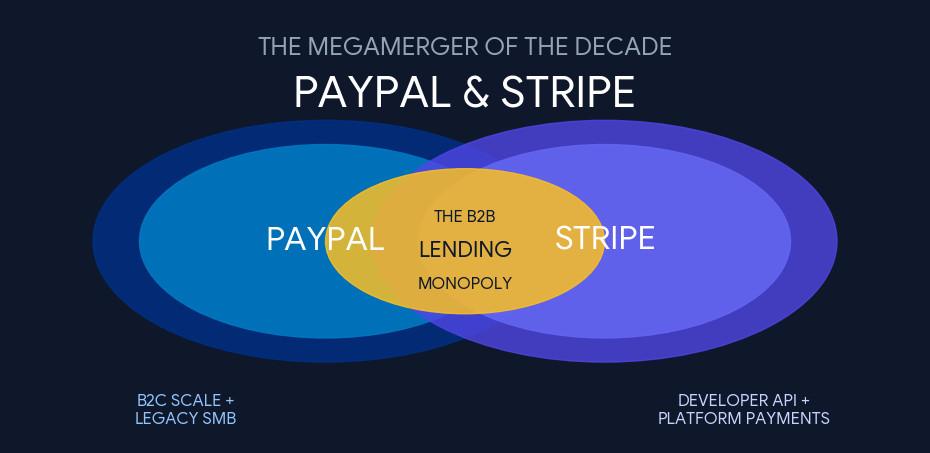
There is no confirmed new offer price, so investors should avoid treating speculation about a potential $70, $75 or $80 bid as fact. Those numbers may appear in market commentary, but they are scenarios rather than announced transaction terms.
The most useful way to think about valuation is through premiums.
If a new offer were $65, it would represent only a modest premium to Friday’s closing price.
At $70, the proposal would imply a materially larger payment for shareholders.
At $75, the premium would become considerably more substantial.
At $80, the transaction would represent a very different valuation from the original $60.50 proposal.
| Hypothetical offer | Approx. premium to $61.66 |
|---|---|
| $60.50 | Below Friday close |
| $65 | ~5.4% |
| $70 | ~13.5% |
| $75 | ~21.7% |
| $80 | ~29.7% |
These are illustrative calculations, not reported offer prices.
This explains why the next negotiation matters so much. If PayPal’s board believes its standalone value is substantially higher than $60.50, Stripe and Advent will need to decide whether paying more is justified by the long-term strategic value of owning PayPal.
The calculation is complicated because PayPal itself is changing.
PayPal’s Turnaround Could Make the Company More Valuable
PayPal’s current CEO, Enrique Lores, is attempting to reposition the company after several years of slower growth and intense competition. The company is simplifying operations, cutting costs and increasing its focus on artificial intelligence and technology. Reuters reported that PayPal expects its restructuring and productivity initiatives to produce approximately $400 million in savings during 2026, although the transformation carries associated costs.
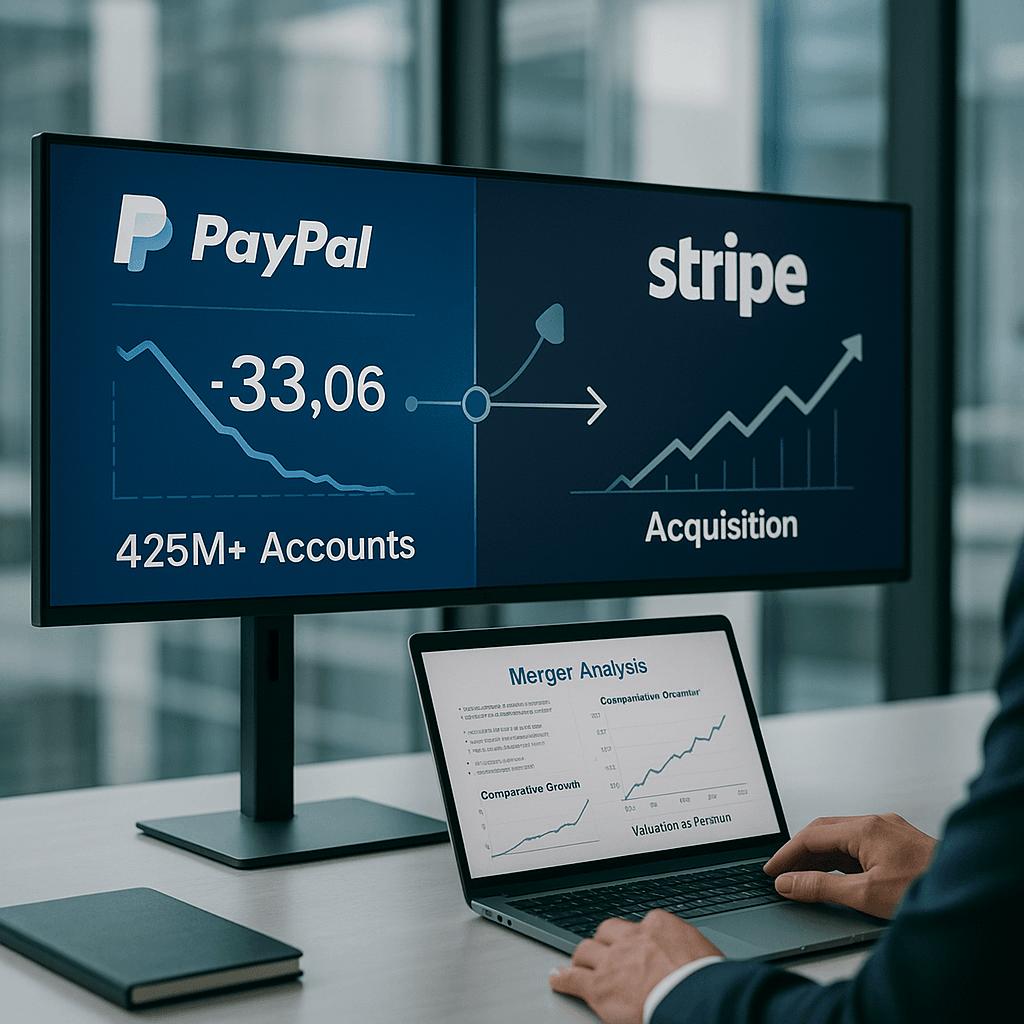
The second-quarter results provided some evidence that the turnaround has room to work.
PayPal reported $8.68 billion of revenue for Q2 2026, an increase of approximately 5% year over year. Adjusted earnings reached $1.38 per share, and the company raised its full-year adjusted earnings outlook to approximately $5.38 per share.
Those numbers complicate the takeover argument.
A buyer could look at PayPal and see a business that has lost momentum, faces competition from Apple Pay and Google Pay and needs substantial operational improvement.
But the same buyer could also see a company with enormous scale, a global consumer network, Braintree’s merchant business, Venmo and significant cash-generation potential.
That tension is exactly what makes the valuation dispute important.
PayPal’s market capitalization had fallen dramatically from its pandemic-era peak of roughly $360 billion. The company’s shares have spent years under pressure, making the current takeover approach an attempt to acquire a globally recognized payments platform at a much lower valuation than investors assigned it several years ago.
For Stripe and Advent, the thesis may be that they can unlock value that the public market has not fully recognized.
For PayPal’s board, the argument is potentially the opposite: if management can execute its turnaround, shareholders may eventually receive more by remaining independent.
Why Stripe Wants PayPal and What the Combination Could Create
Stripe’s business has historically been heavily focused on businesses and online merchants, providing payment processing and financial infrastructure to companies around the world.
PayPal brings something different: a huge consumer-facing ecosystem, PayPal’s branded checkout, Venmo, Braintree and a long-established relationship with millions of consumers and merchants.
The combination could therefore address one of Stripe’s strategic challenges: expanding further into consumer payments.
At the same time, PayPal could gain access to Stripe’s technology, enterprise relationships and developer-focused infrastructure. The potential combined company could become a much larger competitor to traditional payment networks and other fintech platforms.
Reuters estimated that combining Stripe and PayPal could create a payments operation processing roughly $3.7 trillion in annual payment volume, based on the companies’ respective volumes.
That scale is strategically important.
Payments is becoming increasingly competitive as companies compete over checkout, digital wallets, account-to-account transfers, stablecoins, fraud prevention, merchant services and embedded financial products.
Stripe also has its own advantages. The private company was valued at approximately $159 billion in a February 2026 tender offer, giving it substantial financial firepower and making a transaction with PayPal a potentially transformative step rather than a conventional acquisition by a smaller competitor.
Advent adds another important component: private-equity expertise and access to financing.
The reported structure would allow Stripe to bring strategic payments expertise while Advent contributes financial and transaction capabilities.
But combining the two companies would still be enormously complicated.
What This Means for You, Investor Takeaway and Future Outlook
What this means for you: If you own PYPL shares, the most important point is that the original $60.50 offer should no longer be treated as the current deal price.
That proposal was rejected as too low. The latest reports indicate that discussions are continuing around a potentially higher offer, but there is no agreed transaction and no confirmed new price.
That means PYPL investors are effectively facing two possible investment paths.
The first is a takeover scenario. Stripe and Advent could return with a sufficiently high offer, PayPal could agree to negotiate definitive terms and shareholders could ultimately vote on the transaction.
The second is a standalone scenario. Negotiations could fail, PayPal could remain independent and the company’s stock would once again be judged primarily on its operating performance and turnaround prospects.
That creates unusual risk.
If investors buy PYPL solely because they expect a higher acquisition offer, they are making a merger-arbitrage-style bet without a completed transaction.
Investor takeaway: The current stock price tells an important story. At $61.66, PayPal shares were already trading above the original $60.50 proposal on Friday.
That suggests investors either expect a higher bid, believe PayPal’s standalone value is above the original proposal or both.
A higher offer would potentially create additional upside, but the opposite is also true.
If negotiations collapse and investors decide that the takeover premium has disappeared, PYPL could fall sharply as the market reassesses PayPal on its standalone fundamentals.
That is the central risk investors need to understand.
Future outlook: The next major catalyst is likely to be any announcement concerning the negotiations.
If Stripe and Advent increase their proposal, investors will compare the new price against PayPal’s standalone earnings potential.
If PayPal demands a significantly higher valuation, the consortium will have to decide whether the strategic benefits justify paying more.
If no agreement emerges, attention will return to PayPal’s turnaround plan, revenue growth, transaction margins, Venmo, Braintree and cost reductions.
PayPal’s own second-quarter performance provides a useful foundation for that analysis. Revenue rose to $8.68 billion, adjusted EPS reached $1.38 and the company raised its full-year adjusted earnings outlook.
That means PayPal is not simply a distressed company waiting to be rescued.
The company is attempting to demonstrate that it can generate more value independently.
Regulatory, Financing and Competition Risks Could Complicate the Deal
The potential acquisition would face significant regulatory scrutiny because Stripe and PayPal are both major participants in digital payments.
The transaction could combine two important payment platforms with enormous merchant and consumer reach. That creates obvious competition questions, particularly if the combined company gained greater control over payment infrastructure, merchant relationships or consumer wallets.
The U.S. Federal Trade Commission has already shown that payment companies are under regulatory attention. In March 2026, FTC Chairman Andrew Ferguson sent warning letters to the CEOs of PayPal, Stripe, Visa and Mastercard concerning consumer access to financial services and potential debanking practices.
Those letters do not mean the FTC has announced opposition to a Stripe-PayPal transaction. They do, however, demonstrate that both companies operate in an area receiving active regulatory scrutiny.
Any large merger would also need to consider applicable U.S. merger-review requirements. The FTC says the 2026 Hart-Scott-Rodino reporting threshold for transactions increased to $133.9 million, although the actual review of a major transaction depends on its facts and applicable law.
Financing represents another risk.
The original proposal reportedly had approximately $50 billion in committed bank financing, but a larger bid would require the buyers to revisit the financing structure. Higher debt costs, transaction terms and the eventual ownership structure could all affect whether the economics work.
There is also integration risk.
PayPal and Stripe have different histories, cultures and customer bases. Stripe is known for its developer-centric infrastructure and merchant technology, while PayPal has a huge consumer brand and decades of operating history.
Combining the businesses could create opportunities—but also technological, operational and cultural challenges.
And there is a competitive question: would the combined company actually be stronger than the two businesses operating independently?
That answer would determine whether paying a large premium is rational.
What Happens to PYPL If the Deal Fails?
This may be the most important question for investors.
If Stripe and Advent abandon negotiations, PayPal would remain an independent public company. The takeover premium embedded in PYPL’s recent trading could disappear, potentially creating substantial downside pressure.
But a failed deal would not automatically mean PayPal’s business is failing.
The company has already begun a major turnaround under Lores, including cost reductions, organizational changes and investment in AI and technology. Reuters reported that PayPal’s 2026 profit outlook improved despite continued competitive challenges.
The standalone bull case is therefore straightforward.
If PayPal can improve branded checkout performance, increase engagement across Venmo, expand Braintree, improve transaction margins and reduce costs, the company could potentially generate stronger earnings and cash flow without being acquired.
The standalone bear case is equally clear.
Apple Pay, Google Pay and other digital-payment platforms could continue taking market share, while PayPal’s branded checkout business struggles to regain momentum. If growth remains weak, investors may continue assigning the company a relatively low valuation.
This is why PYPL’s future cannot be reduced to the Stripe transaction.
The acquisition story is a catalyst, but the underlying business remains the ultimate determinant of long-term value.
Final Verdict: PayPal’s Next Bid Could Decide the Short-Term Stock Story
The PayPal stock forecast has become unusually dependent on corporate deal negotiations.
The original Stripe-Advent proposal offered $60.50 per share, valuing PayPal at roughly $53 billion and backed by approximately $50 billion of reported bank financing. PayPal’s board considered the offer inadequate.
The latest development is more significant: Stripe and Advent are reportedly back in discussions with PayPal and are considering whether a higher price could lead to a transaction. But no deal has been signed.
PayPal’s Friday close of $61.66 is already above the original offer, meaning investors are pricing in some combination of higher takeover expectations and confidence in PayPal’s standalone turnaround.
For shareholders, the situation creates a clear decision tree:
Higher bid → potentially more upside and a path toward a takeover.
Deal agreement → regulatory review, shareholder approval and transaction execution become the next hurdles.
Negotiations fail → PYPL returns to a standalone turnaround valuation.
Higher standalone earnings → PayPal could potentially justify a valuation above the original bid.
Turnaround disappoints → the stock could lose the takeover premium and face renewed pressure.
The most important thing for investors is therefore to avoid treating the $53 billion figure as a completed acquisition value. It represents the approximate valuation attached to the rejected $60.50 proposal. The latest negotiations reportedly concern a potentially higher price, but that number has not been publicly confirmed.
For now, the market is waiting for the next move from PayPal, Stripe and Advent.
If a higher offer emerges, PYPL could quickly become one of the most closely watched merger situations in the U.S. stock market.
If talks collapse, investors will have to decide whether PayPal’s new turnaround strategy is strong enough to justify owning the stock without a takeover premium.
That makes PayPal one of the most interesting fintech stocks to watch through the remainder of 2026.
PayPal Deal Snapshot
| Item | Latest information |
|---|---|
| Companies involved | PayPal, Stripe, Advent International |
| Original reported offer | $60.50 per share |
| Original implied valuation | ≈$53 billion |
| Original financing | ≈$50 billion committed bank financing |
| PayPal response | Original offer considered too low |
| Latest status | Talks reportedly continuing |
| Possible new price | Not publicly confirmed |
| PayPal Aug. 14 close | $61.66 |
| Q2 2026 revenue | $8.68 billion |
| Q2 adjusted EPS | $1.38 |
| 2026 adjusted EPS outlook | ≈$5.38 |
Deal terms and negotiations remain subject to change. The potential transaction has not been completed or definitively agreed.
Primary sources
FTC — PayPal and Stripe regulatory warning letters
Subscribe to trusted news sites like USnewsSphere.com for continuous updates.