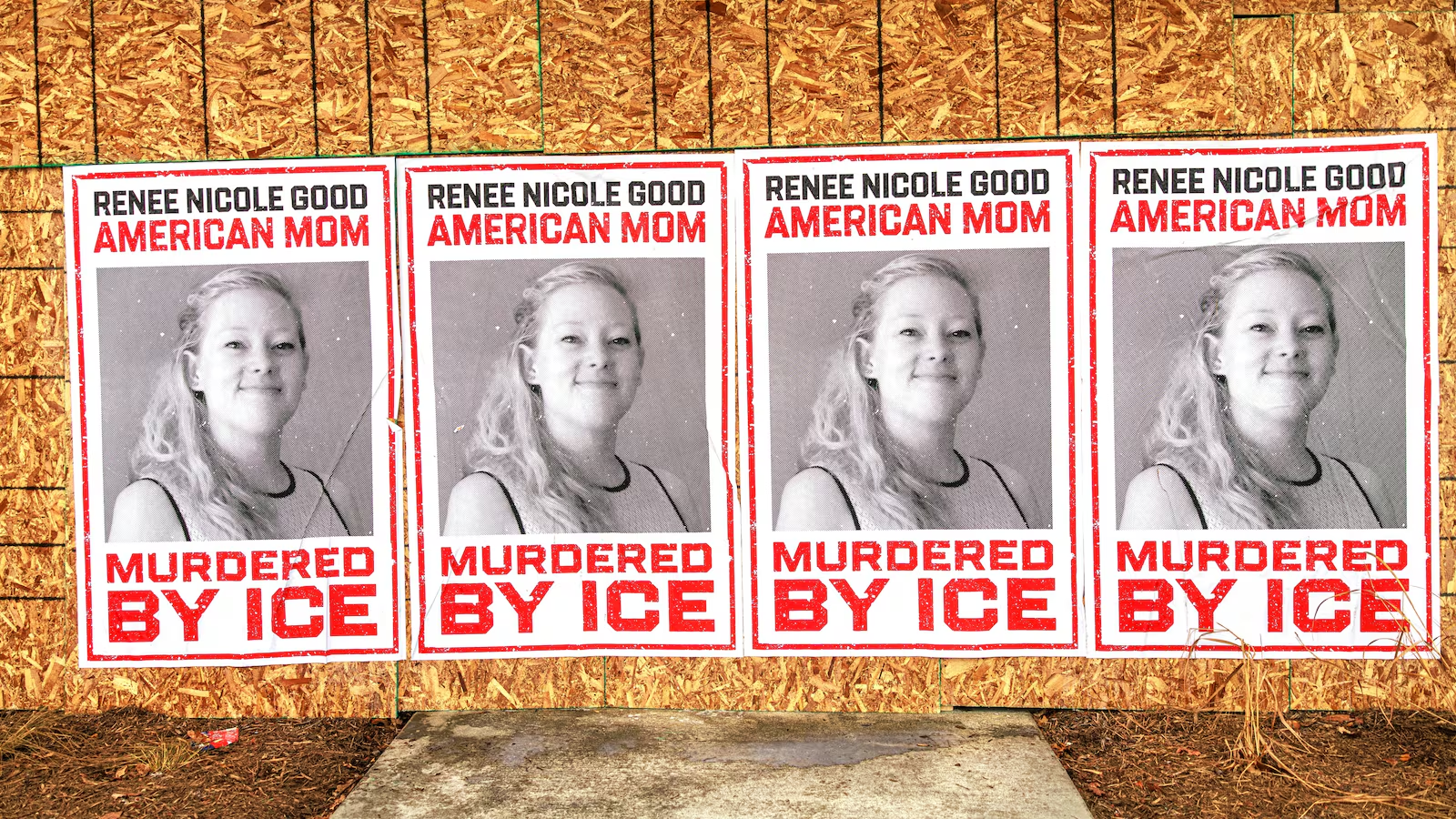
The fatal shooting of a 37-year-old Minneapolis mother by a U.S. Immigration and Customs Enforcement (ICE) agent has not only ignited protests and grief across the country but also shaken the morale within Homeland Security’s ranks, leaving some agents genuinely fearful of public backlash and political fallout.
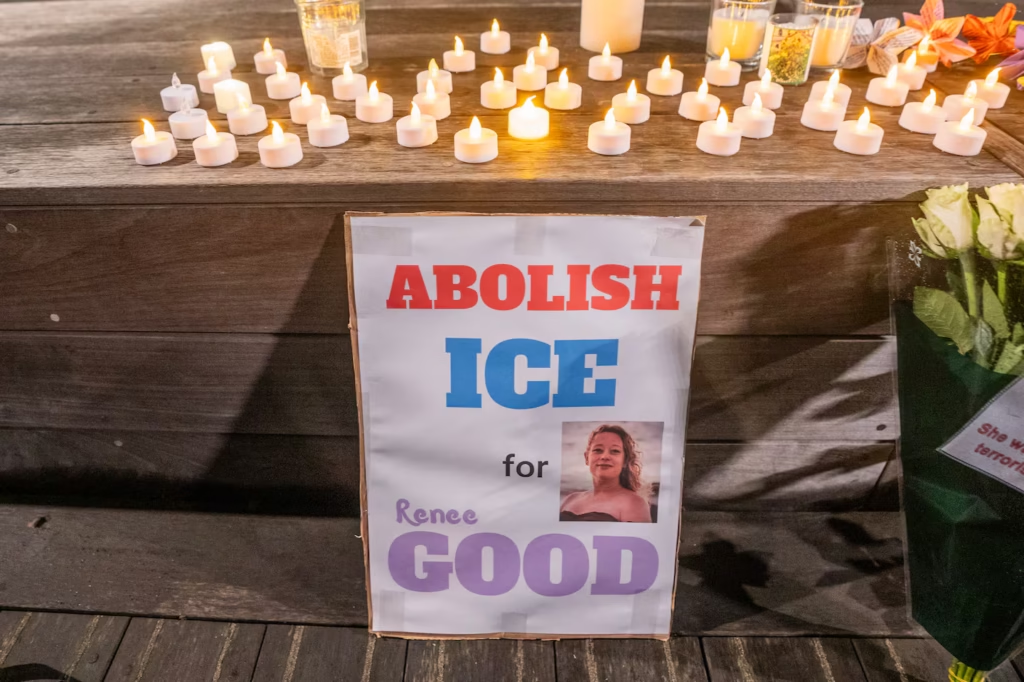
In what has become one of the most controversial enforcement operations of the Trump administration’s second term, the killing of Renée Nicole Good — a mother of three who was shot dead during an ICE operation in Minneapolis on January 7, 2026 — has resurfaced deep divisions over federal immigration policy, force protocols, and agency credibility.
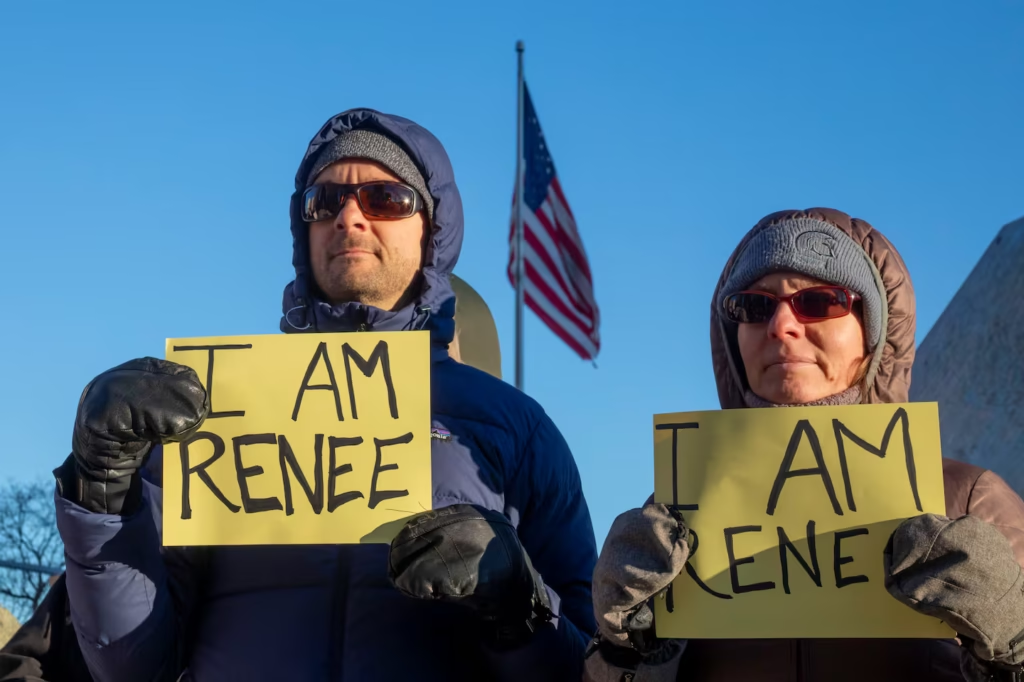
As local leaders, civil rights advocates, and even some federal officials express alarm over how the incident was handled and portrayed, public trust in ICE is plummeting. Experts say this moment could reshape national debates around enforcement powers and the responsibilities of federal law enforcement agencies.
The Minneapolis Incident That Shook a Nation
On a crisp January morning, Renee Nicole Good dropped her six-year-old child off at school and began the drive home with her wife, Becca Good, when the moment turned tragic. Video footage later circulated showing federal agents approaching Good’s vehicle during a broader ICE operation in the residential area of south Minneapolis.
According to federal authorities, Good refused orders to exit the scene and attempted to drive her vehicle in a way they described as threatening. Within moments, an ICE agent fired multiple shots into the car, striking Good and causing a fatal injury. She was pronounced dead later at a local hospital.
But this official account has been widely disputed by eyewitnesses, local leaders, and video analysts. Minneapolis Mayor Jacob Frey publicly challenged the federal narrative, asserting that video evidence did not support claims that Good endangered officers or tried to run them over. “To ICE, get the fuck out of Minneapolis,” Frey reportedly said in response.
The dramatic contradiction between federal statements and local eyewitness accounts has fueled widespread outrage and deep skepticism among the public. Nearly every major local and national news outlet reporting on the story has highlighted conflicting versions of the incident, adding to the controversy.
Homeland Security’s Fractured Response
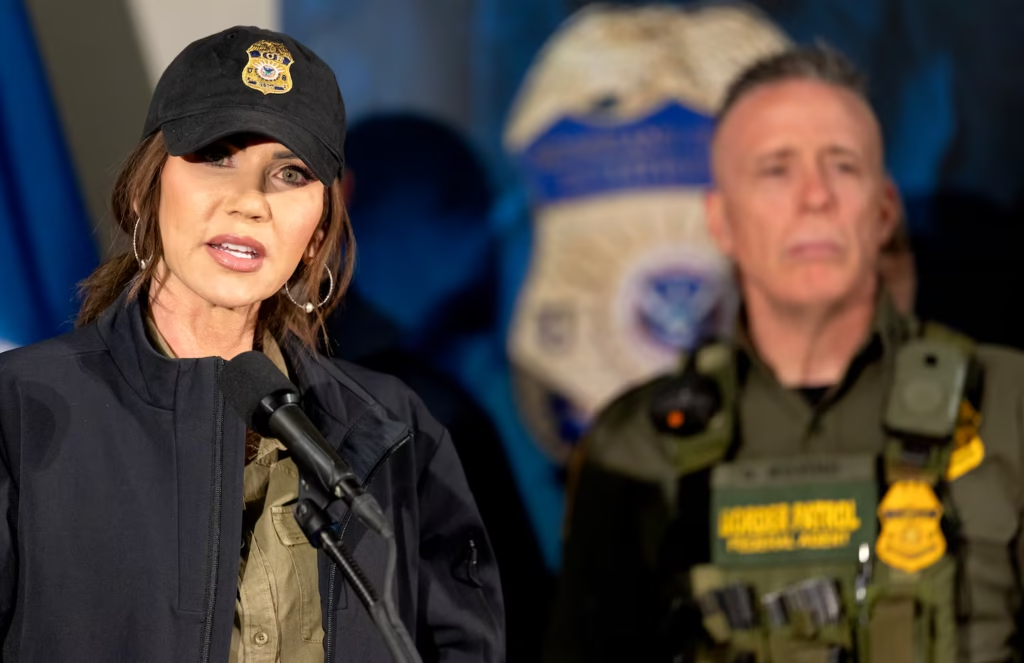
Within hours of the shooting, Homeland Security Secretary Kristi Noem described Good’s actions as “an act of domestic terrorism,” a highly unusual choice of words that stunned observers and many within the federal government itself. Noem’s characterization immediately drew sharp criticism from political opponents, legal experts, and even some national security analysts who said labeling a U.S. citizen a “terrorist” without clear evidence was inappropriate.
Those internal concerns, which were leaked to multiple political news outlets, underscored discomfort among some DHS officials about how quickly and forcefully their leadership moved to defend the agent’s conduct. One source reportedly told The Independent that such language could erode public trust and jeopardize the credibility of ongoing investigations.
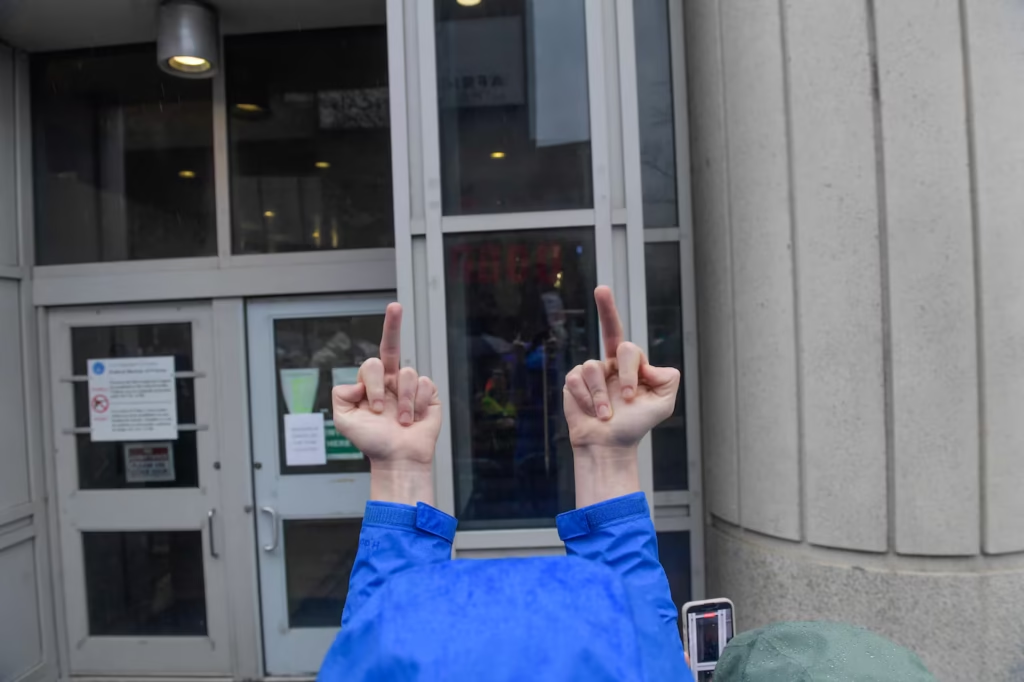
Behind closed doors, some agents have expressed fear that the heightened political scrutiny and growing public anger could make routine enforcement work significantly more dangerous. One former agent said that drivers were making “gun sign” gestures at ICE patrols while passing by — a chilling sign of rising hostility and fear among federal personnel.
This fear is not merely rhetorical. The shift in public sentiment against ICE was so strong that a recent poll — conducted amidst the uproar — showed a sharp drop in approval ratings for the agency, with many Americans questioning its use of force and mission.
Rising Protests and Legal Challenges
Across Minneapolis and beyond, community members took to the streets almost immediately following the shooting. Vigils, peaceful marches, and vocal protests erupted not only in Minnesota but also in cities like Seattle, Portland, and Washington, D.C., where demonstrators called for justice, accountability, and a reevaluation of ICE operations.
Civil liberties groups such as the ACLU mobilized what they described as a nationwide response — holding rallies, issuing press releases, and demanding transparency in the federal investigation. One ACLU spokesperson said these protests aimed to honor Good’s life and advocate against what they view as the normalization of violence by federal law enforcement agencies.
In an unprecedented move, the state of Minnesota — along with the cities of Minneapolis and St. Paul — filed a lawsuit against the federal government, seeking to halt ongoing immigration enforcement efforts that local officials have called a “federal invasion.” The lawsuit argues that the deployment of ICE agents across residential neighborhoods has terrorized residents and undermined local governance.
Minnesota Attorney General Keith Ellison stated that the lawsuit wasn’t just about one tragic event, but about stopping what he described as overly aggressive, militarized federal tactics that endanger ordinary civilians.
Family Grief and Public Reactions
While political leaders and legal experts debated the implications of the shooting, Good’s family spoke publicly about their profound loss. Her relatives described her as a devoted mother, a creative spirit, and a beloved partner who had recently moved to Minnesota with hopes of building a new life.
In emotional statements, extended family members urged the public to approach the tragedy with empathy rather than division. They emphasized that their goal was not to inflame further conflict but to honor Good’s memory and advocate for justice. One relative described her as a woman whose life was “full of heart” and whose absence leaves “an unimaginable void.”
Becca Good, Renee’s wife, also released a heartfelt tribute recounting the day’s events. She said that their intentions were peaceful — that they were in the neighborhood only to support community members and were carrying whistles in solidarity with protesters when the shooting occurred. “We had whistles. They had guns,” she wrote, illustrating the stark imbalance of power and the senselessness of the violence.
National Debate Over Use of Force and Immigration Policy
The Minneapolis shooting has rapidly become more than a local tragedy — it has ignited a broader national debate over the role of federal law enforcement, immigration policy, and the appropriate use of force.
Supporters of the Trump administration argue that ICE agents are confronting increasingly hostile environments and that officers must be prepared to act decisively to protect themselves. National commentators on conservative platforms have framed the incident as a lawful exercise of defensive authority under extreme circumstances.
However, many civil rights advocates, local politicians, and legal scholars heavily dispute that assessment. They assert that disparate narratives and conflicting evidence highlight systemic problems within federal law enforcement culture and accountability frameworks. Critics emphasize that video evidence does not clearly support claims of imminent danger, and they call for a thorough, transparent investigation independent of political influence.
In Washington, state and federal lawmakers are now debating whether changes to ICE’s operational oversight are needed. Some Democratic legislators have proposed reforms aimed at increasing civil rights protections, mandating body-worn cameras for agents, and instituting clearer protocols for use of force in civilian populations.
A Turning Point for Federal Law Enforcement
The Minneapolis shooting that claimed Renee Nicole Good’s life has underscored deep fractures in how Americans view immigration enforcement, law enforcement accountability, and public trust in federal institutions.
What began as a routine ICE operation has rapidly escalated into a national flashpoint — one that exposes conflicting narratives, political tension, and the personal heartbreak of a family now thrust into the spotlight. Whether this tragedy will lead to meaningful reform, increased scrutiny of federal agents, or entrenched polarization remains to be seen.
As public demonstrations continue, legislative debates intensify, and legal battles unfold in courts, the conversation sparked by this shooting is likely to shape America’s approach to immigration enforcement and community policing for years to come.
Subscribe to trusted news sites like USnewsSphere.com for continuous updates.