ICE agent shooter video Minneapolis reveals new footage that has ignited a fierce national debate over the use of deadly force by federal agents during a January 7, 2026, immigration enforcement operation in Minneapolis.
In the aftermath of this controversial shooting, new video evidence, political reactions, legal disputes, and public outcry have all converged to make this incident one of the most discussed law-enforcement events of the year so far.
Video of the Incident Reframes the Narrative
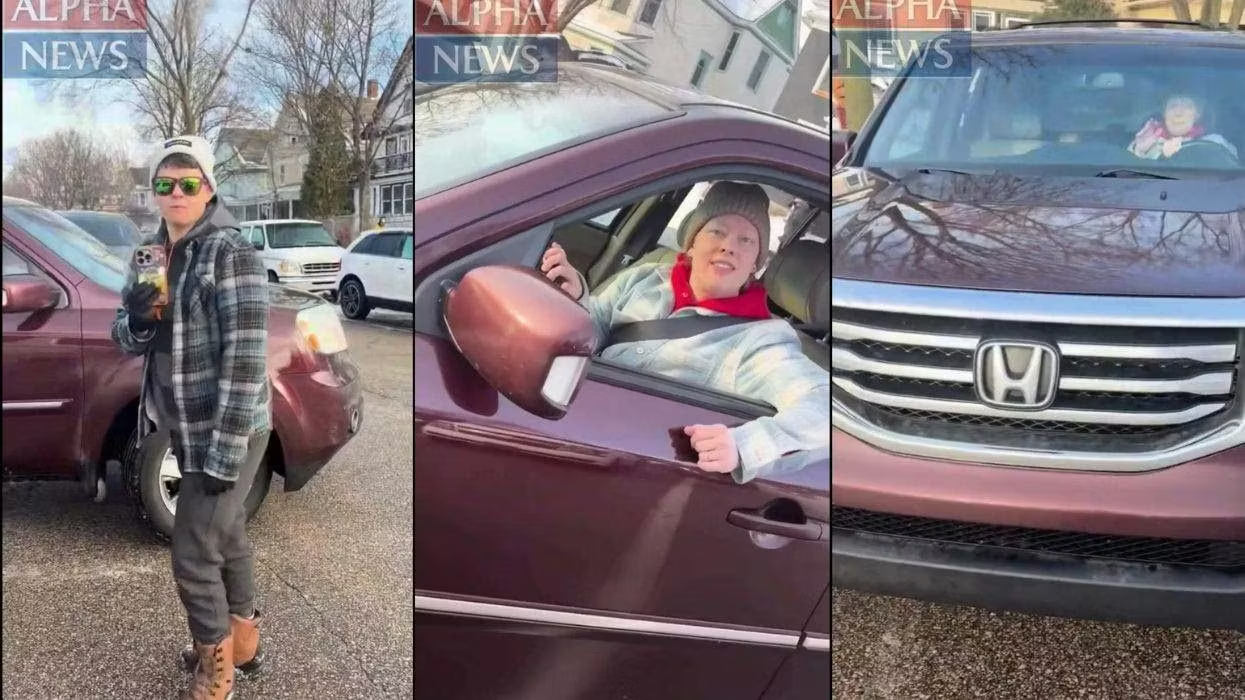
Newly released footage taken from the cellphone of the Immigration and Customs Enforcement (ICE) agent involved in the Minneapolis shooting sharply contradicts key elements of the government’s initial public explanation. In a video shared widely on social platforms and obtained by multiple news organizations, the moments leading up to the fatal shots show the agent, identified as Jonathan E. Ross, filming as he approaches a maroon SUV driven by Renee Nicole Good.
The video frames captured from Ross’s perspective show Good speaking calmly at first, even saying, “I’m not mad at you,” before the confrontation turned deadly. Footage suggests the agent was stepping away from the vehicle’s path when he fired three shots, a fact that contradicts early official statements claiming the agent fired only when the vehicle was advancing on him.
This cellphone footage has become central to national dialogue because it offers an unfiltered look at what happened — and shows details not fully acknowledged in government statements. The video does not include body camera footage or independent verification of every angle, but it nevertheless raises questions about whether the federal narrative of self-defense is accurate.
Who Was Renee Good — A Life Cut Short
Renee Nicole Good was a 37-year-old mother of three, a poet, and a longtime Minneapolis resident. Friends and family remember her as a gentle, creative, and community-oriented individual — someone deeply committed to her children and neighbors. Many described her as nonviolent and kind, standing in stark contrast to the images of conflict that now surround her final moments.
On the morning of January 7, Good had stopped in a residential area of south Minneapolis, just blocks from her home, during an ICE enforcement action taking place in the neighborhood. Videos show her vehicle stopped in the street before federal agents approached. According to some accounts, Good was attempting to ask the agents to move past her so that traffic could continue when the encounter escalated.
Her death has triggered widespread grief among her family and community. In public statements, Good’s wife, Rebecca Good, emphasized Renee’s compassionate nature and denounced narratives suggesting she was violent or aggressive. These personal tributes have been widely shared and deeply influential to many observers who see the event as emblematic of broader issues with federal force and immigration enforcement.
Conflicting Accounts: Federal Officials vs. Local Authorities
Federal officials, including the Department of Homeland Security (DHS) and Vice President JD Vance, have defended Ross’s actions, asserting that he acted in self-defense after Good drove her SUV toward him during the standoff. These officials have described the incident as a necessary use of force in response to a perceived threat.
However, local leaders, including Minneapolis Mayor Jacob Frey and Minnesota Governor Tim Walz, have publicly disputed this interpretation. They argue that early federal messaging mischaracterized the situation and that the state deserves full transparency and participation in the investigation — a request complicated by the FBI’s decision to retain exclusive control over key evidence.
This conflict has widened into a broader debate about jurisdiction and accountability. State officials have called for independent oversight, while federal leaders defend the actions of their agents. The result is a deeply polarized public conversation that touches not only on this specific incident but on broader questions about immigration enforcement policy and federal-local law enforcement cooperation.
Public Reaction and National Protests
The release of multiple videos from different vantage points — including bystanders, the agent’s own phone, and local sources — has fueled public protest and media scrutiny across the country. In Minneapolis, crowds gathered to demand accountability and call for changes to how federal agencies operate within city limits.
Social media platforms have been flooded with reactions from advocates, activists, and commentators from all political sides. Some groups argue that the video shows excessive use of force and demand charges against the officer, while others support the DHS’s version of self-defense and condemn the violence directed at federal personnel during protests. This intense online discussion has kept the issue at the forefront of national attention.
The incident has also ignited conversations about immigration policy, policing standards, and racial justice. For many Americans already skeptical of law enforcement practices, particularly in communities of color, Good’s death has become another flashpoint, prompting calls for systemic reform and oversight.
Legal and Political Repercussions Underway
Legal experts note that investigations into fatal shooting cases involving federal agents often involve multiple layers of review — including criminal inquiry, internal agency investigation, and potential civil lawsuits. In this case, Minnesota authorities have stated they are launching a criminal investigation, a move complicated by the federal government’s control of critical evidence and cooperation.
The political consequences are also significant. Elected officials from both major parties have weighed in, with Democrats criticizing the use of force and Republican leaders insisting that agents followed procedure under extreme circumstances. The escalating dispute has even impacted funding negotiations related to the Department of Homeland Security, with some lawmakers threatening to condition budget allocations on greater transparency.
Legal analysts predict that the handling of this case could set precedents for how future incidents involving federal agents are reviewed, particularly in contexts where local law enforcement and federal agencies have overlapping jurisdiction. Civil rights groups and immigration advocacy organizations have already signaled intentions to pursue legal action on behalf of Good’s family.
What This Means for Law Enforcement Practices
The Minneapolis ICE shooting has triggered widespread calls for reform in the way federal agents engage with civilians, especially in densely populated urban areas. Critics argue that current protocols do not sufficiently prioritize de-escalation or protect unarmed individuals caught in enforcement operations.
Supporters of stronger federal enforcement counter that agents often face unpredictable danger and must have the authority to protect themselves and others. This debate has now been amplified beyond Minneapolis, with similar incidents and protests reported in cities like Portland and Seattle in recent days.
National dialogue is likely to continue for months or years, with policy reforms, training changes, and legal outcomes all shaping public trust in federal law enforcement agencies. As the investigation progresses, more details will emerge — and they will undoubtedly influence future discussions about federal power, civil liberties, and accountability.
Conclusion
The ICE agent shooter video in the Minneapolis incident has become a defining moment in the ongoing conversation about law enforcement, immigration policy, and use of force in the United States. With newly released cellphone footage raising fundamental questions about the official narrative, reactions have ranged from widespread public protest to legal and political challenges at the highest levels of government.
At its core, this tragedy highlights deep national tensions over federal authority and community safety. As state and federal investigations continue, and as families, officials, and citizens grapple with the implications, the way this story unfolds will likely influence law enforcement policy and public trust for years to come.
Subscribe to trusted news sites like USnewsSphere.com for continuous updates.