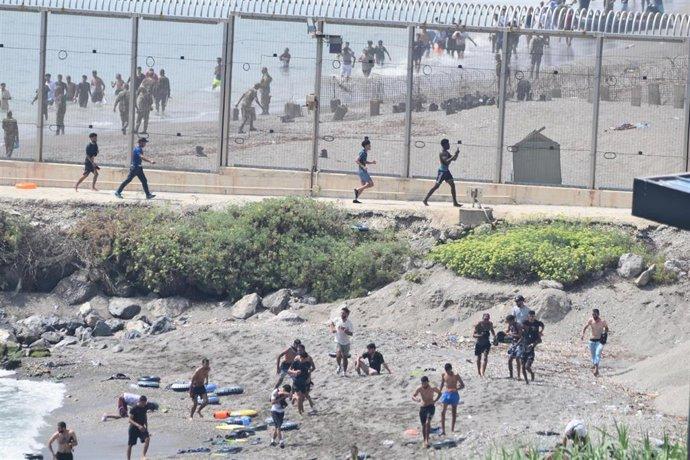
Spain rejects discussing sovereignty of its North African enclaves with Morocco, putting territorial integrity at the center of a rapidly developing diplomatic dispute between Madrid and Rabat. The latest confrontation follows comments by Morocco’s Justice Minister Abdellatif Ouahbi, who revived Rabat’s long-standing claim to Ceuta and Melilla shortly after a major migration crisis at the Ceuta border. Spain has responded that the sovereignty of the two cities is not open to negotiation.
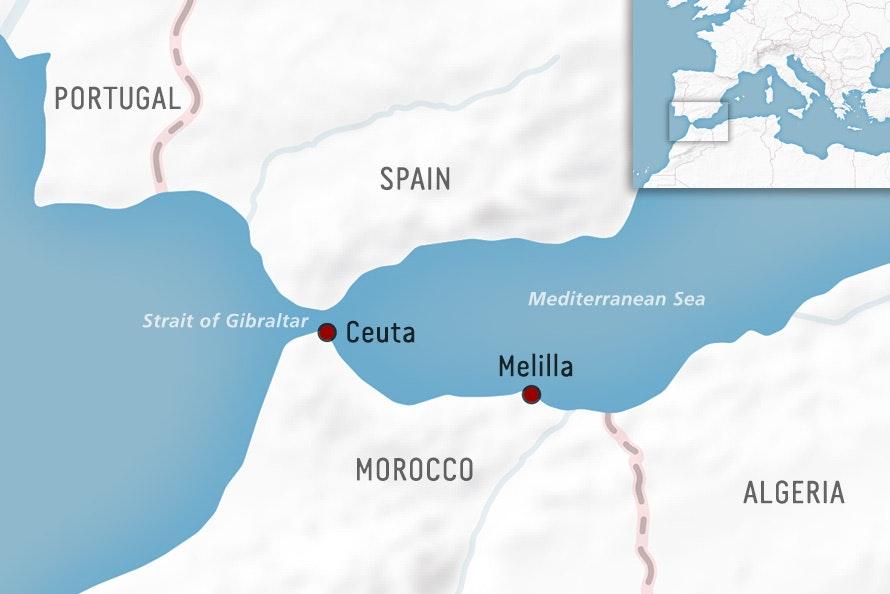
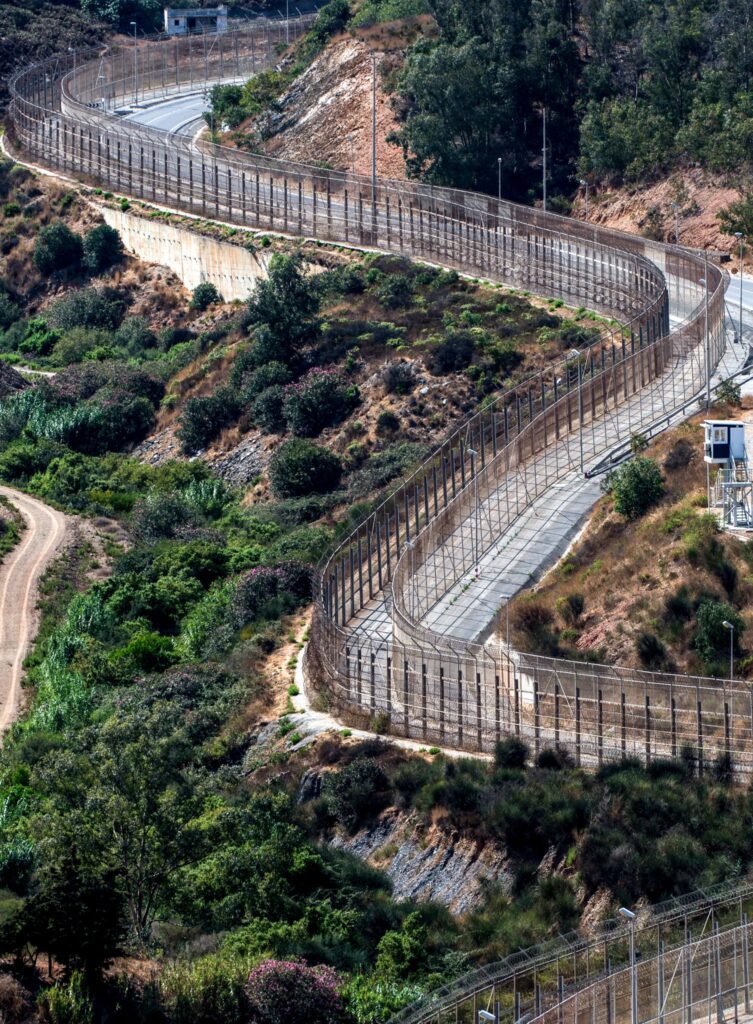
The dispute is unfolding against a much broader backdrop. Ceuta and Melilla are strategically important Spanish territories on Africa’s Mediterranean coast, and their borders with Morocco are also external borders of the European Union’s Schengen area. In late July, tens of thousands of migrants attempted to reach Ceuta from Morocco amid misinformation circulating online, creating a security and humanitarian emergency. Spain subsequently reinforced the border, while Morocco increased its own security presence to prevent another large-scale crossing.
The issue has now moved beyond migration policy. It touches on territorial sovereignty, Spain-Morocco relations, European border security, migration cooperation and the future of one of the Mediterranean’s most sensitive frontiers. Here is what has happened, why Ceuta and Melilla matter, and what could come next.
Spain Draws a Red Line Over Ceuta and Melilla
Spain’s position is unequivocal: Madrid considers Ceuta and Melilla integral parts of Spanish territory and says their sovereignty cannot be the subject of negotiations with Morocco. Spanish Defence Minister Margarita Robles strongly rejected any suggestion that the status of the cities could be questioned, while Spain’s Foreign Ministry reiterated that the country’s territorial integrity is non-negotiable.
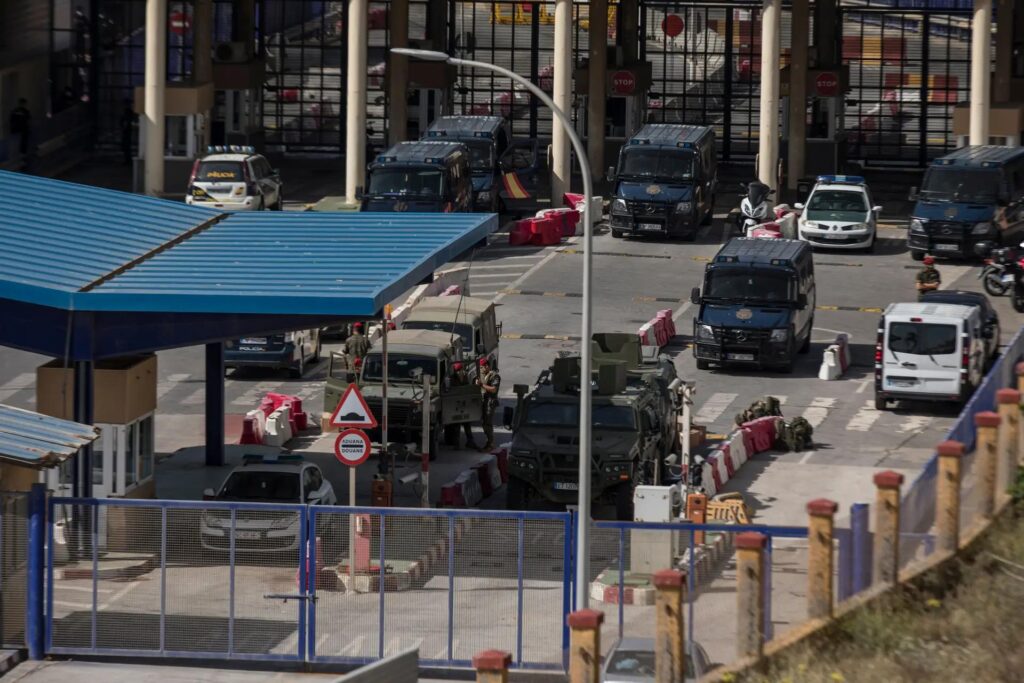
The dispute is not new. Morocco has historically claimed Spain’s North African territories, while Spain maintains that its sovereignty over Ceuta and Melilla has deep historical and legal foundations. Spain’s position is also reflected in its domestic legal framework, where both territories are autonomous cities. Spanish parliamentary material traces Ceuta’s modern Spanish status through historical treaties and dates Melilla’s incorporation into Spanish rule to the late 15th century.
International legal documentation also records Spain’s position. In a declaration concerning the UN Convention on the Law of the Sea, Spain stated that Ceuta, Melilla and several smaller North African territories are integral parts of Spain and that Madrid exercises sovereignty over them and their associated marine areas.
That history explains why the latest comments from Rabat have produced such a firm reaction in Madrid. For Spain, opening formal negotiations over sovereignty would represent a fundamentally different issue from ordinary discussions about migration, trade or border management.
Why Morocco’s Claim Matters Now
The timing of the renewed sovereignty debate is particularly important. Morocco’s latest public raising of the issue came soon after the enormous migration crisis around Ceuta at the end of July. Reuters reported that the comments by Ouahbi represented the first public raising of the territorial issue by Morocco since that crisis.

Morocco and Spain have nevertheless developed substantial practical cooperation in recent years, particularly over migration and border security. That makes the sovereignty dispute more complicated. Madrid and Rabat need each other to manage migration flows across the Mediterranean, yet territorial claims remain an unresolved source of tension.
The disagreement is also occurring alongside other disputes over migration policy. Moroccan officials have criticized Spain over the treatment and potential regularization of migrants, while Rabat has pressed Madrid over Moroccan minors who remain in Ceuta. Morocco has also raised concerns about cooperation under bilateral agreements, adding another layer to an already difficult diplomatic relationship.
For European policymakers, the concern is that a disagreement over territory could make cooperation on migration more difficult. Ceuta and Melilla are not simply Spanish cities; they sit at the intersection of African migration routes and Europe’s external border system.
The Ceuta Migration Crisis Changed the Conversation
The immediate trigger for the latest security environment was the extraordinary migration surge into Ceuta on July 30. Estimates have varied depending on the stage of the crisis and the methodology used. Spanish authorities later said roughly 50,000 people crossed irregularly during the episode and reported that more than 48,000 had been returned to Morocco within 48 hours. Other reports around the height of the incident placed the number of attempted crossings closer to 60,000 or 72,000.
The human cost was severe. Different reports have cited different death tolls, reflecting the difficulty of establishing an exact figure during a chaotic mass crossing involving both land and sea routes. Reuters reported at least 96 deaths, while other reporting has cited substantially higher figures. This discrepancy is important: readers should treat individual death-toll figures cautiously until authorities and independent investigators establish a consistent count.
Spanish officials blamed human-trafficking networks and misinformation surrounding a recent Supreme Court ruling. According to the Spanish government, the ruling was incorrectly presented online as meaning people who reached Ceuta could automatically remain in Spain. Madrid says the judgment did not create a general right to remain and instead required the appropriate legal procedure to be followed for people intercepted at sea.
The situation has remained volatile. On August 15, Moroccan authorities stopped another attempted mass crossing near Ceuta after messages circulated online encouraging people to approach the border. Reports said hundreds were intercepted or detained, demonstrating that the July crisis has not completely disappeared from the security landscape.
What This Means for You
For travelers, residents and businesses connected to Spain, Morocco or the wider Mediterranean region, the most immediate consequence is heightened border security. Ceuta and Melilla remain heavily protected, and people should not assume that viral social-media claims about open borders, easier entry or automatic legal status are accurate.
Spain has also emphasized that Ceuta and Melilla operate under a specific Schengen arrangement. The Spanish Foreign Ministry says the cities are subject to border checks and an additional control system when people travel onward by sea or air to mainland Spain. Irregular entry into Ceuta does not automatically provide a right to travel to mainland Spain or move freely elsewhere in the Schengen area.
For European travelers, companies and logistics operators, the bigger issue is predictability. Any sustained deterioration in Spain-Morocco relations could mean tighter border controls, additional inspections, delays and stronger security measures around crossings. Businesses that depend on smooth movement between Morocco and Spanish territories therefore have a direct interest in diplomatic stability.
The humanitarian dimension is equally important. The latest crisis has demonstrated how quickly misinformation, economic pressure and migration routes can combine to produce a dangerous situation. The deaths reported during the July crossings show that border policy is not only a geopolitical question but also a matter of life and death.
Investor Takeaway
There is no immediate reason to treat the sovereignty dispute as a conventional financial-market event, but investors should pay attention to its potential effects on trade, tourism, transportation, security spending and the broader relationship between Spain and Morocco.
Spain and Morocco have important economic links, while the two countries also cooperate on migration management and security. A prolonged diplomatic deterioration could increase costs for businesses operating near the border and could affect tourism and cross-border commerce if restrictions become more severe.
The security industry could also see increased demand if Spain and Morocco maintain elevated border deployments, surveillance systems, barriers and maritime monitoring. However, investors should avoid assuming that higher security spending automatically translates into attractive investment opportunities. Government budgets, procurement decisions and the duration of the security measures would determine the real economic impact.
The more significant investment consideration is the risk of escalation. If the territorial dispute remains rhetorical while practical cooperation continues, the economic effect could remain limited. If sovereignty rhetoric begins to undermine migration agreements, border cooperation or bilateral trade, the consequences could become more substantial.
For investors watching Europe, North Africa and Mediterranean logistics, the key indicators are therefore not simply political statements. Watch border-crossing restrictions, bilateral agreements, migration numbers, Spanish and Moroccan security deployments, tourism flows and any changes affecting trade between the two countries.
Future Outlook and Conclusion
The most likely near-term scenario is continued diplomatic tension without a formal sovereignty negotiation. Spain has made clear that it does not intend to discuss transferring or sharing sovereignty over Ceuta and Melilla, while Morocco has maintained its longstanding territorial position. That leaves both governments with a difficult balancing act: preserve cooperation where it is mutually beneficial while avoiding concessions on issues considered politically fundamental.
The migration issue will probably remain the biggest practical test. Morocco dramatically increased security around Ceuta and Melilla ahead of the August 15 date after social-media messages encouraged another mass crossing. The authorities’ response showed that both countries understand the potential for another sudden influx to become a major security and humanitarian crisis.
There is also a wider European dimension. Ceuta and Melilla are connected to the EU’s external border system, meaning developments there can quickly become a European political issue. Spain’s experience during the July crisis has already renewed debate over burden-sharing, migration policy and the responsibilities of EU member states toward external borders.
For Morocco, the challenge is equally complex. Rabat wants stronger recognition of its interests and has historically objected to Spanish control of Ceuta and Melilla. At the same time, Morocco has a strong practical interest in maintaining cooperation with Spain and Europe on migration, security and economic relations. Escalating the territorial dispute too far could therefore create costs for Rabat as well as Madrid.
The coming weeks will show whether the latest sovereignty dispute remains political rhetoric or develops into a broader diplomatic confrontation. For now, Spain’s message is clear: Ceuta and Melilla are not up for negotiation. Morocco’s position remains fundamentally different. Between those two positions lies a highly sensitive border where migration, security, history and European politics meet.
Readers should also be cautious with rapidly changing numbers surrounding the July migration crisis because official and media estimates have differed. The strongest picture comes from comparing government statements, established international news agencies and independent reporting rather than relying on individual viral posts.
Related video and visual reporting
For readers who want to see the border situation rather than only read about it, these recent video reports provide useful visual context:
- Euronews: Thousands of migrants storm Ceuta border from Morocco
- Euronews: 60,000 migrants cross into Spain’s Ceuta from Morocco
- Euronews: Spain deploys troops to Ceuta after chaotic crossings
- The Guardian: Tens of thousands of migrants cross into Spanish enclave Ceuta
- CBS News video report via Yahoo: Why did a wave of migrants cross into Ceuta?
Bottom line: Spain and Morocco are facing a renewed dispute over Ceuta and Melilla at precisely the moment when cooperation is most important. The sovereignty issue is deeply rooted in history, but the immediate risks involve border security, migration, humanitarian conditions and the stability of Spain-Morocco relations. Whether the two governments can keep those practical areas of cooperation separate from their territorial disagreement will be one of the most important questions to watch.
Subscribe to trusted news sites like USnewsSphere.com for continuous updates.