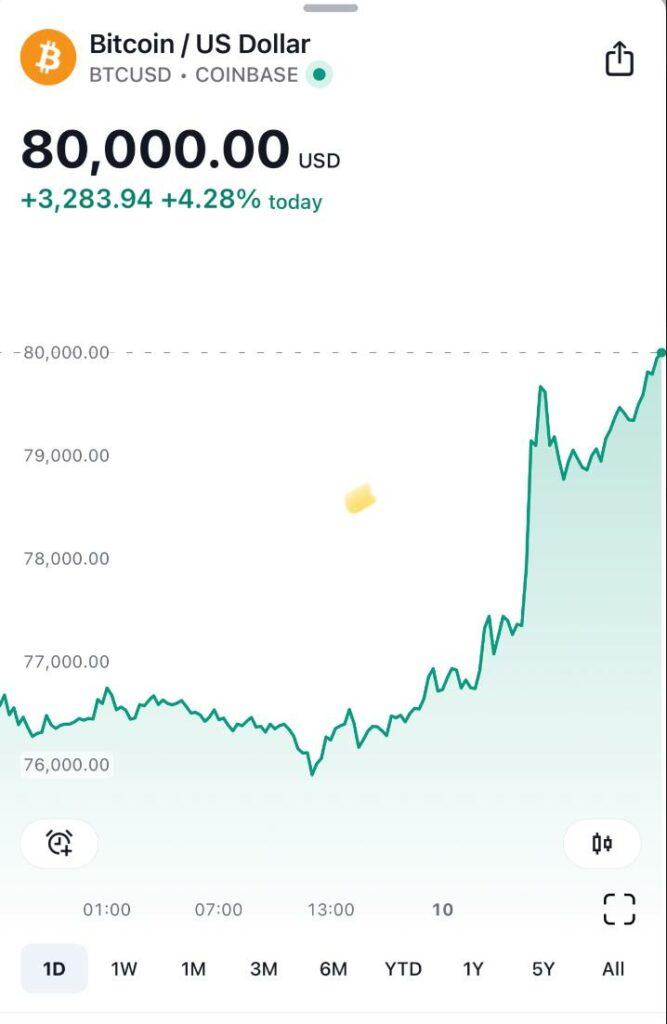
Bitcoin is surging again, but the latest rally is proving far more complicated than a simple bullish comeback. BTC climbed above $80,000 in late August and briefly traded above $81,000 before the market turned more cautious following Federal Reserve Chair Kevin Warsh’s Jackson Hole remarks. By August 30, Bitcoin was trading around the $78,000 area, leaving investors with a difficult question: Is this the beginning of a larger recovery, or simply another sharp rally inside a volatile market?
The answer depends on several forces moving at the same time. U.S. spot Bitcoin ETF demand has returned strongly, the dollar has faced renewed pressure, Treasury policy has raised questions about future liquidity, and investors are increasingly treating Bitcoin as part of a broader “debasement” or alternative-asset trade. At the same time, higher inflation and the possibility of tighter Federal Reserve policy remain serious obstacles.
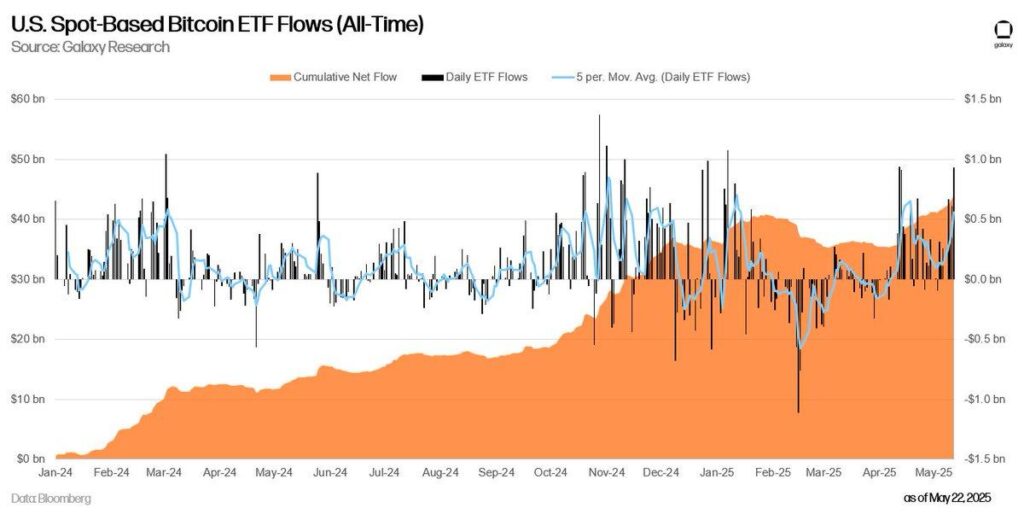
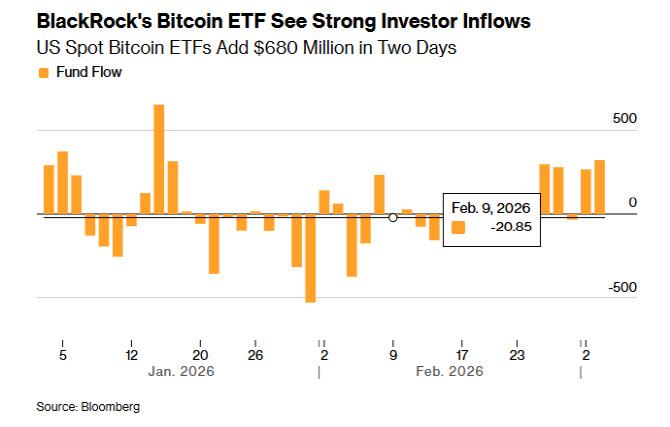
Recent market data show just how quickly sentiment has changed. Bitcoin’s August recovery pushed it from the mid-$70,000s to above $81,000, while U.S. spot Bitcoin ETFs recorded eight consecutive sessions of inflows totaling about $2.8 billion. August ETF flows had already exceeded $3 billion with one trading day remaining, according to CoinDesk.
But the rally is no longer moving in a straight line. The August 28 session produced a sharp reversal, with Bitcoin falling from above $81,000 toward the $77,000-$78,000 area. That reaction matters because the Federal Reserve is becoming the market’s central variable again.
Why Bitcoin Is Rising: ETF Demand, Dollar Weakness and the Liquidity Trade
One of the clearest explanations for Bitcoin’s rebound is renewed institutional demand through U.S.-listed spot ETFs. These products give traditional investors exposure to Bitcoin without requiring them to directly hold or manage the cryptocurrency, making ETF flows an important real-time indicator of institutional appetite.

CoinDesk reported that U.S. spot Bitcoin ETFs absorbed roughly $2.8 billion over eight consecutive sessions through August 28, while August inflows had crossed $3 billion. Other market coverage also showed approximately $2.5 billion entering spot Bitcoin ETFs over seven trading sessions.
That demand is important because it creates a different market structure from earlier Bitcoin rallies that were driven heavily by retail speculation and leverage. When large amounts of capital enter regulated investment vehicles, the effect can be more persistent. It does not guarantee higher prices, however. ETF investors can also sell rapidly when macroeconomic conditions deteriorate.
The second major factor is the U.S. dollar. Bitcoin tends to benefit when investors become concerned about the future purchasing power of fiat currencies or when the dollar weakens against major currencies. Reuters reported that Bitcoin’s move above $80,000 was supported by a softer dollar and growing concerns about currency debasement.
That theme has also pulled gold higher. Bitcoin and gold rising together suggests that at least part of the current demand is not simply a “risk-on crypto trade.” Investors are increasingly looking at scarce assets as potential alternatives when concerns about government debt, inflation and currency purchasing power increase.
The Fed Just Changed the Tone—and Investors Are Paying Attention
The biggest near-term threat to Bitcoin’s bullish momentum is Federal Reserve policy. At the Jackson Hole economic symposium on August 28, Fed Chair Kevin Warsh emphasized that inflation remains too high and that the central bank’s 2% inflation objective remains firm.
Warsh said the Fed’s preferred PCE inflation measure was running at 3.7% over 12 months and 4.1% over six months, substantially above the 2% target. He also argued that broad financial conditions were not particularly restrictive, meaning policymakers have less reason to assume that existing monetary conditions are already doing enough to restrain demand.
That is a problem for Bitcoin because crypto markets have historically been highly sensitive to changes in liquidity expectations. Lower interest rates can encourage investors to move toward higher-risk assets. Higher rates can do the opposite by making cash and government bonds more attractive while increasing the discount rate applied to speculative assets.
Market expectations reacted quickly. Reuters reported on August 30 that the probability of a Federal Reserve rate hike at the September meeting had risen to 55.7% from 35.4% after Warsh’s comments. That is a market-implied probability rather than a promise from the Fed, but it demonstrates how quickly expectations have shifted.
The next major test could therefore come from economic data rather than another crypto-specific headline. The upcoming U.S. employment report and inflation data will help determine whether markets continue pricing tighter policy or return to expectations for easier monetary conditions.
Treasury Yields, the Dollar and Risk Appetite Are the Next Test
Treasury markets are another critical part of the Bitcoin story. On August 19, the U.S. Treasury announced that it would at least double the maximum size of certain longer-dated Treasury buyback operations, from $2 billion to at least $4 billion per operation, beginning September 9 and continuing through the remainder of the refunding quarter.
The announcement was interpreted by some investors as supportive of market liquidity, although it is important not to confuse Treasury buybacks with Federal Reserve quantitative easing. Treasury buybacks are designed to manage the government’s outstanding debt and support liquidity in specific Treasury sectors; they are not the same mechanism as the Fed creating reserves to purchase assets.
Nevertheless, the timing has mattered for markets. Bitcoin, gold and other alternative assets rallied as investors focused on the potential implications of government debt management, liquidity and the long-term purchasing power of the dollar. MarketWatch noted that Bitcoin had outperformed major U.S. stock indexes and gold over a six-month period as it moved through $80,000.
Treasury yields could now become one of the most important signals for crypto traders. If yields rise sharply because investors expect inflation and higher Fed rates, Bitcoin could struggle. If yields stabilize or fall while ETF inflows remain strong, the environment could become considerably more supportive.
This is why Bitcoin’s next move cannot be analyzed by looking at the BTC chart alone. The dollar, Treasury market, Fed expectations, equities and credit conditions are increasingly part of the same trade.
Bitcoin Support and Resistance: The Levels Investors Are Watching
Bitcoin’s technical picture has improved dramatically during August, but the rally has not yet fully escaped the risk of another reversal. BTC pushed above $80,000 and reached roughly $81,300 in late August before falling back. TradingView highlighted the $81,000 area as an important technical test, while other recent market coverage has focused on the rejection around $82,500.
The first major zone to watch is approximately $80,000-$81,300. A decisive move above that region, particularly if accompanied by strong ETF inflows and improving macroeconomic conditions, would strengthen the argument that Bitcoin’s recovery is becoming a larger trend rather than simply a short squeeze.
Below the market, the $77,000-$78,000 area is an important near-term support zone. Bitcoin recently traded in that region after its post-Jackson Hole pullback. A sustained break below it would indicate that buyers are losing some control.
The next area is approximately $73,000-$75,000, which has acted as an important zone during the recent recovery. A deeper move beneath that area would substantially weaken the bullish structure and could reopen the door toward lower support levels.
These are market zones rather than guaranteed turning points. Bitcoin can move thousands of dollars within hours, especially when macroeconomic data, ETF flows or leveraged positions trigger forced buying or selling.
The bullish thesis would become considerably stronger if BTC can reclaim and hold above $81,000-$82,500 while ETF inflows remain positive. Conversely, a sustained breakdown through the mid-$70,000s, especially alongside rising Treasury yields and a stronger dollar, would provide a much more serious warning.
What This Means for You: Investor Takeaway and Future Outlook
For investors, the most important message is that Bitcoin’s rally has genuine fundamental support—but it is not risk-free. ETF inflows provide evidence of renewed institutional demand, while the weaker-dollar and alternative-asset narrative has created another source of buying pressure. August’s price recovery also shows that investors were willing to return to crypto after a major decline from Bitcoin’s previous highs.
However, investors should not ignore the macroeconomic warning signs. Warsh’s message was clear: inflation remains above the Fed’s objective, financial conditions are not especially restrictive, and policymakers are prepared to respond if price pressures fail to improve. That creates a potentially uncomfortable environment for an asset as volatile as Bitcoin.
The next phase of the Bitcoin market could therefore be decided by a tug-of-war between institutional demand and monetary policy.
If ETF inflows continue, the dollar remains soft, Treasury yields stabilize and investors maintain appetite for alternative assets, Bitcoin could make another attempt at the $81,000-$82,500 resistance zone. A successful breakout could put the psychologically important $85,000 level into focus before the market begins thinking seriously about the next major milestone.
But if the Fed remains hawkish, Treasury yields climb, the dollar strengthens and ETF flows reverse, Bitcoin could quickly lose momentum. The biggest warning would be a sustained breakdown below the mid-$70,000s accompanied by falling institutional demand.
The future outlook is therefore cautiously bullish rather than blindly bullish. Bitcoin has demonstrated that buyers are willing to step back into the market, but the rally now needs confirmation. The coming U.S. jobs data, inflation readings, Federal Reserve expectations, Treasury yields and daily ETF flows may matter more than another sensational crypto headline.
For investors watching Bitcoin from the sidelines, the key question is no longer simply whether BTC can rise. It is whether the market can maintain demand when monetary policy becomes less friendly.
That distinction could determine whether the August rally becomes the foundation of a larger recovery—or another temporary surge followed by a painful correction.
Important: Bitcoin is highly volatile and this article is for news and educational purposes, not personalized investment advice. Investors should consider their own risk tolerance and financial circumstances before making decisions.
Recent sources coverage reviewed:
- Reuters — Bitcoin rises above $80,000 as soft dollar and debasement fears boost momentum
- Federal Reserve — Kevin Warsh’s Jackson Hole keynote remarks
- U.S. Treasury — Increased long-end Treasury buybacks beginning September 9
- CoinDesk — Bitcoin ETF inflows and Jackson Hole market coverage
- CoinDesk — Live Bitcoin and ETF market updates
- Reuters — Global markets and the dollar-debasement trade
- YouTube — Recent Bitcoin market-cycle analysis
- YouTube — Bitcoin Asia 2026 market coverage and interviews
Subscribe to trusted news sites like USnewsSphere.com for continuous updates.