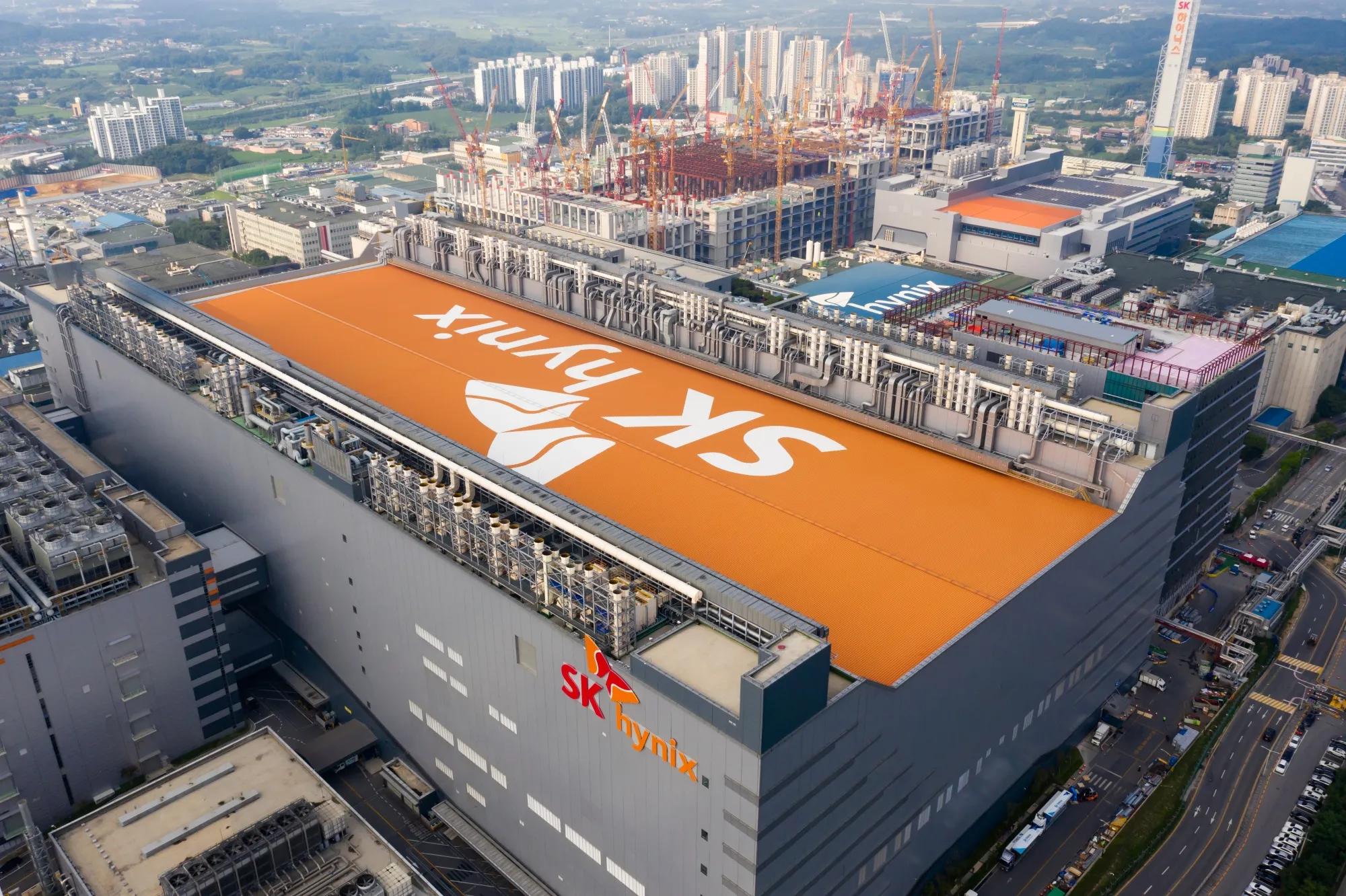
SK Hynix stock is back in focus for U.S. investors after the South Korean memory-chip giant announced a 40 trillion won, or about $28.6 billion, share-buyback and cancellation program that ranks among the largest corporate buybacks in South Korea. The company plans to repurchase the shares between August 20 and November 19, 2026, and cancel them rather than simply holding them as treasury stock.
The announcement arrives at an important moment for the semiconductor industry. SK hynix shares had recently suffered a sharp decline after reaching record levels earlier in the year, as investors became increasingly nervous about whether the extraordinary AI investment cycle can continue at its current pace. Reuters reported that the stock had fallen nearly 10% before the buyback announcement.
For investors in Nvidia, AMD, Broadcom and Micron, the development matters because SK hynix sits directly inside the AI infrastructure supply chain. High-bandwidth memory, or HBM, is essential for many advanced AI accelerators, and SK hynix has positioned itself as one of the industry’s leading suppliers.
The buyback therefore sends two messages at once.
The first is financial: management believes its shares are undervalued enough to justify returning a huge amount of capital to shareholders.
The second is strategic: SK hynix continues to invest heavily in the memory infrastructure needed for the next phase of AI computing.
That combination makes the announcement much more significant than a normal corporate buyback.
Why SK Hynix Announced a $28.6 Billion Buyback
SK hynix’s board approved the purchase and cancellation of 40 trillion won of shares, equivalent to roughly $28.6 billion. The company plans to buy approximately 24.07 million common shares through the open market before canceling them.
The program represents roughly 3.3% of the company’s outstanding shares, according to reporting on the announcement. Because the repurchased shares will be canceled, the number of shares remaining in circulation will decline.
That can be beneficial to existing shareholders.
If a company earns the same amount of money but has fewer shares outstanding, earnings per share can increase because profits are divided among fewer shares. A buyback can therefore improve per-share financial metrics even without an increase in total company earnings.
But the more important question is why SK hynix believes buying its own stock is attractive right now.
The company has argued that its intrinsic value is not fully reflected in the share price after the recent decline. It also has a strong balance sheet, with net cash of roughly 69 trillion won at the end of the second quarter.
SK hynix also said it plans to return more than 50% of cumulative free cash flow to shareholders from 2025 through 2027 through dividends and buybacks. That makes the latest announcement part of a broader shareholder-return strategy rather than an isolated event.
For investors, that distinction matters.
A company that aggressively repurchases shares while maintaining strong cash generation is signaling confidence in its financial position. However, investors should still examine whether the buyback is being funded from sustainable free cash flow rather than from temporary industry conditions.
The AI Memory Connection Is the Real Story
SK hynix is not simply a traditional memory-chip company anymore.
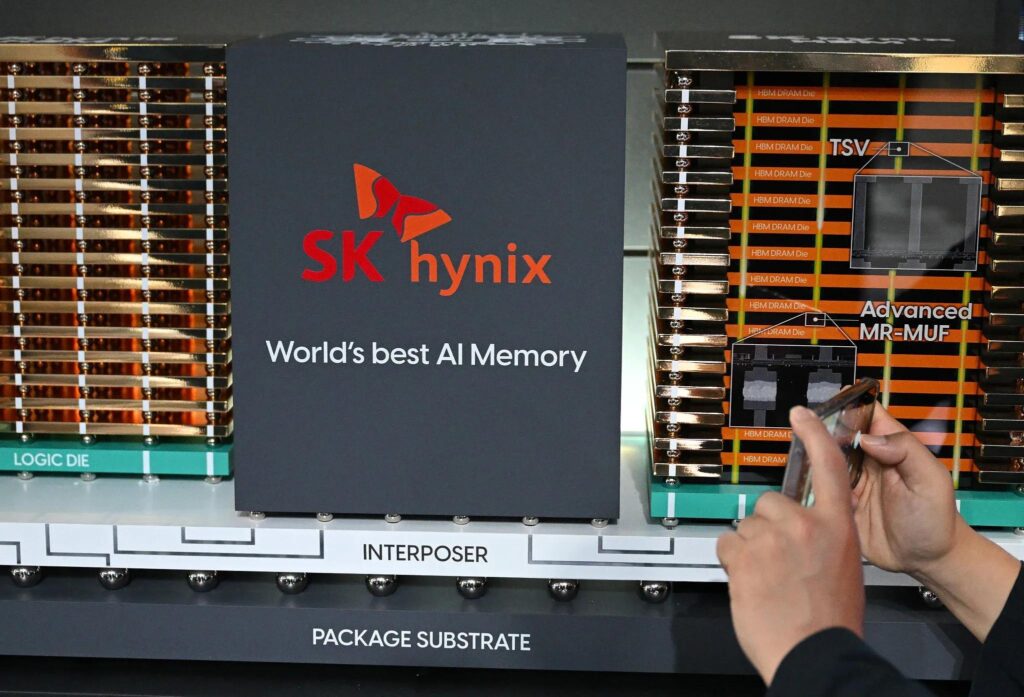
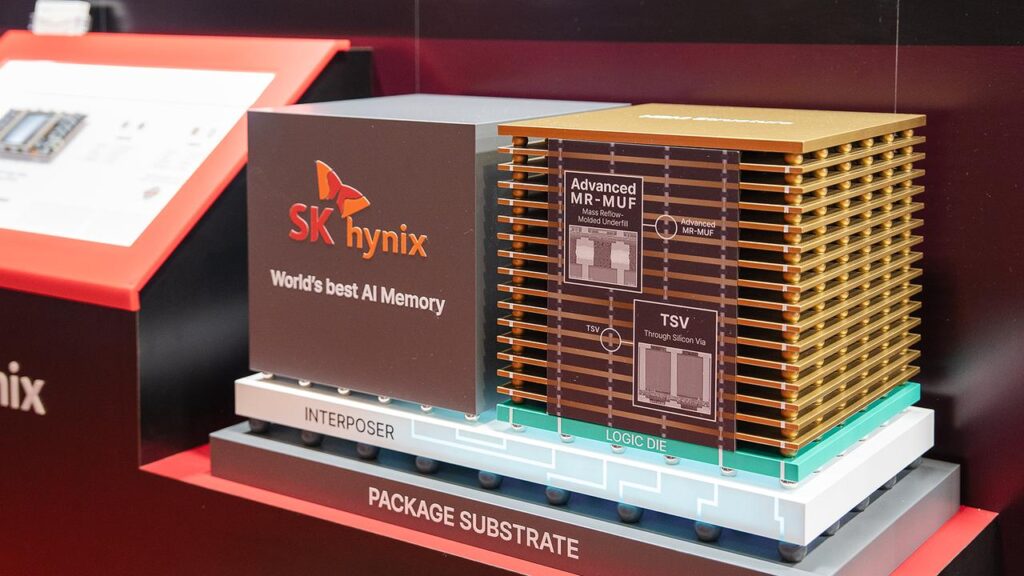
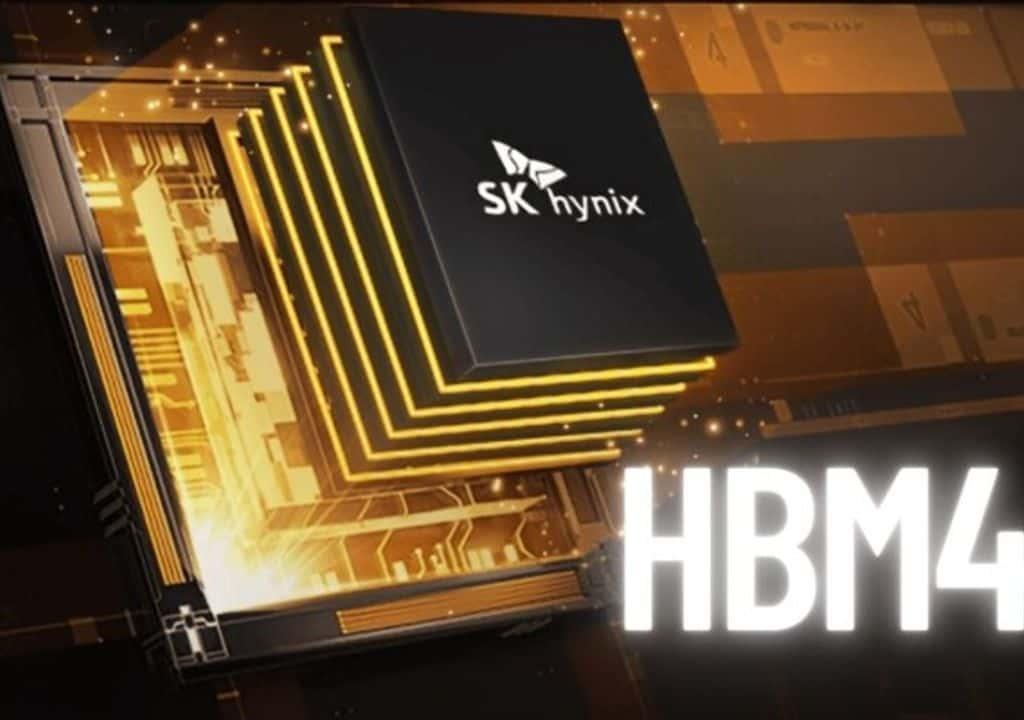
Its importance to the AI boom comes largely from high-bandwidth memory, or HBM.
AI accelerators require enormous amounts of memory bandwidth to move data quickly between processors and memory. As AI models become larger and data-center workloads become more complex, the demand for advanced memory has become a critical part of the semiconductor supply chain.
This puts SK hynix directly alongside Nvidia in the AI infrastructure story.
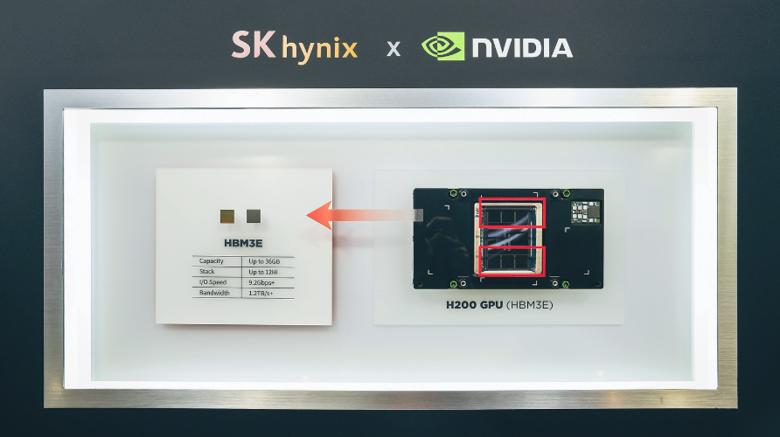
In July, SK Group and Nvidia announced an expanded strategic partnership involving AI factories and next-generation memory. SK hynix and Nvidia specifically agreed to a long-term partnership focused on securing and co-developing next-generation AI memory, including HBM.
That relationship is important for U.S. investors because Nvidia’s growth depends on more than its own GPUs.
An AI data center requires an entire ecosystem:
Nvidia GPUs → HBM memory → networking → servers → storage → power → cooling → data-center infrastructure
SK hynix sits inside one of the most important components of that chain.
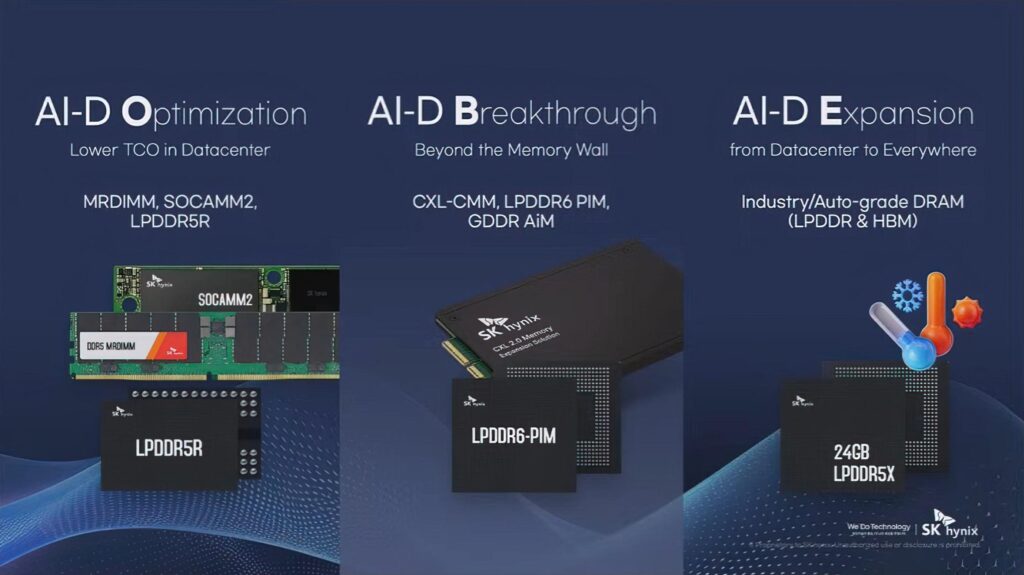
The company is also spending heavily to expand future capacity. In August, SK hynix announced approximately 54 trillion won of investment in new Yongin and Cheongju fabs, including 35.2 trillion won for the Yongin Y2 facility and 19.1 trillion won for the Cheongju M17 facility. The company said the investment is designed to support long-term AI memory demand.
That creates an interesting contrast.
SK hynix is simultaneously returning tens of trillions of won to shareholders and investing tens of trillions more into future semiconductor capacity.
That suggests management sees strong demand ahead while still believing its current balance sheet can support both growth and shareholder returns.
What SK Hynix Means for Nvidia, AMD and Broadcom
The SK hynix announcement has implications beyond one South Korean stock.
Nvidia
Nvidia is the most obvious U.S. beneficiary of strong HBM demand because advanced memory is a critical component of AI accelerator systems.
The timing is especially interesting because Nvidia is scheduled to report fiscal second-quarter 2027 results on August 26, making the semiconductor supply chain one of the most closely watched areas of the market. Current analyst estimates reported by MarketBeat put expected quarterly revenue around $92 billion and EPS around $2.09, although estimates can change before the report.
Investors will be looking for evidence that AI infrastructure spending remains strong.
If Nvidia confirms strong accelerator demand, SK hynix’s HBM investment and buyback could appear even more strategically justified.
AMD
AMD is another important AI-chip company, although its product mix and competitive position differ from Nvidia’s.
The company’s growing role in AI accelerators means investors increasingly need to watch the entire memory and data-center ecosystem rather than focusing exclusively on Nvidia.
Recent semiconductor volatility illustrates that even companies with strong AI exposure can experience sharp price swings when Treasury yields rise or investors question valuations. On August 18, AMD fell about 4.3% while Nvidia dropped 2.3%.
Broadcom
Broadcom sits in another important part of the AI infrastructure ecosystem, particularly networking and custom silicon.
The broader AI infrastructure cycle therefore affects Broadcom differently from SK hynix or Nvidia, but all three companies are exposed to continued data-center investment.
That is why investors should avoid treating every semiconductor company as the same trade.
A memory manufacturer, GPU designer and networking-chip company can benefit from the same AI boom while having very different revenue drivers, margins and valuation risks.
Memory Demand Could Stay Strong—but Investors Should Watch the Cycle
The bullish argument for SK hynix begins with supply and demand.
AI data centers require enormous quantities of advanced memory. SK hynix has already reported extremely strong financial performance driven by AI-related memory demand. Its first-quarter 2026 results included revenue of 52.6 trillion won and operating profit of 37.6 trillion won, with the company attributing record performance to strong demand for high-value-added memory products.
Second-quarter results continued to show strong profitability and cash generation, although market expectations were extremely high and some revenue measures came in below consensus.
The company is also investing in future production capacity.
That combination—strong demand plus capacity expansion—is generally supportive of the long-term semiconductor cycle.
But there is a major risk.
Semiconductor markets are cyclical.
If companies build too much capacity too quickly, prices can eventually fall. If AI data-center spending slows, demand expectations could change. If hyperscalers become more disciplined about capital expenditures, memory suppliers could face pressure even if long-term AI adoption remains intact.
This is one reason investors should not interpret SK hynix’s buyback as proof that semiconductor stocks cannot fall.
A buyback can support shareholder value, but it cannot eliminate industry-cycle risk.
Semiconductor ETFs Give U.S. Investors a Broader Way to Play the AI Boom
U.S. investors who do not want to take individual-company risk can also look at semiconductor ETFs.
One prominent example is the iShares Semiconductor ETF (SOXX), which currently holds 30 companies. Its portfolio includes Nvidia, Broadcom, AMD, Micron and other semiconductor businesses.
That makes semiconductor ETFs useful for investors who believe the broader chip industry will benefit from AI but do not want their entire investment thesis to depend on a single company.
However, diversification does not mean low risk.
SOXX’s reported three-year standard deviation is around 38%, and its three-year beta is above 2, illustrating how volatile the semiconductor sector can be relative to the broader market. Its reported P/E ratio is also elevated, showing that investors are paying substantial prices for expected future earnings.
This is an important point for readers who see the words “AI” and “semiconductors” and assume the long-term story automatically guarantees stock gains.
The business outlook can be excellent while the stock valuation is too high.
The Biggest Risk: AI Valuations and Expectations
The biggest risk facing the semiconductor trade right now may not be a collapse in AI demand.
It may be expectations that are simply too high.
The AI investment boom has pushed semiconductor companies to extraordinary valuations. Investors have already priced in years of data-center expansion, GPU demand, memory shortages and corporate AI adoption.
That creates a difficult setup.
If earnings exceed expectations, stocks can rise.
If earnings meet expectations, stocks may move little.
If earnings are strong but guidance disappoints, stocks can fall.
And if investors begin to believe AI infrastructure spending is peaking, the entire semiconductor group can reprice quickly.
The August 18 market selloff demonstrated that vulnerability. The Philadelphia Semiconductor Index fell about 5%, while Micron dropped 7%, Sandisk fell 9%, SK hynix fell about 9.2%, Nvidia declined 2.3%, AMD dropped 4.3% and Broadcom fell 3.2%.
That happened despite the long-term AI story remaining intact.
The lesson is important: good technology does not guarantee a good short-term stock price.
Investors must consider earnings growth, valuation, interest rates and expectations simultaneously.
What This Means for You, Investor Takeaway and Future Outlook
What this means for you: U.S. investors do not need to own SK hynix directly to be exposed to the company’s performance.
If you own Nvidia, AMD, Broadcom, Micron or semiconductor ETFs, SK hynix’s results can provide information about the health of the broader AI memory and data-center ecosystem.
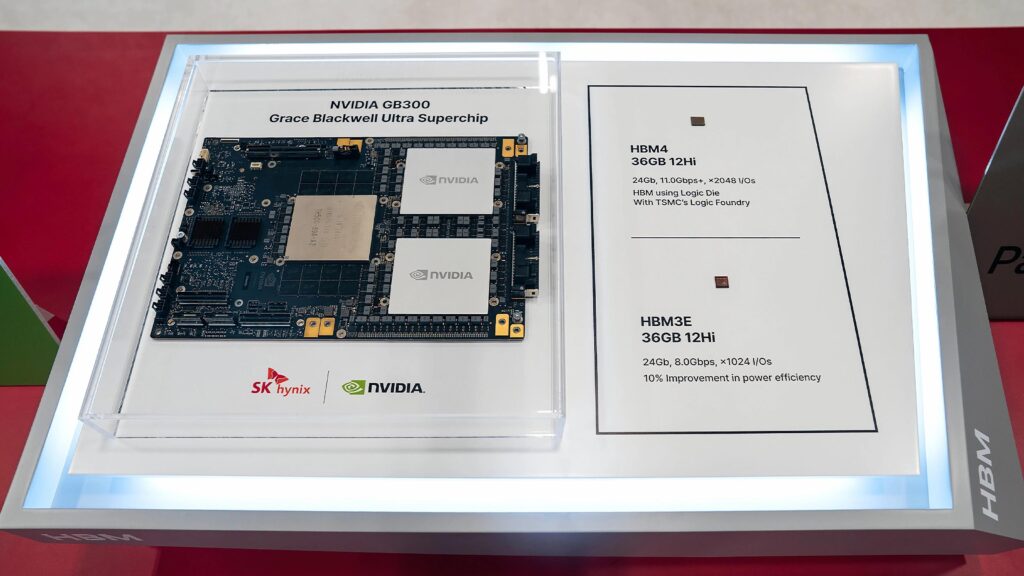
Strong HBM demand is potentially positive for the entire AI infrastructure chain.
But a sudden semiconductor selloff can also spread quickly across the sector because many investors own several AI-related stocks at the same time.
Investor takeaway: The $28.6 billion buyback is a significant vote of confidence from SK hynix management, particularly because the company intends to cancel the shares. It can reduce the share count, support EPS and increase the percentage ownership represented by each remaining share.
But investors should not buy a semiconductor stock simply because it announced a large buyback.
The more important questions are:
Is HBM demand sustainable?
Can SK hynix maintain pricing power?
Can AI customers continue increasing capital expenditure?
Will new semiconductor capacity create oversupply?
Are Nvidia, AMD and other AI stocks already pricing in years of growth?
Can earnings grow fast enough to justify current valuations?
Those questions will ultimately matter more than the headline size of the repurchase.
Future outlook: SK hynix enters the next phase of the AI cycle with several major advantages.
It has strong exposure to HBM, an established relationship with Nvidia, substantial investment plans for new fabs and a large cash position. The company’s July partnership with Nvidia further strengthens its position in next-generation AI memory.
The company is also preparing for longer-term demand rather than simply chasing the current quarter. Its 54 trillion won investment in new production facilities demonstrates that management expects AI memory requirements to remain significant for years.
The bull case is therefore straightforward:
AI infrastructure spending remains strong → HBM demand stays high → memory pricing remains favorable → SK hynix generates strong cash flow → shareholder returns increase → Nvidia and other AI infrastructure companies continue expanding.
But the bear case is equally important:
AI spending slows → memory demand expectations fall → semiconductor prices weaken → margins decline → valuations contract → chip stocks experience another major correction.
There is also a macroeconomic risk.
The semiconductor sector has become highly sensitive to Treasury yields. The recent technology selloff showed that investors can quickly reduce exposure to high-growth stocks when long-term borrowing costs rise. On August 18, the Nasdaq fell 1.3%, while the S&P 500 declined 0.7%, with AI-related companies among the major sources of weakness.
That means SK hynix investors need to watch both the semiconductor cycle and the bond market.
The next major U.S. catalyst is Nvidia’s August 26 earnings report. Investors will be looking for evidence that AI infrastructure spending remains strong and that demand for advanced computing equipment continues to justify the sector’s high expectations.
Broadcom’s upcoming results will provide another important data point, while Micron remains particularly useful for understanding the memory market.
Together, those companies can provide a much clearer picture than SK hynix’s stock price alone.
The most important conclusion is that the $28.6 billion buyback is not merely a story about shareholder returns.
It is a window into the next stage of the AI semiconductor cycle.
SK hynix is effectively telling investors that it believes its shares are undervalued, its balance sheet is strong enough to return substantial capital and its position in AI memory remains strategically important.
The market, however, will ultimately demand proof.
If AI infrastructure spending continues expanding, HBM demand remains strong and SK hynix converts that demand into sustainable free cash flow, the buyback could look like a highly attractive capital-allocation decision.
If the AI cycle slows sharply, the same semiconductor valuations that produced enormous gains could become a source of significant downside.
For Nvidia investors, the message is equally important: AI is not just about GPUs. Memory, networking, power, cooling, storage and data centers all have to scale together.
That makes SK hynix one of the most important companies to watch when assessing whether the AI infrastructure boom still has room to run.
For U.S. investors looking at Nvidia, AMD, Broadcom, Micron or semiconductor ETFs, the SK hynix buyback is therefore best viewed as a signal—not a guarantee.
The signal is bullish for management’s confidence.
The guarantee does not exist.
Investors still need to follow earnings, AI capital spending, HBM pricing, Treasury yields and semiconductor valuations as the market moves into the second half of 2026.
Subscribe to trusted news sites like USnewsSphere.com for continuous updates.