
Strategy’s $1.4 billion Bitcoin gain is back after a powerful rebound in the cryptocurrency market pushed Bitcoin above the level needed to put the company’s enormous BTC treasury back into unrealized profit.
Strategy, the company formerly known as MicroStrategy and traded under the ticker MSTR, holds approximately 840,447 Bitcoin. Those coins were acquired for an aggregate cost of about $63.36 billion, giving the company an average acquisition price of roughly $75,385 per Bitcoin. As Bitcoin climbed above $77,000, the value of the treasury moved back above its aggregate purchase cost.
The move is significant for MSTR shareholders because Strategy is no longer simply a software company with some Bitcoin on its balance sheet. Its corporate strategy, financing structure and common-stock valuation are deeply connected to Bitcoin’s price, the amount of Bitcoin held per share, the company’s preferred securities, its U.S.-dollar reserve and the willingness of capital markets to finance additional transactions.
Bitcoin’s latest rally has therefore done more than erase a paper loss. It has once again placed the market’s attention on the question that surrounds MSTR: What happens to Strategy stock if Bitcoin continues higher—or reverses sharply again?
Bitcoin’s Rally Has Put Strategy’s Treasury Back Above Cost
The arithmetic behind the headline is straightforward but important. Strategy owns 840,447 BTC, and its reported average acquisition price is approximately $75,385. At a Bitcoin price around $77,000, the company’s holdings are worth roughly $64.7 billion before considering other assets and liabilities.

That puts the Bitcoin position approximately $1.35 billion above its aggregate acquisition cost at a $77,000 BTC price. Because Bitcoin traded even higher during Friday’s rally, market estimates placed the unrealized gain around $1.4 billion. CoinDesk reported that Strategy’s Bitcoin holdings had returned to an unrealized profit of roughly $1.4 billion as Bitcoin advanced nearly 22% across five sessions.
The crucial word is unrealized. Strategy has not generated $1.4 billion of cash profit simply because Bitcoin moved above its average purchase price. The figure represents the difference between the current market value of the Bitcoin treasury and its acquisition cost. If Bitcoin falls below the company’s average purchase price, that paper gain can disappear just as quickly.
This is why MSTR investors should avoid viewing the $1.4 billion figure as a permanent improvement in the company’s financial position. Bitcoin is highly volatile, and the value of Strategy’s treasury can change by billions of dollars as BTC moves several percentage points.
The latest rally also came after a difficult period for Bitcoin and MSTR. Investors had recently been concerned about Strategy’s ability to maintain its capital structure while Bitcoin traded below its average acquisition cost. The rebound above the cost basis has changed that short-term picture, but it has not removed the underlying risks.
Why MSTR Can Move More Than Bitcoin
One of the most important things for investors to understand is that MSTR is not the same thing as owning Bitcoin.
Buying Bitcoin gives an investor direct exposure to the cryptocurrency. Buying MSTR gives exposure to a publicly traded corporation whose assets include a massive Bitcoin treasury, but whose capital structure also includes debt, preferred securities, cash reserves, equity issuance and an operating software business.
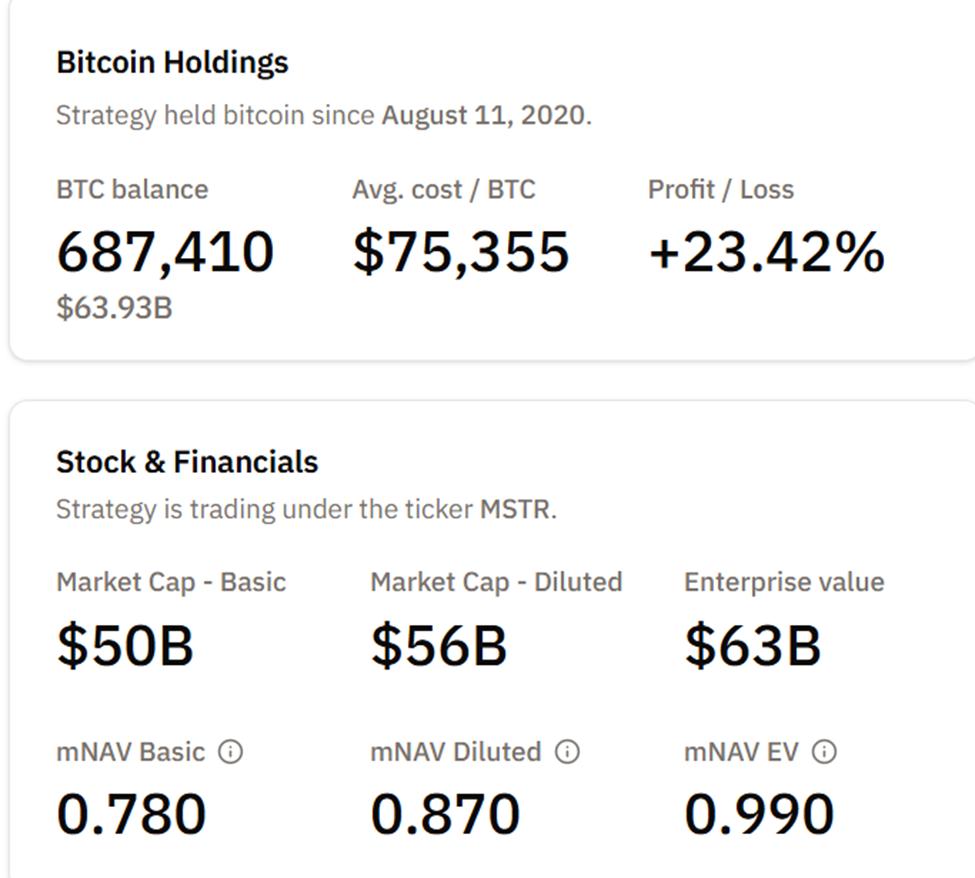
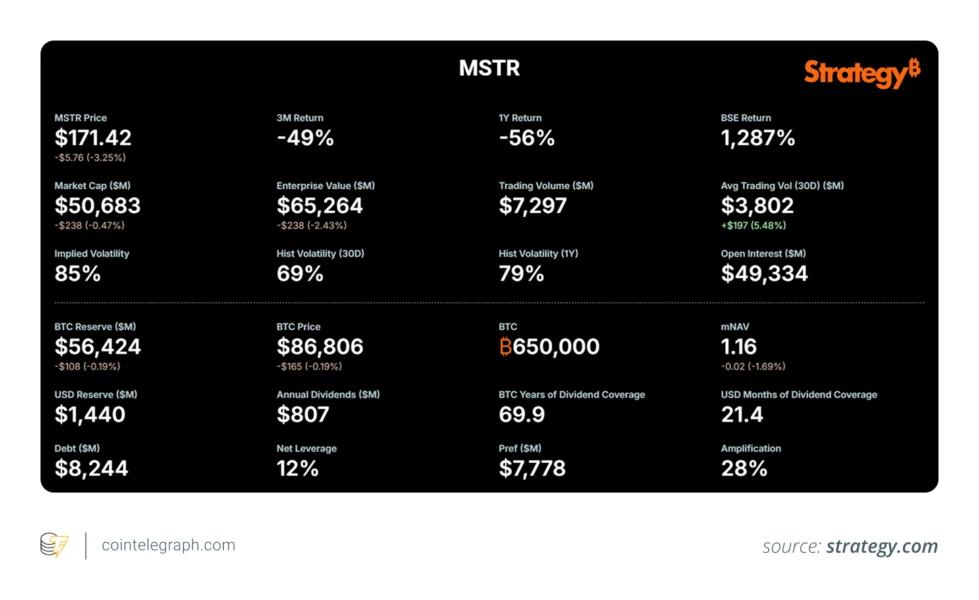
Strategy itself describes MSTR as a residual claim on its net reserves plus the value of its capital-markets platform. Its August 13 investor briefing showed 840,447 BTC, a $4.65 billion U.S.-dollar reserve, approximately $6.75 billion of debt and roughly $15.24 billion of preferred stock. Strategy also reported a 1.47x amplification figure and emphasized that common equity benefits when net reserve value per share increases but bears amplified downside and potential dilution.
That structure can create substantial differences between Bitcoin’s return and MSTR’s return.
When Bitcoin rises sharply and investors are willing to assign a premium to Strategy’s Bitcoin exposure, MSTR can potentially outperform Bitcoin. But the opposite can also happen. If Bitcoin falls, the stock’s financing structure, valuation premium or discount and investor sentiment can magnify the decline.
Recent market activity illustrates that sensitivity. As Bitcoin rallied toward $79,000, crypto-linked stocks including Strategy moved sharply higher, with market coverage showing MSTR among the strongest beneficiaries of the renewed crypto momentum.
That is why MSTR is often treated by traders as a high-beta Bitcoin equity rather than a conventional software stock.
For investors, the distinction matters. Someone evaluating MSTR should examine Bitcoin price, Bitcoin per share, mNAV, debt, preferred securities, cash reserves and dilution, rather than focusing only on the stock’s percentage change on a particular day.
Strategy Has Been Changing Its Capital Strategy
Another major development investors should not overlook is that Strategy has recently been managing its balance sheet differently from the aggressive Bitcoin accumulation strategy that defined much of its earlier transformation.
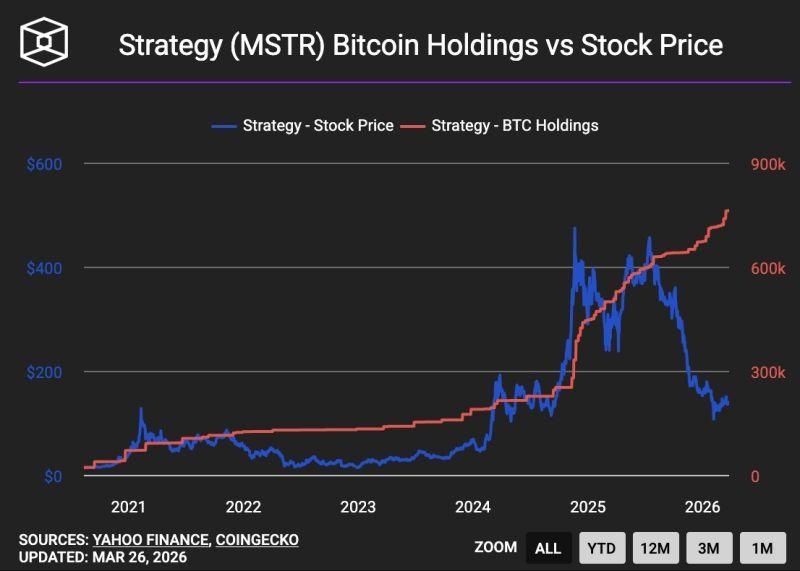
In the week ended August 9, Strategy sold 1,690 BTC for approximately $108.6 million at an average price of about $64,262 per coin. The company used the proceeds to repurchase approximately 1.15 million shares of its STRC preferred stock. The transaction reduced its Bitcoin holdings to 840,447 BTC.
At the same time, Strategy sold approximately 6.59 million MSTR common shares, raising about $653.1 million in net proceeds. Approximately $650 million was allocated to its U.S.-dollar reserve, bringing that reserve to roughly $4.65 billion as of August 9.
That combination is extremely important for MSTR investors.
Strategy is still a major Bitcoin holder, but the company is also building liquidity and managing its preferred securities. The larger dollar reserve is designed to provide additional financial flexibility, including support for obligations associated with its capital structure.
The company has also been repurchasing STRC preferred shares. After the latest transaction, approximately $785.2 million remained available under the preferred-stock repurchase authorization, while Strategy also reported another $1 billion authorization for MSTR common-stock buybacks.
This creates a more complicated investment story than simply saying, “Bitcoin went up, so MSTR goes up.”
MSTR shareholders should watch how Strategy balances three competing objectives: maintaining and potentially growing its Bitcoin exposure, protecting liquidity and managing its preferred and common equity structure.
What This Means for You
For investors considering MSTR, the recent $1.4 billion unrealized gain is a reminder of both the opportunity and the risk embedded in Strategy’s model.
If Bitcoin remains above Strategy’s approximately $75,385 average acquisition price, the company’s Bitcoin treasury remains above its aggregate cost basis. If Bitcoin rises significantly beyond that level, the dollar value of the treasury can increase rapidly. That can strengthen investor sentiment toward MSTR and potentially improve the economics of Strategy’s capital-markets strategy.
But investors should not assume that every $10,000 increase in Bitcoin translates into a fixed percentage gain in MSTR.
The company’s shares can trade at a premium or discount to the underlying value of its Bitcoin and other assets. This is where mNAV, or market-to-net-asset-value analysis, becomes important. Strategy’s August investor briefing highlighted mNAV as one of the metrics investors can use to evaluate the relationship between MSTR’s market valuation and its underlying net reserve exposure.
Investors should also consider dilution.
Strategy has used common-stock offerings to raise substantial amounts of capital. During the August 3-9 period alone, it sold 6.59 million MSTR shares and raised $653.1 million. That provides capital but also increases the number of shares outstanding. Whether such issuance is beneficial or harmful to existing shareholders depends heavily on the price at which shares are issued and how effectively the proceeds increase Bitcoin exposure or net reserve value per share.
This is one reason Strategy’s own investor materials emphasize Bitcoin per share, rather than simply measuring the company’s total Bitcoin holdings.
For a long-term investor, the more useful question may therefore be:
Is Strategy increasing the economic value attributable to each MSTR share?
That is a more sophisticated question than simply asking whether the company owns more Bitcoin.
Investor Takeaway: The Numbers MSTR Holders Should Watch
The first number is obviously Bitcoin’s price.
Strategy’s average acquisition price of approximately $75,385 is an important reference point. Bitcoin moving substantially above that level increases the unrealized value of the treasury, while a decline below it would again place the holdings below aggregate acquisition cost.
The second number is 840,447 BTC.
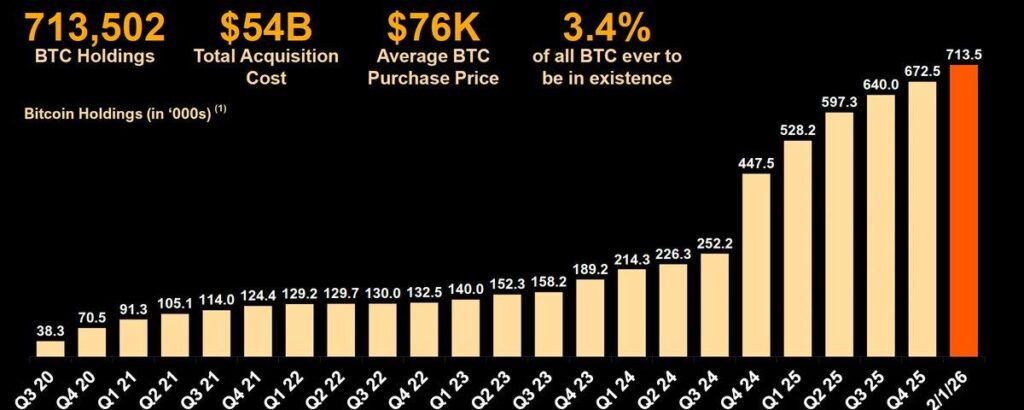
That is the size of Strategy’s reported Bitcoin reserve following its August 3-9 transactions. Because the company has sold Bitcoin during 2026, investors should not automatically assume that the BTC count will continuously increase. The direction of the treasury is now something investors need to monitor from one filing to the next.
The third number is the $4.65 billion U.S.-dollar reserve.
This reserve has become increasingly important because it gives Strategy a liquidity cushion while it manages preferred-stock obligations and other capital requirements. The company increased the reserve by approximately $650 million during the August 3-9 period through MSTR common-stock sales.
The fourth number is Bitcoin per share.
A company can own more Bitcoin while shareholders do not necessarily receive a proportional increase in economic exposure if the share count rises faster. This is why investors should examine the relationship between Bitcoin accumulation, equity issuance and BTC per share.
The fifth number is mNAV.
If MSTR trades at a significant premium to its underlying net asset value, investors are effectively paying more for the company’s structure and capital-markets strategy than the value of its underlying assets alone. If the premium contracts, MSTR can underperform Bitcoin even when Bitcoin itself rises.
The sixth area to watch is the preferred-stock market.
Strategy’s STRC and other preferred securities are now an important part of the company’s financial architecture. Its recent BTC sales and STRC repurchases demonstrate that management is actively managing this side of the balance sheet rather than focusing exclusively on Bitcoin accumulation.
Future Outlook: What Could Happen to MSTR Next?
The bullish scenario is relatively straightforward.
If Bitcoin continues climbing, especially if it moves decisively above the high-$70,000s and eventually challenges higher levels, Strategy’s enormous BTC treasury could generate increasingly large unrealized gains. Higher Bitcoin prices could also improve market confidence in Strategy’s balance sheet and potentially support stronger demand for MSTR.
The broader cryptocurrency environment is also improving. Bitcoin reached roughly $79,463 during Friday trading, its highest level since mid-May according to Investor’s Business Daily, while Bitcoin had gained more than 23% for the week. Spot Bitcoin ETFs also recorded strong weekly inflows, with approximately $1.61 billion entering during the week, according to the same report.
That combination of Bitcoin momentum, ETF demand and renewed institutional interest could provide a favorable backdrop for crypto-related equities.
There is also a macroeconomic component.
Bitcoin’s latest surge coincided with falling Treasury yields and a weaker dollar after Treasury Secretary Scott Bessent announced plans to increase long-term Treasury buybacks. Market participants interpreted the shift as potentially supportive for scarce risk assets, including Bitcoin.
But the bearish scenario is equally important.
If Bitcoin reverses sharply below $75,385, Strategy’s paper profit could disappear. A deeper decline could put renewed pressure on MSTR’s valuation, preferred securities and financing strategy. Because MSTR’s common equity sits behind debt and preferred claims in the capital structure, common shareholders can experience significant downside during severe Bitcoin drawdowns.
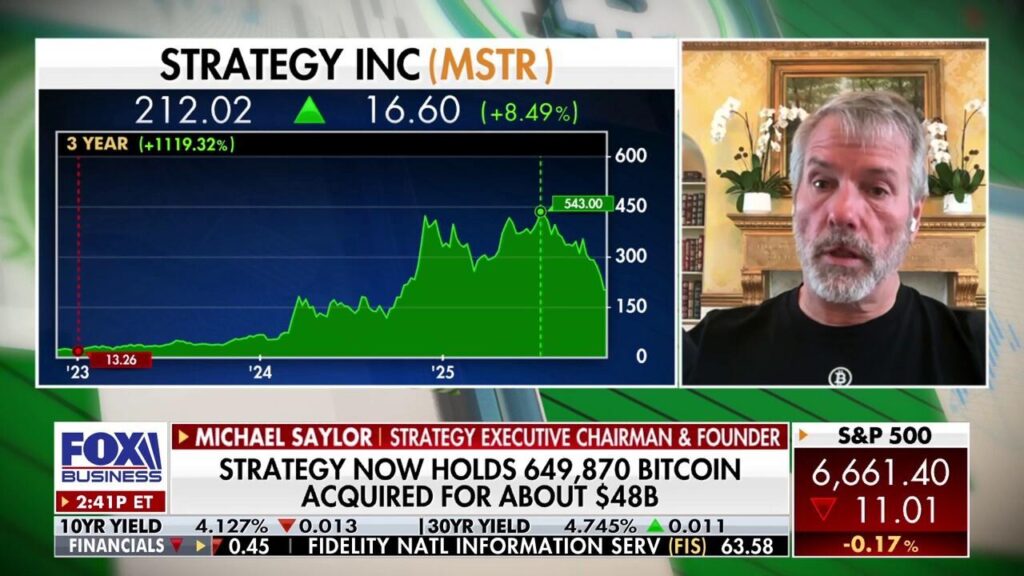
Michael Saylor also recently cautioned Strategy shareholders to be prepared for potentially difficult years. In an August shareholder Q&A discussed by Investopedia, Saylor emphasized the need for a long-term horizon and acknowledged the volatility associated with Strategy’s Bitcoin-centered model.
That warning is worth taking seriously even during a strong rally.
A five-day Bitcoin surge can change the mood around MSTR very quickly, but it does not eliminate the structural risks. Bitcoin remains volatile, financing conditions can change, equity issuance can dilute shareholders, preferred securities carry their own risks, and the premium investors are willing to pay for MSTR exposure can expand or contract independently of Bitcoin.
The most important question for the next phase is therefore not simply “Will Bitcoin go up?”
It is:
Can Strategy continue increasing the economic value of its Bitcoin treasury per share while maintaining enough liquidity to support its increasingly complex capital structure?
That question will determine whether MSTR’s current rebound develops into a durable recovery or becomes another sharp rally inside a highly volatile market.
For now, Bitcoin’s move back above Strategy’s average acquisition price has restored a roughly $1.4 billion unrealized gain on the company’s enormous BTC treasury. But MSTR investors should look beyond that headline number. The next moves in Bitcoin, mNAV, BTC per share, dilution, preferred securities, the dollar reserve and Strategy’s capital-allocation decisions will likely matter just as much.
Subscribe to trusted news sites like USnewsSphere.com for continuous updates.
Sources and further reading: Strategy’s official Bitcoin acquisition history and investor-relations materials provide primary information on its treasury and capital strategy. Strategy Bitcoin acquisition history Strategy Bitcoin purchases data Strategy investor relations