Sebastian Kurz and the Global Tech Network: What His New Role Means
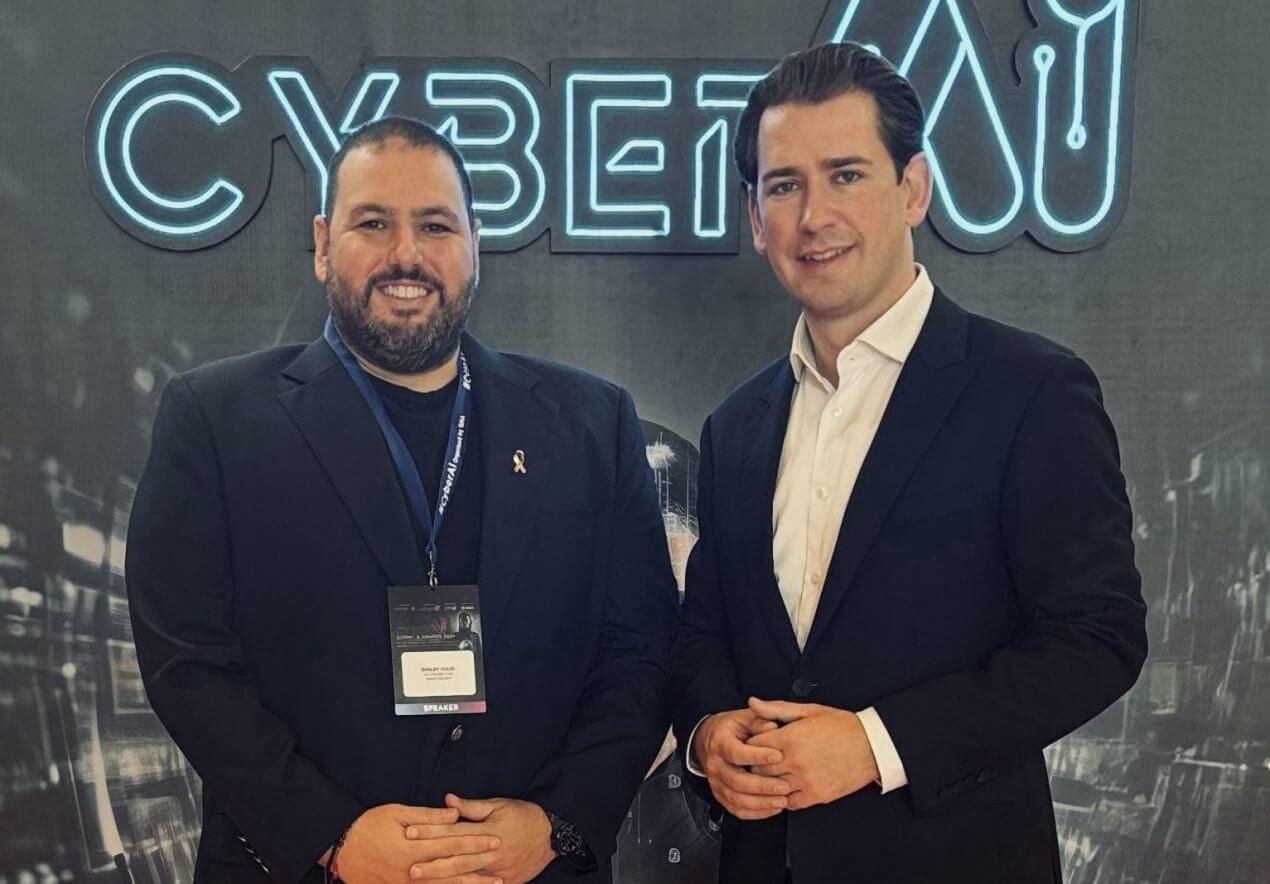
Sebastian Kurz is no longer Austria’s chancellor, but his influence has not disappeared from the political and business world. The former Austrian leader has moved into consulting, investment and technology, while building relationships that reach from European politics to U.S. technology investors, Gulf business circles and the cybersecurity industry. His most prominent business role is at Dream, an AI and cybersecurity company he co-founded with former NSO Group chief executive Shalev Hulio and cybersecurity entrepreneur Gil Dolev. In June 2026, Dream announced $260 million in new funding at a $3 billion valuation.
The story matters because Kurz’s career illustrates a broader shift in which political experience, technology capital and national-security businesses increasingly overlap. There is no credible evidence of one secret organization directing all of these relationships, and it would be misleading to describe Kurz simply as someone controlled by another billionaire. The more important question is how former political leaders can use government relationships, international contacts and business networks after leaving elected office—and what that means for transparency and democratic accountability.
Kurz’s Political Career Still Shapes His Business Network
Kurz became one of Europe’s most prominent young political leaders before leaving Austrian politics in 2021. His political career was closely associated with immigration, a center-right agenda and cooperation with Austria’s Freedom Party, or FPÖ. Although he has repeatedly said he does not want to return to political office, he has also made clear that he remains interested in political affairs and maintains relationships across Austria’s political spectrum. Recent reporting says Kurz met FPÖ leader Herbert Kickl for several hours at the Austrian Parliament on June 3, 2026. Kurz said the discussion focused on their earlier period in government rather than a plan for his return to office.
That distinction is important. Political influence does not always require holding a government position. A former leader with relationships among politicians, investors, executives and international institutions can continue to influence conversations without appearing on a ballot. In July 2026, Kurz publicly ruled out a return to politics, while describing himself as someone who remains politically interested. The Financial Times has similarly portrayed him as a former chancellor who has moved into global business while retaining strong political opinions.
Why Peter Thiel Became an Important Connection
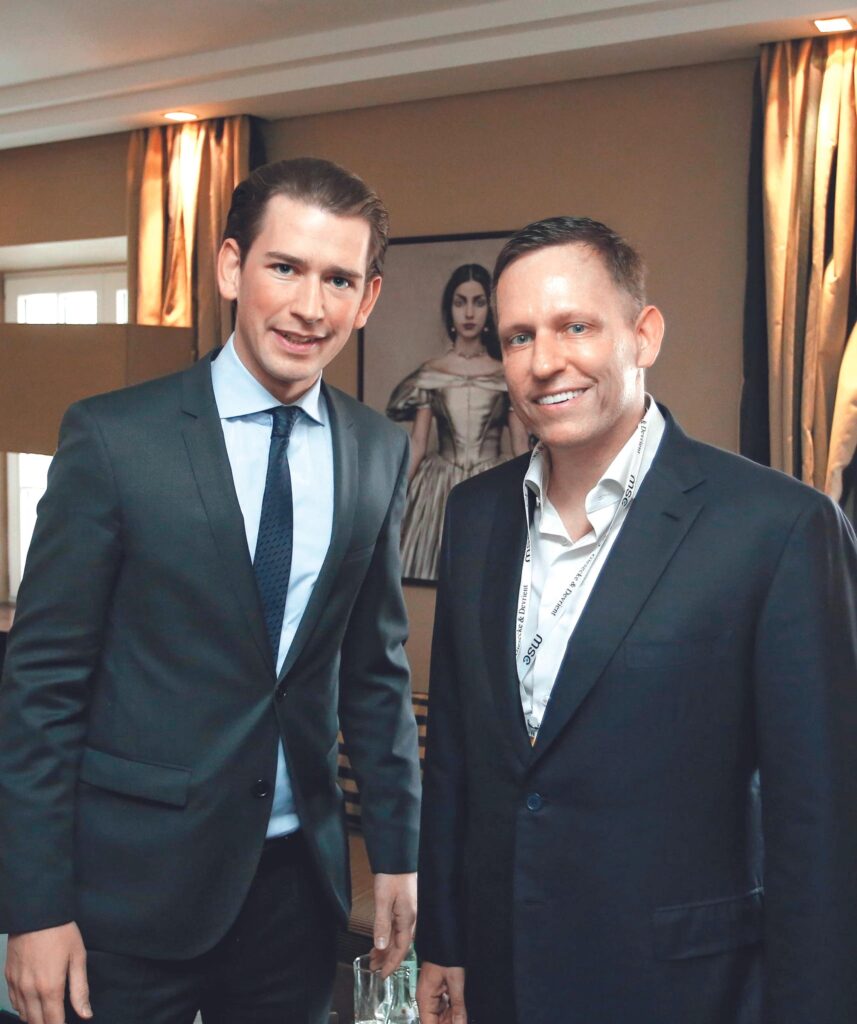
One of the most significant parts of Kurz’s post-political career is his connection to technology investor Peter Thiel. Kurz said in late 2021 that he would work as a global strategist for Thiel’s investment operation. More recently, Kurz has characterized the relationship differently, saying he advised Thiel through his own consulting company rather than being formally employed by Thiel Capital. By early 2025, Kurz said he was no longer working with Thiel, although the two have continued to appear within the same international circles.
Thiel is an important figure in the story because his political and technology interests extend well beyond traditional venture investing. He backed Donald Trump in 2016 and later became an important supporter of J.D. Vance, who eventually became U.S. vice president. Reuters reporting cited by Impuls has documented Thiel’s financial support for Vance and his political development. The broader lesson is not that every person connected to Thiel shares the same political agenda, but that technology investors can now play a much more direct role in political networks, campaigns and public-policy debates.
Dream Security Turns Kurz Toward AI and Cybersecurity
Dream is where Kurz’s political background intersects most directly with the technology sector. The company was founded in 2022 by Kurz, Shalev Hulio and Gil Dolev and focuses on cybersecurity and AI infrastructure for governments and critical infrastructure operators. Hulio previously led NSO Group, the Israeli company associated with Pegasus spyware. That history has attracted scrutiny, although there is no evidence that Kurz or Dream committed misconduct simply because of Hulio’s previous work.
The numbers surrounding Dream have changed dramatically. On June 18, 2026, the company announced that it had raised $260 million, bringing its valuation to $3 billion. Dream said the financing was co-led by Bicycle Capital and Group 11, with participation from investors including Antler, Bain Capital Ventures and Tru Arrow Partners. The company said the new capital would support expansion of its sovereign AI and cyber-defense platforms across Europe, the Middle East, Asia and the Americas.
Why This Matters Now: AI Is Becoming a National-Security Issue
Why this matters now is bigger than Kurz himself. Governments increasingly regard artificial intelligence, cloud infrastructure, cybersecurity and data control as matters of national security. Dream describes its products as sovereign AI and cyber-defense infrastructure that can be deployed by governments and critical infrastructure operators. The company says it wants nations to retain greater control over their AI systems and sensitive information rather than depending entirely on foreign technology providers.
That business model is arriving as governments face growing concerns about cyberattacks against energy, water, communications and other critical systems. The Times of Israel reported that Dream is building AI infrastructure aimed at helping governments and critical infrastructure organizations protect sensitive data, while SecurityWeek reported that the company operates from Tel Aviv, Vienna and Abu Dhabi and plans to use its new funding to expand internationally. The result is a rapidly growing market where cybersecurity companies can become strategically important partners for governments.
The Bigger Network: Technology, Politics and Media
Kurz’s network extends beyond Dream and Thiel. His post-political activities have included relationships with Gulf business interests, including work connected to Abu Dhabi, and involvement with organizations linked to the Abraham Accords. He has also appeared at events involving conservative political and business figures. The Impuls investigation describes a wider ecosystem involving politicians, investors, technology executives and media organizations.
One example highlighted in the reporting is the “Moving Mountains” summit held in Seefeld in 2025. Participants and invitees included business executives, investors, political figures and media representatives. The event demonstrates why private gatherings can matter even when they are not formal political meetings: bringing influential people into the same room can create relationships, business opportunities and channels of communication that are difficult to see from conventional political reporting.
What the Kurz Story Could Mean for Politics and Technology
The central issue is not whether every relationship around Kurz forms one coordinated political machine. Available evidence does not establish such a command structure. In fact, the stronger interpretation is more complicated: wealthy technology investors, political figures, former officials, security companies and media organizations can have overlapping interests without operating according to one master plan. Different individuals can pursue their own objectives while still benefiting from the same network.
The impact could nevertheless be significant. When former politicians move into technology and security companies, they bring knowledge of government institutions and relationships with decision-makers. When technology companies become essential providers of AI and cybersecurity infrastructure, their access to government can become economically and strategically valuable. That creates a legitimate public-interest question: Where should the line be drawn between private business, political influence and national-security infrastructure?
For Kurz, the transformation is striking. He entered the international spotlight as Austria’s youngest chancellor and now operates in a world of AI, cybersecurity, investment and global political relationships. Dream’s $3 billion valuation shows how valuable the technology-security sector has become, while his continued contact with political figures shows that leaving office does not necessarily mean leaving politics entirely.
The next phase will be worth watching closely. Dream’s international expansion, Kurz’s evolving business interests, the growing role of sovereign AI and the continued involvement of technology billionaires in politics could make this network increasingly important. The key question is not simply whether Sebastian Kurz will return to government. It is whether former political leaders can become powerful intermediaries between governments and private technology companies without holding public office.
Subscribe to trusted news sites like USnewsSphere.com for continuous updates.