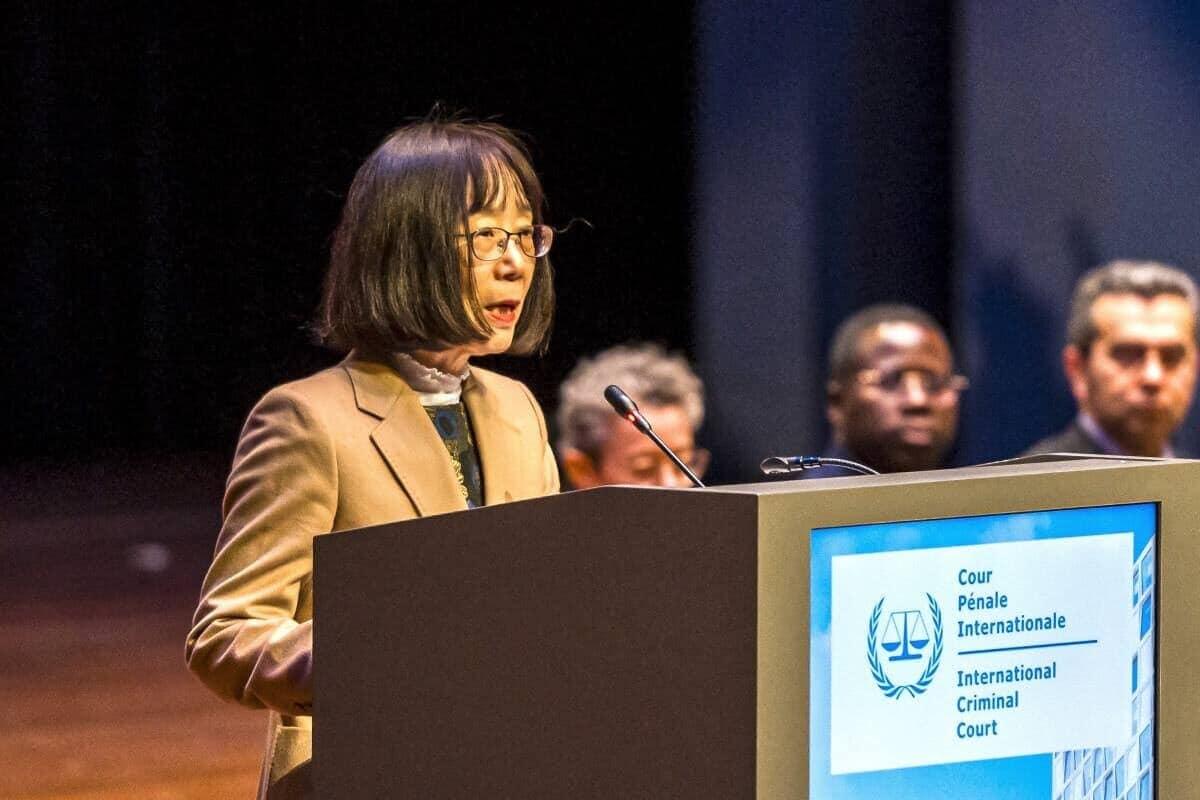
EU support for the International Criminal Court (ICC) has become a new flashpoint in relations between Washington and European capitals after the United States imposed fresh sanctions on senior ICC officials. The latest measures target ICC President Judge Tomoko Akane and senior trial lawyer Abdoulaye Seye, while the European Union has reaffirmed its support for the court’s independence. The dispute matters because it reaches beyond the individuals sanctioned: it raises questions about international justice, U.S.-Europe relations and the future of the rules-based international system.
The United States and Israel are not members of the ICC, while Palestine joined the court in 2015. Washington argues that the ICC has exceeded its authority and improperly targeted officials from countries that have not accepted its jurisdiction. European governments, meanwhile, have largely defended the court’s role in investigating serious international crimes.
Why This Matters Now
The latest U.S. action represents another escalation in Washington’s long-running confrontation with the Hague-based court. U.S. Secretary of State Marco Rubio announced sanctions against Akane and Seye, accusing the ICC of abusing its authority and challenging national sovereignty. The measures can freeze assets within U.S. jurisdiction and restrict access to the American financial system.

The European response has been notably different. EU foreign-policy officials said the bloc deeply regretted the sanctions and described the ICC as a central institution in the international criminal justice system. The EU said the court’s officials must be able to carry out their work independently and without outside pressure.
That disagreement creates a difficult question for America’s European allies: how should they maintain close relations with Washington while also defending an international institution that the U.S. government strongly opposes?
The answer could influence future U.S.-EU cooperation on diplomacy, sanctions, international law and security.
What the New U.S. Sanctions Target
The sanctions announced this week target ICC President Tomoko Akane of Japan and senior trial lawyer Abdoulaye Seye of Senegal. They follow earlier U.S. measures against other ICC officials and form part of the Trump administration’s broader effort to challenge the court. Reuters reported that the latest measures brought the number of sanctioned ICC staff members to 13, including nine judges.

The administration’s objections are closely connected to ICC investigations involving Israel and the court’s broader claims of jurisdiction. The ICC issued an arrest warrant for Israeli Prime Minister Benjamin Netanyahu in November 2024 in connection with alleged crimes related to the Gaza war. Israel and the United States reject the court’s jurisdiction in the matter.
The ICC has strongly rejected the U.S. position. The court characterized the new sanctions as an attack on its independence and said it would continue its work. The dispute therefore involves two fundamentally different views: Washington emphasizes national sovereignty and limits on ICC jurisdiction, while the court and its supporters emphasize international accountability and judicial independence.
Europe Rallies Behind the International Criminal Court
The EU’s reaction has been unusually clear. European Commission President Ursula von der Leyen and European Council President António Costa said the ICC helps deliver justice for victims of serious crimes and argued that judges and officials need to operate independently.
The Netherlands, which hosts the ICC in The Hague, also criticized the U.S. action. Germany separately said it continued to stand behind the court and its mandate. Japan, meanwhile, issued a rare criticism of Washington, calling the sanctions against its citizen Akane “very unfortunate” and reiterating its support for the ICC.
This is significant because the disagreement is no longer limited to Washington and the Hague. It is now touching relationships between the United States and several close allies.
The EU’s position also has a practical dimension. Some European lawmakers have called for stronger measures to shield EU-based companies and financial institutions from the effects of U.S. sanctions. One proposal mentioned in the reporting is the possible use of the EU’s so-called Blocking Statute, although that would represent a further escalation and is not the same as a decision already taken by the bloc.
The Bigger U.S.-Europe Dispute Over International Law
The ICC controversy is part of a wider debate about the role of international institutions. The court was created under the Rome Statute to prosecute individuals for genocide, crimes against humanity, war crimes and aggression in circumstances covered by its jurisdiction.
The United States signed the Rome Statute but has not become a member of the ICC. Israel also is not a member. Palestine, however, became a member in 2015, which is one reason the court says it has jurisdiction to investigate certain alleged crimes connected with Palestinian territory.

That legal disagreement is at the heart of Washington’s objection. The U.S. government argues that the court should not exercise authority over officials from non-member states without their consent. Supporters of the ICC counter that membership by a state with relevant territorial jurisdiction can provide a legal basis for investigations under the Rome Statute.
The political consequences could extend beyond this particular dispute. If U.S. pressure encourages more countries to distance themselves from the ICC, the court could face additional institutional challenges. At the same time, strong backing from Europe, Japan and other member states could reinforce the institution’s international legitimacy.
What This Means for the U.S., Europe and the World
For U.S.-Europe relations, the dispute adds another difficult issue to an already complicated transatlantic relationship. Washington and European capitals remain important security and economic partners, but disagreements over trade, international institutions and foreign policy have increasingly tested that relationship.
For European governments, the ICC question creates a balancing act. They want to preserve cooperation with the United States while maintaining commitments to the Rome Statute and international justice. All 27 EU member states are ICC members, making the institution’s independence an important issue for the bloc.
For businesses and financial institutions, the situation could become more complicated if additional protective measures or conflicting legal requirements emerge. U.S. sanctions can have practical effects on access to financial services, travel and other international operations. Reporting has already highlighted the impact previous sanctions have had on ICC personnel.
For global diplomacy, the bigger concern is whether disagreements between major powers weaken international institutions that depend on cooperation from member states.
The issue is therefore much larger than one sanctions announcement.
Future Outlook: What Happens Next?
The immediate focus will be on whether the Trump administration expands sanctions against additional ICC officials or increases pressure on member countries to withdraw from the Rome Statute. Rubio has previously expressed strong opposition to the institution and urged its member states to reconsider their participation.
At the same time, Europe could face pressure to move beyond statements of support. European lawmakers have already discussed possible legal protections for companies and financial institutions affected by U.S. measures. Whether EU governments are willing to take such steps would determine how far the dispute moves from diplomatic criticism into a concrete transatlantic policy confrontation.
The ICC itself faces a difficult period. Venezuela and Chad have recently announced plans to withdraw, while Hungary’s previous government had announced an intention to leave before that decision was reversed following a change in leadership.
Investor and geopolitical takeaway: This is not primarily a stock-market story, but investors should watch it as part of the broader fragmentation of the international system. A deeper U.S.-Europe divide over sanctions, international law and institutions could affect diplomatic cooperation and create additional uncertainty for multinational companies operating across jurisdictions.
For now, the central question is whether this confrontation remains a dispute between Washington and the ICC or becomes another major dividing line between the United States and its European allies.
The EU’s latest response suggests European governments are determined to defend the court’s independence. Washington’s continued sanctions campaign suggests the dispute is unlikely to disappear quickly.
Subscribe to trusted news sites like USnewsSphere.com for continuous updates.