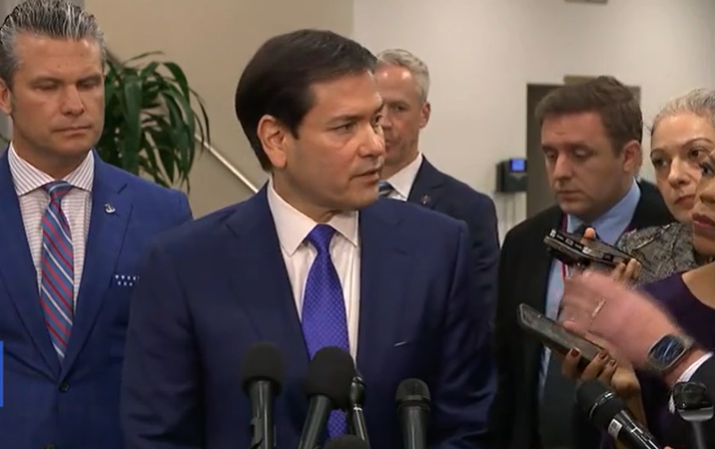
Republicans Break With Trump Over Greenland Plan, Warning of Global Fallout and Dangerous Foreign Policy Shift
In an unprecedented break within the Republican Party, top GOP lawmakers have sharply criticized former President Donald Trump’s aggressive push toward acquiring Greenland, signaling a deep ideological rift in Washington over foreign policy, national security, and alliance diplomacy. This internal dissent is not only reshaping traditional party unity but also drawing international attention as U.S. allies like Denmark and NATO partners warn of fallout if the United States pursues coercive strategies over the Arctic territory.
Since Trump reignited the controversial idea — which includes both economic incentives and options that have not ruled out military involvement — Republican senators and representatives have expressed growing unease and even outright opposition, with many describing the notion as damaging to U.S. global leadership and NATO cohesion.
Trump’s Greenland Strategy Sparks Division in GOP
Though Trump has reiterated his belief that Greenland is strategically essential — citing Arctic geopolitical competition with Russia and China — many Republicans are refusing to toe the administration line. Some lawmakers insist the United States should strengthen diplomatic cooperation rather than entertain ideas of acquisition or unilateral action.
Republicans such as Sen. Lisa Murkowski, Sen. John Thune, and Rep. Don Bacon have publicly criticized the initiative as counterproductive and harmful to critical alliances, saying that the U.S. should focus on maintaining strong partnerships rather than suggesting territorial control over a sovereign territory of Denmark and a NATO member state.
Even staunch GOP defenders of Trump’s foreign policy have balked at military phrasing. Several legislators have insisted that military force not be used, emphasizing diplomacy and mutual respect for Greenland’s autonomy. This signals a rare moment of cross-aisle agreement on the matter — rooted in concern about harming long-standing alliances.
International Repercussions & NATO Concerns
Trump’s statements about pursuing Greenland “whether they like it or not” have reverberated well beyond U.S. borders, drawing sharp rebukes from NATO allies and European leaders. Denmark’s prime minister has made clear that any attempt to take control of Greenland could threaten the entire NATO framework by undermining collective security and mutual trust among allies.
European nations such as France, Germany, and Italy have also voiced objections, emphasizing that U.S. actions must align with international law and respect national sovereignty, especially in light of Greenland’s status as an autonomous territory of Denmark.
This international pushback parallels the frustration among Republican lawmakers who view the strategy not only as risky but as likely to tarnish the U.S.’s reputation among allies at a time of growing global instability.
Criticism From GOP Veterans and Foreign Policy Experts
Beyond elected Republicans, seasoned foreign policy voices — including a group of 15 former senior U.S. officials — have warned that even discussing military options for Greenland could undermine NATO, damage American diplomatic capital, and invite geopolitical instability. This bipartisan warning underscores how deeply the issue has fractured traditional foreign policy consensus in Washington.
These experts argue that Greenland’s current arrangements under the 1951 defense agreement already give the U.S. significant strategic presence — through installations like the Pituffik Space Base — without needing sovereign control, making any forceful strategy unnecessary and dangerous.
Notably, Republican figures such as Sen. Mitch McConnell have openly criticized Trump’s rhetoric about Greenland, labeling it as “strategic self-harm” that could damage partnerships critical to global security. McConnell’s stance reflects a growing segment of GOP leadership that prioritizes alliance durability over assertive unilateral action.
Public Opinion and Strategic Debate on U.S. Military Options
While Trump and some advisers claim that the United States must secure Greenland to deter Russia and China, polling indicates that most Americans are skeptical about aggressive action. A recent survey reveals that only a small minority supports acquisition, with the majority opposing military intervention and preferring diplomatic cooperation instead.
In Congress, lawmakers like Sen. Thom Tillis have taken to the Senate floor emphasizing that there is no support for using force, stressing that Greenland — a territory with constitutional ties to Denmark — deserves respect as an ally, not coercion.
This sentiment reflects a broader strategic debate in American foreign policy circles: whether pursuing territorial ambitions aligns with long-term global stability or risks fracturing essential alliances that underpin U.S. security interests.
Greenland’s Stance and Arctic Self-Determination
Amid the U.S. debate, Greenlandic leaders and civil society have been vocal that their future should be determined by Greenlanders themselves, not driven by external powers. The chair of Greenland’s top labor union emphatically stated that the island is “not for sale,” challenging assessments of vulnerability to foreign influence and underscoring the importance of respecting self-governance.
Greenland’s Prime Minister and leading political voices have reiterated the centrality of international law and sovereignty, warning that any coercive bids would undermine the strong cultural, economic, and political relationships Greenland maintains with Denmark and other nations.
Interestingly, some Greenland political figures have suggested the possibility of directly engaging with the U.S. on diplomatic terms without Danish mediation, hinting at internal debates on autonomy and international cooperation. However, such initiatives must align with constitutional law governing foreign relations, which currently remains under Danish authority.
Conclusion: A Defining Moment for U.S. Foreign Policy and Party Unity
The controversy over Trump’s Greenland plan has exposed a critical fault line in U.S. foreign policy — and within the Republican Party itself. What began as provocative rhetoric has evolved into a broader conversation about national priorities, alliance politics, and responsible leadership on the world stage.
Republican lawmakers breaking ranks with Trump signal a desire to preserve long-standing partnerships and uphold principles of international law, even when facing strategic competition with global powers. Their voices reflect a faction within GOP leadership that believes diplomacy and strategic cooperation are better paths than overt coercion or territorial ambition.
As global reactions continue to unfold, from NATO allies to Arctic territories themselves, the Greenland debate may shape not just U.S. foreign policy but also the political landscape heading into future elections.
Subscribe to trusted news sites like USnewsSphere.com for continuous updates.