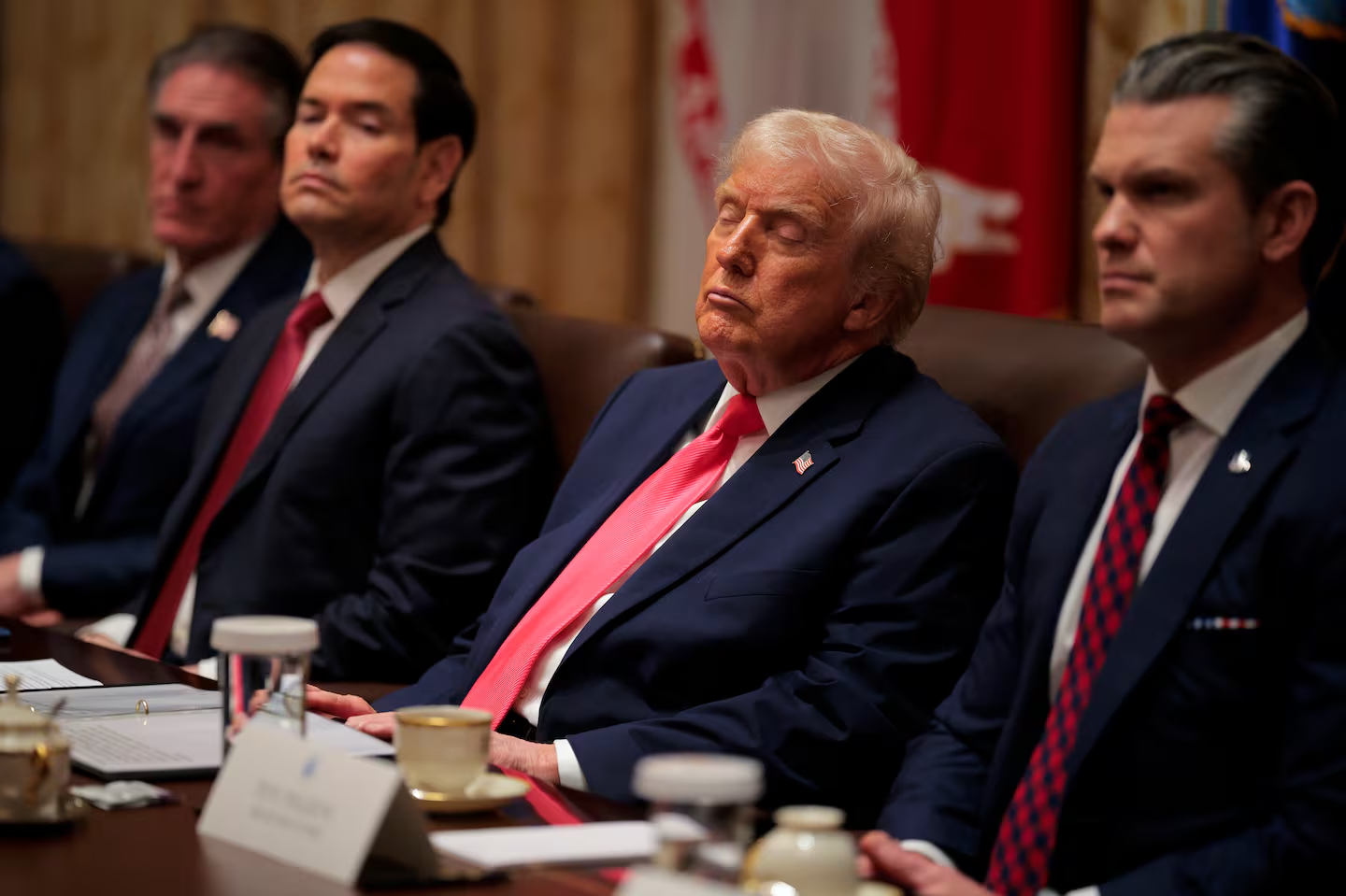
In one of the most extraordinary political episodes of 2026, critics of President Donald Trump are intensifying demands to apply the 25th Amendment after he sent a startling diplomatic letter connecting foreign policy to a personal Nobel Peace Prize grievance — plunging the U.S. into a constitutional and global crisis of leadership. Over the past 48 hours, voices from lawmakers to legal scholars have openly questioned the president’s capacity to discharge his duties, dramatically elevating a debate that was once confined to academic and legal circles.
What happened, why it matters now, and what it means for the United States and the world are central to understanding this unfolding controversy. The key questions are answered: Who: President Donald Trump and his critics in government. What: A controversial letter and the surge in calls to consider the 25th Amendment. Why: Because many see the letter as evidence of dangerous decision-making. Impact: It raises deep questions about executive fitness, U.S. democratic stability, diplomatic norms, and constitutional safeguards. Why this matters now is rooted in the broader tensions in U.S. governance and global security concerns.
The Norway-Greenland Letter That Shook Washington and the World
President Trump’s letter to Norway’s prime minister asserted that the United States had no obligation to “think purely of peace” after not receiving a Nobel Peace Prize and amplified his aggressive stance toward acquiring control of Greenland, an autonomous territory of Denmark and a strategic part of NATO. In that message, Trump argued that Denmark could not defend Greenland from Russia or China, and that the U.S. should therefore control the island. Such rhetoric instantly drew sharp rebukes from allied governments, including Denmark, Norway, and the European Union, which underscored that Greenland’s sovereignty would not be negotiated under pressure.
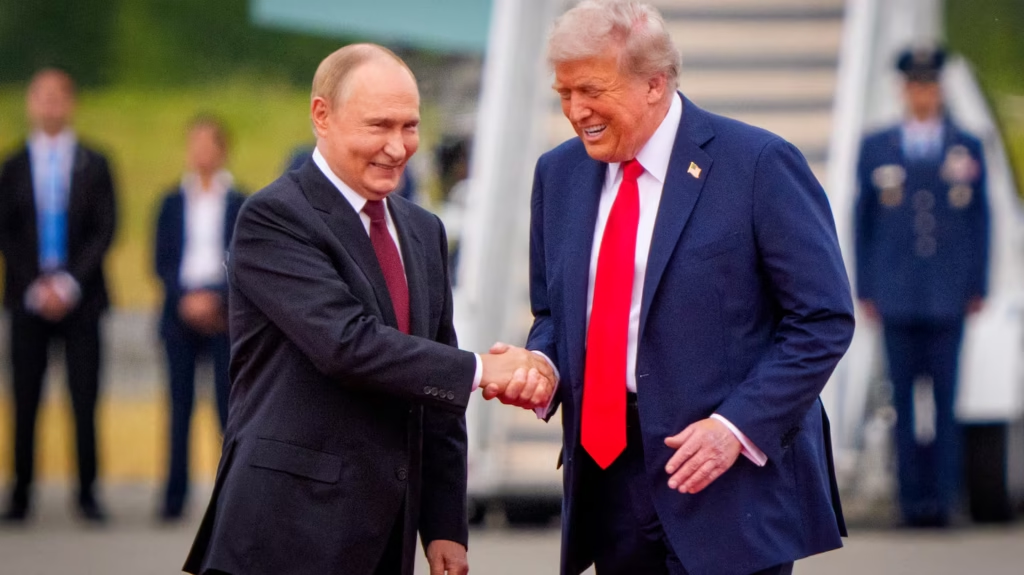
The letter ignited a firestorm on social media and across political commentary, with opponents labeling it reckless. The link between diplomatic pressure, foreign policy aims, and an expressed grievance over a peace prize was widely seen as unprecedented, fueling broader concern about the president’s judgment. This is not just a critique of policy, but of the tenor and context in which that policy was communicated.
Growing Momentum for the 25th Amendment Debate
The 25th Amendment to the U.S. Constitution provides mechanisms for removing a sitting president from power if they are “unable to discharge the powers and duties of the office.” Section 4, in particular, allows the vice president and Cabinet to act if there are “clear evidence” of incapacity, with Congress stepping in if disputes arise. Historically, this section has never been successfully used, though it has been discussed during past moments of presidential difficulty.
After Trump’s controversial letter, lawmakers and commentators who were previously cautious have grown more vocal. Some Democratic and even bipartisan voices argue that recent actions — including the letter and other statements perceived as erratic — may warrant serious constitutional consideration. These proponents say that the amendment exists to protect national governance and should not be sidelined when the stakes are this high.
Constitutional Safeguards Versus Political Reality
Legal experts emphasize that invoking the 25th Amendment is not merely a political maneuver but a constitutional safeguard designed for extreme scenarios. To initiate it, the vice president and a majority of Cabinet members must agree that the president cannot perform his duties. If the president objects, Congress — with a two-thirds majority in both chambers — must affirm the decision. This high threshold means the process is intentionally rigorous, reflecting the high constitutional cost of removing a commander-in-chief.
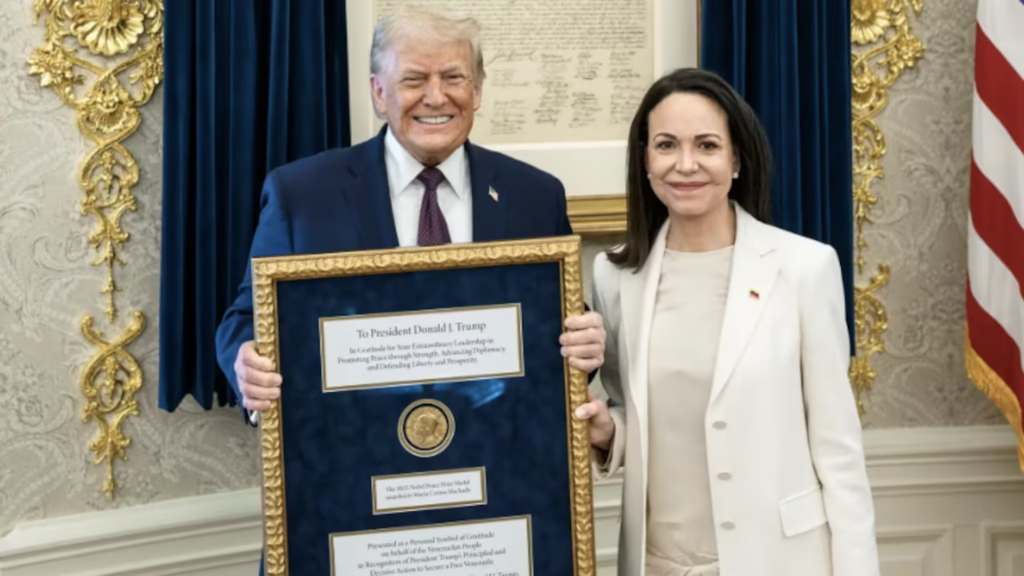
Critics of the calls say the amendment is being weaponized for political purposes and warn against lowering the bar for its application. They argue that temperament and controversial statements, while troubling to many, should not automatically equate to incapacity without robust legal and medical evidence.
Global and Domestic Repercussions
Beyond U.S. constitutional politics, the letter and ensuing debates have strained relations with key allies. European leaders insist that Greenland’s sovereignty will not be traded or negotiated under diplomatic coercion. Danish and Norwegian officials have publicly reaffirmed their positions, emphasizing that international law and treaty obligations govern such matters.

Domestically, the episode feeds into broader national debates over executive power, foreign policy strategy, and democratic norms. For many Americans, the controversy is not merely academic but tied to real concerns about global stability and leadership effectiveness.
Public Reaction and the Path Forward
On social media and in public forums, the response has ranged from urgent calls for constitutional intervention to fervent defenses of the president’s intentions. Some Americans view Trump’s bold diplomacy as unapologetic leadership, while others view it as impulsive brinkmanship. As the situation evolves, both legal scholars and constitutional historians warn that the coming days will be critical in shaping the narrative around presidential authority and limits — with lasting implications for democracy.
Amid these tensions, news outlets, policymakers, and citizen voices alike are paying close attention to whether the 25th Amendment discourse will move from heated rhetoric to formal action.
A Turning Point in U.S. Politics and Governance
The controversy over President Trump’s Greenland letter has swiftly moved from a diplomatic oddity to a constitutional flashpoint. With significant voices now invoking the 25th Amendment and calling for structured constitutional review, this moment represents more than a policy dispute — it could become a defining test of American constitutional mechanisms, public trust, and democratic stability.
Subscribe to trusted news sites like USnewsSphere.com for continuous updates.