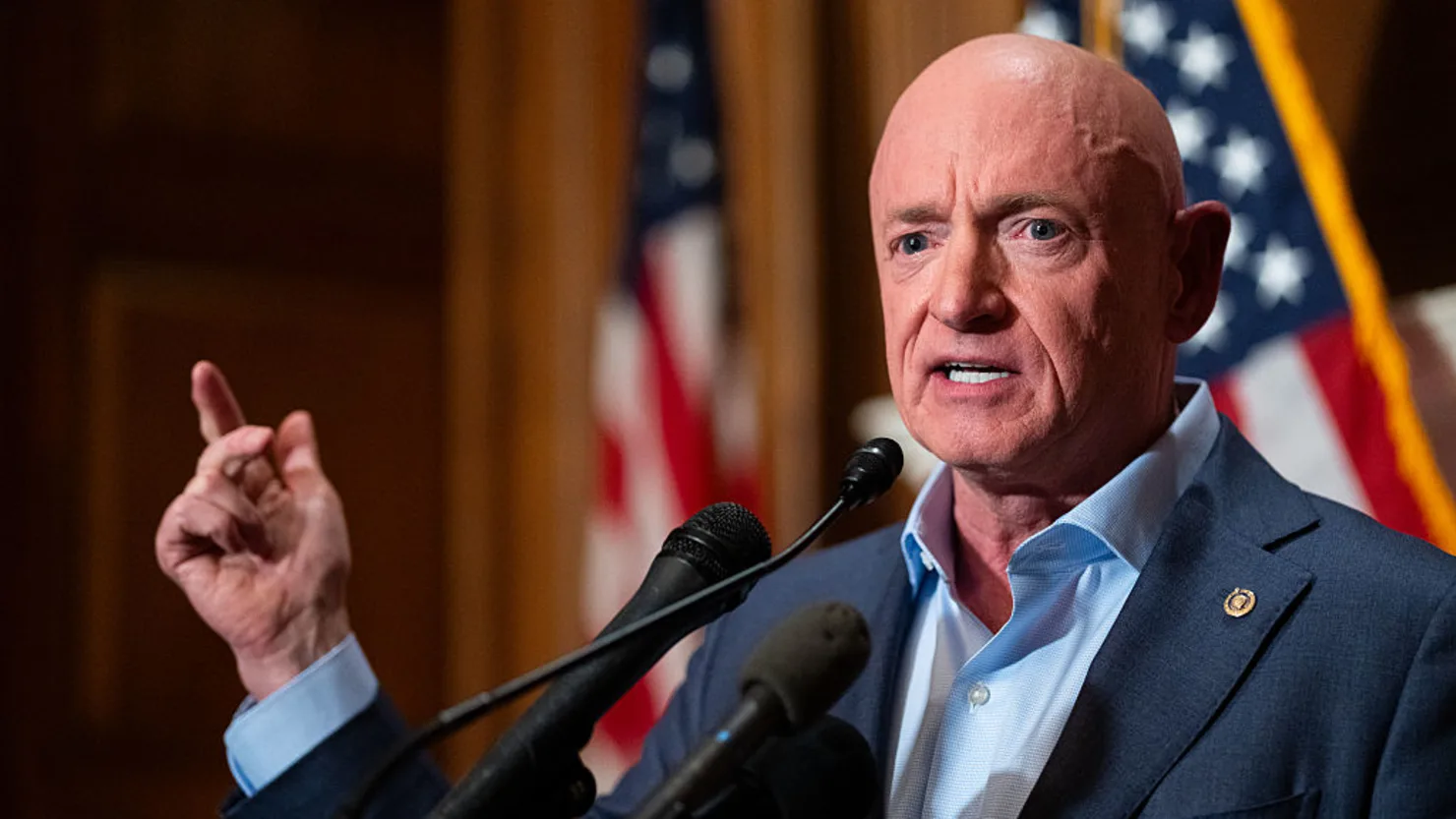
In a move that has ignited fierce political debate and deepened tensions between the Pentagon and Capitol Hill, Defense Secretary Pete Hegseth has initiated administrative proceedings that could downgrade Senator Mark Kelly’s retired Navy rank and reduce his military pension — all tied to a controversial video in which Kelly and fellow lawmakers urged service members to refuse unlawful orders.
The unprecedented action centers on a video released in November 2025 featuring Kelly and five other Democratic lawmakers, many of whom are veterans or former military personnel, telling U.S. troops that they have a legal and moral duty to disobey illegal directives. Critics aligned with the Trump administration have denounced the video as undermining military discipline and described it as potentially seditious.
Breaking Down the Pentagon’s Action and What It Means
The Pentagon announced that it has formally issued a letter of censure to Senator Mark Kelly and begun procedures under the Uniform Code of Military Justice to potentially reduce his retired rank from Navy captain and cut his retirement pay. As a decorated veteran and retired officer, Kelly still receives military benefits, which makes him uniquely subject to Pentagon jurisdiction even as a sitting senator.
Hegseth described Kelly’s participation in the video as “seditious in nature” and “reckless misconduct,” asserting that telling troops to disobey orders — even those believed to be unlawful — could erode good order and discipline within the armed forces. The letter of censure, once finalized, will become part of Kelly’s permanent military records and could materially affect his pension benefits in retirement.
According to the Pentagon’s timeline, Kelly has 30 days to submit a formal response, and the retirement rank review process is expected to conclude within 45 days.
What the Original Video Said — And Why It Sparked a Storm
The video at the center of this controversy was recorded and released in November 2025 at a time of heated national debate over the legal basis for certain military operations, including U.S. strikes in Latin American waters and domestic deployments tied to civil unrest. Kelly, alongside lawmakers such as Elissa Slotkin and Jason Crow, stated plainly that U.S. law obligates military personnel to refuse orders that are unlawful under the Constitution or military justice codes.
While the message aligns with longstanding legal principles — that service members have a duty to disobey unlawful commands — the release of a public video urging troops to think critically about orders was viewed by some officials as inappropriate and potentially disruptive to military hierarchy.
This clash reflects deeper divisions in how military discipline and civilian oversight intersect with political speech — especially when retired veterans remain actively engaged in public debates.
Sen. Kelly’s Response and Broader Political Reactions
Kelly has strongly rejected the Pentagon’s actions, characterizing them as politically motivated attempts to silence dissent and punish critics of the current administration. In statements, he has pledged to fight the proceedings “with everything I’ve got,” framing the controversy as a defense of free speech and constitutional rights.
Democratic leaders, including Senate Majority Leader Chuck Schumer, have denounced the Pentagon’s move as retaliatory and warned it sets a dangerous precedent for civil-military relations. Legal experts and advocacy groups have also questioned whether administrative penalties against a retired officer for political speech exceed the Pentagon’s legal authority and erode fundamental free-speech protections.
Some Republican lawmakers, however, have backed Hegseth’s approach, arguing that retired officers — even those now in public office — should be held to high standards of conduct to maintain trust in the military chain of command.
Explaining the Legal Framework at Play
Under the Uniform Code of Military Justice (UCMJ), certain behaviors — including sedition or conduct prejudicial to good order — can, in theory, be disciplined if committed by service members. What makes this case unique is that Kelly is retired and no longer on active duty, yet still receives pension benefits tied to his former rank.
Citing Articles 133 (conduct unbecoming) and 134 (general misconduct), Hegseth’s statement suggests that the Pentagon believes it has a legal basis to hold Kelly accountable under military law for statements he made as a civilian senator. Critics argue that such interpretations stretch the intent of these articles and blur the lines between political speech and punishable misconduct.
Ultimately, the question of how far military jurisdiction can stretch into political discourse — especially for retired officers now engaged in legislative work — could trigger deeper legal challenges in courts.
Historical Context: Civil-Military Relations and Precedent
The Pentagon’s action against Kelly is extraordinarily rare. Previous interventions involving military speech controversies have generally stayed within the bounds of internal discipline or focused on active duty members. Here, the conflict touches civil liberties, political speech, and military justice authority, raising novel constitutional issues.
Some analysts note that this controversy mirrors broader patterns seen in recent Pentagon policies under the current administration, where senior military leaders have been reshaped and political loyalties sometimes framed alongside institutional decisions. While those patterns are contested, the handling of Kelly’s case will likely be studied as a constitutional moment in civil-military relations.
Public Perception and Media Commentary
The reaction to this story in media outlets represents a polarized landscape:
- Some conservative outlets emphasize the need for stringent discipline and view Kelly’s comments as potentially detrimental to unit cohesion.
- Progressive and civil liberties commentators counter that advising troops on legal duties aligns with fundamental military law and democratic oversight. WBZ News
- Neutral legal analysts highlight that regardless of political leanings, courts may ultimately have to weigh in on whether the Pentagon exceeded its authority.
This wide-ranging discourse underscores how a seemingly internal military administrative decision now reverberates across political, legal, and public domains.
Looking Ahead: What Comes Next
With the response period underway and administrative proceedings moving forward, several outcomes are possible:
- The Pentagon could finalize Kelly’s rank reduction and pension cut.
- Kelly could successfully challenge the move in court.
- Broader legal rulings might clarify or limit Pentagon authority over retired officers engaging in political speech.
Whatever unfolds, this episode is likely to remain a flashpoint in discussions about military justice, constitutional rights, and executive power.
Conclusion
The Pentagon’s decision to pursue administrative penalties against Senator Mark Kelly over a video urging troops to refuse unlawful orders has escalated into a major political and legal controversy. It raises critical questions about civil-military boundaries, free speech protections for retired officers turned lawmakers, and the limits of military justice. As Kelly prepares to respond and public debate intensifies, this case could shape future interpretations of constitutional and military authority.
Subscribe to trusted news sites like USnewsSphere.com for continuous updates.