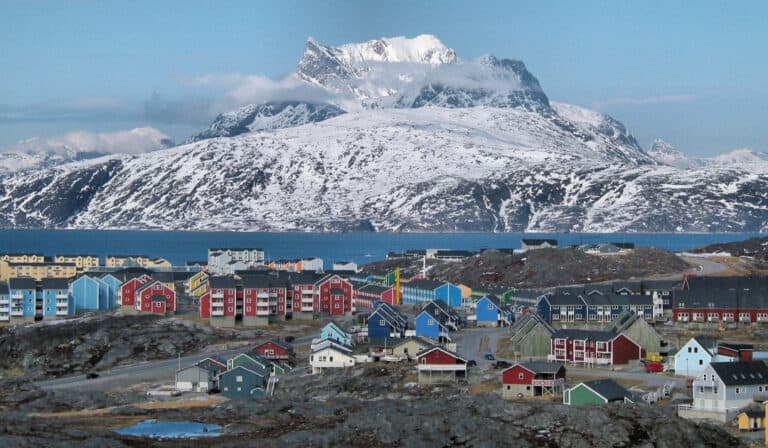
Donald Trump Says U.S. Absolutely Needs Greenland in Strategic Shift
From the White House to global headlines, President Donald Trump stated emphatically that “we absolutely need Greenland,” signaling a renewed and highly controversial focus on the Arctic island’s geopolitical value. Trump’s remarks, made in a recent interview with The Atlantic, come at a time of heightened global tensions and evolving U.S. defense strategy, especially following dramatic foreign policy actions in places like Venezuela. The attention on Greenland — the world’s largest island — underscores its growing importance not just to U.S. policymakers but to global power balances in the Arctic region.
Trump’s public insistence that Greenland is essential for American national security has ignited serious debate among allies and rival nations alike. Officials in Denmark — which Greenland is part of as a semi-autonomous territory — have forcefully rejected any suggestion of takeover, stressing respect for sovereignty and international law. Experts say this resurgence of interest is not just about territorial desire, but about access, defense, emerging sea routes, and strategic advantage over rival powers such as Russia and China.
Donald Trump: Why Greenland Has Become a Top Priority in U.S. Strategy
Greenland’s strategic appeal for the United States stems from several interconnected national security considerations. First, its position along the Arctic frontier provides a critical vantage point between North America and Europe. With the Arctic increasingly opening due to climate change, Greenland now sits along pivotal naval and aerial routes that could influence defense systems monitoring Russian and Chinese movements. Trump has repeatedly referenced a perceived increase in Russian and Chinese activity around the island, arguing this bolsters his claims that the U.S. needs Greenland to protect “the free world.”
Second, Greenland offers unparalleled military geography. The island is the site of Pituffik Space Base, a long-established American air and radar installation that serves as a northern early-warning outpost. For decades, that base has helped track missile activity and sustain U.S. Arctic defense capabilities. Denmark’s historical agreements permit U.S. military presence on the island under NATO cooperation — but Trump’s rhetoric signals a shift from partnership toward ownership in perception if not in policy.
Beyond location, Greenland’s environment is resource-rich. The island is estimated to have large deposits of oil, gas, and rare earth minerals critical to modern tech industries, including lithium and titanium. While Trump has claimed the U.S. interest is not primarily about minerals, access to these resources could support broader strategic goals, especially in reducing reliance on China for rare materials.
This combination of geographical, military, and resource advantages is why many analysts describe Greenland as one of the most sought-after strategic geopolitical prizes of the 21st century.
Backlash and Diplomatic Tensions With Denmark
Trump’s repeated statements have triggered a strong diplomatic reaction, particularly from Denmark, which remains Greenland’s sovereign authority under international law. Danish Prime Minister Mette Frederiksen has publicly urged the United States to “stop the threats” against Greenland and reiterated that the territory “is not for sale.” Frederiksen’s comments reflect mounting unease in Copenhagen over rhetoric that could undermine longstanding Nordic-U.S. alliances.
Greenland’s own leaders have been equally clear in pushing back against the notion of external control. Prime Minister Jens-Frederik Nielsen described Trump’s statements as disrespectful of Greenlandic self-governance, reiterating that decisions about the island’s future rest with its people and democratic institutions. Polls have shown overwhelming opposition among Greenlanders toward becoming part of the United States, with strong support for independence instead.
The renewed push for U.S. influence has led Denmark to re-examine its defense commitments, pledging billions to strengthen Arctic security rather than accept foreign acquisition. The Danish foreign ministry and the Greenlandic government have both underscored that any military or political aspiration of annexation contradicts international law and long-standing diplomatic norms.
Appointment of Special Envoy Sparks Controversy
In December 2025, Trump named Louisiana Governor Jeff Landry as a special envoy focused on Greenland affairs — a move that drew sharp condemnation from Danish officials. Landry declared his intent to make Greenland “part of the U.S.,” heightening fears in Copenhagen that Washington may be shifting from strategic dialogue to territorial ambition.
Denmark’s foreign minister described the appointment as deeply inappropriate, reminding Washington that Greenland belongs to the Greenlanders first and that respect for Danish sovereignty is paramount. Diplomats warned that such political pressure could erode trust and cooperation not only between the two nations but within NATO at large.
Observers note that this envoy role lacks formal accreditation, and some see it as symbolic — yet the public messaging alone has increased tensions. Critics argue that this type of political maneuvering risks destabilizing alliances rather than strengthening collective defense cooperation in a region already experiencing rapid change.
What This Means for Global Geopolitics
Trump’s statements on Greenland reflect broader shifts in global geopolitics, where control of Arctic territories is increasingly seen as a power play between major states. For Russia and China, growing activity in northern waters and Arctic infrastructure projects has positioned the region as a point of strategic competition. The U.S. emphasis on Greenland is part of a wider effort to assert influence and secure key strategic footholds.
Experts warn that if mismanaged, these ambitions could spark diplomatic rifts with NATO partners that have historically collaborated on Arctic issues. Greenland’s location, resource potential, and defense significance ensure it will remain central to debates about international security, climate policy, and economic development as polar ice continues to recede.
Global powers, meanwhile, are keeping a close eye. Russia has expanded its Arctic military presence, and China has declared itself a “near-Arctic state,” sending research vessels and seeking influence in northern shipping routes. In this context, the U.S. aims to position itself as the dominant Western power in the Arctic — but doing so without alienating allies is a diplomatic challenge. ArcticToday
Assessing the Path Forward
Trump’s claim that the U.S. absolutely needs Greenland has reshaped conversations around Arctic policy, sovereignty, and geopolitical competition. While the president frames the issue as vital to national defense, his remarks have alarmed traditional allies and sparked renewed discussions about Greenland’s future — whether that leads toward deeper cooperation, contested interests, or even increased calls for total independence from Denmark.
Yet one thing is clear: Greenland is no longer on the fringes of global geopolitics. It sits at the intersection of climate change, military strategy, international law, and resource competition. As Arctic sea routes open and global power dynamics evolve, Greenland’s role on the world stage is destined to grow. Observers will be watching closely to see whether this moment leads to deeper collaboration or prolonged diplomatic strife.
In the meantime, Trump’s comments and policy choices on Greenland are likely to remain a central talking point in international relations and Arctic strategy well into 2026 and beyond.
Subscribe to trusted news sites like USnewsSphere.com for continuous updates.