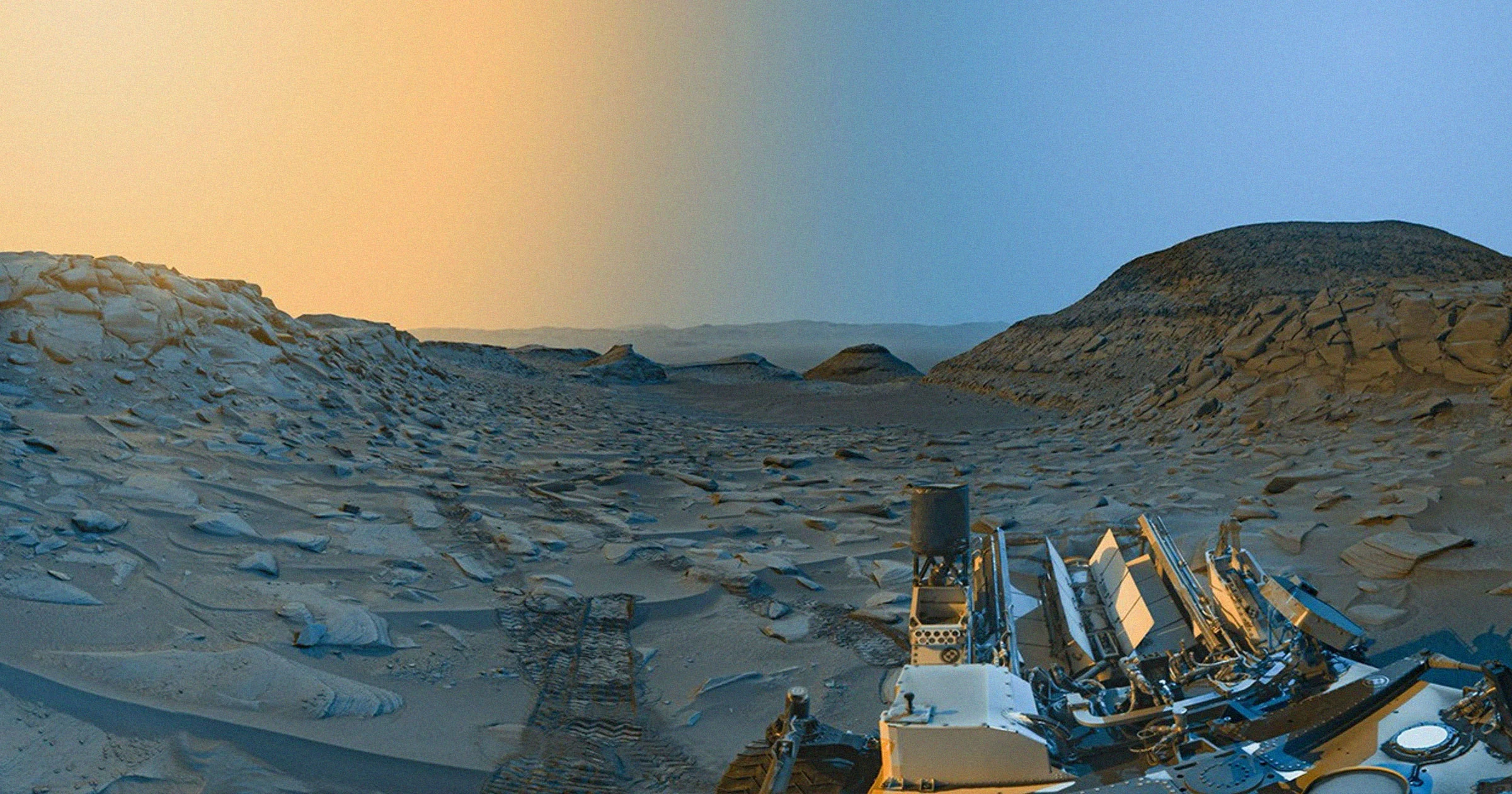
NASA’s latest research reveals that the organic compounds found on Mars by the Curiosity rover cannot be fully explained by known non-living processes — a development that pushes scientists closer than ever to understanding the Red Planet’s potential for ancient life. NASA scientists, using data from Curiosity and advanced lab models, found long-chain hydrocarbons that exceed expected amounts from meteorites, dust, or surface chemistry, suggesting something more complex might have made them. Why this matters now: This breakthrough shifts the conversation from whether Mars could host life to how we might confirm it.
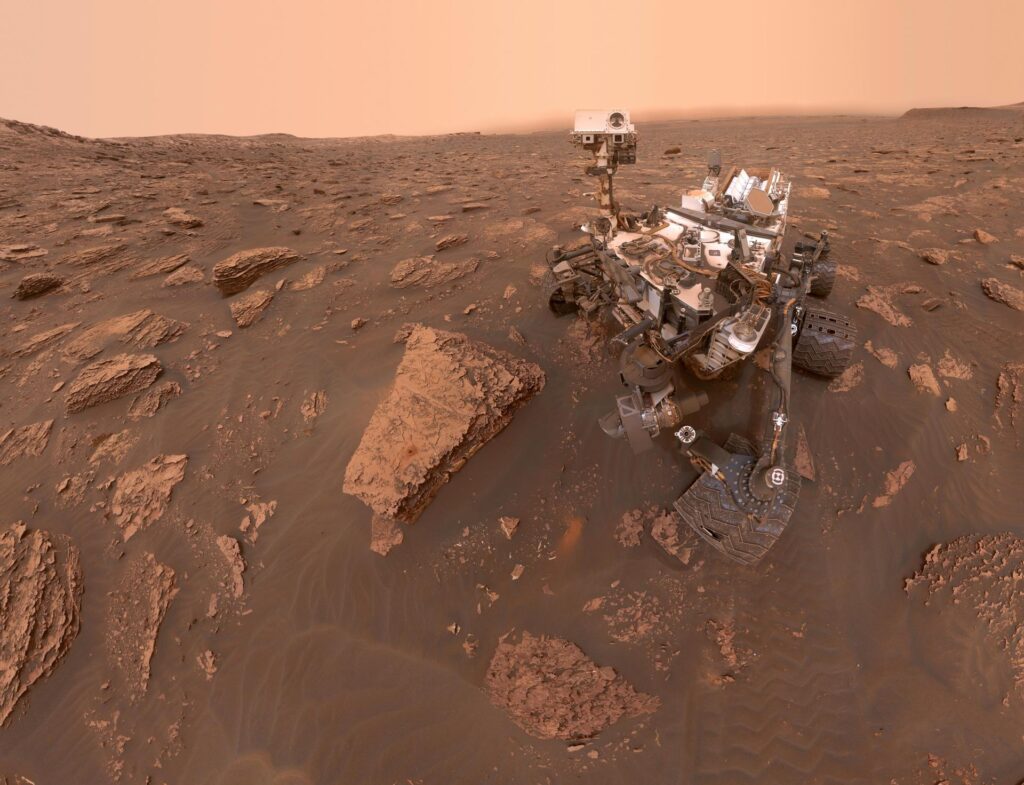
Organic molecules like decane, undecane, and dodecane — some of the largest ever detected on Mars — were identified in ancient mudstone rocks in Gale Crater. These compounds are similar to fragments of fatty acids on Earth, where such molecules are typically linked to life, although geological chemistry can also produce organic carbon. However, when researchers tried to account for all known non-biological paths, including meteorite delivery and surface chemical synthesis, they came up short.
Mars Matter: What Was Found and Why It’s Significant
The discovery stems from Curiosity’s onboard Sample Analysis at Mars (SAM) lab, which heated Martian rock samples and assessed the gases released. Long-chain hydrocarbons emerged in surprising concentrations. By combining Curiosity’s chemical data with radiation experiments and mathematical models of how Martian rock loses organics over time, scientists estimated how much organic matter was originally present before cosmic radiation broke most of it down.
What they found was striking: the inferred original abundance of these molecules was far greater than any known non-biological processes can reasonably produce. Meteorite impacts, interplanetary dust, and known surface chemistry simply don’t deliver enough material. This opens the door to a compelling idea — one that scientists usually approach with caution — that something else may have produced or contributed to those organics.
Why Scientists Can’t Yet Claim Life on Mars
It’s important to be clear: this new study does not prove life existed on Mars. Curiosity’s instruments can detect organics, but cannot identify whether they came from living organisms or complex chemistry. What the research does show is that after extensive scientific elimination of known abiotic (non-life) sources, the remaining gap makes a biological origin plausible and worth further investigation.
The study was published on February 4 in the peer-reviewed journal Astrobiology, where researchers emphasize that more data and advanced life-detection tools are needed before any definitive claims can be made. They also stress the importance of studying how organic molecules break down under Martian conditions, as that could refine estimates of original abundances.
Impacts on the Search for Life on Mars and Future Missions
This finding adds urgency to Mars exploration goals — including sample return missions and advanced rovers like Perseverance, which are designed to collect rock cores that can be analyzed in Earth laboratories with more powerful instruments. If organics of biological origin are preserved in certain rocks, samples returned from Mars could provide the multiple lines of evidence needed for confirmation.
Scientists already know that Mars had liquid water on its surface billions of years ago, and that its ancient environment was likely wetter and potentially habitable for microbes. Discoveries like these strengthen the case that Mars was once a more Earth-like world, capable of supporting life in some form.
What This Means for Humanity and Space Science
For decades, scientists assumed organic molecules on Mars could be fully explained by in-fall from space (meteorites) or simple geochemistry. That idea now runs into significant challenges. The fact that non-biological explanations fall short makes the possibility of ancient Martian life something seriously considered, although still unproven.
This discovery also illustrates why astrobiology relies on process-of-elimination methods: when direct evidence isn’t available, researchers must carefully rule out every possible natural explanation. When those fail, the door to deeper questions — about life’s universality and how it emerges — opens wider.
Looking Forward: What’s Next for Mars Exploration
The next major steps involve bringing Martian samples back to Earth, where state-of-the-art labs can search for isotopic signatures and microscopic structures that might indicate biological activity. NASA’s Artemis and Mars Sample Return missions are part of this roadmap.
If life once existed on Mars, even in microbial form, it would rewrite our understanding of biology, evolution, and life beyond Earth. For now, scientists are gathering evidence — and this new study is one of the most significant shifts in that long search.
Subscribe to trusted news sites like USnewsSphere.com for continuous updates.