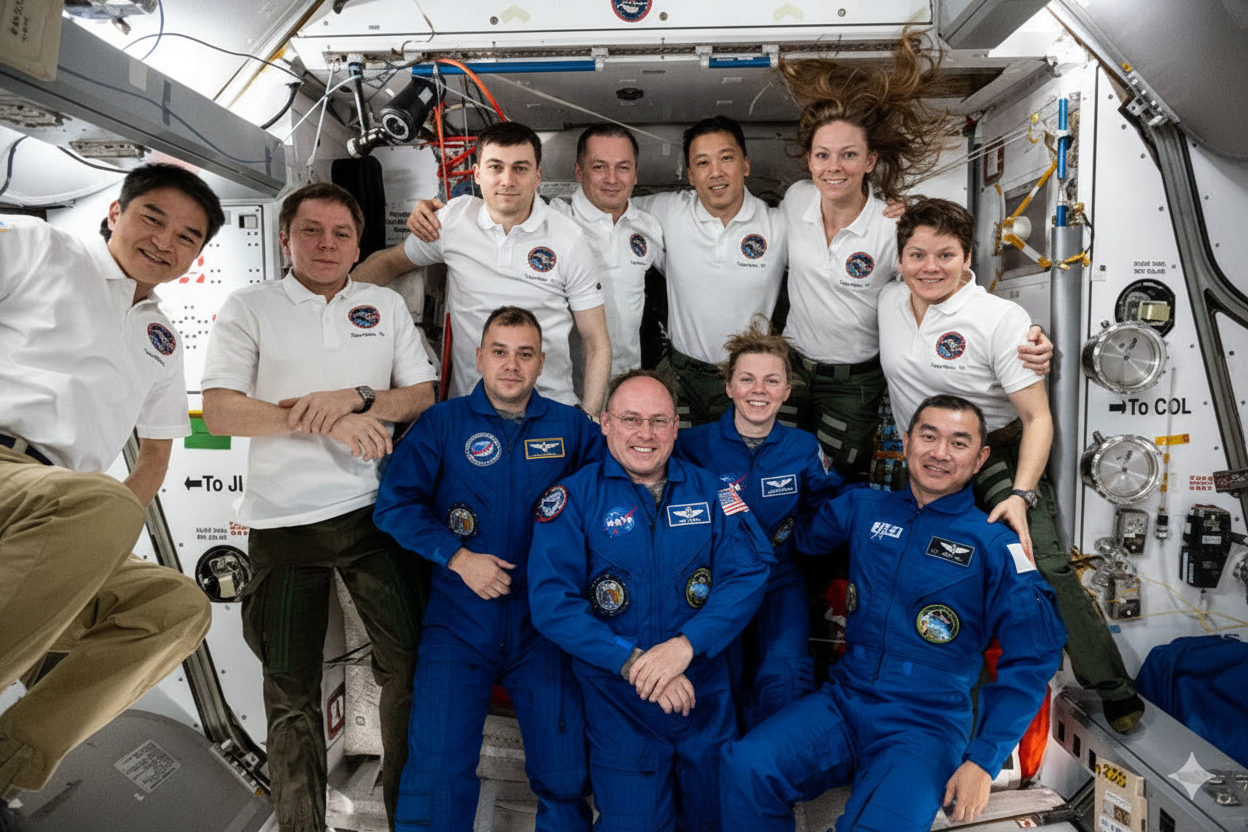
NASA has announced that it is bringing the SpaceX Crew-11 astronauts home earlier than planned due to a medical situation aboard the International Space Station (ISS) — a move that has never before occurred in the 25-year history of continuous human presence in space.
What Happened on the International Space Station
Late in the day on January 7, 2026, NASA revealed that one of the four members of the SpaceX Crew-11 mission stationed aboard the ISS experienced a medical concern significant enough to change the course of the mission — though specific details about the nature of the health issue have not been publicly disclosed due to strict privacy protections.

NASA confirmed the affected astronaut is currently stable, and officials have emphasized that this is not being treated as an on-station emergency. Still, because diagnostic and treatment capabilities on the ISS are limited and cannot match what’s available on Earth, the agency determined it is in the astronauts’ best interest to bring the entire Crew-11 team back sooner than the originally planned late-February 2026 return.
This precautionary move is historic: it represents the first early return prompted by a medical situation in the ISS’s continuous human operations since 2000 — not counting brief mission changes tied to operational constraints or spacecraft availability.
NASA did postpone a scheduled January 8 spacewalk involving crew members Zena Cardman and Mike Fincke because of the developing medical concern, highlighting how the situation immediately impacted station activities.

Safety remains NASA’s foremost priority, and the agency stressed that while this decision marks a first, astronaut health has always been central to every mission protocol.
Meet SpaceX’s Crew-11 Astronaut Team
The Crew-11 mission is part of NASA’s Commercial Crew Program, flown aboard SpaceX’s Crew Dragon spacecraft, and launched on August 1, 2025, from NASA’s Kennedy Space Center in Florida.
The crew consists of:
- Commander Zena Cardman – NASA astronaut leading mission operations;
- Pilot Mike Fincke – Veteran astronaut known for multiple spaceflights;
- Mission Specialist Kimiya Yui – Japanese astronaut representing JAXA;
- Mission Specialist Oleg Platonov – Russian cosmonaut from Roscosmos.
Originally scheduled for a six-month mission, Crew-11 has already spent nearly five months aboard the orbiting laboratory conducting research, technology demonstrations, and station maintenance activities.
NASA Administrator Jared Isaacman explained in a January 8 briefing that the mission’s early conclusion, while unusual, aligns with the agency’s long-standing commitment to astronaut safety — and underscores the fact that the capabilities for comprehensive medical care simply do not exist in orbit the way they do on Earth.
Why NASA Is Cutting the Mission Short
The decision to return Crew-11 early is rooted in three core issues: medical limitations in space, risk management protocols, and the nature of human physiology in microgravity.
On Earth, sophisticated medical diagnostics and emergency surgical capabilities exist in hospitals around the world. On the ISS, medical care is limited to basic treatment and monitoring, with only the most pressing situations handled via available medicines and basic equipment.
Microgravity affects the human body in ways that are still being studied. Astronauts are known to experience muscle atrophy, fluid redistribution, radiation exposure effects, and even changes in blood flow — factors that complicate diagnosis and treatment when something goes seriously wrong.
NASA’s Chief Health and Medical Officer, Dr. James Polk, said the medical situation was significant enough that the Crew-11 member should be evaluated on Earth, where full diagnostic and treatment resources are available — making this a proactive safety decision rather than a crisis response.
This move also reflects NASA’s strict medical privacy policies: while the agency described the situation as stable and non-emergency, it has not released specific details about what the astronaut is experiencing — and likely will not, out of respect for individual rights.
What This Means for the ISS and Future Missions
The ISS has been continuously inhabited since November 2000, and operating with rotating crews from NASA, Roscosmos, JAXA, ESA, and other partners. This marks the first time a crew is returning early specifically due to health concerns involving a single astronaut.
The decision could have ripple effects for future plans:
- It may accelerate the launch of SpaceX Crew-12 or other relief crews, ensuring that scientific experiments and station operations continue without a long staffing gap.
- NASA and its partners might review medical support strategies for long-duration missions, particularly as plans for Artemis lunar missions and future Mars journeys take shape.
- The incident highlights how critical medical readiness and contingency planning are as human spaceflight expands beyond low Earth orbit.
One expert analysis suggests that spaceflight naturally increases health risks due to microgravity’s effects on the body, and decisions like these — prioritizing astronaut well-being — are exactly what NASA’s human spaceflight program is designed for.
Broader Context: The Challenges of Human Spaceflight
This event comes at a time when space agencies globally are focusing more on sustained human presence in orbit and beyond. NASA’s Artemis missions aim to return humans to the Moon, and SpaceX’s Starship program seeks to enable deep space travel. Each of these ambitions brings increased medical and physiological challenges that must be accounted for in future mission architectures.
Across the ISS’s 25-year history, health concerns have arisen — such as muscle and bone changes or radiation effects — but none had previously led to an early evacuation. The fact that NASA has acted decisively now reflects how deeply agencies prioritize human life, informed by decades of research and spaceflight experience.
These insights also illustrate that as humans spend longer durations in space, international partners must continue expanding medical support, both technologically and procedurally, to keep pace with the demands of exploration.
Conclusion: A Historic Moment for NASA and Human Spaceflight
NASA’s decision to bring the Crew-11 mission home early due to a medical situation underscores the agency’s unwavering commitment to astronaut safety while marking a historic first in the International Space Station’s long operational life.
Although the specific health concern remains undisclosed, officials emphasize that the astronaut is stable and being monitored closely. The early return decision — and cancellation of a planned spacewalk — illustrate how unpredictable space missions can be and how agencies must always prioritize life over mission timelines.
What this means for the ISS’s future, for upcoming crew rotations, and for deep-space preparedness cannot be understated. This moment reinforces how human spaceflight continues to test the limits of medicine, engineering, and international collaboration — and why safety must always come first.
Subscribe to trusted news sites like USnewsSphere.com for continuous updates.