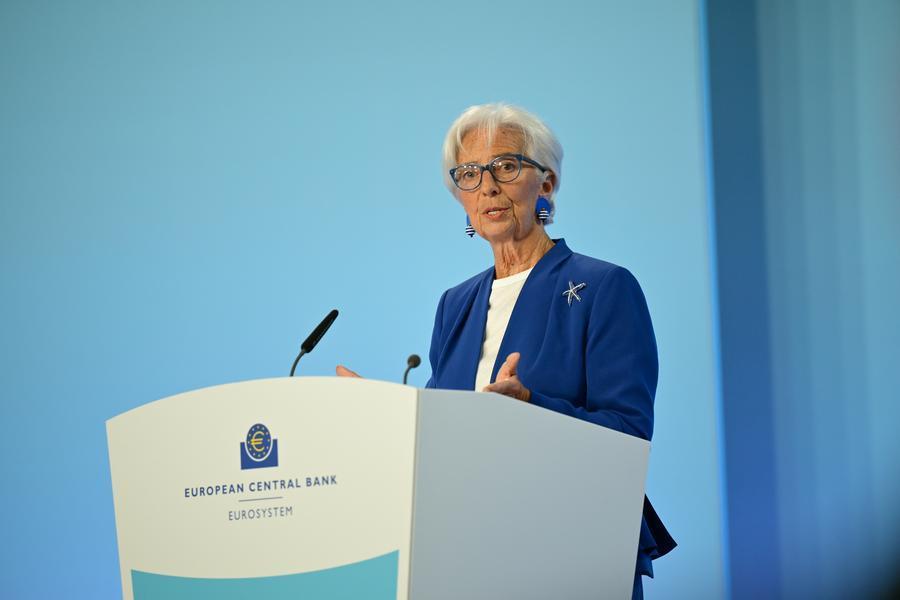
European competitiveness is facing a major structural test as the global economic environment changes, European Central Bank President Christine Lagarde warned on August 19, 2026. Speaking at the World Economic Forum’s International Business Council in Geneva, Lagarde said three foundations that supported Europe’s postwar growth—expanding global trade, relatively cheap energy and a stable rules-based international order supported by U.S. security guarantees—are weakening at the same time.
The warning comes as Europe also confronts stronger competition from China, higher energy costs, fragmented markets and the rapid development of artificial intelligence. Lagarde argued that Europe cannot rely on its old growth model returning and needs to make it easier for companies to expand across the European Union, attract investment and turn its research strength into commercial success.
For the United States, the issue matters too. A less competitive Europe could affect American exporters, multinational companies, financial markets, trade relationships and the broader balance of the global economy.
Why This Matters Now
Lagarde’s warning is not simply about one year’s economic growth. Her argument is that the assumptions behind Europe’s economic model are changing. Europe became unusually dependent on international trade and benefited enormously from globalization, but the environment for global commerce is now more fragmented.
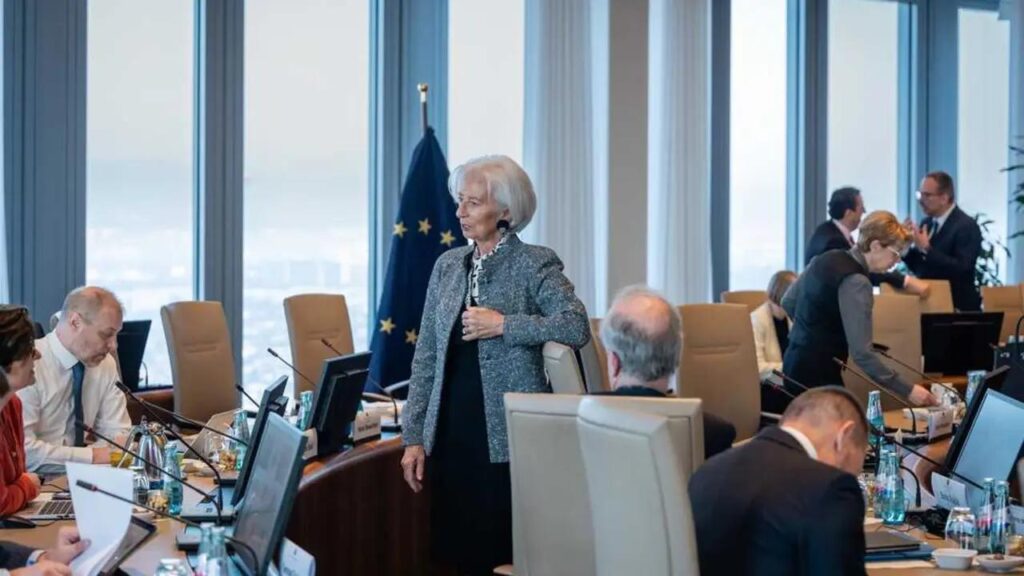
According to Lagarde, more than 2,500 trade restrictions were implemented globally during January–October 2025. Europe is roughly twice as open to trade as the United States when measured by trade as a share of GDP, meaning changes in global trade conditions can have an unusually large effect on European businesses and workers.
Energy is another major issue. Europe historically benefited from relatively inexpensive energy, including Russian gas, which supported industrial production. That advantage has weakened substantially. Lagarde said electricity prices for energy-intensive European industries were more than twice U.S. levels on average last year and about 50% higher than in China.
The third change is geopolitical. Lagarde said the stable international environment that helped European companies organize supply chains around efficiency rather than resilience is under pressure. Companies now have to consider geopolitical risks, supply-chain security and strategic dependencies when making investment decisions.
That creates a difficult environment for Europe because businesses may become more cautious precisely when the region needs more investment.
U.S. Retreat and the Changing Global Economic Order
The most politically sensitive part of Lagarde’s argument concerns the changing relationship between Europe and the United States. Her point was not that Europe should simply blame Washington for its economic problems. Rather, she argued that a global system in which U.S. security guarantees and a rules-based international order supported European economic integration is becoming less certain.
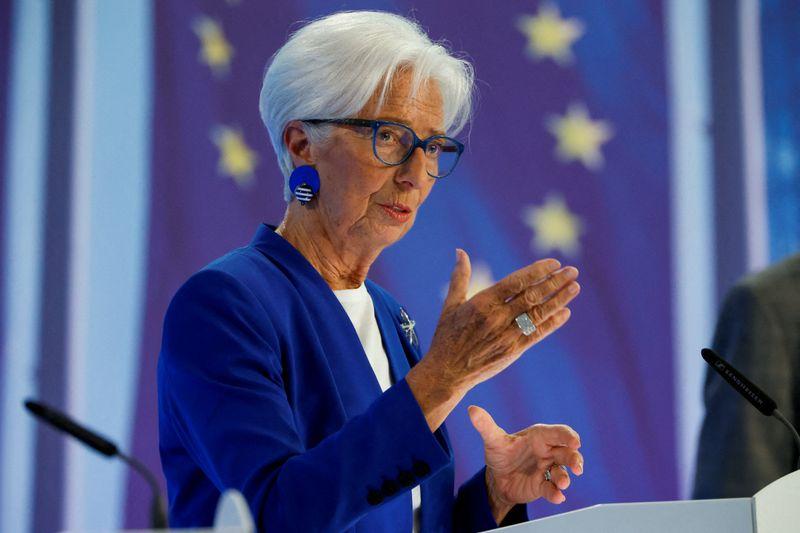
The return of geopolitical tensions, trade restrictions and questions about long-standing alliances means European governments and companies increasingly have to account for risks that were less prominent during earlier decades of globalization. Other reporting on Lagarde’s remarks noted that tariffs and uncertainty surrounding U.S.-European relations are adding to the challenge.
This could have consequences beyond Europe. The U.S. and European economies remain deeply connected through trade, investment and financial markets. If European companies face persistently higher energy costs or struggle to scale, American companies competing in global markets could face different competitive dynamics.
For investors, the bigger question is whether Europe can transform this period of geopolitical uncertainty into an incentive for greater economic integration.
Lagarde’s answer was that Europe needs to become more capable of generating growth internally rather than depending so heavily on exports.
China, Energy Costs and Europe’s Industrial Challenge
China represents another important part of the competitiveness problem.
Lagarde said China now competes directly with the euro area in close to 40% of the sectors where Europe has a comparative advantage, compared with around 25% in the early 2000s. That illustrates how China’s industrial capabilities have moved beyond lower-cost manufacturing into increasingly sophisticated areas of global competition.
Europe therefore faces a two-sided challenge. Its companies must compete against Chinese producers while also dealing with higher energy costs and a more uncertain global trading environment.
That is particularly important for energy-intensive industries such as chemicals, metals and other manufacturing sectors. If European production becomes structurally more expensive than production in the United States or China, companies can face difficult decisions about where to invest, expand factories and build future capacity.
However, Europe still has significant economic advantages. It has a huge consumer market, advanced industrial companies, strong universities and research institutions, sophisticated financial systems and a highly educated workforce.
The problem is converting those strengths into companies capable of competing at global scale.
AI Could Become Europe’s Next Big Economic Test
Artificial intelligence is where Lagarde’s warning becomes especially forward-looking.
Europe has substantial scientific and research capabilities. The ECB says the European Union represents around 6% of the world’s population but about 15% of its researchers, while producing almost one-fifth of the world’s most-cited scientific publications.
But research strength does not automatically translate into economic leadership.
Europe largely missed much of the commercial upside from the first digital revolution, according to Lagarde. She warned that Europe cannot repeat that experience with AI, which she described as another major technological transformation.
There are encouraging signs. The ECB said survey evidence indicates euro-area companies expect to allocate roughly 9% of their total investment to AI in 2026. The challenge is making sure those investments spread through the economy and allow companies to grow.
That requires scale.
A company that can operate across a market of hundreds of millions of consumers without repeatedly facing different national rules can potentially grow faster than one forced to treat every country as a separate market.
This is why Lagarde emphasized reducing fragmentation within Europe’s Single Market.
What This Means for You
For American readers, Lagarde’s warning may initially sound like a European issue. But changes in European competitiveness can eventually influence U.S. consumers, investors and companies because the U.S. and Europe remain major economic partners.
A weaker European economy could reduce demand for some U.S. exports, while stronger European investment in AI, defense, energy and infrastructure could create new opportunities for American technology and industrial companies.
For investors, Europe also presents a complicated picture. Structural weaknesses can weigh on corporate earnings, but major reforms can create opportunities if governments succeed in improving capital markets, reducing barriers and encouraging investment.
For European consumers and businesses, the stakes are even more direct. Higher energy costs, weaker productivity and fragmented markets can limit wage growth and investment. On the other hand, stronger integration could improve competition, reduce duplication and make it easier for successful companies to expand.
The central issue is therefore not simply whether Europe is growing today.
It is whether Europe can build a new growth model capable of producing stronger productivity and globally competitive companies.
Investor Takeaway and Future Outlook
Lagarde’s comments should not be interpreted as a forecast that Europe’s economy is about to collapse. In fact, other reporting on her remarks emphasized that European growth has continued despite major shocks. ANSA reported that euro-area growth increased 1.5% in 2025 and continued expanding in 2026, with domestic demand becoming an increasingly important source of growth.
The ECB has also identified investment as a potential new growth engine. In February, it said investment was projected to account for almost 40% of euro-area growth between 2026 and 2028, representing more than €150 billion in additional cumulative investment. Defense, infrastructure, digital investment, data centers and energy networks are expected to play important roles.
That makes the next few years particularly important.
Europe has a choice between remaining fragmented and struggling to scale companies—or using its enormous single market to create a more integrated environment for investment, innovation and entrepreneurship.
The AI race may become the clearest test.
If European companies can turn strong research capabilities into large global businesses, Europe could strengthen productivity and reduce some of the competitiveness gap. If companies continue to face fragmented rules and limited access to growth capital, the region risks falling further behind the U.S. and China in strategically important technologies.
Future outlook: Europe’s economic challenge is increasingly about productivity, scale, energy security, capital formation and technological adoption—not simply short-term interest rates or trade figures.
Lagarde’s message ultimately points toward a broader transformation: the global economic environment that helped Europe prosper for decades is changing, and Europe may need to build more of its own economic strength rather than assuming the old system will return.
For the United States, Europe and global investors, that makes European competitiveness an issue worth watching well beyond the headlines.
Primary source: The European Central Bank published Lagarde’s full August 19 remarks from the World Economic Forum’s International Business Council. Read Lagarde’s full ECB remarks
Subscribe to trusted news sites like USnewsSphere.com for continuous updates.