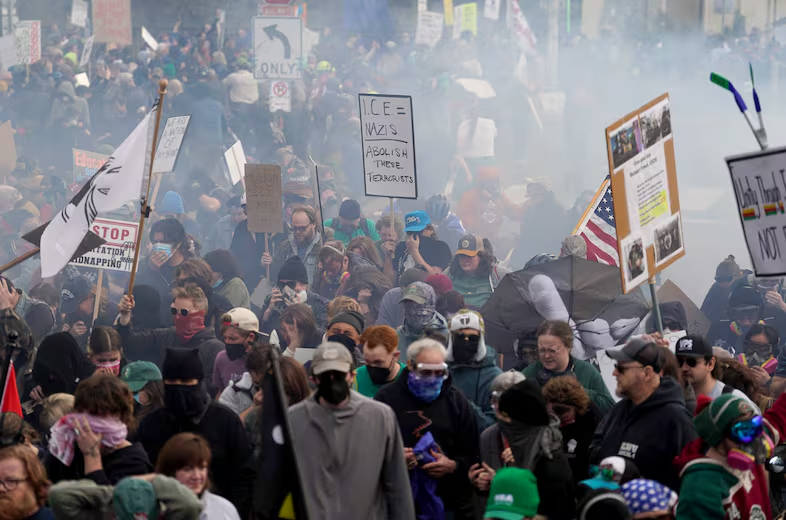
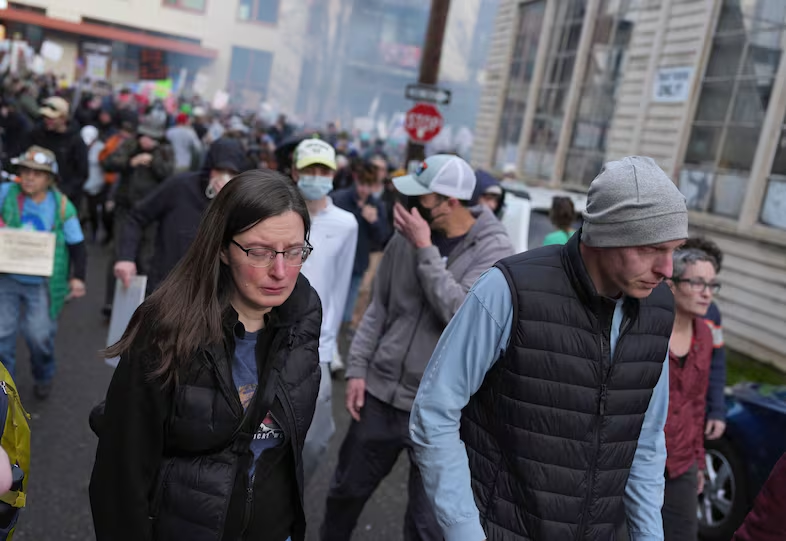
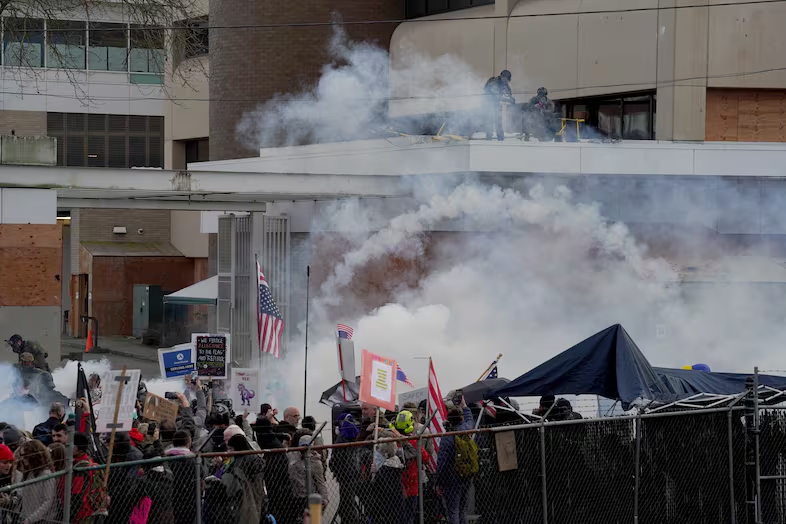
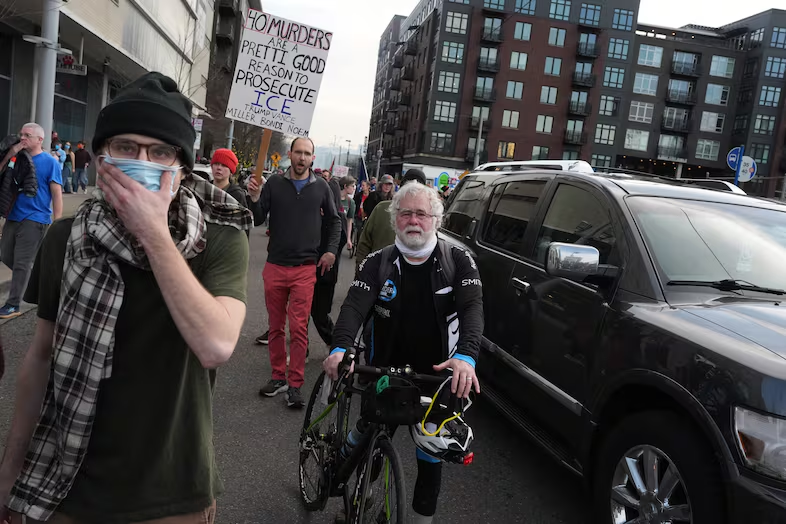
In a powerful display of union strength and civil resistance, thousands of demonstrators joined the Labor Against ICE protest in Portland, Oregon, to oppose federal immigration enforcement policies and the continued operations of Immigration and Customs Enforcement (ICE) — a movement that has rapidly gained momentum nationwide. Protesters, backed by more than 30 labor unions, marched from Elizabeth Caruthers Park to the South Waterfront ICE facility Saturday, only to be met with tear gas and crowd-control munitions deployed by federal agents in what city officials are calling an unnecessary use of force.
The demonstration reflects growing national outrage over ICE enforcement tactics and alleged abuses of power, with similar “ICE Out” strikes and rallies occurring in cities across the United States over the past several days in response to recent federal actions.
Union Power and Public Opposition to ICE Enforcement
Protest organizers said the Labor Against ICE rally stood as one of the largest union-backed demonstrations in Portland in recent years, drawing members from at least 17 major unions, including the Oregon Nurses Association, SEIU affiliates, Teamsters, and local public service groups.
Participants called for an end to what they describe as brutal deportation practices and for the abolition of ICE — an agency critics argue has operated with limited accountability. The march began peacefully and proceeded through city streets toward the ICE facility, where chants opposing federal immigration policy echoed across South Portland.
Union leaders emphasized that their protest was rooted in both worker solidarity and human rights advocacy, asserting that immigration enforcement impacts families, communities, and labor rights — and must be addressed through democratic pressure rather than violence.
Federal Response Sparks Local Outrage
The demonstration took a dramatic turn when federal agents fired chemical agents, including tear gas, at demonstrators near the ICE building. City officials, including Portland’s mayor and city council members, swiftly condemned the use of force, invoking recent ordinances that ban tear gas deployment within city limits.
Mayor Keith Wilson characterized the action as harmful and constitutionally questionable, stating that peaceful protest was met with excessive federal response despite Portland’s restrictive local laws. Council leaders echoed this outrage and called for enforcement of the city’s chemical agent ban.
Portland Police Bureau officials clarified that local law enforcement did not deploy the tear gas and that the chemical agents came from federal personnel. Still, many city leaders are pressing for accountability, highlighting ongoing tensions between municipal authority and federal immigration enforcement.
National Context: ICE Protests Gain Momentum
The Portland protest is part of a broader wave of coordinated demonstrations organized under themes like “ICE Out” and “no work, no school, no shopping,” calling for economic strikes and public support nationwide. Activists in other cities, from Minneapolis to San Francisco, have staged rallies, walkouts, and citywide actions to protest ICE and federal immigration policies, especially in the wake of high-profile incidents involving agent violence or deaths during enforcement operations.
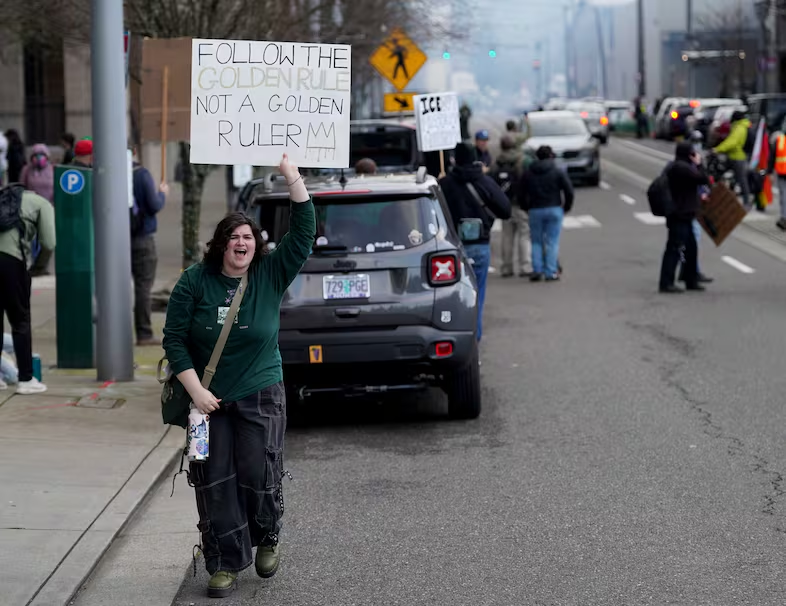
These nationwide actions reflect widespread concern among activists, labor unions, students, and local communities — all demanding reforms or dismantling of an agency that critics characterize as abusive and lacking in transparency.
Impact on Portland Community and City Governance
Beyond the immediate protest, the events have deep implications for local governance, public safety, and civic trust in Portland. Officials are documenting the protest and responses, preparing evidence to potentially pursue legal actions against federal enforcement as allowed under local ordinances.
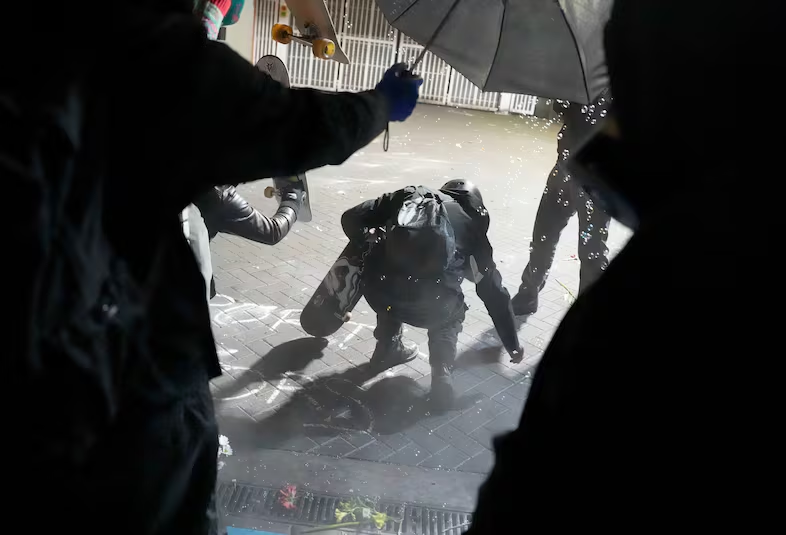
The ongoing demonstrations also raise questions about the balance of power between city leadership and federal agencies — a conversation deeply tied to government accountability, civil liberties, and the limits of protest in a democratic society.
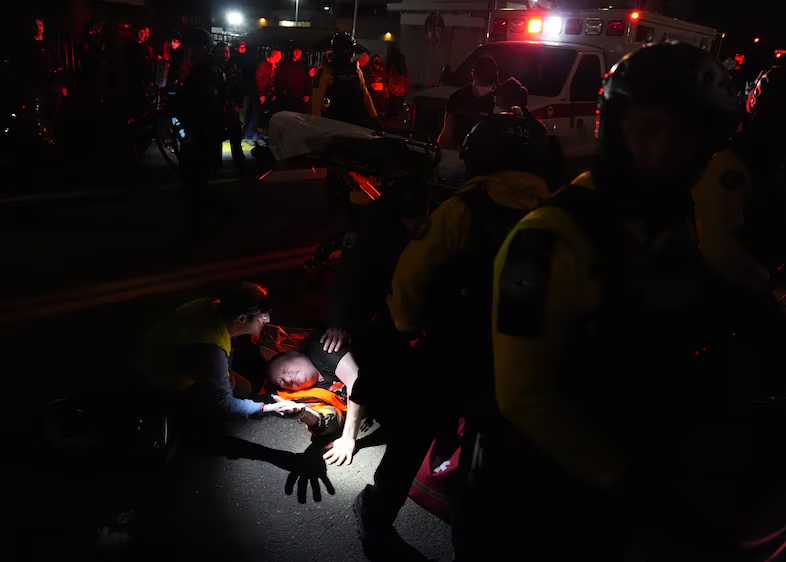
Why This Matters Now
The Labor Against ICE protest comes at a critical moment when immigration enforcement and civil liberties are at the forefront of national debate. Recent coordinated protests across cities signify that this is no longer a localized issue; rather, it has become a sustained movement drawing on labor, student, and community networks across the country.
With federal agencies taking aggressive stances and cities pushing back through legislative and civic channels, the spotlight on ICE’s role and conduct is intensifying — making this a pivotal moment in America’s discussion over immigration policy, public protest rights, and federal oversight.
Subscribe to trusted news sites like USnewsSphere.com for continuous updates.