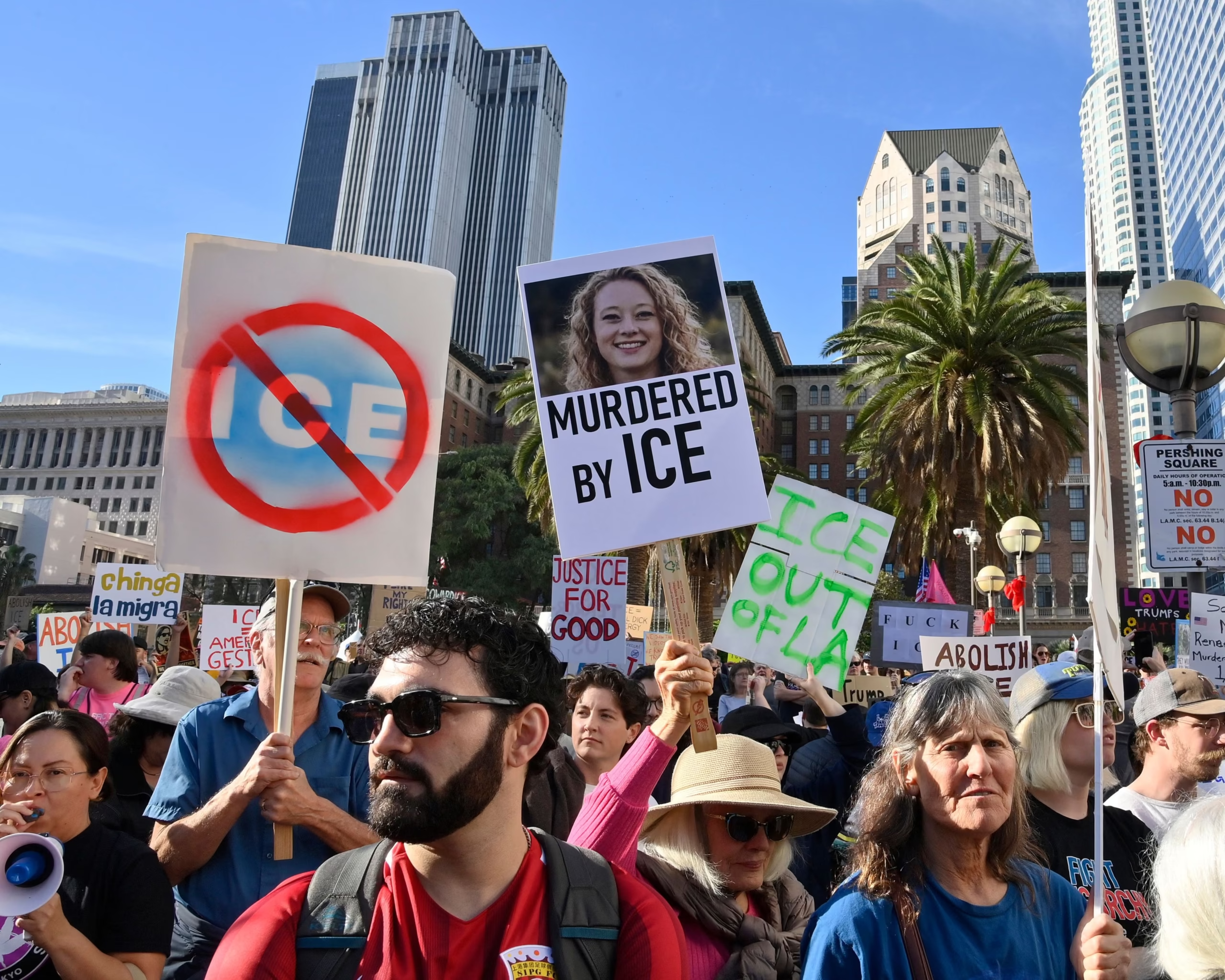
The Minneapolis ICE shooting of Renee Good sparked nationwide protests and intense political debate. The fatal encounter between U.S. Immigration and Customs Enforcement (ICE) and 37-year-old American citizen Renee Nicole Good has triggered a powerful national reckoning over immigration enforcement, use of force by federal agents, and political leadership. What began in South Minneapolis has rapidly climbed into one of the most consequential domestic news stories in the United States right now, drawing thousands into the streets, drawing criticism from civic leaders, and galvanizing debates on federal power.
What Happened to Renee Good: The Incident That Shocked the Nation
Early on January 7, 2026, Minneapolis streets became the focal point of a federal immigration operation involving U.S. Immigration and Customs Enforcement (ICE). During that operation, an ICE agent identified as Jonathan Ross fatally shot Renee Nicole Good, a 37-year-old mother of three.
Evidence from bystander footage and multiple eyewitness accounts indicates that Good was in her SUV and attempting to leave the scene when the agent fired his weapon. Some federal statements claimed the agent acted in self-defense after insisting that Good exit her vehicle, portraying her movement as threatening. Local leaders, video analysts, and community members directly dispute that narrative, saying the footage shows no imminent threat posed by Good.
Renee Good was not a known activist before the shooting. According to close family and early reports, she had just dropped off her child at school that morning and was on her way home with her partner when the incident occurred — a personal tragedy that quickly gained national attention and sympathy.
The complex and contested facts of the case — including conflicting claims about Good’s actions — have become a central point in the broader national dialogue about immigration law enforcement in the United States.
Federal Deployment: How the Government Escalated Its Presence
Following the fatal shooting, the U.S. Department of Homeland Security announced the deployment of hundreds more federal agents to Minneapolis, which Secretary Kristi Noem described as necessary to protect ongoing ICE operations and secure enforcement personnel on the ground. This deployment is reported to be the largest ICE operation in Minnesota’s history, with around 2,000 federal officers present before additional reinforcements were announced.
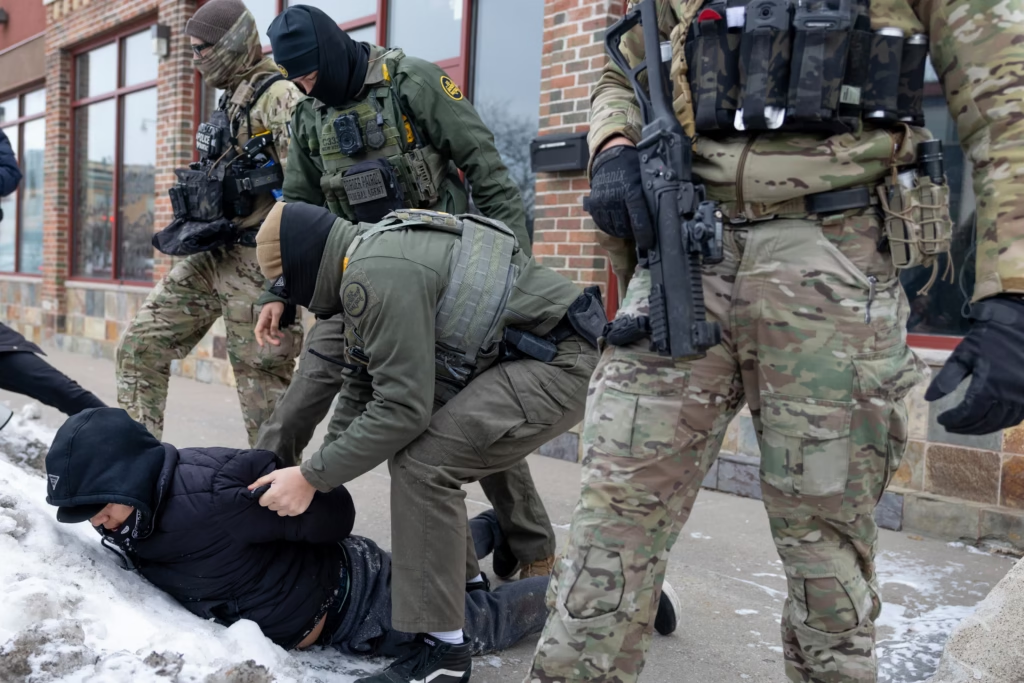
Noem, speaking publicly, defended the continuous reinforcement of federal agents and characterized Good’s actions as “obstruction” of law enforcement, though critics have sharply rejected this framing.
Governors, mayors, and lawmakers at both the state and national levels have been drawn into the discussion. Some Democratic officials, including Minneapolis Mayor Jacob Frey, say the federal response has exacerbated community tensions rather than calming them.
Local civilian groups have also formed “observation networks,” with volunteers accompanying and monitoring federal actions in neighborhoods, hoping to document interactions and safeguard residents’ rights.
This expanding federal footprint has become a flashpoint in debates over immigration enforcement authority, local governance, and civil liberties.
Nationwide Protests: Public Outrage and Civil Action
From Minneapolis to cities across the country, the shooting of Renee Good has ignited widespread protests, with demonstrators demanding justice, accountability, and limits on ICE actions.
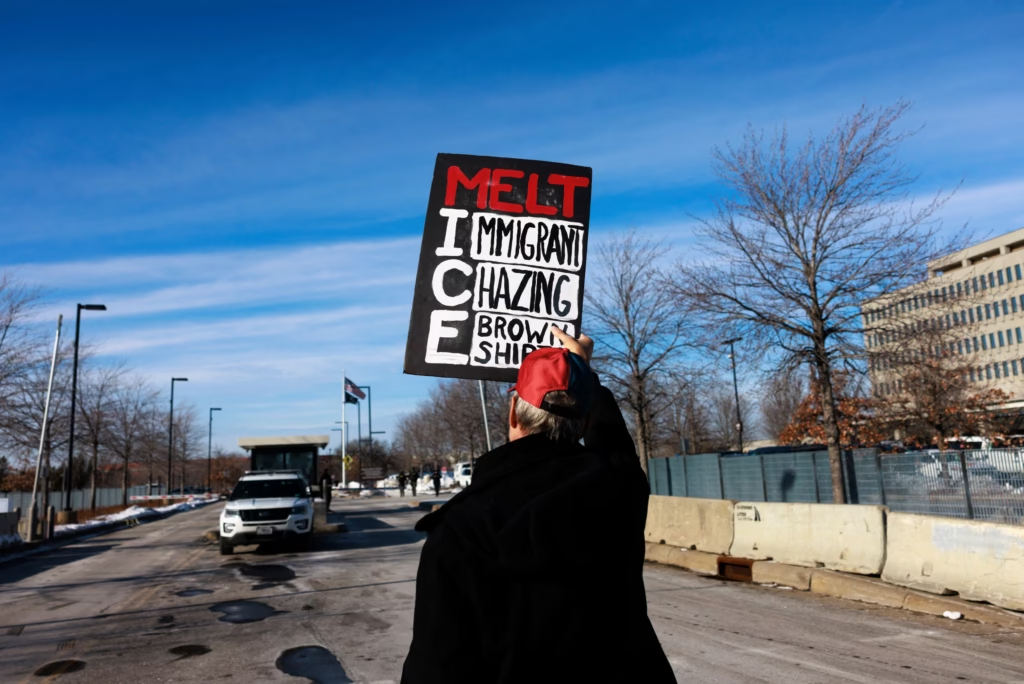
Protest organizers and participants often framed their actions around calls for removing ICE from local communities entirely, decrying the agency as emblematic of broader injustices in immigration enforcement. Demonstrations have taken place in major metro areas, including Los Angeles, Chicago, Salt Lake City, New York City, and even internationally — including solidarity vigils in Berlin.
Protesters have employed a range of tactics, from peaceful marches and vigils to boisterous demonstrations that block traffic and confront federal forces. In Minneapolis alone, tens of thousands gathered at Powderhorn Park and marched toward the shooting site, while in Chicago and nearby suburbs, residents held signs calling for accountability and justice.
The demonstrations have grown not just in size but in symbolic resonance, drawing concerns about federal authority and the very nature of civil disobedience in confronting perceived injustices by law enforcement.
Political Controversy: Leaders, Labels, and Investigations
The political fallout from the incident has been intense. Across party lines, elected officials and civic leaders have amplified contrasting narratives and pressed for differing forms of accountability.
Secretary Kristi Noem described Good’s actions as “domestic terrorism, prompting widespread criticism for misapplying a political label to justify federal force.
Minnesota officials, including Governor Tim Walz and Minneapolis Mayor Jacob Frey, have demanded increased state involvement and oversight, especially as federal investigations progress. Frey has publicly urged that state investigators be included in the federal inquiry — a request initially resisted.
Meanwhile, the FBI’s involvement has drawn scrutiny and controversy. Reports indicate that state law enforcement was blocked from participating in the federal–level investigation, raising legal tensions and questions about transparency.
National figures and commentators have also weighed in, with some conservative voices defending the federal agent’s actions, while progressive lawmakers call for broader immigration reform and ICE accountability. The political discourse around the event reflects deeper fractures in American approaches to immigration enforcement and civil rights.
Personal Stories: Remembering Renee Good
Beyond policy debates and political rhetoric lies a deeply human tragedy. Renee Nicole Good was more than a headline — she was a mother of three, a poet, a spouse, and a community member whose life was abruptly ended during a controversial encounter with federal agents.
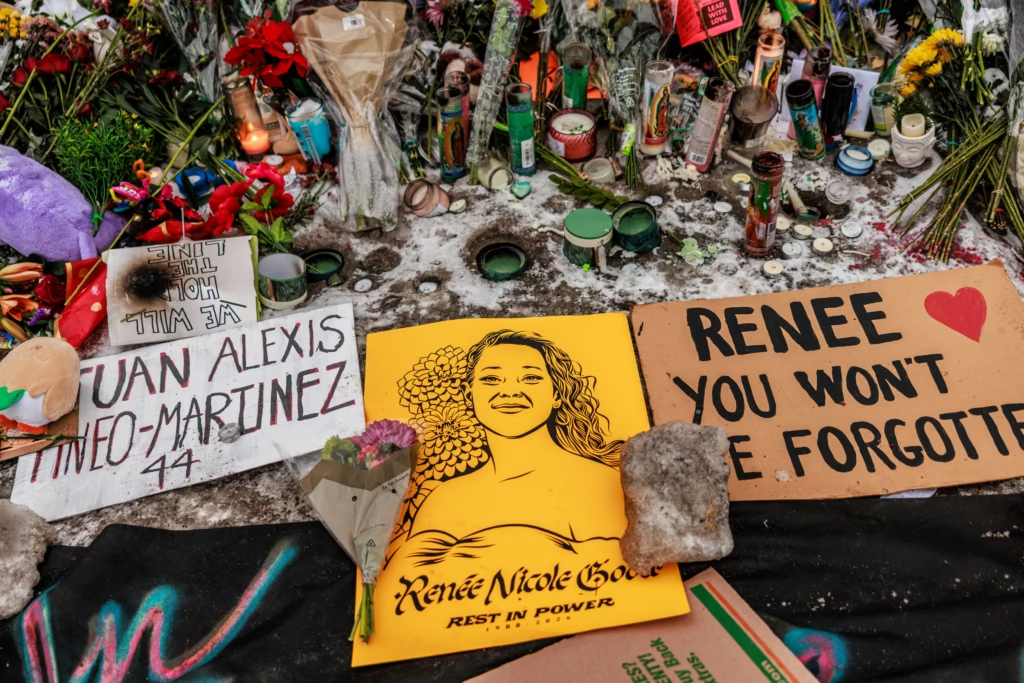
Footage and photos from Good’s life — including images of her with family and personal belongings at the shooting scene — have circulated online, highlighting the human cost of the incident. Those close to her describe her as compassionate and grounded, not previously engaged in political activism, making her death resonate with many Americans on a personal level.
Vigils in Minneapolis and nationwide have honored her life, even as protests continue. Memorial gatherings have become spaces not only of mourning but also of solidarity and calls for broader human rights protections.
These personal narratives have helped shape public perception of the incident, moving it beyond abstract policy arguments to conversations about community safety, federal power, and justice.
Looking Forward: What This Means for America
As national attention remains focused on Minneapolis and its aftermath, several important questions loom:
- What will be the outcome of federal and state investigations into the shooting?
- How will the U.S. government balance immigration enforcement with civil liberties?
- Will public pressure and protests influence future policy decisions?
- Can local communities and federal authorities find common ground to prevent further escalation?
The answers to these questions are not yet clear — but what is clear is that the shooting of Renee Good has become more than a local incident. It has galvanized public debate, elevated concerns about federal agency accountability, and energized a national movement for justice.
As news continues to develop and more information becomes available, one thing remains certain: this moment in history will reverberate far beyond a single street in Minneapolis.
A Turning Point in National Discourse
The Minneapolis ICE shooting of Renee Good is a defining news event of early 2026. From nationwide protests and political clashes to federal deployments and evolving investigations, the impact of this tragedy is shaping national dialogue on immigration, public safety, and federal authority.
Subscribe to trusted news sites like USnewsSphere.com for continuous updates.