Japan’s Crypto Crackdown Signals a New Era for Digital Assets
Japan’s crypto crackdown is rapidly becoming one of the most closely watched developments in the global digital asset industry. As regulators strengthen oversight of cryptocurrency exchanges, trading platforms, stablecoins, and investor protections, the country’s actions are sending a powerful message to markets worldwide. What happens in Japan matters because the nation has long been viewed as one of the most mature and regulated cryptocurrency markets in the world.

Recent regulatory proposals and policy discussions suggest that Japanese authorities are moving toward treating crypto assets more like traditional financial instruments. This shift could fundamentally reshape how digital assets are traded, taxed, and monitored within the country. Market participants around the world are now analyzing Japan’s approach as a potential blueprint for future regulation in other major economies. Recent proposals include stricter disclosure requirements, enhanced investor protection measures, and expanded oversight by the Financial Services Agency (FSA).
The significance extends beyond Japan’s borders. As governments increasingly focus on financial stability, anti-money laundering compliance, and investor safety, Japan’s latest actions could influence regulatory frameworks across Asia, Europe, and North America.
Why Japan Is Tightening Crypto Regulations
Japan has a unique history with digital assets. The country experienced some of the cryptocurrency industry’s earliest and most high-profile exchange failures, leading regulators to adopt stricter oversight than many other jurisdictions. While these measures helped improve investor confidence, authorities remain concerned about fraud, market manipulation, and the rapid growth of speculative trading.
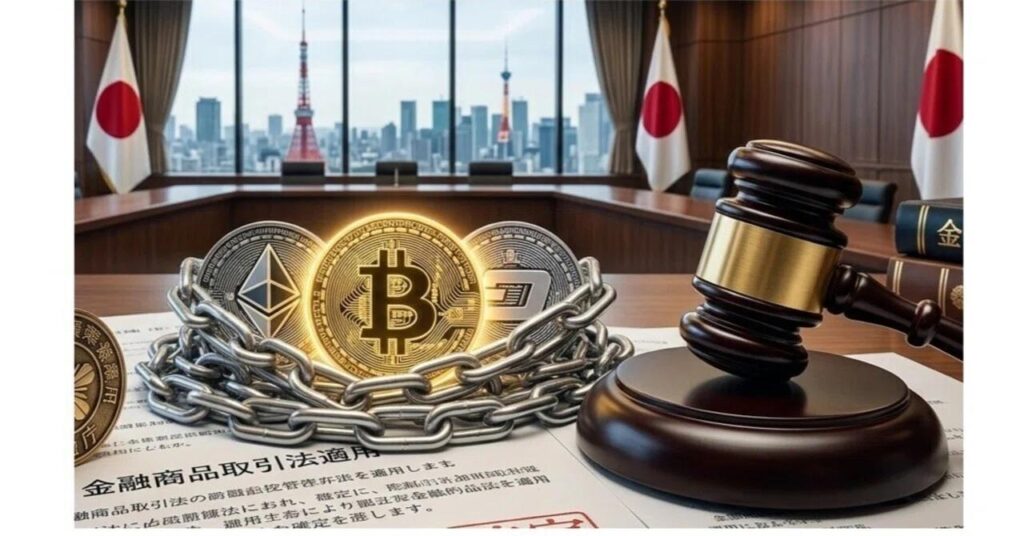
According to recent regulatory discussions, Japanese policymakers are considering transitioning crypto oversight from the Payment Services framework to the Financial Instruments and Exchange Act (FIEA). Such a move would place cryptocurrencies under rules that more closely resemble those governing stocks and securities. The objective is to increase transparency, improve disclosure standards, and strengthen consumer protections.
Another major concern involves cryptocurrency scams and fraudulent investment schemes. Reports indicate that crypto participation has expanded significantly in Japan, with millions of accounts now actively holding digital assets. As adoption grows, regulators face mounting pressure to reduce investor losses and improve market integrity.
How Global Markets Are Responding
The international crypto community is paying close attention because Japan’s regulatory decisions often influence broader industry trends. Investors, exchanges, and blockchain companies understand that stricter regulations in major economies can affect liquidity, innovation, and capital flows across borders.
Some analysts believe stronger oversight could ultimately benefit the market by reducing fraud and increasing institutional participation. Large financial institutions typically prefer operating in environments with clear legal frameworks and regulatory certainty. As a result, tighter regulation may encourage more traditional investors to enter the digital asset sector over time.

Others warn that excessive regulation could drive innovation to jurisdictions perceived as more crypto-friendly. This concern is particularly relevant as countries compete to attract blockchain startups, crypto exchanges, and digital finance companies. The balance between investor protection and innovation remains one of the industry’s most important challenges. Global regulators and organizations continue emphasizing stronger oversight to address financial crime risks associated with virtual assets.
Stablecoins, ETFs, and the Next Regulatory Battleground
Interestingly, Japan’s regulatory approach is not solely restrictive. While authorities are increasing oversight, they are also exploring ways to integrate digital assets into the broader financial system.
Recent policy discussions have highlighted support for yen-based stablecoins and the possibility of creating legal frameworks for crypto exchange-traded funds (ETFs). Stablecoins are viewed as a potential tool for improving payment efficiency and cross-border settlements, while ETFs could provide regulated access to cryptocurrency investments for mainstream investors.
Japan’s largest financial institutions have already begun exploring stablecoin initiatives under regulatory supervision. These developments suggest that regulators are attempting to separate speculative risks from practical blockchain innovation. Instead of banning digital assets, policymakers appear focused on creating a more structured and transparent ecosystem.
This dual approach—stricter compliance alongside innovation support—may become a model for other countries seeking to balance economic opportunity with financial stability.
What This Means for Investors and the Crypto Industry
What This Means for You
If you are a cryptocurrency investor, Japan’s actions highlight the growing importance of regulation in shaping market performance. Regulatory decisions increasingly influence asset prices, exchange operations, and investor sentiment. Understanding policy developments is becoming just as important as tracking Bitcoin or Ethereum price movements.

Retail investors should pay close attention to compliance requirements, tax rules, and platform security standards. Markets are evolving from a largely unregulated environment toward one that resembles traditional finance. Investors who adapt early may be better positioned to navigate future changes.
Investor Takeaway
For long-term investors, regulatory clarity can be a positive development. Clear rules often attract institutional capital, improve transparency, and reduce systemic risks. While short-term market volatility may increase during regulatory transitions, stronger frameworks can support sustainable growth over time.
Investors should monitor developments related to crypto taxation, ETF approvals, stablecoin regulations, and exchange licensing requirements. These factors could significantly influence market opportunities in the coming years. Japan is also considering reforms related to crypto taxation and insider-trading oversight, reflecting a broader effort to align digital assets with traditional financial regulations.
Future Outlook for Global Digital Asset Markets
The future of digital assets is likely to be shaped by regulation as much as by technology. Japan’s latest moves demonstrate that governments are no longer treating cryptocurrencies as a niche financial product. Instead, digital assets are increasingly becoming part of mainstream financial policy discussions.
Looking ahead, analysts expect greater international coordination among regulators. Countries are likely to share best practices related to anti-money laundering standards, investor protection measures, stablecoin supervision, and crypto market transparency. Organizations such as the Financial Action Task Force (FATF) continue encouraging stronger global compliance frameworks to address cross-border risks.
At the same time, innovation is unlikely to disappear. Blockchain technology continues attracting investment across finance, payments, tokenization, and decentralized infrastructure. The key question is not whether crypto will survive increased regulation, but how the industry will evolve within a more structured legal environment.
Japan’s approach may ultimately be remembered as a turning point. By tightening oversight while still supporting responsible innovation, the country is attempting to create a sustainable path forward for digital assets. Whether other nations follow the same strategy could determine the next chapter of the global cryptocurrency market.
Conclusion
Japan’s crypto crackdown is more than a domestic regulatory story—it is a global signal that the digital asset industry is entering a new phase of maturity. The country’s efforts to strengthen oversight, improve transparency, and protect investors are influencing conversations among regulators, financial institutions, and crypto businesses worldwide.
While tighter regulations may create short-term uncertainty, they could also establish the foundation for broader institutional adoption and long-term market stability. Investors, traders, and industry leaders should view Japan’s actions as an important indicator of where global crypto regulation may be heading next.
As governments seek to balance innovation with accountability, the lessons emerging from Japan could shape digital asset markets for years to come.
Subscribe to trusted news sites like USnewsSphere.com for continuous updates.