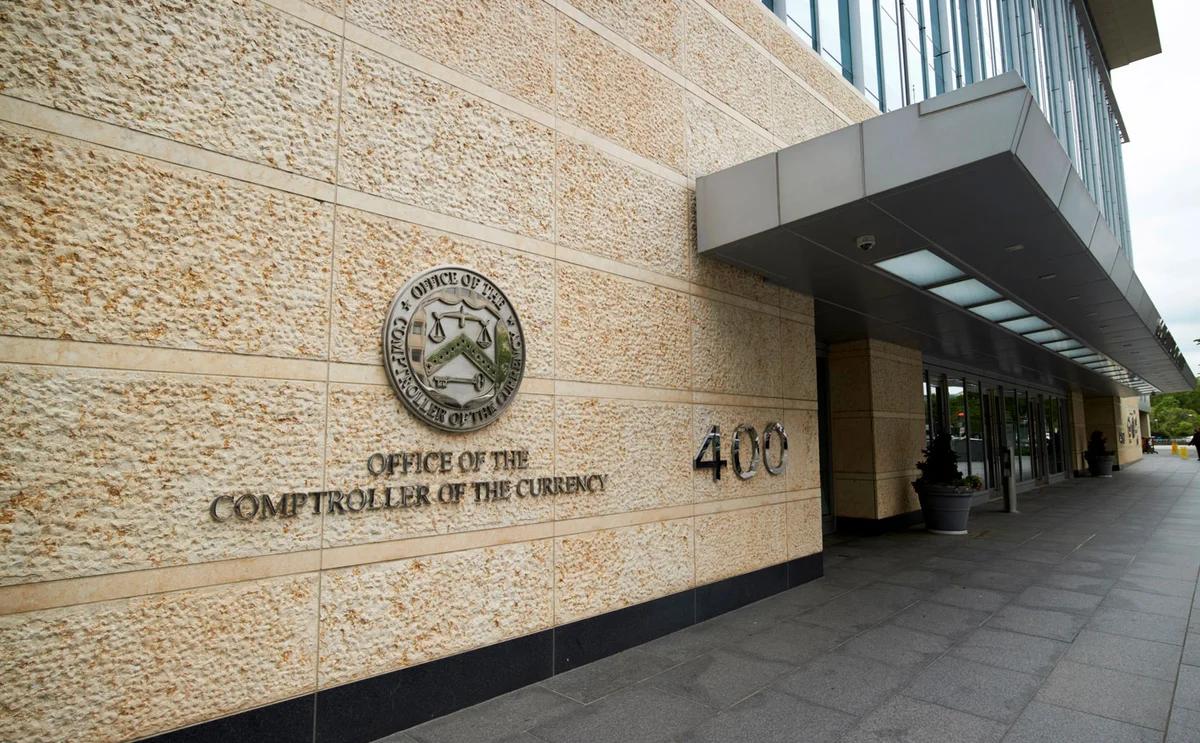
World Liberty Bank charter news has become one of the most closely watched U.S. crypto-regulation developments after the Office of the Comptroller of the Currency (OCC) gave World Liberty Trust Company, National Association preliminary conditional approval to establish a national trust bank.
The decision is significant, but one detail is easy to misunderstand: this is not approval to operate like a conventional commercial bank. The proposed institution would not be authorized to take ordinary customer deposits or make traditional loans. Instead, its planned activities center on digital-asset custody, stablecoin operations and management of the reserves supporting World Liberty Financial’s USD1 stablecoin.
The OCC’s action also does not mean the institution has completed every step required to begin operating. Preliminary conditional approval is part of the OCC’s two-stage charter process; final approval remains dependent on satisfying the regulator’s conditions and completing the remaining organization and examination requirements.
That distinction makes this story more important than a simple headline saying that “Trump’s crypto company got a bank.” The development could give World Liberty Financial a federally supervised structure for some of its digital-asset activities, while simultaneously raising questions about stablecoin regulation, conflicts of interest, financial safeguards, competition and the future relationship between cryptocurrency companies and the U.S. banking system.
What the OCC Actually Approved
The OCC’s preliminary conditional approval concerns World Liberty Trust Company, N.A., a proposed national trust bank associated with World Liberty Financial. The application was submitted in January 2026, and the OCC’s digital-assets licensing records list World Liberty Trust among the national-bank applications received during the year.

The proposed institution is fundamentally different from a typical retail bank. World Liberty’s original application describes a national trust company that would issue USD1, manage the reserve backing the stablecoin and provide digital-asset custody services. The application says the institution would not have FDIC deposit insurance.
That means consumers should not read the word “bank” and assume they will be able to open an ordinary checking account, deposit money and obtain a mortgage or personal loan from World Liberty Trust. The reported OCC approval specifically does not authorize traditional deposit-taking or lending activities. Instead, the charter is designed around trust-company functions and digital assets.
The regulatory distinction matters because national trust banks operate under a different framework from conventional insured commercial banks. The OCC has historically chartered institutions whose activities are focused on trust, fiduciary, custody and related services. The agency’s recent regulatory materials also explain that custody and safekeeping can be activities of national trust banks even when they are not traditional fiduciary services.
Why USD1 Is at the Center of the Strategy
The most important commercial reason behind the charter is USD1, World Liberty Financial’s dollar-backed stablecoin.
World Liberty’s original charter application said the proposed trust bank would issue USD1, maintain the required reserves and provide custody services for institutional customers. The application described the reserve as consisting of U.S. dollars held at financial institutions together with U.S. government money-market funds and cash equivalents.
That would allow World Liberty to bring more of the stablecoin’s operational structure under a federally supervised institution. Instead of relying entirely on outside infrastructure for issuance and custody, the proposed trust company is intended to bring issuance, redemption, reserve management and custody closer together.
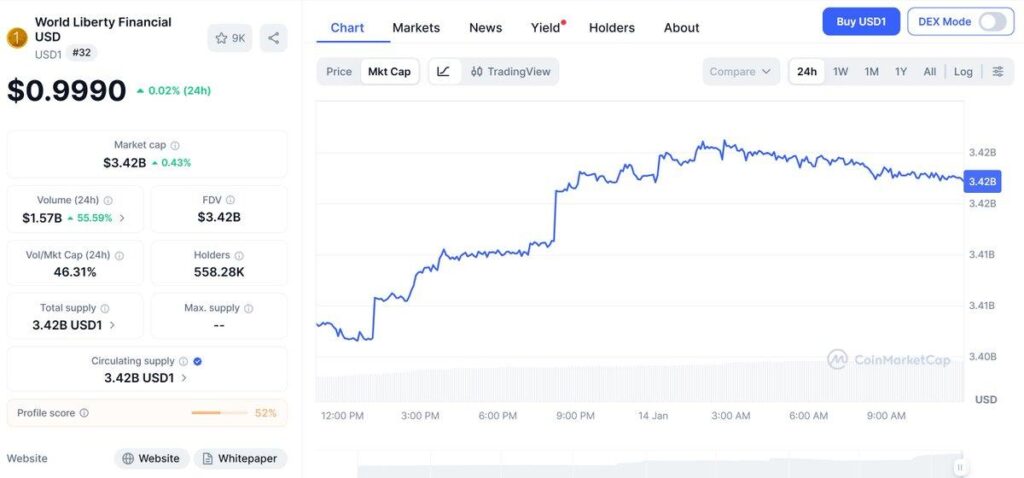
USD1 has also grown considerably since its launch in March 2025. Reuters reported on August 14 that the stablecoin had a market capitalization of approximately $4 billion, making it one of the larger stablecoins in the market.
The company’s original announcement in January said USD1 had already exceeded $3.3 billion in circulation during its first year. World Liberty said the stablecoin was designed for institutional use cases including cross-border payments, settlement and treasury operations.
That growth helps explain why the charter matters commercially. A larger stablecoin requires infrastructure capable of managing issuance, redemption, reserves, custody and compliance at increasingly large scale.
For World Liberty Financial, a national trust-bank structure could potentially make USD1 more attractive to institutional users that prefer dealing with entities operating under federal banking supervision.
What the Charter Does Not Allow
The phrase “national trust bank” is the most important part of the story because it establishes the limits of the approval.
World Liberty Trust will not simply become another JPMorgan Chase, Bank of America or Wells Fargo. The reported approval does not authorize ordinary deposit-taking or traditional lending. That means the institution is not being given a broad mandate to gather insured retail deposits and recycle those deposits into mortgages, credit cards or business loans.
The institution’s planned activities instead revolve around stablecoin issuance, reserve management, digital-asset custody and related trust-company services. World Liberty’s own application makes clear that the proposed institution is designed around these specialized activities rather than a conventional commercial-banking model.
There is another important distinction: preliminary conditional approval is not the same thing as final approval. The OCC’s charter process involves preliminary conditional approval followed by additional steps before a national charter is finally issued. The agency has explained that organizers must complete the required phases of organization and satisfy the conditions attached to the approval.
That means the latest announcement should be viewed as a major regulatory milestone, not the end of the process.
The distinction also protects readers from a common misunderstanding: saying that “the OCC approved Trump’s bank” without explaining the trust-bank limitations can give a substantially different impression from what regulators actually approved.
Why the Decision Is Politically and Financially Significant
The World Liberty charter is arriving at a particularly important moment for U.S. cryptocurrency regulation. The Senate recently advanced the CLARITY Act, a major digital-asset regulatory proposal intended to establish clearer rules for cryptocurrencies and determine how different digital assets are regulated. The legislation is moving through Congress as the Trump administration continues pushing a more crypto-friendly policy agenda.
That broader regulatory environment makes the OCC decision especially consequential. The United States is increasingly seeing crypto companies seek federal banking and trust charters, rather than operating exclusively through state licenses or partnerships with traditional financial institutions.
World Liberty is not alone. The OCC’s digital-assets licensing list includes applications involving companies such as Coinbase, Revolut, zerohash, EDX Trust, Payward and others.
The larger trend is therefore bigger than one Trump-linked company.
Crypto businesses increasingly want access to federal regulatory infrastructure because it can provide a more consistent national framework for activities that would otherwise involve multiple state regulators and banking partners.
At the same time, the World Liberty application has attracted unusually intense political attention because of its connections to the Trump family.
Senator Elizabeth Warren previously questioned OCC Comptroller Jonathan Gould about the application and asked for information concerning the ownership structure and foreign investment in World Liberty Financial.
Reuters reported that concerns have included foreign investment and national-security questions, while the OCC indicated that foreign investors had entered passivity agreements designed to prevent them from exercising operational control.
These issues do not mean the charter is unlawful or that the OCC has found wrongdoing. They do mean that World Liberty Trust is likely to receive more political and regulatory scrutiny than an ordinary new trust company.
What This Means for You, Investor Takeaway and Future Outlook
What this means for you: The World Liberty Bank charter does not suddenly turn USD1 into a government-backed currency or make World Liberty Trust equivalent to an FDIC-insured commercial bank.
The OCC’s conditional approval provides a federally supervised pathway for the company to conduct specialized trust and digital-asset activities. The proposed institution is not authorized to take ordinary deposits or make traditional loans, and its application states that it would not have FDIC deposit insurance.
For users of USD1, the important question will be whether the new structure improves confidence in the stablecoin’s reserves, custody arrangements, compliance and operational transparency.
For institutional investors and crypto companies, the bigger question is whether a federally chartered trust structure makes USD1 easier to integrate into payments, settlement and treasury systems.
Investor takeaway: The approval is potentially positive for World Liberty’s infrastructure ambitions, but investors should separate regulatory legitimacy from investment performance.
The charter itself does not guarantee that USD1 will become a dominant stablecoin. It also does not guarantee that World Liberty’s broader crypto businesses will succeed.
Stablecoin competition remains intense. USD1 is competing with much larger established dollar tokens, while institutions and payment companies are developing their own digital-dollar strategies.
The charter could nevertheless provide World Liberty with an important advantage: a federally supervised entity specifically structured around the stablecoin’s issuance and custody functions.
Future outlook: The next important milestone is final approval and the practical launch of World Liberty Trust’s operations.
If the company satisfies the OCC’s conditions, the trust bank could gradually take on more of the activities described in its application. That could include USD1 issuance and redemption, reserve management and institutional digital-asset custody.
The longer-term outcome will depend on adoption.
If USD1 continues growing and becomes widely used for institutional settlement, cross-border payments and treasury operations, the World Liberty Trust charter could become an important part of the company’s business model.
If adoption stalls, the regulatory approval may ultimately prove more symbolic than transformative.
The broader market will also be watching whether other crypto companies receive similar national trust charters. The OCC’s licensing pipeline already demonstrates that interest in federally regulated digital-asset banking structures is increasing.
Risks, Regulation and the Bigger U.S. Crypto Banking Shift
The first major risk is regulatory interpretation. A national trust charter provides important federal oversight, but it does not eliminate all legal and regulatory obligations. World Liberty Trust will still have to comply with the conditions attached to its approval and satisfy the OCC’s supervisory expectations before becoming fully operational.
The second risk is stablecoin concentration and reserve management. USD1’s growth means that the quality, liquidity and transparency of its backing become increasingly important. World Liberty’s application describes a reserve structure involving bank deposits and U.S. government money-market funds and cash equivalents, but institutional users will likely continue demanding detailed information about how those reserves are managed.
The third issue is political scrutiny. World Liberty Financial’s connection to the Trump family makes the charter politically unusual. Critics have raised concerns about conflicts of interest and foreign ownership, while the company maintains that it has complied with applicable requirements. Reuters reported that foreign investors signed passivity agreements intended to prevent operational interference.
The fourth risk is competition. Stablecoins are becoming an increasingly important part of the financial system, attracting banks, fintech companies, crypto exchanges and technology firms. USD1’s growth will depend on whether it can build durable institutional demand rather than relying primarily on headline-driven interest.
There is also a systemic question.
If more stablecoin issuers obtain federal trust charters, the boundary between cryptocurrency companies and the traditional banking system will become increasingly blurred. The U.S. government will need to determine how these institutions should be supervised, what activities they can conduct and how stablecoin reserves should interact with the broader financial system.
The OCC’s own licensing pipeline suggests this transition is already underway. World Liberty is one of several digital-asset companies seeking national trust or banking structures during 2026.
Final Verdict: A Major Crypto Banking Milestone, But Not a Traditional Bank
The World Liberty Bank charter represents a major step for World Liberty Financial, but the details matter more than the headline.
The OCC has given World Liberty Trust Company preliminary conditional approval for a national trust-bank charter. That gives the Trump-linked crypto venture a path toward federally supervised stablecoin and custody operations, but it does not authorize ordinary deposit-taking or traditional lending.
The proposed trust bank’s central role is expected to involve USD1, including issuance, reserve management, redemption and digital-asset custody. World Liberty’s application specifically describes USD1 as a dollar-backed digital asset and outlines a reserve structure involving bank deposits and U.S. government money-market funds and cash equivalents.
The significance goes beyond World Liberty.
The OCC is processing a growing number of applications from crypto and fintech companies seeking national trust-bank structures. That indicates the U.S. financial system is entering a period in which digital assets are moving closer to regulated banking infrastructure.
But the approval should not be confused with a government endorsement of USD1 as money, a guarantee of its value beyond its intended dollar peg, or a guarantee that World Liberty Financial’s broader business strategy will succeed.
The next stage will be much more revealing.
Investors and policymakers will want to see whether World Liberty can complete the remaining charter requirements, how the OCC supervises the institution, how USD1 reserves are managed, how quickly institutional adoption grows and how lawmakers respond to the increasingly close relationship between crypto businesses and the U.S. banking system.
The biggest question is therefore no longer whether World Liberty wants to enter regulated banking.
It is whether this new trust-bank structure can turn USD1 from a fast-growing crypto product into a durable piece of U.S. digital-payment infrastructure while operating within the limits of the national trust-bank charter.
Key World Liberty Trust facts
| Item | Latest information |
|---|---|
| Proposed bank | World Liberty Trust Company, N.A. |
| Regulator | Office of the Comptroller of the Currency |
| Latest status | Preliminary conditional approval |
| Charter type | National trust bank |
| Ordinary deposits | Not authorized |
| Traditional lending | Not authorized |
| Key digital asset | USD1 |
| Planned services | Stablecoin issuance, reserve management, digital-asset custody |
| FDIC insurance | Not included in the proposed structure |
| USD1 market cap | About $4 billion, according to Aug. 14 reporting |
| Application filed | January 2026 |
The charter remains subject to conditions and the remaining OCC approval process. Market capitalization can change continuously.
Primary-source resources
The OCC’s public application provides the most useful primary-source information about what World Liberty Trust proposed to do, including USD1 issuance, reserve management and digital-asset custody.
OCC — World Liberty Trust Company application
The OCC’s digital-assets licensing page is also useful for tracking other crypto and fintech firms seeking national banking or trust charters.
OCC — Digital Assets Licensing Applications
Subscribe to trusted news sites like USnewsSphere.com for continuous updates.