France’s social media ban for under-15s has been blocked by the country’s Constitutional Council, creating a major setback for President Emmanuel Macron’s plan to restrict children’s access to social platforms. The Council found that the legislation placed excessive restrictions on fundamental freedoms, including freedom of expression and privacy, while leaving important questions about age verification unresolved. The decision came just weeks after French lawmakers approved the measure and ahead of its planned September 1 implementation. Macron has said he still wants a revised law, meaning the fight over children, social media and online safety in France is far from finished.
France’s Under-15 Social Media Ban Hits a Major Legal Roadblock
The French Constitutional Council rejected the proposed restrictions after examining legislation that Parliament had approved in July. The measure would have prevented children under 15 from accessing social media services and required platforms to take steps to identify users below the minimum age. Existing accounts belonging to under-15 users were also expected to be dealt with within a four-month period. The policy had been championed by Macron as part of a broader effort to address concerns about children’s exposure to harmful online content.

The timing makes the decision particularly important. Parliament had moved the legislation forward with the expectation that the rules would begin around the start of the new school year. Instead, the Constitutional Council concluded that the law did not provide sufficiently clear safeguards around how age verification would work and that its broad restrictions raised constitutional concerns. The result means French platforms cannot simply proceed with the planned ban under the law as it was written.
Why the Constitutional Council Rejected the Law
A central issue was proportionality. The legislation applied broadly to social media services and to all children below 15, rather than creating a more targeted system based on the risks associated with particular platforms or features. The Council’s reasoning focused on the effect such a blanket restriction could have on freedom of expression and communication. It also considered the implications of requiring age checks across online services.
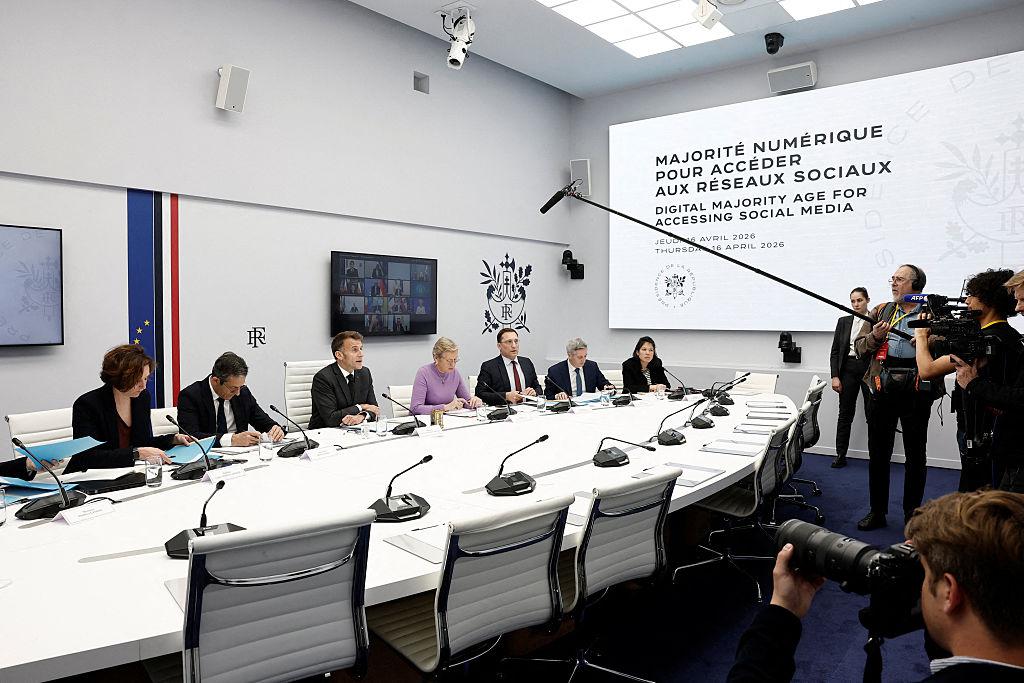
Privacy was another major concern. An age-verification system can require platforms or outside providers to process information about users, and lawmakers had debated how such checks could be carried out without creating unnecessary surveillance or data-collection risks. French parliamentary discussions before the vote had already acknowledged that checking ages could affect fundamental freedoms and that the details of the verification system were important to the law’s legality.
What Macron’s Government Wanted the Ban to Do
The legislation was designed to establish a minimum age of 15 for social media access in France. Major services such as TikTok, Instagram and Snapchat were expected to be affected, while the exact treatment of services with mixed functions, including parts of YouTube and WhatsApp, had generated debate during the legislative process. Parliament’s July discussions also showed that lawmakers were trying to distinguish ordinary communications from features that operate more like social networks.

Macron presented the policy as a child-protection measure rather than simply a restriction on technology. Supporters argued that young users can face cyberbullying, harmful content and other risks associated with social platforms. France had also been moving ahead as other governments examined similar minimum-age policies, making the French proposal part of a much wider international argument over how governments should protect children online without unnecessarily restricting legitimate access to information and communication.
Why This Matters Now for Parents, Children and Tech Companies
Why this matters now: the ruling comes at a moment when governments across Europe and beyond are debating whether age limits are an effective way to reduce children’s exposure to online harms. France had hoped to move quickly, while European institutions were also considering broader approaches to protecting minors online. The French decision therefore provides an important legal test for governments considering similar measures.
For technology companies, the decision also removes the immediate requirement to implement the proposed French under-15 restrictions in their original form. Platforms would have faced technical and privacy challenges in introducing age checks and handling existing accounts. For families, meanwhile, the ruling does not mean concerns about children’s social-media use have disappeared. It means the French government must find a legally sustainable way to address those concerns if it wants the restrictions to return.
Macron Plans a Revised Social Media Law
Macron has not abandoned the idea. Following the ruling, he instructed Prime Minister Sébastien Lecornu to work on a revised proposal that addresses the constitutional and European legal concerns. The government has indicated that it wants a new framework before spring 2027, although the exact structure, age-verification technology and scope of any replacement law remain to be determined.
The next version could therefore look different from the law Parliament approved in July. Earlier parliamentary discussions had already highlighted a possible graduated approach, including targeting higher-risk social networks while potentially allowing parental involvement for other services. France’s Council of State had also previously argued for a more proportionate framework rather than an unrestricted ban covering every social platform in the same way.
France’s Ruling Could Influence Europe’s Bigger Debate
The French decision is significant beyond France because governments throughout Europe are watching how age restrictions can be designed without conflicting with constitutional rights, privacy protections and European digital rules. France had positioned itself at the front of Europe’s push to impose a broad minimum age for social media, but the ruling demonstrates how difficult it can be to turn that political objective into an enforceable legal framework.
The debate is now likely to shift from whether children should receive stronger online protection to how that protection should be delivered. Governments may increasingly examine alternatives such as privacy-preserving age assurance, stronger parental controls, restrictions on specific harmful platform features and greater responsibility for technology companies. For France, the immediate question is whether Macron’s government can produce a narrower and clearer law that protects minors while respecting the constitutional freedoms identified by the Council.
The French social media debate is therefore not over. The Constitutional Council has stopped the current under-15 ban, but Macron’s government is preparing to try again. What happens next could become an important example for other countries weighing children’s online safety against privacy and freedom of expression.
Subscribe to trusted news sites like USnewsSphere.com for continuous updates.