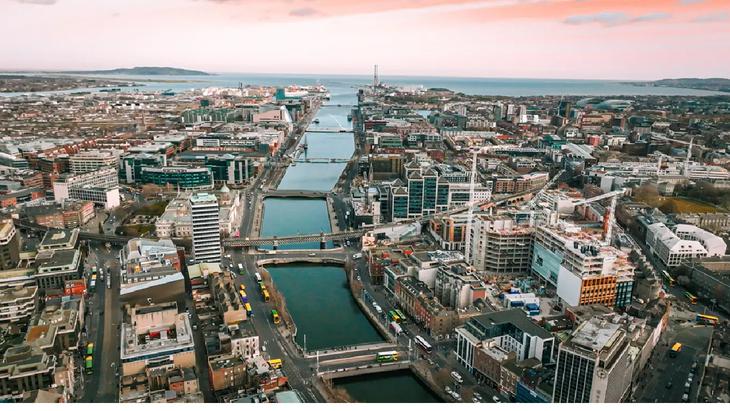
Ireland immigration remained above 100,000 for a fifth consecutive year, even as the number of people arriving fell from the previous year, according to new figures from Ireland’s Central Statistics Office. An estimated 110,600 people moved to Ireland in the 12 months to April 2026, while 62,500 people left, producing net migration of 48,100. At the same time, Ireland’s population climbed to 5,525,600, an annual increase of 66,900. The figures reveal a country being shaped by two forces at once: continued international migration and a steadily aging population.
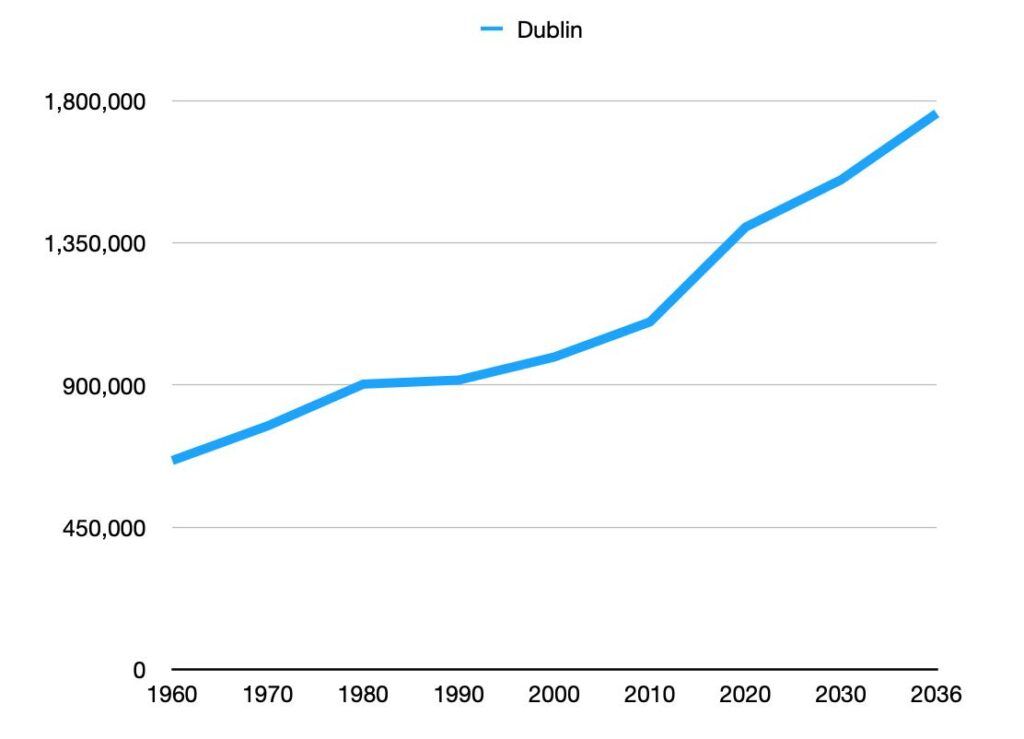
The numbers are important beyond immigration itself. Ireland is adding residents while the number of children is falling, the older population is expanding and Dublin continues to account for a large share of the country’s population. That combination could influence housing demand, the labor market, public services, schools, healthcare and the country’s long-term demographic outlook.
Ireland Immigration Remains Above 100,000 for a Fifth Year
Ireland recorded an estimated 110,600 immigrants in the 12 months ending April 2026. Although that is still a substantial inflow, it represents a 12% decline from the 125,300 immigrants recorded in the corresponding period a year earlier. The latest figure is also 14,700 lower than the previous year’s level. Even with that decline, the total remained above 100,000 for the fifth consecutive 12-month period.
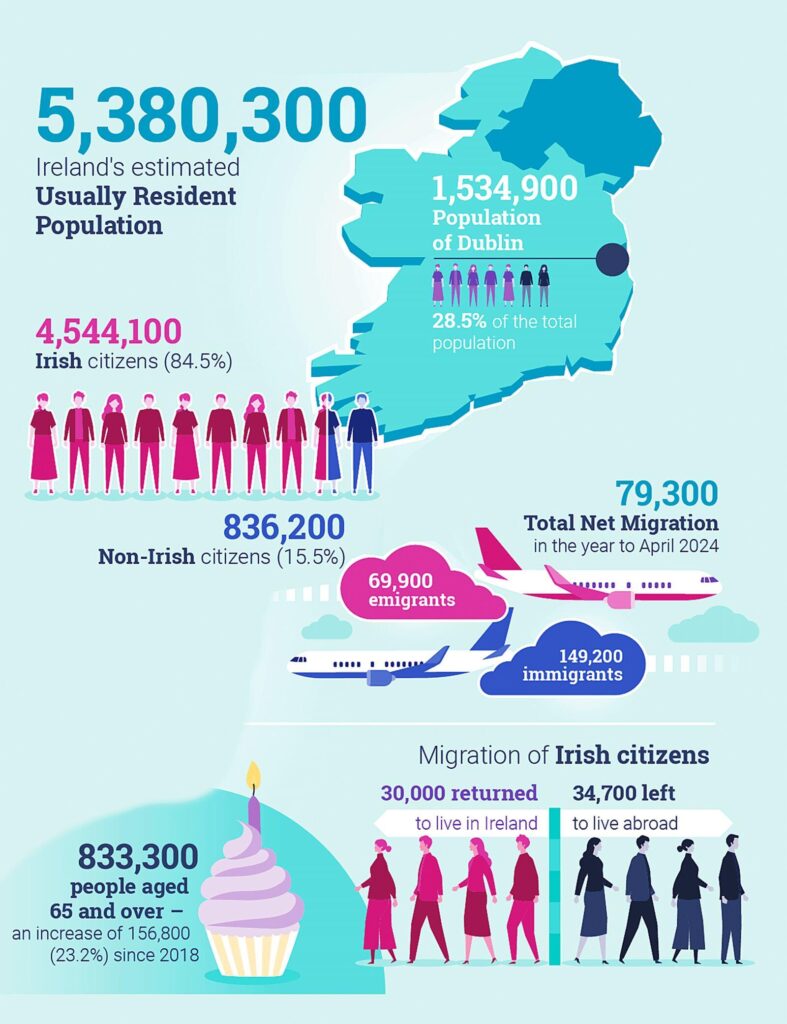
The composition of arrivals also provides useful context. About 30,200 were returning Irish citizens, while 20,700 were citizens of other EU countries and 4,300 were UK citizens. Another 55,500 immigrants were classified as citizens from the rest of the world. That means international migration to Ireland is not coming from one single group; it reflects a mixture of returning Irish residents, Europeans and people arriving from countries outside the EU and UK.
Why This Matters Now
The latest figures matter because Ireland’s population is growing at a time when its demographic balance is changing. The country added 66,900 people during the year to April 2026, bringing the estimated usually resident population to 5.526 million. Population growth was therefore not driven by births alone. Net inward migration accounted for the majority of the increase, while natural population growth contributed the remainder.
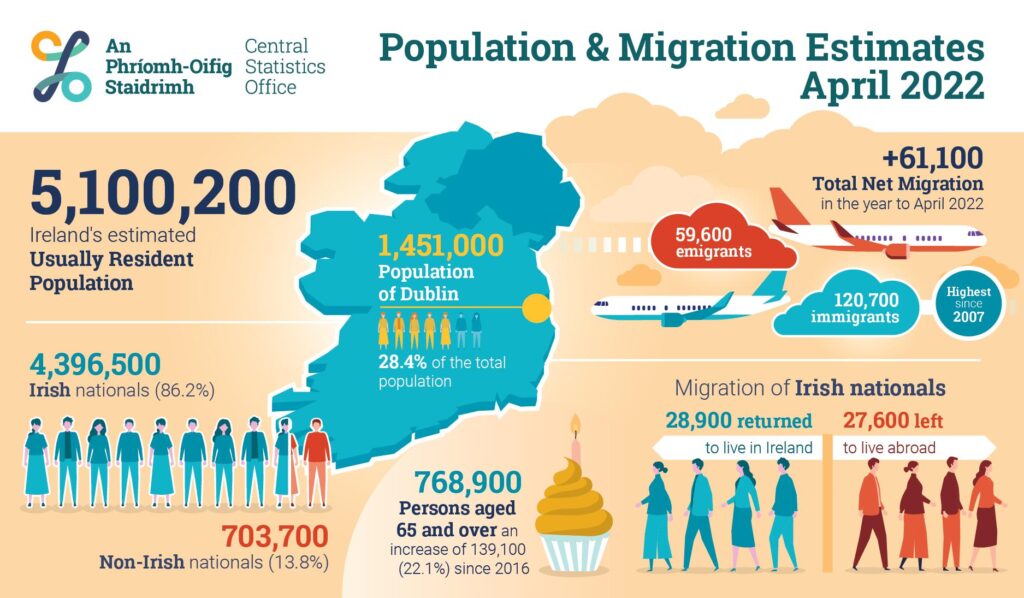
At the same time, the number of young children is moving in the opposite direction. Ireland had 992,400 people aged 0 to 14 in April 2026, taking this age group below one million for the first time since 2014. The number of babies under one year old was about 55,000, down 19,900, or 27%, over 16 years. These trends suggest that migration is becoming increasingly important to overall population growth as Ireland’s birth numbers weaken.
Net Migration Falls, but Ireland Still Gains Residents
The number of people leaving Ireland also declined. CSO estimates show that 62,500 people emigrated during the 12 months to April 2026, down 5%, or 3,100 people, from the previous year. Because fewer people left while more than 110,000 arrived, Ireland recorded positive net migration of 48,100.
That net figure is lower than the previous year’s 59,700 and substantially below the 79,300 recorded in 2024. The direction is therefore clear: migration remains a major source of population growth, but the exceptional levels recorded in the previous two years have moderated. The CSO says the larger fall in immigration than emigration was responsible for the decline in net migration.
Who Is Moving to Ireland?
Age is another important part of the story. More than half of immigrants—58,300 people, or 53%—were between 25 and 44 years old. That is significant because this is generally a major working-age population group, meaning migration can affect the size and composition of Ireland’s labor force as well as its total population.
The figures also show an interesting contrast among younger migrants. Around 21,000 immigrants were aged 0 to 14, representing 19% of arrivals, while only 3,700 emigrants were in that age group. By comparison, 32% of emigrants were aged 15 to 24, compared with 15% of immigrants. These patterns demonstrate that migration is not simply a movement of individual workers; families and different age groups are also part of the population changes.
Ireland’s Aging Population Adds Another Challenge
While migration is helping increase the overall population, Ireland is simultaneously becoming older. The CSO estimates that 891,100 people were aged 65 or older in April 2026. That represents 16.1% of the population, compared with 14.4% in 2020. The number of people in this age group increased by 165,000 over that period, or 22.7%.
This demographic shift has long-term consequences. A larger older population can increase demand for healthcare, social care, pensions and other public services. Meanwhile, fewer children could eventually affect schools and the future size of the working-age population. The combination makes migration an increasingly important part of Ireland’s demographic equation, but it also creates pressure to ensure infrastructure and public services expand alongside population growth.
Dublin Holds Nearly 29% of Ireland’s Population
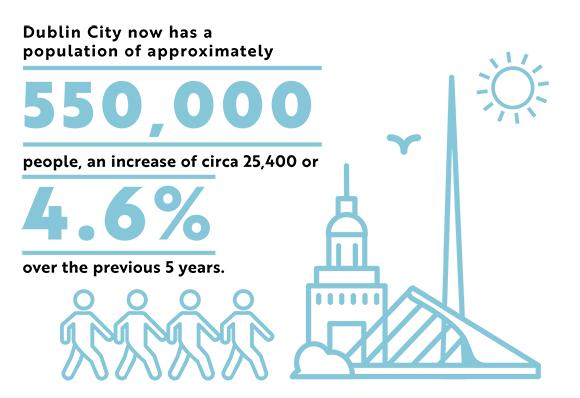
The population increase is particularly significant in Dublin. The CSO estimates that 1,597,700 people lived in Dublin in April 2026, representing 28.9% of Ireland’s total population. Dublin’s share has increased from 28.3% in 2020, showing that population growth has not been evenly distributed across the country.
That concentration has practical implications. A growing population means demand for homes, transportation, healthcare, schools, workplaces and other services. Recent reporting has also highlighted the connection between sustained population growth and Ireland’s housing shortage. The Times recently argued that immigration is important to sectors such as healthcare and hospitality while warning that inadequate housing supply can intensify pressure on communities.
What the Numbers Could Mean for Ireland’s Future
The latest statistics point toward a major demographic transition rather than a simple immigration story. Ireland’s population has passed 5.5 million, immigration has remained above 100,000 for five consecutive years, and net migration continues to add tens of thousands of residents annually. Yet the pace of immigration has slowed, while the country is also recording fewer young children and a rapidly expanding older population.
The broader trend becomes clearer when earlier CSO data is considered. Immigration reached 141,600 in 2023 and 149,200 in 2024 before falling to 125,300 in 2025 and 110,600 in 2026. Net migration followed a similar pattern, rising to 77,600 in 2023 and 79,300 in 2024 before declining to 59,700 in 2025 and 48,100 in 2026.
The Bigger Picture: Population Growth Is Changing Shape
Ireland’s latest population figures show why migration, birth rates and aging need to be considered together. Natural increase—births minus deaths—was nearly 19,000 in the year to April 2026. There were approximately 54,300 births and 35,400 deaths. That means Ireland’s population was still growing naturally, but net migration was responsible for a much larger share of the overall increase.
For policymakers, the challenge is therefore broader than deciding whether immigration is rising or falling. The country needs to plan for where people will live, where they will work, how transportation will expand, how healthcare and education will respond, and how an aging population will be supported. The latest figures suggest Ireland is not simply getting bigger; its population is becoming structurally different.
What to Watch Next
The next population estimates will be important for determining whether the decline in immigration continues or whether arrivals stabilize around current levels. Another key indicator will be net migration because it captures the difference between people arriving and people leaving. If immigration falls further while emigration rises, population growth could slow considerably. If net migration remains strong, migration will continue to be a major driver of demographic change.
Housing and public infrastructure will also remain central issues. Dublin already accounts for almost 29% of the national population, while the country is simultaneously dealing with demographic aging and a changing age structure. The latest data therefore provides a useful warning: population growth can create economic opportunities, but the benefits depend heavily on whether housing, services and infrastructure keep pace with the number of people living in Ireland.
Bottom line: Ireland immigration has fallen from the exceptionally high levels seen in 2023–2025, but it remains historically significant. More than 110,000 people arrived in the latest 12-month period, pushing net migration to 48,100 and helping Ireland’s population reach 5.53 million. At the same time, fewer children and more older residents are reshaping the country’s demographic profile.
Subscribe to trusted news sites like USnewsSphere.com for continuous updates.