Trump Asked US Special Forces to Plan Greenland Invasion, Alarming Military Leaders, Report Says
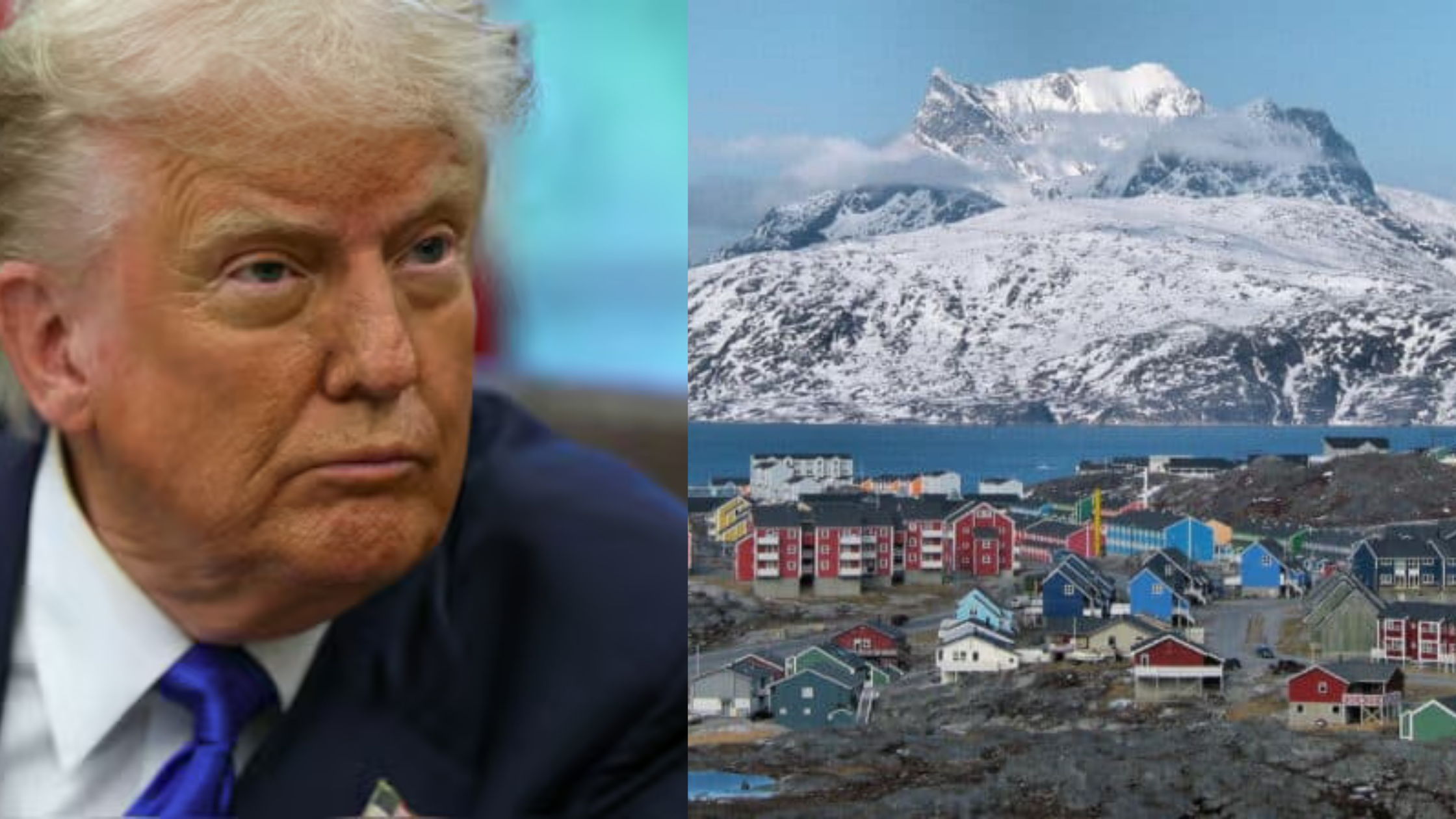
Trump Greenland invasion plan discussions have resurfaced after new reports revealed that former US President Donald Trump allegedly directed elite US special forces to quietly explore military scenarios involving Greenland—an extraordinary move that reportedly triggered strong internal resistance from senior Pentagon leaders.
The revelation has reignited global debate over US ambitions in the Arctic, the limits of presidential authority, and the fragile balance between strategic competition and international law. While the plan never materialized, its existence alone has alarmed allies, military experts, and foreign policy analysts worldwide.
Why Greenland Holds Strategic Importance for the United States
Greenland is not just the world’s largest island—it sits at the center of Arctic geopolitics. As climate change accelerates ice melt, new shipping lanes, untapped mineral reserves, and strategic military positioning have turned the Arctic into a zone of growing competition among global powers.
For the United States, Greenland’s location provides a critical early-warning position for missile defense and airspace monitoring between North America and Europe. The US already operates the Pituffik Space Base, a vital installation for missile tracking and satellite surveillance, making Greenland an indispensable part of American defense architecture.
However, Greenland is an autonomous territory under the sovereignty of Denmark, a NATO ally. Any move to seize control by force would represent a dramatic violation of international norms and alliance trust.
Inside the Reported Military Planning Request
According to multiple defense and intelligence sources cited across global media, Trump allegedly asked senior defense officials to examine whether US special forces could secure Greenland in a hypothetical crisis scenario. The request was reportedly framed as a strategic exercise rather than a formal order, yet it still shocked military leadership.
Top generals are said to have pushed back immediately, warning that even theoretical planning could destabilize diplomatic relations with Denmark and NATO allies. They emphasized that Greenland was neither hostile nor contested territory and that military action would be unjustifiable under US law and international conventions.
The resistance illustrates an often-overlooked reality: US military leaders can—and sometimes do—act as a constitutional brake when civilian directives threaten national or global stability.
Military Resistance and Constitutional Boundaries
Senior Pentagon officials reportedly viewed the idea as not only impractical but dangerous. Military doctrine requires lawful justification, proportional threat assessment, and alliance coordination—none of which applied to Greenland.
Several defense analysts note that this moment highlights the professional independence of the US military. While civilian leadership sets policy, the armed forces retain a legal obligation to refuse unlawful or destabilizing actions.
This internal resistance prevented the idea from moving beyond informal discussions, but its exposure has raised new concerns about decision-making processes at the highest levels of power.
Diplomatic Fallout and Global Reactions
International reaction to the revelations has been swift and skeptical. Danish officials reiterated that Greenland is not for sale and that its people have the right to self-determination. European leaders expressed concern that such thinking—even hypothetically—could undermine trust among allies.
For Greenlanders themselves, the reports revived long-standing fears of being treated as a strategic asset rather than a society with its own political voice. Greenland’s leadership has consistently emphasized economic development, environmental protection, and gradual self-governance—not militarization.
The episode has also strengthened arguments within Europe for reducing strategic dependency on unpredictable leadership decisions from Washington.
The Broader Arctic Power Struggle
The Greenland controversy cannot be separated from the larger Arctic rivalry involving Russia and China. Russia has expanded military infrastructure across its Arctic coastline, while China has branded itself a “near-Arctic state,” investing heavily in polar research and infrastructure.
US policymakers increasingly view the Arctic as a future frontline of strategic competition. However, experts stress that diplomacy, economic cooperation, and international law—not force—remain the most effective tools for maintaining stability in the region.
The reported invasion planning, critics argue, reflects a zero-sum mindset that could escalate tensions unnecessarily.
Lessons for Future US Leadership
This episode offers several critical lessons. First, it underscores the importance of institutional guardrails within democratic systems. Second, it highlights how unconventional leadership styles can strain alliances even without concrete action.
Future administrations will likely face increased scrutiny over Arctic policy, with greater emphasis on transparency, alliance coordination, and respect for international norms.
For voters and global observers alike, the story serves as a reminder that power projection without restraint can carry long-lasting consequences for credibility and trust.
The reported Trump Greenland invasion plan may never have progressed beyond internal conversations, but its implications are far-reaching. It reveals how strategic anxiety, unchecked ambition, and geopolitical competition can collide in dangerous ways.
As the Arctic grows more accessible and more contested, responsible leadership will matter more than ever. Allies, institutions, and informed citizens will play a crucial role in ensuring that strategic competition does not spiral into unnecessary confrontation.
Subscribe to trusted news sites like USnewsSphere.com for continuous updates.