A federal judge has ruled that immigration enforcement officers involved in the aggressive Minneapolis-area immigration operation cannot detain or use chemical agents like tear gas on peaceful protestors who are merely observing or following agents at a legal distance. This ruling stems from a deeply contentious legal battle over the Trump administration’s largest immigration enforcement surge, which has led to nationwide protests, legal challenges, and escalating political tensions.
On the ground in Minneapolis and St. Paul, protests have repeatedly clashed with federal officers, resulting in pepper spray use, arrests of bystanders, and widespread outrage from civil liberties groups. The ruling represents a pivotal moment in the broader debate over immigration enforcement tactics and constitutional rights.
Federal Judge Limits Enforcement Tactics Against Peaceful Protestors
U.S. District Judge Katherine Menendez — overseeing multiple lawsuits over the enforcement campaign known as Operation Metro Surge — issued a preliminary injunction that sharply limits how Immigration and Customs Enforcement (ICE) officers and other federal agents can interact with demonstrators.
Under the court’s order:
- Federal agents cannot detain peaceful protesters or bystanders who are not actively impeding law enforcement or suspected of criminal activity.
- The ruling prohibits the use of tear gas, pepper spray, and similar irritants against individuals exercising First Amendment rights.
- It also bars detentions absent probable cause or reasonable suspicion that a crime has occurred.
The ruling came after a lawsuit filed by the American Civil Liberties Union (ACLU) of Minnesota on behalf of activists who said federal immigration agents violated their constitutional rights while conducting the enforcement operation. Those activists were peacefully following agents to monitor their actions when they said they were subject to unnecessary force and unlawful detention.
Judges like Menendez have emphasized that simply observing government activities — even enforcement operations — is protected speech, and constitutional protections cannot be suspended simply because demonstrations occur in volatile contexts. Legal analysts predict that this decision will serve as a key precedent in similar federal enforcement disputes nationwide.
The Triggering Event: Outrage Over the Death of Renee Good
Tensions in the Twin Cities reached a boiling point after the controversial fatal shooting of local resident Renee Good by an ICE agent on January 7, which became a flashpoint for protests and public scrutiny. Good, a 37-year-old mother of three, was killed during the early stages of the enforcement surge. Both federal officials and local witnesses offered starkly conflicting accounts of the incident, further fueling public distrust.
Minnesota Governor Tim Walz and Minneapolis Mayor Jacob Frey publicly challenged ICE’s characterization of the shooting, saying available video evidence did not support the agency’s claim that Good posed an imminent threat. Gov. Walz even vowed to increase state resources and issued a strong rebuke of the federal presence, arguing it worsened tensions rather than improved public safety.
This high-profile death triggered continuous protests, vigils, school walkouts, and calls for nationwide accountability from civil rights organizations. As demonstrators congregated in city centers, many captured video footage of federal agents using aggressive crowd-control tactics, which further amplified national media coverage and social media engagement.
State of Minnesota and Cities Sue Federal Government Over Enforcement Tactics
In a separate but related legal action, Minnesota — along with the cities of Minneapolis and St. Paul — filed a lawsuit against the Department of Homeland Security, ICE, Customs and Border Protection (CBP), and other federal agencies. This lawsuit charges the federal government with violating constitutional protections by deploying overwhelming force in civilian communities and disregarding civil liberties.
The complaint argues that federal agents’ actions:
- Violated the First Amendment by targeting peaceful observers.
- Constituted an unlawful search and seizure under the Fourth Amendment.
- Amounted to racial profiling and discrimination.
This state-level lawsuit goes beyond the immediate protest restrictions to challenge the entire premise of the deployment — asserting that it disrupts everyday civic life, impinges on community safety, and exceeds federal authority.
Across the U.S., similar legal challenges are emerging, including lawsuits in Illinois and other states that object to expansive immigration crackdowns. These broader efforts illustrate a growing national movement pushing back against aggressive federal enforcement tactics.
Political Fallout and Department of Justice Investigation Into Local Leaders
Amid the legal and public safety turmoil, a new front opened when the U.S. Department of Justice reportedly launched an investigation into Minnesota Governor Walz and Minneapolis Mayor Frey, probing whether their public statements and policy actions improperly interfered with federal immigration enforcement. Federal authorities suggested the inquiry was based on a possible conspiracy to impede federal operations — a charge that has drawn harsh criticism from local leaders and civil liberties groups.
Mayor Frey decried the investigation as “political intimidation” and disputed any claim of wrongdoing, maintaining that his administration prioritized community trust and safety. Gov. Walz echoed this sentiment, calling the probe a misuse of federal power to silence dissent.
Meanwhile, supporters of the DOJ inquiry argue that elected officials must avoid encouraging actions that could potentially disrupt law enforcement. However, civil rights advocates counter that public officials should be able to critique federal policies without fear of legal retaliation. The ongoing investigation raises broader questions about federal-state relations and the balance between enforcement jurisdiction and community governance.
Protests, Community Responses, and the National Debate on Immigration Enforcement
The enforcement surge has not only sparked legal actions but also mobilized widespread grassroots protests across Minnesota. Thousands of residents, activists, students, and community groups have taken to the city streets demanding transparency, accountability, and reforms. Demonstrations have included vigils for the victims, rallies calling for limits on federal enforcement powers, and coordinated actions that have drawn attention in major metropolitan areas.
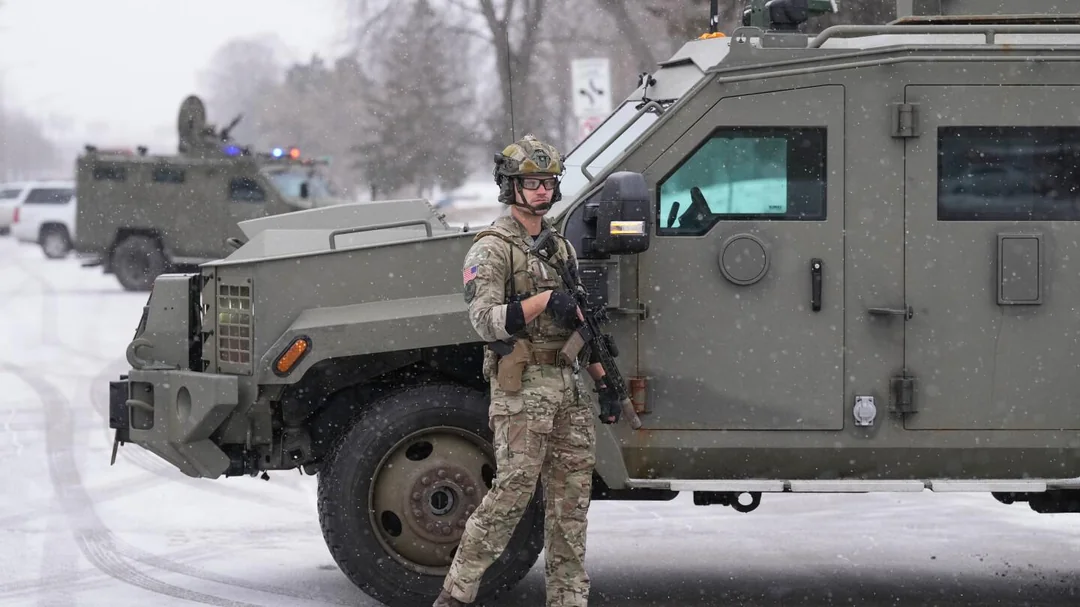
Video footage widely shared on social media shows federal agents pointing rifles, deploying chemical irritants, and making arrests even in areas well beyond immediate enforcement targets — actions that critics argue represent mission creep and a militarization of immigration enforcement.
Public opinion on the enforcement tactics remains deeply divided. Supporters of strong border and immigration enforcement maintain that the federal government has a duty to uphold immigration laws, even in the face of protests. Opponents, however, emphasize constitutional rights, civil liberties, and the need for community trust in law enforcement policies. This polarization reflects broader national debates dating back to earlier immigration reforms and protests, including movements like “Day Without Immigrants” and other resistance efforts to federal immigration policy expansions.
A Turning Point in Immigration and Civil Liberties Law
The federal judge’s injunction restricting how immigration agents can engage with peaceful protestors marks a significant shift in the legal landscape surrounding immigration enforcement in America. What began as a controversial enforcement surge has now evolved into a landmark constitutional battle over civil liberties, community rights, and federal authority.
With ongoing lawsuits, political investigations, and nationwide public engagement, the Minneapolis operation has sparked a broader national conversation about how immigration laws should be enforced and how constitutional protections can be upheld in charged environments.
Subscribe to trusted news sites like USnewsSphere.com for continuous updates.