Trump’s $100 Billion Venezuela Oil Strategy Faces Industry Pushback and Global Scrutiny
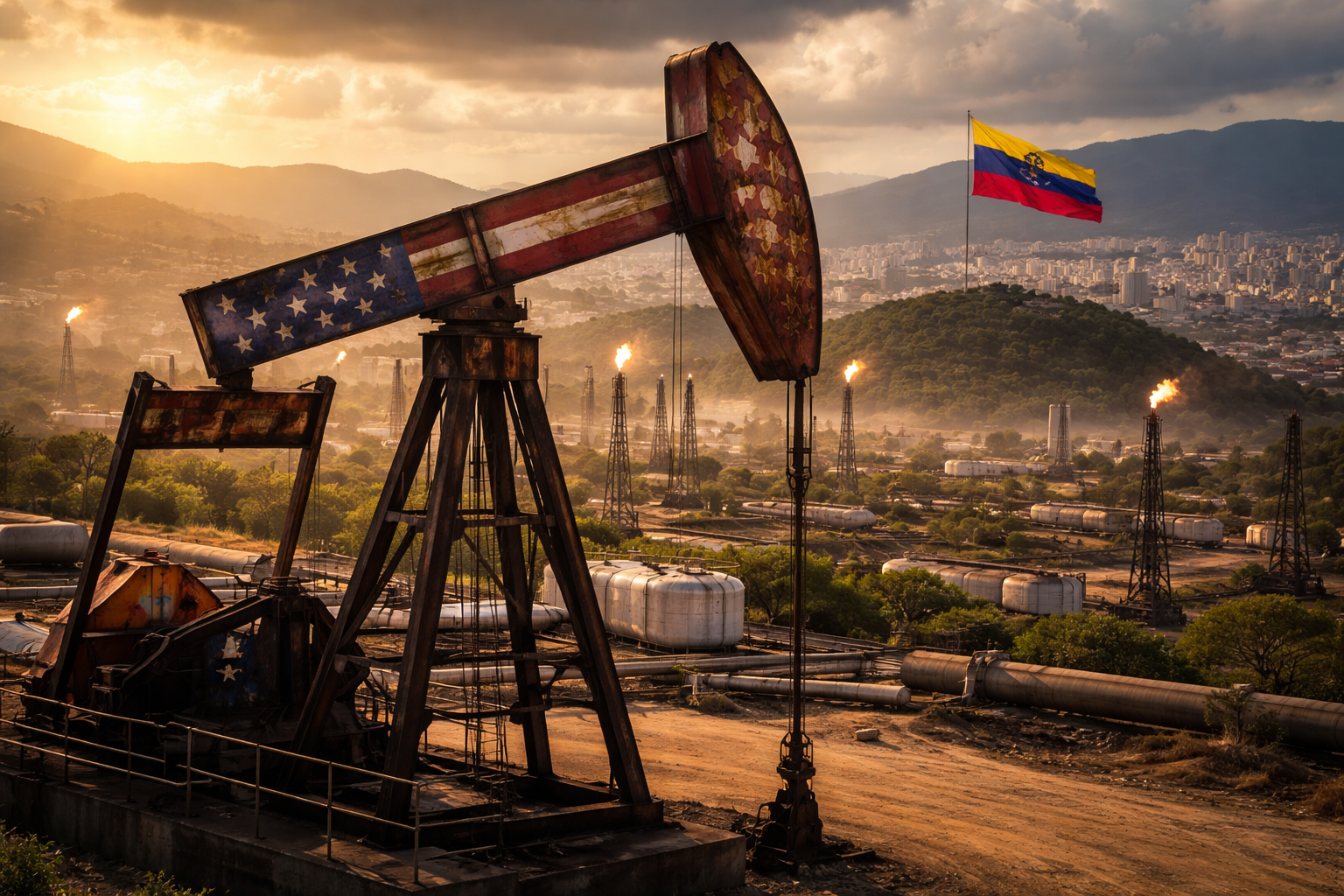
President Donald Trump’s bold plan to have American oil giants invest $100 billion to revive Venezuela’s crumbling oil infrastructure — a centerpiece of his post-Maduro foreign policy — is colliding with industry caution, economic reality, and geopolitical controversy.
In a high-profile White House meeting on January 9, Trump urged executives from Chevron, ExxonMobil, ConocoPhillips, and several other energy firms to commit private capital for what he framed as a historic oil renaissance in Venezuela. He touted the move as a strategic win that would boost U.S. energy security, lower gasoline prices, and unlock vast reserves that have long remained underproduced due to years of mismanagement, sanctions, and political instability.
Yet within hours of the meeting, several major players expressed deep reservations. Exxon’s CEO bluntly described Venezuela as “uninvestable” under current conditions without major legal and commercial reforms, while other firms signaled hesitation over the immense risks involved.
The unfolding push comes amid an extraordinary backdrop: U.S. forces recently captured Venezuelan President Nicolás Maduro, and the administration has signaled plans to control oil exports indefinitely, selling millions of barrels directly on global markets.
Trump’s Oil Initiative: Ambition Meets Reality
President Trump’s message to U.S. oil executives was clear: if American companies are willing to invest in Venezuela’s deteriorated oil sector, the returns could be transformational — for the companies and for U.S. energy prices. He highlighted Venezuela’s enormous oil reserves and promised support and protection for investors as part of the broader strategy.
Yet beneath the bold language lies a stark economic truth. Venezuela’s oil production has plummeted to a fraction of its historic output due to decades of underinvestment and political turmoil. Experts estimate that restoring the sector to its former capacity could require upward of $150-plus billion over a decade or more.
ExxonMobil’s CEO Darren Woods made this point bluntly, stating that without sweeping legal protections and contract reforms, Venezuela remains a high-risk environment for Western investment. This sharply contrasts with Trump’s optimistic projection of rapid industry revival.
For companies like ConocoPhillips, past losses are also part of the calculus. Conoco is reportedly owed billions from previous Venezuelan expropriations — money that Trump said firms should “write off” in exchange for future opportunities.
How U.S. Control of Venezuelan Oil Shapes the Energy Debate
Trump’s strategy is deeply tied to recent U.S. moves in Venezuela. Following the removal of Maduro, the administration has seized control of Venezuelan crude stocks and is reportedly planning to market that oil indefinitely to benefit American consumers and energy interests.
This shift reflects a dramatic reorientation of U.S. policy toward Venezuela, one that places oil at the center of diplomatic and economic calculations. Backers argue that redirecting Venezuelan oil production to U.S. refineries — particularly along the Gulf Coast — could significantly offset domestic energy prices and reduce reliance on other foreign supplies.
However, this approach is not without its critics. Some analysts warn that the plan could entangle the U.S. in long-term financial commitments without clear legal frameworks or assurances of profitability. Others highlight the geopolitical risks of controlling another sovereign nation’s resources, potentially provoking backlash from global partners like China and Russia.
Industry Reactions: Hesitation and Strategic Caution
The U.S. oil industry’s response has been notably cautious. While Chevron — the only major U.S. oil company still operating in Venezuela — expressed willingness to expand output, other giants have been far less enthusiastic.
For ExxonMobil, concerns stem largely from Venezuela’s history of nationalizations and legal instability. The company has endured expropriations in the past and remains wary of reinvesting without strong contractual guarantees.
ConocoPhillips, another veteran of Venezuelan oil operations, has already written off billions it once invested there and has made no firm commitment to return. Industry observers note that while smaller independent firms might be more willing to take risks, major players are bound by shareholder expectations and long-term financial discipline.
Even within the Trump administration’s broader energy circle, voices urge caution. Recent public commentary suggests that detailed investment frameworks are still lacking — a significant hurdle for companies that must weigh multi-billion-dollar decisions against global oil market volatility.
Economic and Global Implications of the Plan
Economically, Trump’s Venezuela strategy has potential upsides and downsides. Proponents argue that increasing production from Venezuela could help stabilize global oil markets and provide more affordable energy for Americans. If U.S. firms significantly expand output, it could reduce crude imports from higher-cost regions and strengthen domestic refineries’ feedstocks.
But there are significant barriers: rebuilding Venezuela’s oil fields will take years, and current global oil prices — which are relatively low — make the margin for profit thinner than in past decades. Some analysts warn that companies could spend decades without seeing full returns if conditions do not improve quickly.
There are also broader geopolitical risks. By assuming control of Venezuelan oil exports, the U.S. is effectively inserting itself into Latin American energy politics in a way that could strain relations with regional neighbors and global energy partners. Critics argue that this could destabilize already fragile markets and provoke international disputes over sovereignty and resource rights.
What Comes Next: Risks, Regulations, and Reality
As the White House works to finalize agreements and outline legal terms for oil investments, multiple issues remain unresolved. First among them is how the U.S. government plans to enforce investment protections without formal changes in Venezuelan law — a key point ExxonMobil cited in its reluctance to commit.
There is also the question of who truly benefits. Will Venezuelans see economic and social improvements from increased oil production, or will profits flow overwhelmingly to multinational corporations and U.S. consumers? This debate is already intensifying in public forums and international diplomatic circles.
Additionally, environmental advocates have raised alarms that renewed exploitation of Venezuela’s heavy crude could delay global efforts toward renewable energy transition, locking in more emissions for decades.
Conclusion: A Strategic Gamble With Uncertain Returns
Trump’s proposal to unleash $100 billion in private oil investment in Venezuela represents one of the most aggressive shifts in American energy policy in years. While it offers the promise of revived production and lower fuel costs, major oil companies remain cautious, citing legal uncertainty and economic risks.
In the coming months, the success or failure of this initiative will hinge on whether the White House can present a viable economic model and secure legal reforms that protect investors. For now, the global energy community watches closely as this unprecedented strategy unfolds on the world stage.
Subscribe to trusted news sites like USnewsSphere.com for continuous updates.