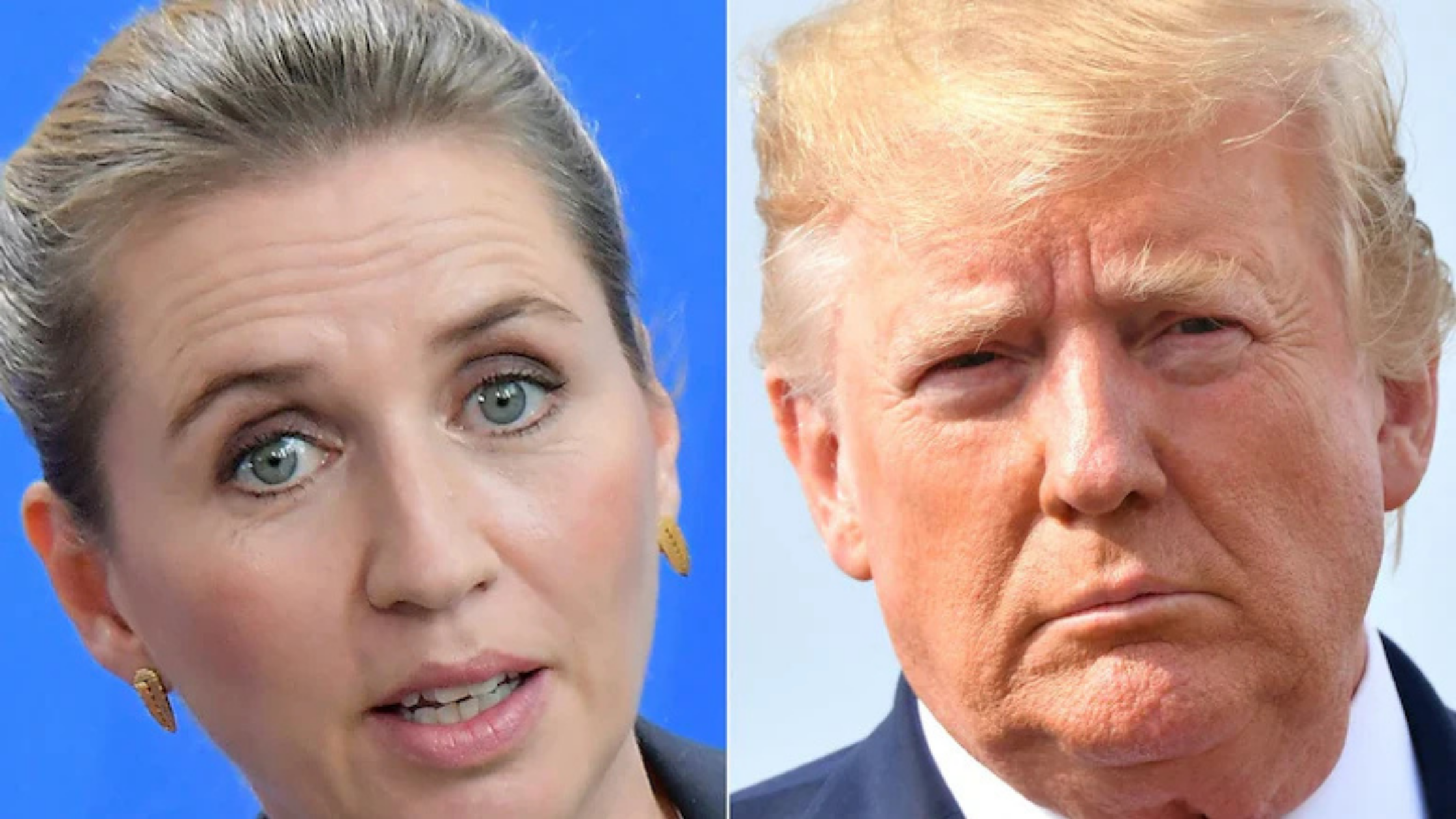
In a dramatic escalation of transatlantic tensions, Denmark has firmly warned the United States that defending Greenland — including against a potential U.S. takeover — is a matter of national and NATO security, a stance that has reverberated across Europe and the world. The warning comes after renewed U.S. interest in acquiring the Arctic island from Denmark, igniting sharp diplomatic pushback, global headlines, and serious strategic debate about the future of NATO and Arctic geopolitics.
This story has captured widespread international attention and continues trending across major news platforms and expert analyses because it touches not only on Western alliance cohesion but also on shifting global power dynamics in the Arctic. My reporting combines multiple sources to present the fullest view available.
The Heart of the Controversy: Greenland’s Strategic Value
Greenland — an autonomous territory of the Kingdom of Denmark with fewer than 60,000 residents — has long held outsized geopolitical significance due to its location between North America and Eurasia. It sits near critical Arctic sea routes and holds potentially vast natural resources, drawing international interest from the United States, Russia, and China.
U.S. interest in Greenland is not new and predates recent events. During World War II, Denmark’s ambassador to the U.S. authorized American defense of Greenland, a pact that formed the basis of ongoing defense cooperation. This context underlines the territory’s strategic weight in global security architecture.
But recent rhetoric has taken the situation into uncharted territory.
Former U.S. President Donald Trump and some officials have openly discussed acquiring Greenland — by purchase or otherwise — citing concerns about Russian and Chinese expansion in the Arctic. This has alarmed Danish and European leaders, who view such talk as dangerous and destabilizing.
Denmark’s All-Out Defense Pledge: A Red Line for NATO
Denmark’s government has been categorical: If Greenland were attacked — even by an ally — Danish forces are under orders to defend it immediately, without waiting for political clearance. This “shoot first” posture reflects a Cold War-era directive that remains in force, underscoring Copenhagen’s seriousness about territorial defense.
Rasmus Jarlov, a senior Danish MP and chair of the defence committee, stated publicly that Denmark will defend its territory in any eventuality, including hypothetically against the U.S. This unusual turn — warning a powerful ally of the catastrophic consequences of attacking a fellow NATO member — has stunned strategic circles.
Prime Minister Mette Frederiksen has said bluntly that any U.S. forceful action against Greenland would “end NATO” as an institution. Given NATO’s foundation on collective defense under Article 5, this warning highlights how severe Copenhagen regards the current crisis.
U.S. Policy Statements and Internal Debate
The U.S. response has been mixed and politically charged. Some advisers and legislators argue Greenland is essential for securing the Arctic and countering influence from Russia and China. Others strongly caution against any aggressive action.
A White House official reportedly stated that a military option “is always on the table” to secure Greenland, even as diplomats promote negotiation and respect for international law.
Meanwhile, a bipartisan group of former U.S. officials has publicly admonished the White House against any military attempt to seize Greenland, warning such a move would undermine U.S. credibility, destroy long-standing alliances, and destabilize global security.
This internal debate in Washington illustrates the complexity of balancing strategic ambition with alliance commitments.
European Leaders Rally Behind Denmark
Across Europe, leaders have overwhelmingly backed Denmark’s defense of Greenland and emphasized respect for sovereignty and international law.
Italian Prime Minister Giorgia Meloni has explicitly ruled out supporting any U.S. military intervention while urging a stronger NATO presence in the Arctic — a position seeking to protect both alliance unity and Arctic security.
Poland’s Prime Minister also expressed deep concern, warning that discord over Greenland could strain NATO cooperation precisely when unity is needed to counter other global threats like Russia.
United Kingdom, French, German, Spanish, and Nordic leaders have affirmed that Greenland’s future must be determined by its people, not external pressures — a message clearly aimed at reaffirming alliance norms.
Greenland’s Own Voice: Autonomy, Identity, and Self-Determination
Perhaps most significant in all this is how Greenland’s leaders and population view these developments.
Greenlandic Prime Minister Jens-Frederik Nielsen has stated unequivocally that Greenlanders do not want to become Americans or relinquish control of their territory to another nation. He stressed that any decision about the island’s status must be made by its people under international law, not imposed by outsiders.
Polls have shown that a large majority of Greenlanders reject U.S. annexation proposals, reinforcing the view that sovereignty and identity are central to the debate.
This stance has added moral weight to Copenhagen’s diplomatic resistance and galvanized European support for Greenland’s self-determination.
The Geopolitical Stakes: NATO, Arctic Strategy, and Great Power Competition
Why has a relatively small island become such a flashpoint?
The answer lies in Arctic geopolitics. Melting ice is opening new shipping routes and making the region’s substantial resources more accessible. Russia has expanded its military footprint in the Arctic, and China has styled itself as a “near-Arctic state,” intensifying competition.
For the U.S., stronger footholds in the region could offer strategic advantages over both competitors. But alienating NATO allies and undermining legal norms could also weaken American influence at a time when Western unity is crucial.
Experts now describe the clash as an inflection point in alliance politics — a rare test of whether NATO’s collective defense and diplomatic consensus can endure under pressure.
What Happens Next: Diplomatic Engagement or Continued Tension?
Efforts are underway to defuse the situation through diplomacy. Meetings are planned between U.S., Danish, and Greenlandic officials. Secretary of State Marco Rubio is slated to engage counterparts to negotiate paths forward that respect sovereignty while addressing U.S. strategic interests.
Yet the threat rhetoric from Washington continues to fuel unease, and European governments are discussing contingency plans for Arctic security cooperation beyond simple NATO frameworks.
Many analysts believe the current standoff will prompt a broader reassessment of Western Arctic policy, possibly leading to increased NATO deployments in the region — not as a concession to threats, but as deterrence against future coercive ambitions.
Conclusion: A Defining Moment for NATO and Arctic Policy
The standoff over Greenland has shattered assumptions about NATO unity and reaffirmed the importance of respecting allied sovereignty. Denmark’s uncompromising pledge to defend its territory — even against a powerful ally — has underscored the explosiveness of the crisis. European support for Copenhagen, Greenland’s insistence on self-determination, and growing debate within the United States itself highlight the complexity of the issue.
What happens next will likely shape the future of Arctic alliances, global power competition, and strategic cooperation for years to come. The world is watching not just a territorial dispute, but a potential test of public international law, alliance loyalty, and the evolving architecture of global security.
Subscribe to trusted news sites like USnewsSphere.com for continuous updates.