Defund the American Oligarchy: Why Billionaire Power and Trump-Era Politics Alarm Millions Now
Defunding the American oligarchy — the growing influence of billionaires and corporate power over Washington — has become central to the national political debate as President Donald Trump’s policies benefit the ultra-wealthy while many working Americans struggle with rising costs. Studies show that wealthy individuals and corporate interests hold disproportionate sway over political outcomes in the United States, shaping policy far beyond what most citizens want — raising urgent questions about economic inequality, democratic health, and who governing power really serves.

Progressive lawmakers and activists. A push to defund oligarchic influence and fund the people. Why? Because economic pain and political inequality are rising. Impact? Potential shift in how money shapes government and accountability. Why this matters now: With midterm elections approaching and national debates on economic fairness intensifying, the issue is front and center in U.S. politics.
The Growing Influence of Oligarchy in American Politics
The term “oligarchy” describes a system where a small, ultra-wealthy elite has outsized influence over political and economic decisions. In modern America, critics argue that campaign financing, tax advantages, and corporate lobbying have shifted power away from ordinary citizens and toward a wealthy minority. Research by political scientists demonstrates how policy outcomes often favor the rich, even when a majority of voters support an opposite direction — evidence suggesting the U.S. may function closer to a plutocracy than a true democracy.
In 2025 and 2026, high-profile political figures and activists have amplified these concerns, pointing to the concentration of wealth among tech billionaires and mega-corporations as a foundation for political power rather than purely market success. This concentration isn’t just economic; it has real effects on legislative priorities, regulatory enforcement, and public funding decisions — contributing to widening inequality and diminishing trust in democratic institutions.
The Progressive Defund the Oligarchy Resolution
In late January 2026, a group of progressive Democratic lawmakers introduced the “Defund the Oligarchs, Fund the People” resolution in Congress. Spearheaded by Representatives Rashida Tlaib, Pramila Jayapal, and Delia Ramirez, and co-sponsored by Summer Lee, the resolution calls for reducing tax breaks, subsidies, and political advantages that benefit the richest Americans and corporations. It argues that current policies result in massive tax giveaways for the wealthy while everyday families face stagnant wages, unaffordable healthcare, and rising costs for basic needs.
Supporters of the resolution frame it as a corrective measure — one designed to restore democratic principles by ensuring government responds to people’s needs, not billionaire interests. Advocates argue that every dollar given in corporate giveaways reduces funding available for public services like education, healthcare, and housing — areas where many citizens feel government investment is desperately needed.
Why Critics Say This Debate Matters for Democracy
Political analysts warn that unchecked oligarchic power can lead to weakened democratic checks and balances. When a small group of wealthy individuals and corporations has disproportionate influence over elected officials, policy priorities can drift away from broad public welfare toward narrower private interests. This dynamic not only affects economic policy but also erodes trust in democratic institutions — from the legislative process to independent media and public agencies.
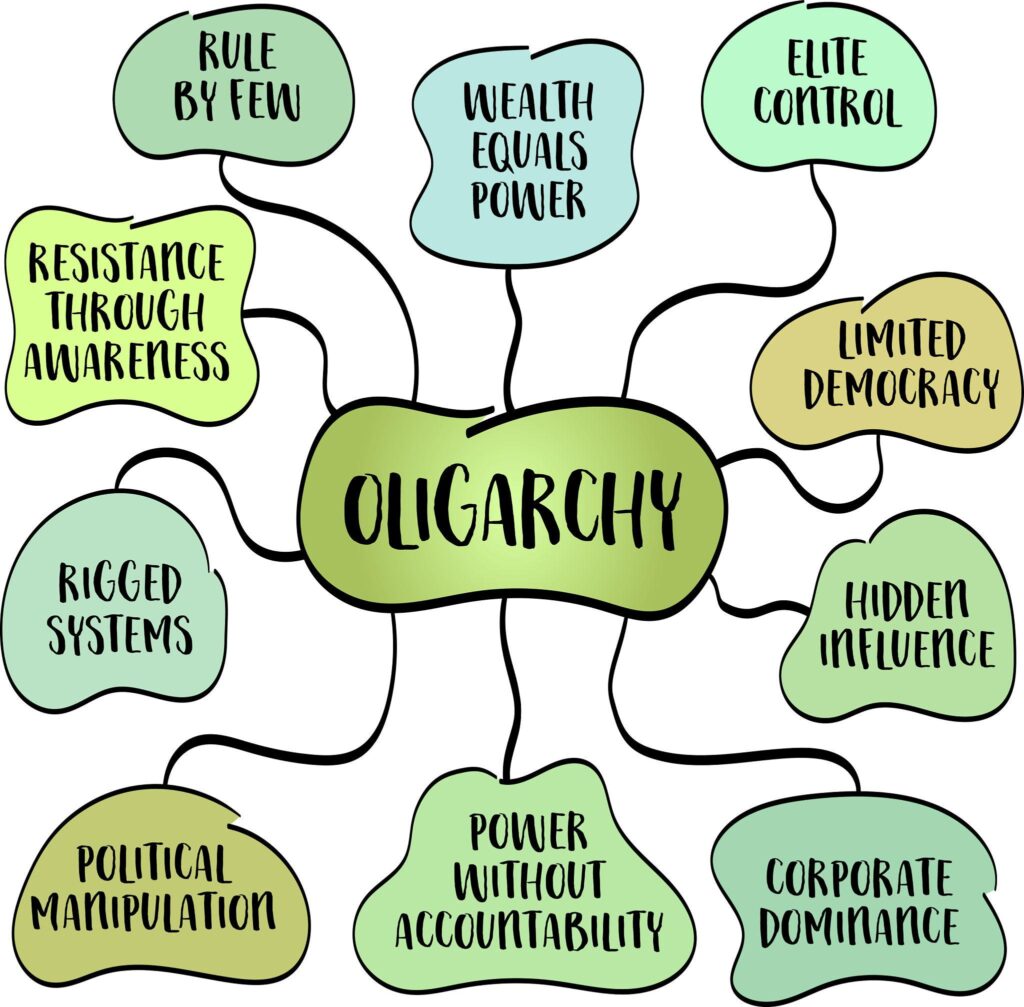
Beyond the U.S. examples, broader historical and comparative research demonstrates that when economic elites dominate political decision-making, democratic governance can weaken. Scholars argue that accountability, transparency, and public participation must be restored to protect representative government. In the current U.S. context, uncertainty about how any reform measures could succeed adds urgency to public debate.
Real-World Impacts on Everyday Americans
For millions of Americans, the growing perception of oligarchic sway isn’t abstract: it’s felt in their wallets. A large portion of the population lives paycheck to paycheck, while essential costs such as housing, healthcare, and food continue to rise faster than wages. Many families report that they bear the brunt of federal policy choices that favor corporate tax breaks and incentives for investors, leaving less funding for social safety nets and direct assistance for struggling households.
These trends shape voter attitudes and political priorities, helping to explain why issues like wealth inequality and campaign finance reform are gaining traction with a broad array of voters, regardless of party. Indeed, public opinion surveys repeatedly show strong bipartisan support for higher tax rates on large corporations and the ultra-wealthy — an indicator that this issue resonates across much of the electorate.
The Future: Democracy, Accountability, and Reform
The debate over oligarchy isn’t just about tax policy or partisan politics — it’s about the foundational question of who has a voice in democracy. Whether the Defund the Oligarchy movement translates into lasting policy change remains uncertain, but its rise signals a growing demand among Americans for a government that works for the many, not the few.
As this conversation intensifies — from Capitol Hill to classrooms, workplaces, and social media — it’s clear that reforms around political finance, corporate influence, and economic fairness will continue to shape American democracy.
Subscribe to trusted news sites like USnewsSphere.com for continuous updates.