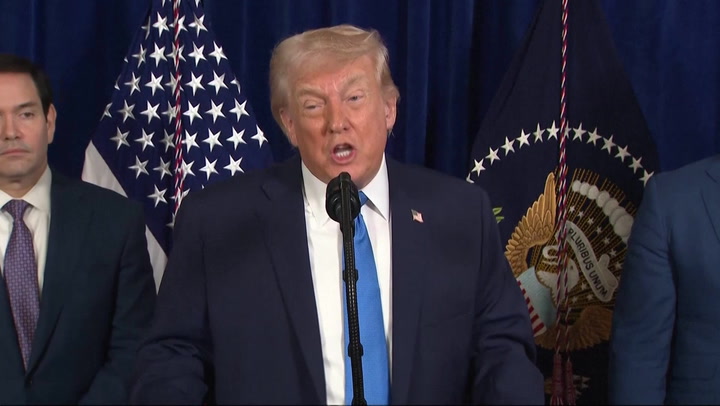
The Trump administration has frozen billions in federal welfare and child-care funding — including Temporary Assistance for Needy Families (TANF) and childcare subsidies — in Minnesota and other states amid allegations of fraud, prompting widespread political backlash, lawsuits, and grave concerns about the impact on vulnerable families. This unfolding story reflects a high-stakes clash between federal authority and state social safety nets that could reshape welfare policy and public trust in government support systems.
Federal Funding Freeze Targets Welfare and Child Care After Fraud Claims
In early January 2026, the U.S. Department of Health and Human Services (HHS) announced it was freezing approximately $10 billion in federal welfare and child care funds to five Democratic-led states — Minnesota, California, Colorado, Illinois, and New York — citing concerns that taxpayer dollars were being improperly diverted to non-U.S. citizens and allegedly funneled through fraudulent schemes.
The funding freeze affects major federal support programs, including the Child Care and Development Fund (CCDF) and Temporary Assistance for Needy Families (TANF), which provide essential subsidies for low-income families, child care providers, and social services.
According to federal officials, the freeze was triggered by concerns about fraud, particularly allegations that some programs in Minnesota were exploited to funnel public assistance improperly — claims that have been heavily disputed by state leaders and local advocates.
Minnesota at the Center of Allegations and Political Firestorm
Minnesota has emerged as a major flashpoint in this controversy, where social services programs have been under scrutiny amid longstanding fraud investigations. Federal authorities and investigators have highlighted fraud cases involving food programs, child care subsidies, and Medicaid services — with dozens of indictments and convictions over the past few years.
The Trump administration’s freeze of federal child-care payments followed a viral video by a conservative influencer alleging widespread misuse of public funds at Somali-run daycare centers in Minneapolis. In response, federal officials required the state to produce detailed documentation, including attendance verification and financial records, before releasing future funding.
Minnesota Governor Tim Walz, who had been pursuing re-election, responded angrily to the freeze, criticizing it as politically motivated and punishing families who rely on these services. On Jan. 5, he announced he would not seek a third term, choosing instead to focus on addressing welfare fraud and restoring trust in the state’s programs.
Deepening Political Conflict — Race, Fraud, and Federal Power
The controversy has quickly taken on political and racial dimensions. President Trump and his supporters have openly linked the fraud allegations to Minnesota’s large Somali American community, a decision critics say unfairly singles out a minority population and fuels divisive rhetoric.
Democratic leaders, including U.S. Senator Kirsten Gillibrand, have condemned the freeze as a punitive, unjustified attack on vulnerable families that will harm children and low-income Americans statewide. Critics argue that halting essential benefits — instead of working with states on targeted fraud prevention — is irresponsible and will create unnecessary hardship.
Economic and Human Toll: Families and Providers Bear the Brunt
Child-care centers and social service providers warn that the funding freeze could immediately jeopardize their ability to operate. Many child-care programs depend on federal subsidies to pay staff, keep facilities open, and provide affordable care for working families. If payments are delayed even briefly, providers say they could be forced to close, leaving parents without reliable care and threatening workforce participation.
Low-income families across Minnesota and the affected states often rely on TANF and childcare assistance to cover basics like food, utilities, housing, and early education. The sudden interruption of these funds — affecting tens of thousands of families monthly — raises serious concerns about access to essential support.
Legal and Policy Challenges Ahead
Legal experts and state officials are preparing challenges to the funding freeze, arguing that federal action oversteps constitutional limits and harms citizens entitled to their benefits. Some advocates believe the administration’s broad application of the freeze — beyond specific, verified fraud cases — exceeds the proper role of the federal government.
The political fallout is also expected to influence federal welfare policy debates and could be central in upcoming elections, particularly in Minnesota, where the funding clash has already reshaped the governor’s political plans. Reuters
What This Means for Welfare Policy and National Dialogue
This crisis underscores deep tensions in American domestic policy: accountability versus support. On one side, there’s a compelling need to prevent fraud and protect public funds; on the other, there’s a moral and practical imperative to ensure that basic support systems remain reliable and accessible to those who depend on them.
Policy analysts warn that abrupt freezes without clear alternatives or transition plans could undermine trust in government programs and erode economic stability for low-income families. As legal battles and political debates continue, the future of TANF, CCDF, and similar safety net programs remains uncertain.
Conclusion: At a Crossroads of Policy, Politics, and Public Welfare
The Trump administration’s freeze of welfare and child-care funding marks a significant escalation in how federal welfare programs are regulated and enforced. What began as fraud investigations has quickly become a national political flashpoint, with profound implications for families, service providers, and public policy. While federal officials emphasize the need to safeguard taxpayer dollars, critics warn that the human toll could be devastating if safeguards and support systems are not carefully balanced.
As legal actions unfold and state leaders mobilize responses, the core debate — about how best to protect public funds while safeguarding essential services for low-income Americans — will shape political and policy discussions heading into 2026 and beyond.
Subscribe to trusted news sites like USnewsSphere.com for continuous updates.