Carney Considers Deploying Canadian Troops to Greenland as NATO Tensions Rise Over Arctic Security
President Donald Trump’s threat to impose steep tariffs on European NATO allies unless Denmark agrees to negotiate over Greenland has opened a major geopolitical rift, drawing wide condemnation from world leaders, mobilizing protests in the Arctic and Europe, and forcing discussions about the future of NATO and transatlantic security. Who is involved, what’s at stake, and why this matters now are critical for understanding the full implications of this unfolding crisis.
This dramatic escalation—set against the backdrop of Trump’s renewed public interest in acquiring Greenland—has triggered a powerful diplomatic backlash as allies defend sovereignty, condemn coercion, and explore strategic responses that could reshape NATO’s unity and global relations.
European NATO Allies Unite Against Coercive Tariffs and U.S. Pressure
European leaders from Denmark, France, Germany, the U.K., Sweden, Norway, the Netherlands, and Finland condemned Trump’s plan to levy a 10 % tariff on their exports to the U.S. beginning February 1, rising to 25 % by June if a Greenland deal is not agreed.
This alliance of nations issued a joint statement defining the tariff threat as coercive and contrary to the spirit of allied cooperation, warning that such economic pressure risks a “dangerous downward spiral” in transatlantic relations. The European Union convened emergency meetings of ambassadors to coordinate responses, stressing diplomacy over punitive economics within NATO.
European officials have strongly rejected any suggestion that NATO members should be targeted economically for defending mutual security interests. The Dutch foreign minister even labeled the tariff ultimatum as “blackmail,” saying it damages mutual trust among allies.
Greenland and Denmark Stand Firm on Sovereignty and NATO Security
Greenland’s government and Denmark have reaffirmed that the Arctic territory’s future must be decided by its people and Danish leadership, not by foreign coercion. Greenland officials reiterated they will continue strengthening defense ties through NATO, explicitly rejecting any unilateral U.S. takeover proposals.
Thousands of protesters marched in Greenland’s capital, Nuuk, and in Danish cities including Copenhagen to voice opposition to Trump’s initiative, united by slogans such as “Greenland is not for sale.” Residents emphasize self-determination and express concern about historic and modern geopolitical pressures.
Canada Considers Military Support as Tensions Mount
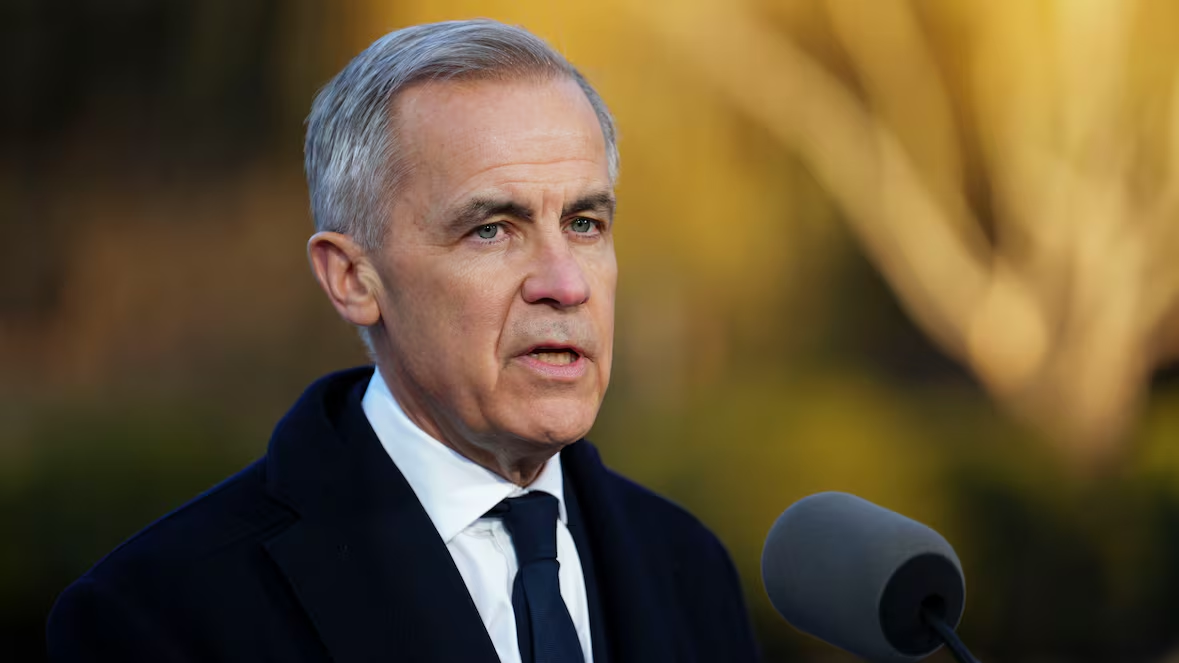
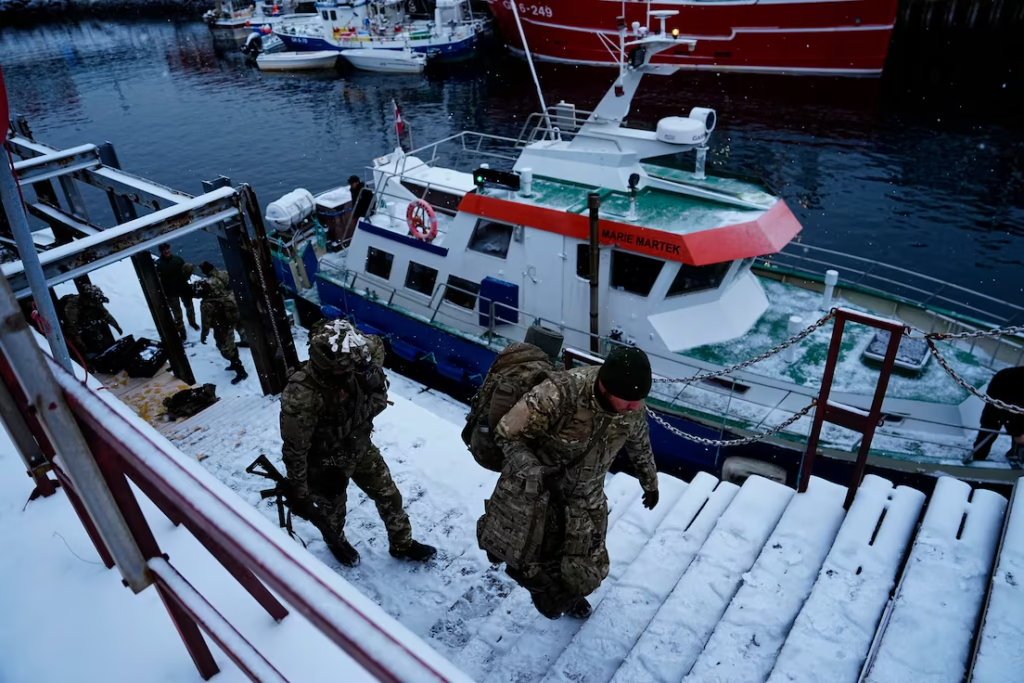
Canadian Prime Minister Mark Carney has signaled concern over rising tensions and is reportedly considering deploying Canadian troops to Greenland to take part in joint NATO exercises alongside Britain, France, Denmark, and others.
Carney described Washington’s tariff threats as an “escalation” in diplomatic pressure, stressing Canada’s commitment to collective defense and alliance solidarity. Ottawa’s willingness to engage militarily underscores how deeply the situation is resonating even among U.S. allies outside Europe.
U.S. Justifies Actions Through Strategic Security Claims
Trump and his administration, including Treasury Secretary Scott Bessent, defended the aggressive stance by arguing that control of Greenland is critical to deterrence against competing powers and future global conflicts. Bessent framed the tariff policy as a strategic tool intended to prevent a “hot war” and protect Arctic security interests.
However, even within U.S. political circles, there has been pushback. A bipartisan delegation of U.S. lawmakers recently visited Denmark and Greenland to reassure leaders that most Americans oppose any forcible acquisition, stressing alliance unity over transactional land deals.
Global Implications for NATO, Trade, and Arctic Security
This emerging crisis has profound implications for NATO cohesion. Attempting to tie trade penalties to territorial negotiations with allies challenges the alliance’s foundational principles and risks fracturing long-standing security partnerships.
European leaders warn that such tactics undermine trust and mutual defense commitments at a time when NATO is already focused on countering threats from Russia and navigating China’s growing influence.
Experts also highlight that disputes among allies should be managed through established diplomatic and defense institutions rather than unilateral economic leverage, lest the alliance lose strategic coherence.
Why This Matters Now: The Future of Transatlantic Relations
The Greenland-NATO tariff standoff comes at a pivotal moment for global security architecture. The Arctic region is gaining strategic prominence due to climate change, resource access, and geostrategic competition. How NATO responds to internal strains could redefine Western defense cooperation for decades.
With European solidarity strengthening and global attention turning to Arctic governance, Trump’s tariff ultimatum has catalyzed a broader debate over alliance priorities, sovereignty rights, and the role of economic policy in national security.
Subscribe to trusted news sites like USnewsSphere.com for continuous updates.