UK and France Deliver Precision Airstrike on ISIS Weapons Cache in Syria, Halting Extremist Resurgence
In a decisive military move that demonstrates unwavering Western resolve against extremist threats, the United Kingdom and France jointly carried out a precision airstrike on a suspected Islamic State (ISIS) underground weapons cache in central Syria. This coordinated operation, conducted late on Saturday evening near the historic city of Palmyra, aimed to dismantle a fortified facility used by remnants of the extremist group to store rockets, explosives, and ammunition — a location intelligence analysts had flagged as a critical resurgence node.
The joint strike underscores international determination to curb any revival of ISIS after its territorial defeat in 2019, bolstering ongoing efforts by Western and regional partners to degrade extremist networks across Syria’s fragmented landscape.
Strategic Strike Near Palmyra: What Happened
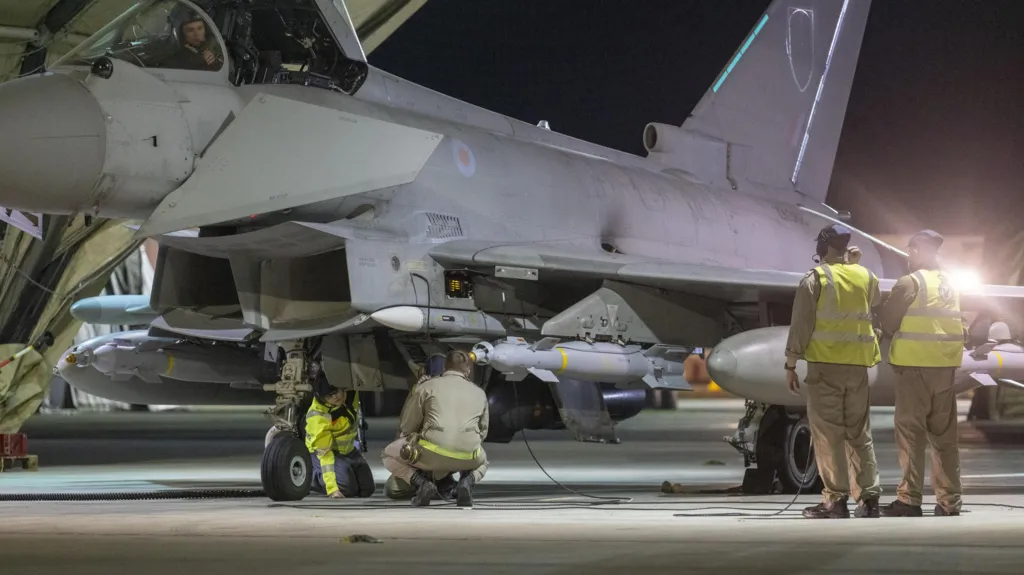
Military officials from both nations confirmed that Royal Air Force (RAF) Typhoon FGR4 combat jets, supported by French aircraft and a Voyager aerial refuelling tanker, dropped precision‑guided Paveway IV bombs on access tunnels leading into an underground bunker believed to be used for storing ISIS weapons and explosives. British authorities say the strike was executed in a remote mountainous area north of Palmyra, deliberately chosen to avoid civilian presence.
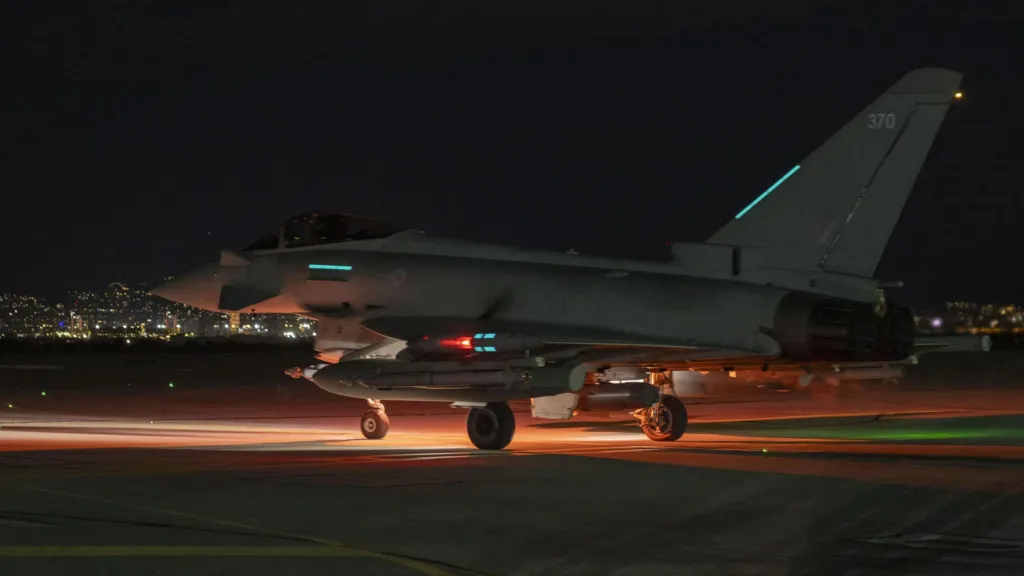
According to the UK Ministry of Defence, initial assessments suggest the target was successfully engaged, and all aircraft returned safely to base after the mission. The ministry further emphasized that there were no indications of civilian risk or unintended damage.
This operation forms part of a broader anti‑ISIS campaign involving coalition partners who have kept constant patrols and surveillance over Syrian airspace to prevent extremist factions from regrouping and exploiting unstable regions of the country.
Why This Joint Airstrike Matters
1. Preventing Extremist Resurgence
Although ISIS lost its territorial caliphate in Syria and Iraq by 2019, it has continued to operate through small cells and isolated factions, particularly across the desert and mountainous regions of Syria. According to military analysts, the dismantling of underground weapons facilities disrupts the group’s ability to regroup, resupply, and carry out future attacks.
The joint mission also signals solidarity between European partners and broader coalition forces in combating terrorism — a priority that remains at the forefront of Western defense strategies even after years of conflict.
2. Demonstrating Military Coordination and Readiness
By combining resources — from British precision jets to French aerial support — the airstrike highlights the high level of interoperability between allied forces, enhancing collective deterrence against extremist threats. This integration helps ensure that critical intelligence is acted upon swiftly and effectively to forestall potential threats.
Military strategists also view such joint operations as highly symbolic, reaffirming long‑standing defense cooperation between NATO members and the broader international community engaged in Middle Eastern security.
Remarks From Defence Officials
In a public statement following the mission, UK Defence Secretary John Healey praised both RAF and French forces for their professionalism and precision, noting that the operation “demonstrated Britain’s leadership and determination to stand shoulder to shoulder with our allies to stamp out any resurgence of Daesh and their violent ideology in the Middle East.”
French military representatives echoed this sentiment, framing the operation as part of a sustained commitment to regional stability and counter‑terrorism, particularly in light of persistent threats posed by ISIS affiliates. The emphasis on shared values and strategic cooperation was central to their communication.
Context: ISIS Threat and the Syrian Battlefield
A Long-Running Conflict
ISIS — also known as the Islamic State and by its Arabic acronym Daesh — emerged from the chaos of the Syrian civil war and Iraq conflict, briefly controlling large swaths of territory until international and local forces dismantled its caliphate by March 2019. Despite territory loss, residual cells have remained active, seeking to regroup through underground hideouts, weapons caches, and recruitment networks.
Counter‑terrorism experts caution that without sustained pressure, these remnants could leverage remote locations to plan attacks or incite instability — a concern that has driven repeated coalition airstrikes and intelligence operations throughout the region.
Coalition and Local Forces
The UK‑France strike is just one part of a broader coalition strategy that includes the United States and local allied forces, each focusing on discrete yet complementary goals: intelligence gathering, battlefield disruption, and long‑term stabilization through diplomatic and security partnerships.
Some analysts believe targeted operations like this not only degrade extremist capacity but also signal to global audiences that the international community remains committed to defeating terrorism in all its forms.
Global Reaction and Social Media Trends
News of the airstrike spread rapidly across international media and social platforms, drawing reactions from officials and civilians alike. Posts labeled the operation as a necessary step to prevent ISIS resurgence, while others debated the longer‑term political and humanitarian implications of foreign military involvement in Syria.
Despite differing viewpoints on military strategies, many observers highlighted the precision and apparent lack of civilian harm as key indicators of the operation’s tactical success.
What Happens Next? What this Means for Regional Stability
Military experts expect continued vigilance and occasional targeted strikes as part of the coalition’s long‑term strategy to disrupt extremist infrastructure. Given the fragmentation of power across Syria, operations will likely be conducted in response to validated intelligence about weapons caches, command posts, or communication hubs tied to ISIS networks.
At the same time, political analysts assert that diplomatic engagement and reconstruction efforts remain essential to fostering enduring peace and preventing militant re‑emergence. The complex interplay between military action, humanitarian needs, and geopolitical shifts continues to shape the broader trajectory of the Syrian conflict. eutoday.net
Conclusion
The UK‑France joint airstrike on a suspected ISIS arms depot in Syria marks a significant tactical success in the continued fight against extremist threats. Combining precision military capability with strategic international cooperation, the operation aimed not only to neutralize a weapons cache but also to send a clear message of unified resolve against terrorism. As Syria remains a central theater in the broader Middle East struggle, sustained coalition efforts backed by actionable intelligence will be crucial to ensuring long‑term security.
Subscribe to trusted news sites like USnewsSphere.com for continuous updates.