Canada is set to open a consulate in Nuuk, Greenland, underscoring its intent to deepen diplomatic ties and strengthen its role in the rapidly changing Arctic region. This decisive move comes at a moment of heightened global interest in the North, from climate change effects and resource potential to mounting geopolitical tensions involving the United States, Russia, and China.
Unlike typical diplomatic posts, this move carries strategic weight: it signals Canada’s commitment to Arctic governance, Indigenous partnership, and collective security alongside Denmark and NATO allies. Experts say this will become one of the most significant Arctic diplomatic shifts in recent history — especially as rival nations vie for influence in the region.
The Arctic has transformed from a frozen hinterland into a center of international attention. Melting ice, rich mineral reserves, and evolving shipping routes have made the region geopolitically important. With Greenland at the crossroads of these developments, Canada’s new consulate not only supports diplomatic relations but also strengthens Canada’s role as a key Arctic stakeholder.
Deepening Ties with Greenland and Denmark: A Diplomatic Pivot
Canada’s decision to establish a consulate in Greenland’s capital, Nuuk, is rooted in longstanding cultural, historical, and geopolitical connections. The two nations share more than just geographical proximity — they also share deep ancestral connections through Indigenous Inuit communities that stretch across the Arctic.
This initiative follows years of Arctic policy evolution, including a comprehensive Canadian Arctic Foreign Policy that prioritizes sovereignty, Indigenous engagement, and international cooperation. The policy sets a clear direction for Canada’s presence in the High North and opens diplomatic channels designed to enhance security and sustainable development in partnership with Arctic neighbors.
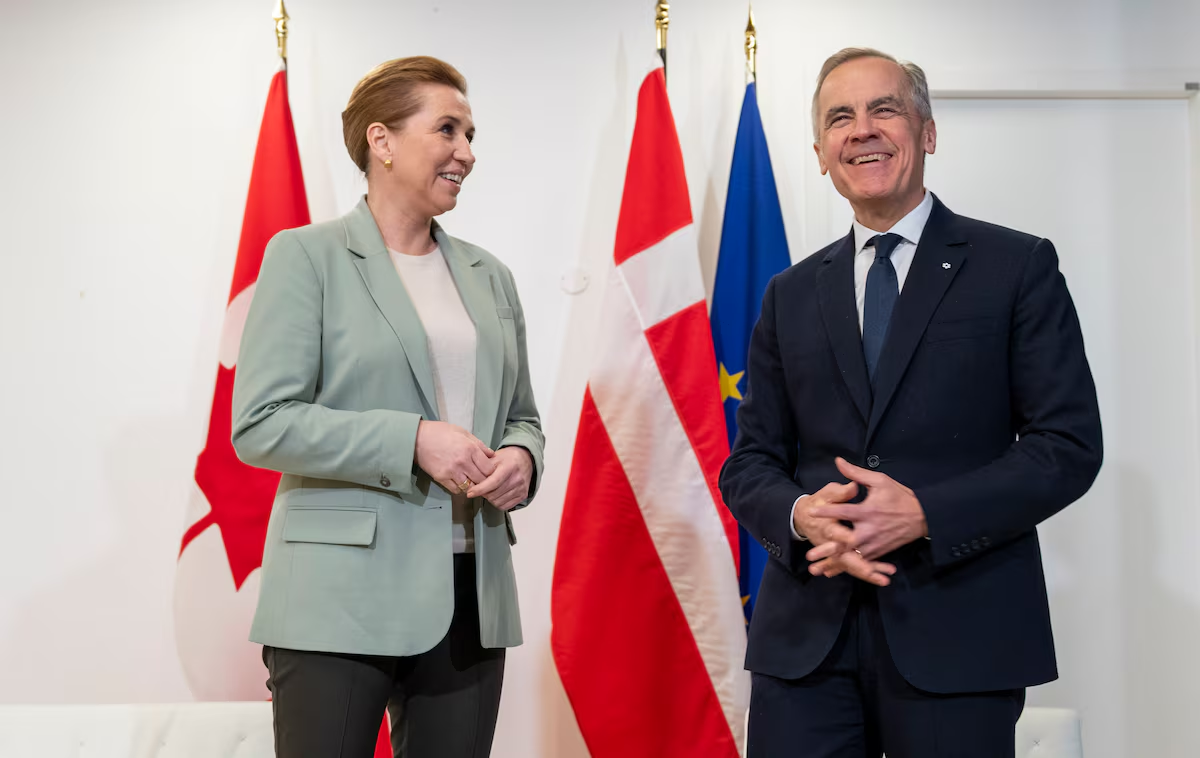
Canadian Prime Minister Mark Carney emphasized that only Denmark and Greenland can determine Greenland’s future, a clear stance meant to reinforce sovereign decision-making and support for international law. This reassurance arrives against a backdrop of broader global interest in Greenland’s strategic position.
Strategic Timing: The Arctic’s Rising Importance
The decision to open a Greenland consulate comes as the Arctic becomes one of the most contested and consequential areas of international diplomacy. What was once considered remote is now central to discussions about climate change, defense alliances, and energy and mineral exploration.
Warming temperatures are opening previously inaccessible waters, making the Arctic Ocean a potential hub for new shipping lanes between Europe, Asia, and North America. At the same time, countries like Russia and China have increased their presence and influence in the region. Canada’s expanding diplomatic footprint aims to ensure it remains a strong, stable voice in Arctic governance.
Canada’s Foreign Minister, Anita Anand, has highlighted the opening of the consulate as part of a “concrete step” toward strengthening ties not only with Greenland but also with broader Arctic allies — reinforcing solidarity and shared commitment to sovereignty and security.
Broader Geopolitical Tensions and the U.S. Dimension
Canada’s announcement also arrives amid increased international discussion about Greenland’s strategic future. In recent months, U.S. President Donald Trump reignited talk about the possibility of annexing Greenland — a notion that leaders in Copenhagen and across Europe have firmly rejected.
Although the idea of annexation or territorial expansion is widely seen as politically controversial, it has heightened global awareness of Greenland’s strategic value. The island sits above the Arctic Circle, making it a linchpin for military, economic, and environmental interests.
Canada’s diplomatic steps, then, serve both as a reaffirmation of its Arctic priorities and as an indirect response to uncertainty in global leadership strategies. While Canada supports a rules-based international order and respect for sovereign choices, it is also positioning itself as a stabilizing force amid dynamic geopolitical currents.
Indigenous Leadership at the Forefront of the Arctic Strategy
A notable element of this diplomatic push is the role of Mary Simon, Canada’s Governor General and the first Indigenous person to hold this position. Of Inuk descent, Simon’s involvement highlights Canada’s effort to integrate Indigenous perspectives into Arctic diplomacy and reinforce the deep cultural links between Canada’s and Greenland’s northern communities.
Her planned visit to Greenland alongside Foreign Minister Anita Anand is both symbolic and strategic. It demonstrates Canada’s commitment to honoring Indigenous voices in foreign policy and underscores the human dimension of Arctic relations — where traditional knowledge and community ties matter as much as geopolitical strategy.
This approach aligns with broader Canadian policy principles that emphasize the inclusion of Indigenous peoples in decisions that impact their homelands — particularly in areas like security, environmental stewardship, and economic opportunities.
An Evolving Arctic Landscape: Challenges and Opportunities
The Arctic today stands at a crossroads of competing interests and emerging global priorities. While climate change is altering ecosystems and exposing new economic possibilities, it is also amplifying political and security complexities.
Canada has responded with a multi-layered approach that blends diplomacy, defense, and environmental protection. The new Greenland consulate is part of that tapestry: a diplomatic outpost that connects Canada more directly with Arctic affairs and positions it favorably within international forums such as the Arctic Council and NATO.
Moreover, closer ties with Greenland help Canada leverage partnerships aimed at sustainable development — including scientific research, natural resource coordination, and community resilience in the face of rapid change.
These growing diplomatic channels will ensure Canada remains an influential voice in Arctic decision-making — a factor that analysts say will prove crucial as the global balance of northern influence continues to shift.
What This Means for Global Security and Future Relations
Canada’s consulate in Nuuk marks more than just a diplomatic milestone — it reflects a broader strategy rooted in foresight and proactive engagement. By reinforcing its Arctic presence, Canada is signaling that it intends to be at the center of evolving global priorities, from security and transportation to climate policy and Indigenous partnership.
This initiative also embodies Canada’s belief in diplomacy backed by respect for sovereignty, international law, and collaborative problem-solving. It highlights the importance of diverse voices in shaping the Arctic’s future — especially those of Indigenous communities whose histories and lives are deeply interwoven with the region itself.
In an era where the Arctic’s relevance is growing exponentially, Canada’s diplomatic deepening with Greenland positions it as a reliable partner, respected ally and influential voice on the world stage. ArcticToday
CONCLUSION
Canada’s decision to open a consulate in Greenland reflects an ambitious and timely expansion of its Arctic diplomacy, driven by geopolitical shifts, climate realities, and a commitment to partnership and sovereignty. As global powers recalibrate their strategies in the North, Canada’s move strengthens its voice in Arctic governance and builds deeper ties with its northern neighbors. This decisive act will likely be cited for years to come as a defining moment in Canadian foreign policy and Arctic affairs.
Subscribe to trusted news sites like USnewsSphere.com for continuous updates.