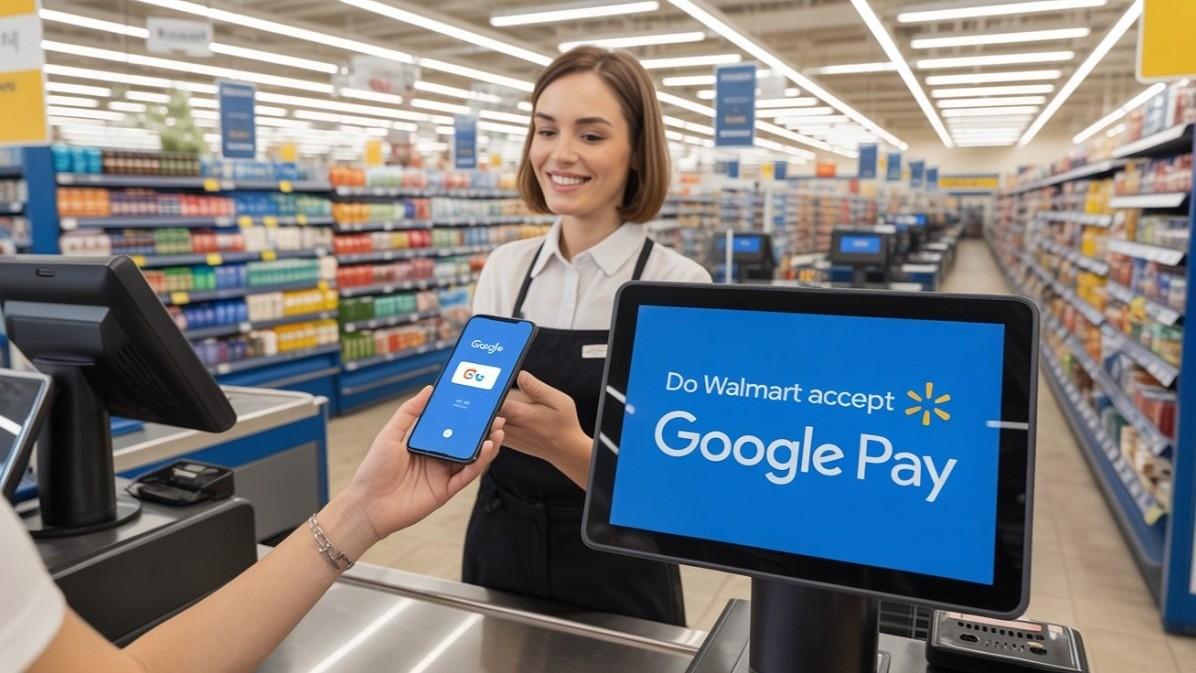
Walmart Google Pay support is coming to U.S. stores, marking a major change in how millions of shoppers will be able to pay at checkout. Starting August 24, 2026, Walmart and Sam’s Club will begin rolling out Tap to Pay at select U.S. locations, with Walmart targeting availability across all U.S. stores and clubs by the end of 2026. Fuel stations are scheduled to receive the capability by mid-2027.
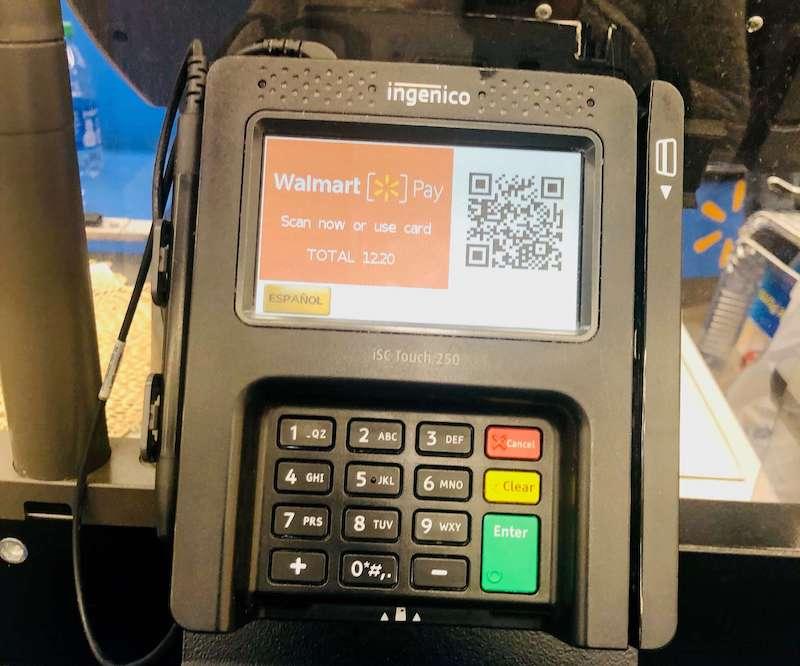
The move is significant because Walmart has historically pushed shoppers toward its own Walmart Pay system rather than supporting NFC-based wallets such as Google Pay and Apple Pay. Now, customers will have more choice, including eligible contactless cards, phones and smartwatches, while Walmart Pay, cash and traditional credit and debit cards will continue to be available.
The timing is also interesting for investors. Walmart just reported a difficult quarter for U.S. shoppers, with comparable sales growth slowing to 2.6%, its weakest U.S. performance in six years, even as e-commerce grew strongly and the company received nearly $2.9 billion in tariff refunds.
That makes the Tap-to-Pay announcement more than a simple technology upgrade. It raises questions about consumer convenience, digital payments, Walmart’s financial ecosystem, Google Pay’s reach, retail competition and Walmart stock.
Walmart Google Pay Rollout Starts August 24
The Walmart Google Pay expansion begins with select Walmart stores and Sam’s Club locations on August 24, 2026. Walmart says the rollout will eventually cover all U.S. Walmart stores and Sam’s Club locations by the end of the year. Contactless payment at fuel stations is expected to follow by mid-2027.
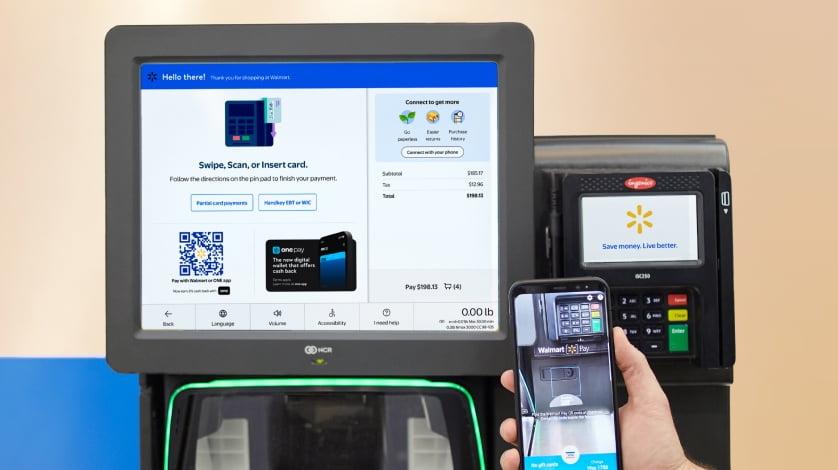
Shoppers will be able to use eligible contactless cards, phones and smartwatches at participating checkout terminals. Walmart also says customers can add eligible Walmart, Sam’s Club and OnePay cards to digital wallets. Existing payment options are not disappearing: Walmart Pay, cash and regular credit and debit cards will remain available. Sam’s Club members will also continue to have access to Scan & Go.
That means Walmart is not replacing its existing payment ecosystem with Google Pay. Instead, it is adding another layer of choice.
For consumers, the practical difference is straightforward. Instead of opening the Walmart app and using its QR-based payment process, a shopper with a compatible digital wallet can use a contactless phone, smartwatch or card at a supported terminal.
The rollout will not happen simultaneously at every location. Walmart has described the initial launch as a selective rollout, meaning shoppers should not assume that every store will have the feature immediately on August 24.
That distinction is important for anyone searching for “Does Walmart accept Google Pay?” The answer in late August 2026 is effectively yes, but availability will depend on the store during the rollout period.
Why Walmart Changed Its Payment Strategy
For years, Walmart took a different approach from many large U.S. retailers.
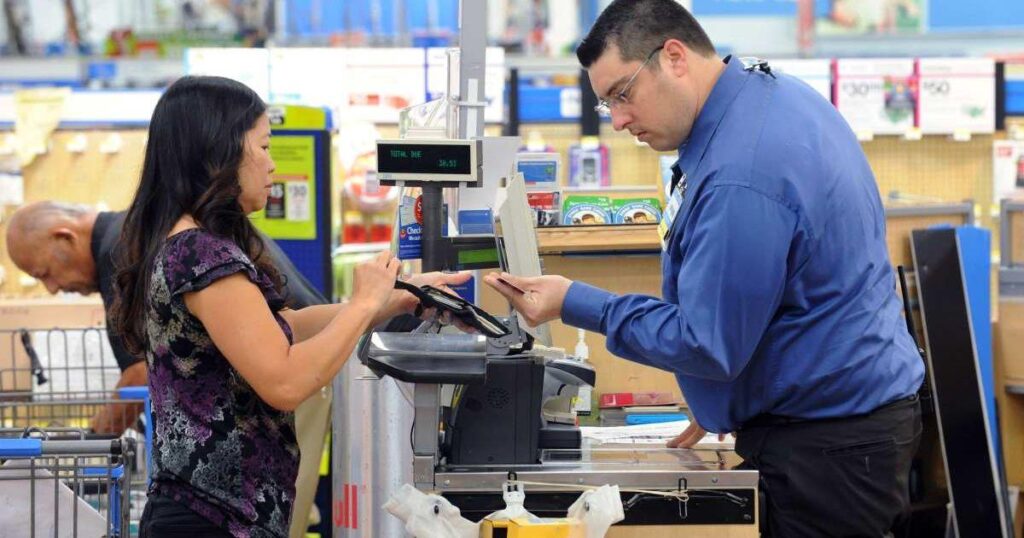
The company promoted Walmart Pay, which allowed customers to connect payment cards to the Walmart app and pay using a QR-code-based system. That gave Walmart greater control over the checkout experience and helped connect payments with its broader app ecosystem.
But consumer payment habits continued to change.
Tap-to-pay has become increasingly normal in everyday retail. Customers are accustomed to paying with smartphones, smartwatches and contactless cards at restaurants, grocery stores, pharmacies and other retailers.
Walmart’s decision therefore represents a strategic shift toward meeting customers where they already are rather than requiring them to adopt a Walmart-specific payment workflow.
Google Pay support also gives Android users a familiar payment option at one of America’s largest retailers.
Google’s own payment infrastructure is designed around contactless transactions using compatible devices and NFC-enabled terminals. Google explains that users can tap a phone at a compatible card reader rather than physically inserting or swiping a card.
The change is not limited to Google.
Walmart’s announcement covers Tap to Pay more broadly, and current reporting indicates that Apple Pay is also part of the new contactless-payment rollout.
That makes this a much bigger change than simply adding one payment application.
Walmart is effectively moving from a more controlled payment environment toward a multi-wallet checkout strategy.
What This Means for U.S. Shoppers
What this means for you: the biggest immediate benefit is convenience.
A shopper carrying an NFC-enabled phone or smartwatch can potentially leave a physical wallet in a pocket or bag and simply tap at a compatible Walmart checkout terminal. Customers who already use Google Pay or Apple Pay at other retailers will not need to change their normal payment behavior specifically for Walmart.
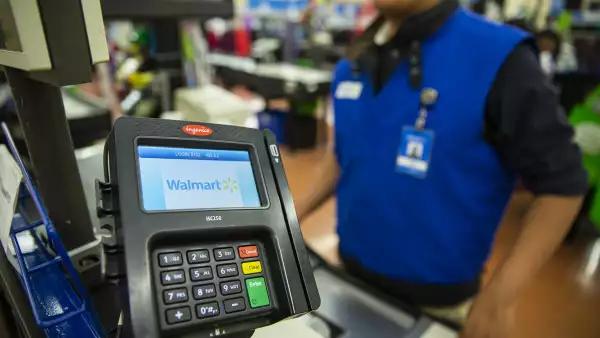
That could be particularly useful for quick purchases, grocery runs and situations where a customer is already using a phone or smartwatch.
Security is another consideration. With modern digital wallets, the payment experience can use tokenized credentials rather than simply exposing the underlying card number to every merchant terminal. Google describes its tap-to-pay system as using the phone and compatible card credentials to complete contactless payments.
However, consumers should still remember that digital wallets do not eliminate all payment risks. Users should protect their phones, enable appropriate device security and monitor card accounts for unauthorized transactions.
There is also a practical limitation during the rollout.
Not every Walmart location will necessarily have Tap to Pay immediately. Walmart says the initial rollout starts at select locations before expanding to all U.S. stores and clubs by the end of 2026.
So a shopper visiting Walmart on August 24 should not be surprised if the local store has not yet received the capability.
The same applies to fuel stations. Walmart’s current target puts Tap to Pay at its fuel operations around mid-2027, meaning shoppers should not expect every Walmart gas pump to support contactless payments during the initial store rollout.
For Sam’s Club members, the new feature adds another option rather than replacing Scan & Go.
That is potentially important because different shoppers have different priorities. Some want the fastest possible checkout, some prefer using a physical card, and others want all payment activity inside the retailer’s app.
Walmart is now giving consumers more ways to choose.
Why the Timing Matters for Walmart and Retail Stocks
The Tap-to-Pay announcement comes at a particularly important moment for Walmart stock.
Walmart’s latest quarterly results showed a mixed picture. The company reported total revenue growth of 5.9% in constant currency and operating income growth of 28.8%, while its U.S. comparable sales grew just 2.6%. Walmart also reported 24% growth in e-commerce, showing that digital shopping remains one of its strongest growth areas.
The weak U.S. comparable-sales figure attracted investor attention. Reuters reported that Walmart shares fell about 9% following the results, erasing more than $80 billion in market value. The company nevertheless raised its full-year sales and profit outlook.
This creates an interesting backdrop for the payment expansion.
Walmart is simultaneously trying to make shopping more convenient while dealing with consumers who are becoming more selective about spending.
Reuters reported that U.S. consumers are increasingly prioritizing essential purchases and becoming more cautious as elevated gasoline prices and economic pressures affect household budgets. Walmart’s slower same-store sales growth reflects some of that pressure.
Digital payments could help Walmart improve the shopping experience, but investors should not assume that adding Google Pay will immediately translate into a major increase in revenue or earnings.
The financial benefit is likely to be more indirect.
A smoother checkout can potentially reduce friction. More convenient payment options can improve customer satisfaction. Greater digital-wallet compatibility can make Walmart less inconvenient relative to competitors.
Those factors could contribute to customer retention over time.
But Walmart’s much larger financial drivers remain merchandise sales, margins, e-commerce, advertising, memberships, supply-chain efficiency and overall consumer spending.
The company’s e-commerce performance is particularly noteworthy. Walmart’s U.S. e-commerce sales rose 24% in the latest quarter, while store-to-door deliveries increased substantially.
That suggests the Tap-to-Pay announcement is part of a broader technology strategy rather than an isolated payment decision.
Investor Takeaway: Google, Walmart and the Digital Payment Battle
Investor takeaway: the Walmart Google Pay rollout is strategically important, but investors should view it as one piece of a much larger retail and payments story.
For Walmart, accepting Google Pay and Apple Pay could help remove a long-standing source of friction for customers who prefer contactless payments.
For Google, Walmart represents an enormous retail footprint. More places where consumers can use Google Pay can strengthen the habit of keeping payment cards inside a digital wallet.
That does not necessarily mean Walmart is handing its payment relationship to Google.
In fact, Walmart’s announcement makes clear that the company will continue supporting Walmart Pay and its own financial ecosystem. Customers can also add eligible Walmart, Sam’s Club and OnePay cards to digital wallets.
This creates a fascinating competitive dynamic.
Google wants payment usage.
Walmart wants customer loyalty and a broader financial relationship.
Consumers want convenience and choice.
Those objectives can overlap, but they are not identical.
Walmart has increasingly expanded beyond traditional retail. Its ecosystem includes Walmart+, advertising, financial services, memberships, e-commerce and digital experiences.
The company’s latest earnings release highlighted technology-powered solutions designed to make the Walmart experience faster, more convenient and more personalized.
Tap-to-Pay fits naturally into that strategy.
However, investors should keep expectations realistic. A payment feature alone is unlikely to transform Walmart’s earnings outlook.
The more important question is whether Walmart can combine payment convenience + e-commerce + membership + advertising + low prices + financial services into a stronger customer ecosystem.
That is where the long-term strategic value may emerge.
Google also has a broader opportunity.
The more frequently consumers use digital wallets in physical stores, the more relevant mobile payments become as part of everyday commerce. Walmart’s enormous store network gives Google another major merchant environment in which its payment technology can be used.
Meanwhile, Apple has the same incentive to expand Apple Pay usage.
That means Walmart’s decision potentially increases competition among the major digital-wallet ecosystems.
Future Outlook: What Walmart’s Tap-to-Pay Expansion Could Mean
Future outlook: Walmart’s payment strategy is likely to become increasingly important as retail moves toward a combination of physical stores, mobile commerce, digital wallets and personalized financial services.
The immediate milestone is August 24, 2026, when select Walmart and Sam’s Club locations begin adding Tap to Pay. The larger milestone is the end of 2026, when Walmart expects the capability to reach all U.S. stores and clubs. Fuel stations are scheduled for the following phase, targeted for mid-2027.
If the rollout proceeds smoothly, the change could eliminate one of the most noticeable payment differences between Walmart and competing major retailers.
That could become increasingly important during the holiday shopping season, when checkout speed and convenience matter more because stores experience higher traffic.
The payment expansion could also become more important as Walmart continues investing in e-commerce and omnichannel shopping.
A customer might discover a product online, order it through Walmart’s app, pick it up at a store and make another purchase while there. The retailer’s ability to connect these experiences is increasingly important.
Walmart’s latest results already demonstrate how significant digital commerce has become. U.S. e-commerce grew 24% in the quarter, while the company continued expanding delivery and technology capabilities.
There is another important factor: consumer affordability.
Walmart said it received nearly $2.9 billion in tariff refunds and used the benefit to invest in prices, including more than 11,000 rollbacks during the quarter.
That means Walmart is competing on two fronts.
It wants to make products affordable while simultaneously making the shopping experience more convenient.
For consumers facing higher fuel prices and cautious household budgets, that combination could be powerful.
But the company still faces risks.
If consumer spending weakens further, convenient payment technology cannot completely offset reduced purchasing power. If competition from Amazon, Target, Costco and other retailers intensifies, Walmart will need to keep investing heavily in price and convenience.
There is also the question of whether customers actually change their behavior because Tap to Pay becomes available.
Some shoppers will likely embrace it immediately. Others will continue using Walmart Pay, physical cards or Scan & Go.
The important thing is that Walmart is no longer forcing customers to choose one digital-payment path.
That represents a meaningful change in strategy.
For Google Pay, the Walmart rollout is another step toward making mobile payments a routine part of American retail.
For Walmart, it could help modernize checkout and remove friction.
For consumers, it means more choice.
For investors, the announcement is best viewed not as a standalone earnings catalyst but as another piece of Walmart’s broader transformation into a technology-enabled retailer and financial-services ecosystem.
The most important question over the next year will not be simply “Does Walmart accept Google Pay?”
It will be whether Walmart can use its enormous physical footprint, digital growth, membership business, advertising platform, financial services and increasingly flexible payment infrastructure to deepen customer loyalty while keeping prices competitive.
That is a much bigger story than a tap at the checkout terminal.
And with Walmart’s U.S. comparable sales growth slowing while e-commerce remains strong, the company has a clear incentive to make every part of the shopping experience easier, faster and more connected.
The rollout beginning August 24 could therefore become a small but highly visible symbol of a much larger change in American retail: consumers increasingly expect the checkout experience to work the same way they already use technology everywhere else.
Walmart is finally moving in that direction.
Subscribe to trusted news sites like USnewsSphere.com for continuous updates.
Recommended source links
Walmart’s official Tap to Pay announcement