Venezuela Supreme Court Appoints Delcy Rodríguez Interim President After Maduro’s Capture
Venezuela’s Supreme Court ordered Vice President Delcy Rodríguez to become interim president after President Nicolás Maduro was detained during a military operation by U.S. forces, marking an unprecedented power shift that has shocked regional allies and global powers alike.
This high‑stakes development represents one of the most dramatic political turns in contemporary Venezuelan history and has triggered a complex international reaction — from diplomatic tension with the United States to widespread calls for peaceful resolution among global capitals.
Supreme Court Decision and Legal Basis for Leadership Transition
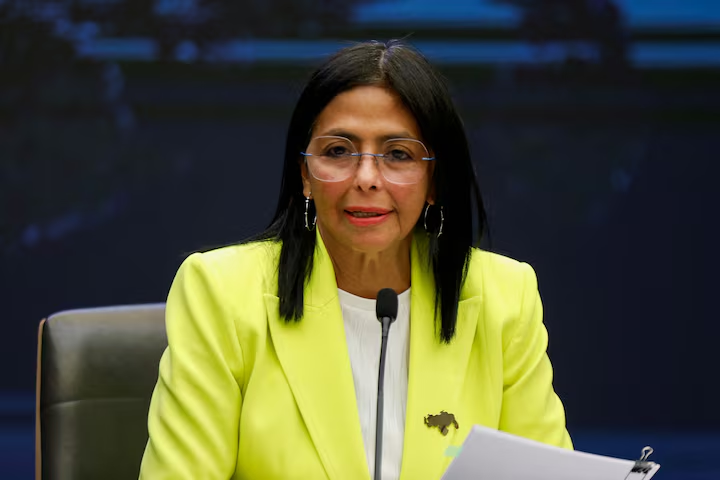
Venezuela’s Constitutional Chamber of the Supreme Court issued a ruling late Saturday that Delcy Rodríguez will assume all duties of the presidency in an acting capacity, with the primary goal of maintaining administrative continuity and national defense in the absence of President Maduro.
The court emphasized that its order was intended to “guarantee administrative continuity and the comprehensive defense of the nation” following Maduro’s abrupt removal from office during the U.S. operation. It also noted that judges will further deliberate to establish the proper legal framework for government continuity under Venezuela’s constitution.
Under Venezuelan law, provisions such as Articles 233 and 234 of the national constitution allow vice presidents to temporarily take charge during a president’s absence — a legal safeguard intended for crises. Analysts note that the Supreme Court’s interpretation in this context could have long‑lasting implications for Venezuela’s political structure.
Who is Delcy Rodríguez? Profile of Venezuela’s New Acting Leader
Delcy Rodríguez, a seasoned politician and ally of the late Hugo Chávez and Nicolás Maduro, has served as vice president since 2018 and holds significant influence within Venezuela’s United Socialist Party. She’s also been the oil minister and previously the foreign minister, placing her at the center of Venezuela’s energy and diplomatic policies.
Rodríguez — a lawyer by training — rose through the political ranks over decades, building a reputation as one of Chávez’s closest allies and one of Maduro’s most trusted lieutenants. Despite heavy sanctions from Western governments over human rights concerns and electoral disputes, she remains a key figure in Chavismo’s core leadership.
Her sudden elevation to acting president reflects both her standing within the regime and her capacity to navigate the turbulent political landscape now facing Venezuela. Rodriguez’s leadership will be closely watched by foreign governments and investors, particularly given Venezuela’s role as one of the world’s largest holders of proven oil reserves.
Maduro’s Capture and U.S. Military Operation
The Supreme Court’s decision came after a U.S. military operation that resulted in Venezuelan President Nicolás Maduro’s capture, removal from the country, and subsequent detention in the United States — a move described by U.S. officials as targeting international narcotics trafficking networks and criminal charges.
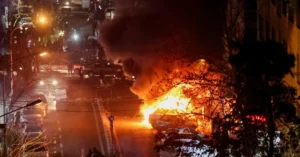
The U.S. action, which included a coordinated strike in Caracas and other strategic locations, was framed by Washington as a legal enforcement measure, though many international legal experts have raised concerns over sovereignty and international law implications.
Reactions were sharply divided: some Venezuelan exiles in the U.S. celebrated the move, while governments around the world — including Russia, France, and Brazil — condemned it as a breach of international norms requiring urgency and peaceful solutions.
International and Domestic Reactions to the Transition
The global response to Rodríguez’s interim appointment and Maduro’s capture has been intense and multifaceted:
- United States: President Donald Trump stated that the U.S. plans to oversee Venezuela until a stable transition is achieved and suggested that Rodríguez could cooperate with Washington on governance efforts, including economic restoration and energy sector reforms.
- Germany and the European Union: European leaders have urged a negotiated political solution that respects Venezuelan sovereignty and international law, underscoring the need for a peaceful democratic path forward.
- United Nations: The Security Council is expected to convene to address what many are calling a potentially unparalleled breach of international security norms.
- Venezuelan Public: Inside the country, reactions range widely — from supporters of Chavismo denouncing the U.S. operation as an unlawful invasion, to opposition figures calling for democratic reform and elections.
Domestically, Rodríguez has rejected U.S. narratives of cooperation — declaring Maduro the only legitimate president and denouncing his detention as a “kidnapping” aimed at undermining Venezuela’s sovereignty.
Implications for the Venezuelan Economy and Oil Industry
Venezuela’s economy — heavily reliant on oil exports — now faces new uncertainties as the world watches how diplomatic relations and domestic governance evolve.
President Trump has publicly stated that U.S. oil companies may be brought in to “fix badly broken infrastructure” and revitalize Venezuela’s energy sector. Yet it remains unclear how such engagements would occur, given ongoing sanctions and resistance from influential elements within the Venezuelan military and political elite. Global Nation
Oil markets have reacted with caution, and analysts warn that long‑term political instability — especially if internal conflict grows — could disturb global energy markets given Venezuela’s crude potential. Business Insider
The Road Ahead: Governance, Stability, and Elections
With Rodríguez now acting as interim president, Venezuela enters a critical transitional period. Constitutional interpretations suggest elections may be required if the president’s absence becomes permanent — but timing, organization, and international recognition of any vote remain uncertain.
Political experts predict that Rodriguez’s stewardship could reinforce continuity of Chavismo policies, yet the strong international pressure and internal opposition could accelerate demands for democratic reform.
This moment may shape Venezuelan politics for years, influencing not only domestic power structures but also hemispheric balance, U.S.–Latin America relations, and global geopolitical alignments.
Conclusion: A Defining Moment in Venezuelan History
The appointment of Delcy Rodríguez as interim president by Venezuela’s Supreme Court after Nicolás Maduro’s capture highlights one of the most dramatic chapters in the nation’s modern political history. The legal move, set against the backdrop of foreign military intervention and intense international debate, places Venezuela at a pivotal crossroads — between sovereignty and external pressure, continuity and change, stability and upheaval.
As global governments and Venezuelan citizens grapple with these developments, the path forward will likely be defined by diplomatic negotiations, constitutional interpretations, and the resilience of Venezuelan institutions and civil society.
Subscribe to trusted news sites like USnewsSphere.com for continuous updates.