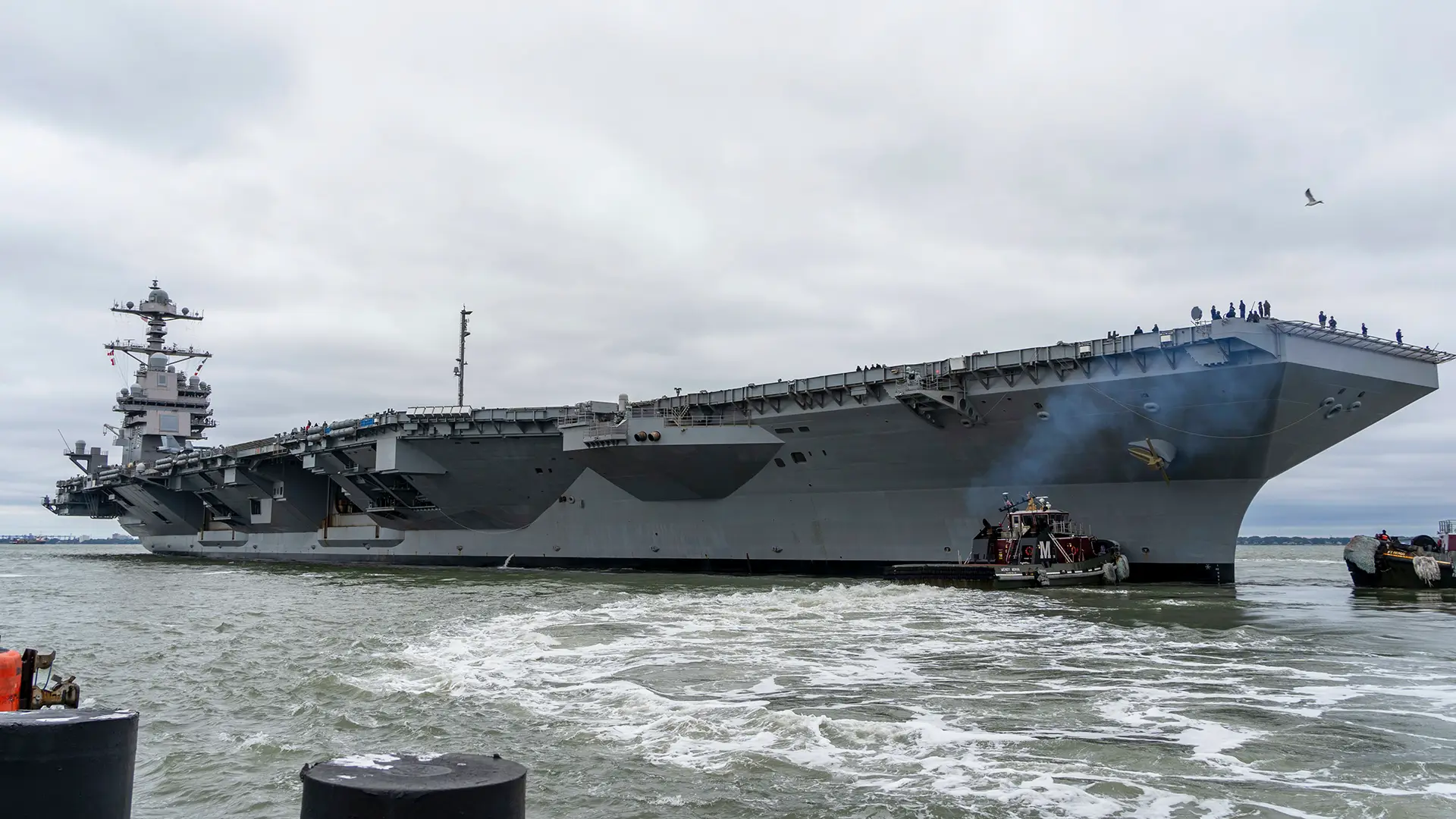
The United States is facing one of its most serious military and diplomatic crises in years as Washington weighs a possible military strike on Iran while President Donald Trump continues a significant military buildup in the Middle East—including the deployment of the nation’s most advanced aircraft carrier strike group toward Iranian waters. Experts say this development could reshape regional stability and global geopolitics in the coming days.
What is unfolding involves high-stakes nuclear negotiations, naval movements, political brinkmanship, and worldwide attention—all as the USS Gerald R. Ford transits toward the region, poised to bolster U.S. deterrence amid faltering diplomacy.
Escalation and Diplomacy: Trump Signals Military Option
The White House has repeatedly warned Iran to seize diplomatic agreements or risk heightened military consequences, signaling that diplomacy is the preferred path but keeping force on the table. Press Secretary Karoline Leavitt told reporters Iran would be “wise to make a deal,” even as Trump publicly hinted that the U.S. might strike Tehran if negotiations fail to yield a satisfactory end to nuclear and regional disputes.
Despite indirect negotiations held in Geneva, officials admit that Iran and the U.S. remain far apart on key issues, with meaningful concessions yet to be achieved. Trump’s advisors are reported to have briefed him on military readiness, and U.S. commanders have positioned strategic assets in anticipation of possible operations.
Why this matters now: With global oil markets still sensitive from recent Strait of Hormuz tensions and Russia warning against deeper conflict, any shift from diplomacy to military action could immediately stoke instability not just in the Middle East but across energy, finance, and geopolitical frameworks globally.
Naval Power Projection: USS Gerald R. Ford Underway
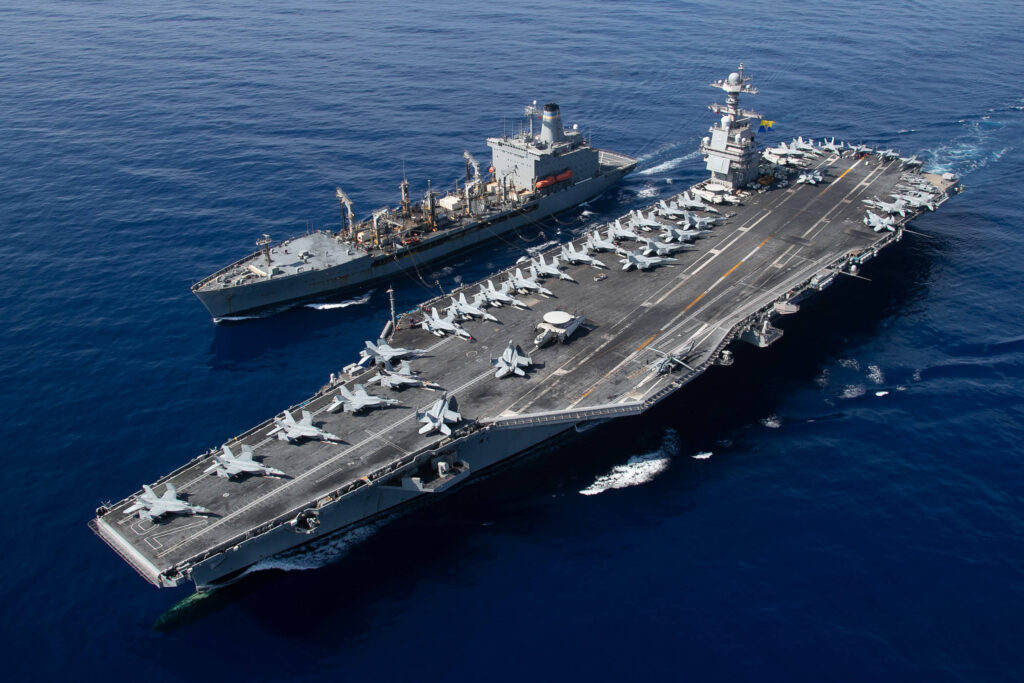
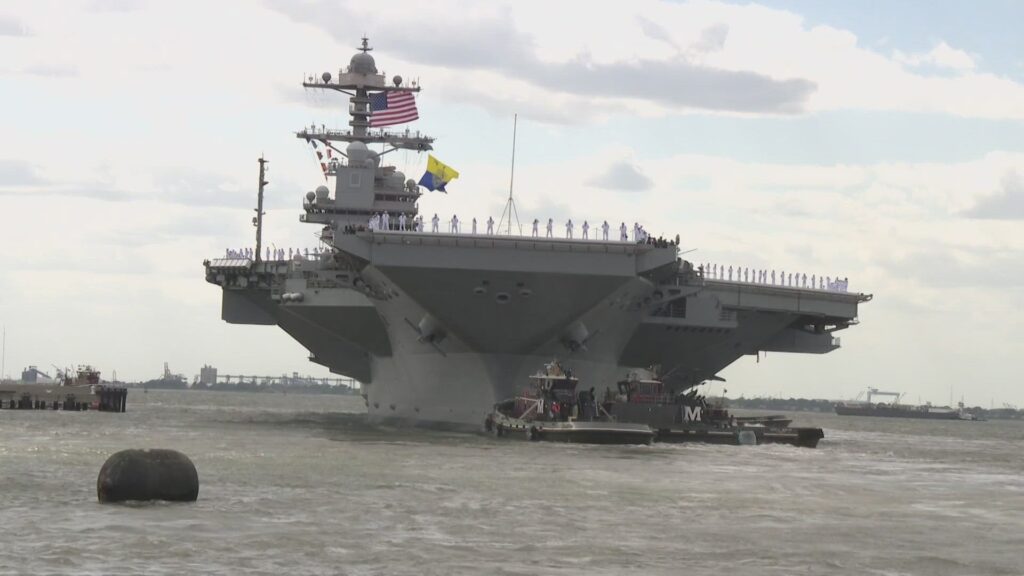
At the center of the U.S. military posture is the deployment of the aircraft carrier USS Gerald R. Ford, the newest and most technologically advanced carrier in the U.S. fleet, now moving east through the Atlantic toward the Mediterranean and ultimately the Middle East.
The Ford transited the Strait of Gibraltar, signaling a strategic show of force as tensions mount between Washington and Tehran. Analysts interpret this movement as a clear message of U.S. commitment to deterrence and potential readiness for combat if diplomatic talks break down.
Naval analysts note that once fully integrated with the existing USS Abraham Lincoln carrier strike group already in the Arabian Sea, the United States will have a formidable maritime presence capable of both defensive operations and precision strike options should conflict escalate.
Tehran’s Response and Regional Risk
In response to mounting U.S. pressure, Tehran has displayed its own military capabilities, including live-fire drills and temporary closure of the Strait of Hormuz, a critical chokepoint for roughly 20% of global oil shipments.
Iran’s leadership insists it does not seek war, but its strategic actions underscore a willingness to defend its interests. Regional stakeholders, including Russia and Gulf nations, have expressed concerns about escalation and advocated for a diplomatic settlement.
Former intelligence officials also warn that a military clash could begin within days unless parties find a way back to substantive talks—a possibility that highlights the fragility of the current situation.
Strategic Allies and Global Diplomacy
The crisis has triggered discussions among U.S. allies, including talks between President Trump and British Prime Minister Keir Starmer, where both leaders reaffirmed the necessity of preventing Iran from developing nuclear weapons and agreed on the importance of regional stability.
International diplomacy remains active but tense, with world powers closely watching whether Iran will submit meaningful proposals to end the nuclear standoff. The involvement of third-party mediators adds complexity but also potential pathways for resolution.
What’s at Stake Globally
A U.S. strike on Iran would be unprecedented in scope and consequence, risking broader conflict with unpredictable results. Markets are already shifting in response to these developments, with energy prices and defense stocks reacting to geopolitical signals. Analysts warn that even the threat of conflict could have long-lasting impacts on global trade and economic stability.
Experts emphasize that the coming days will likely determine whether diplomacy holds or if a shift toward military action will redefine U.S.–Iran relations for years to come. This turning point, analysts say, will have ramifications for global alliances, Middle East security, and the future trajectory of both nations’ foreign policy strategies.
Subscribe to trusted news sites like USnewsSphere.com for continuous updates.