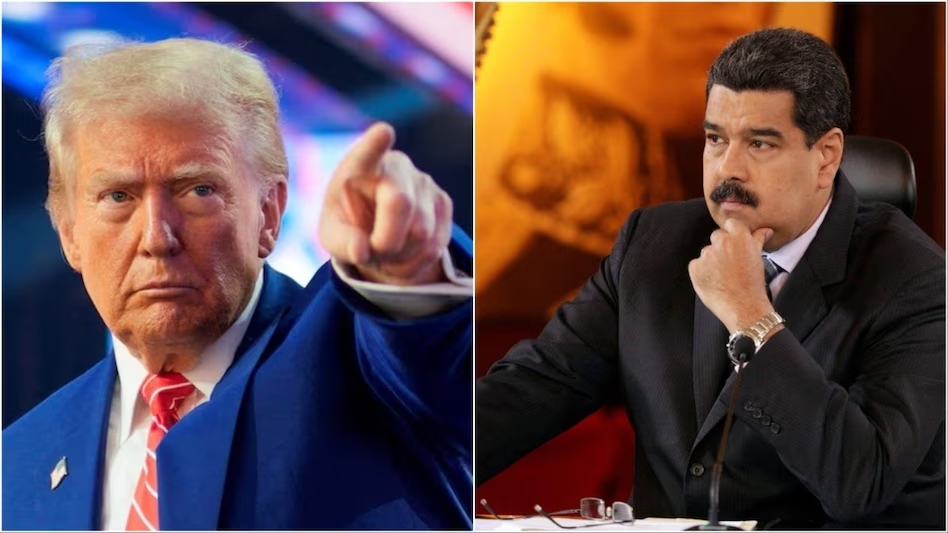
United States President Donald Trump announced that Venezuelan President Nicolás Maduro had been “captured and flown out of the country” following large-scale U.S. military operations — a claim that sent shockwaves across the world and reshaped international geopolitics within hours.
Less than a week into 2026, late-night explosions shook Caracas and other Venezuelan cities, marking the most dramatic escalation yet in long-standing tensions between Washington and Caracas. Within hours of the strikes, President Trump posted a statement on his social platform declaring that both Maduro and his wife, Cilia Flores, were taken into custody and transported out of Venezuela — a development that has immediately sparked intense global reactions, legal questions, and diplomatic friction.
The U.S. Operation: What Trump Announced
In an early morning post on Truth Social, President Trump stated that U.S. forces had executed a “large-scale strike” against Venezuela, successfully capturing President Nicolás Maduro and his wife and flying them out of the country.
Although details of how the capture was carried out are still emerging, Trump emphasized that the operation was conducted “in conjunction with U.S. law enforcement,” hinting that elite military and specialized units played integral roles in the mission.
Eyewitnesses and residents of Caracas reported hearing at least seven explosions before dawn and seeing smoke rising over the capital. Videos circulating on social media showed aircraft flying low overhead, explosions in military zones, and citywide power fluctuations, painting a picture of chaos and unprecedented escalation.
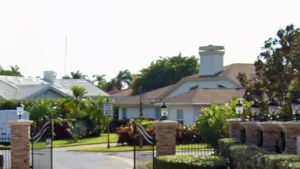
Trump also announced plans for a press conference later in the day to provide further details from his Florida estate, underscoring the significance of the event as one of the most consequential U.S. military actions in decades.
Reactions Within Venezuela: Emergency and Uncertainty
Venezuela’s official government response was swift and vehement. The administration in Caracas described the strikes as a “flagrant breach of international law” and branded the U.S. actions as imperialist aggression aimed at seizing strategic resources and imposing regime change.
Delcy Rodríguez, Venezuela’s Vice President, appeared on state television demanding immediate proof of life for Maduro and Cilia Flores, insisting the world must know that the president is alive and safe.
In response to the military action, Venezuelan authorities declared a national emergency and mobilized defense structures across the country. State leaders called for national unity and resistance against what they termed an invasion, evoking centuries-long traditions of sovereignty and national defense.
For ordinary Venezuelans, the sudden violence and government instability triggered panic in urban centers, with people stunned by the intensity of the airstrikes and the lack of clarity about what would happen next.
U.S. Goals and Legal Rationale
From Washington’s perspective, the strike was framed as a long-planned culmination of efforts to pressure the Maduro regime, which the U.S. has accused of corruption, election fraud, and narcotics trafficking for years.
Trump’s administration has repeatedly labeled Maduro’s government a “narco-state,” alleging deep involvement in international drug trafficking networks and abuses that have driven millions of Venezuelans into poverty and mass migration.
U.S. Attorney General Pam Bondi later confirmed that Maduro and his wife would face indictments in American courts, adding a legal dimension to what had primarily been presented as a military maneuver.
Despite these claims, independent legal and international law experts have questioned the legality and long-term implications of a U.S. operation involving the detention of a foreign head of state without global consensus or United Nations Security Council approval. Observers say this may raise unprecedented legal challenges about sovereignty and the use of force.
Latin America and Global Political Fallout
The global response to the capture announcement was immediate and polarized.
Regional Backlash
Leaders across Latin America strongly condemned the strikes as violations of sovereign rights and warned of serious consequences for regional stability. Colombia, fearing mass displacement, rapidly deployed forces to its border, anticipating a refugee surge and broader humanitarian crisis.
Brazil’s President Luiz Inácio Lula da Silva denounced the military action as an unacceptable overreach. Russia, Cuba, and other allies of Caracas called for immediate clarity on Maduro’s condition and location while decrying the attack as illegal aggression.
Support and Cautious Endorsements
Conversely, some U.S. allies and Western governments expressed cautious support for removing a leader accused of severe abuses. Republican leadership in the U.S. hailed the operation as a decisive move against narco-terrorism, highlighting Maduro’s alleged international drug networks.
However, many nations emphasized that any political transition in Venezuela must respect international law and human rights norms, underscoring global concerns about unilateral military actions.
Geopolitical Powers Weigh In: Russia, China, and Beyond
Major world powers have reacted with deep concern, underscoring the operation’s implications beyond the Western Hemisphere.
Russia called for an urgent diplomatic response and accused the U.S. of destabilizing a sovereign nation, fueling already strained relations between Moscow and Washington.
China urged all parties to avoid escalation and pursue dialogue and diplomatic safeguarding, reflecting Beijing’s protective stance toward state sovereignty and non-intervention. Analysts say China is closely monitoring the situation to determine potential impacts on global energy markets and geopolitical alliances.
International organizations, including the United Nations, have called for restraint, stressing the need for transparent information about Maduro’s welfare, the legal basis for the operation, and respect for human rights protections.
What This Means for Venezuela’s Future
With Maduro’s capture now at the center of global headlines, Venezuela faces an uncertain path forward.
Power vacuum risks: With the president and first lady removed from their posts, Venezuelan institutions may be prone to instability or internal conflict. Experts warn that a leadership vacuum could fuel unrest, economic collapse, and increased criminal activity.
Humanitarian Crisis: Millions of Venezuelans, already displaced both within and outside the country, may experience new waves of migration and need urgent humanitarian aid.
Diplomatic Negotiations: What follows may be a complex mix of negotiations between Venezuelan opposition forces, U.S. representatives, and neighboring governments to stabilize the nation’s political framework.
Analysts suggest that rebuilding trust with a traumatized populace and restoring institutions will take years of coordinated support — and that political reconciliation will be essential to avoid deeper fragmentation. Reuters
Global Economic and Security Implications
Venezuela holds the largest proven oil reserves in the world, and its political turmoil may have reverberations in global energy markets. Disruptions in oil output could intensify price volatility already seen in 2025, impacting consumers and economies worldwide.
Critically, Venezuela’s strategic position in regional security — especially in counter-narcotics operations — is now in flux. As the government collapses, criminal networks may exploit weakened state control, potentially increasing drug trafficking and violence across the Caribbean and beyond.
Conclusion: A Turning Point With Uncertain Paths Ahead
The reported capture and removal of Venezuelan President Nicolás Maduro marks one of the most dramatic international events of 2026, with sweeping geopolitical, legal, humanitarian, and economic consequences.
As governments around the world react, citizens in Venezuela grapple with the immediate impacts of heightened military action and uncertainty about their future. The international community now watches closely as new chapters in Venezuelan history unfold — a moment that may redefine power balances across the Western Hemisphere and beyond.
Subscribe to trusted news sites like USnewsSphere.com for continuous updates.