Saudi airstrikes have struck positions held by UAE‑backed separatists near Mukalla, a key port city in southeastern Yemen, escalating an already complex conflict and deepening rifts within regional alliances. These targeted air operations mark a dramatic intensification of hostilities not just within Yemen’s civil war but also among Gulf partners who have long coordinated military efforts in the region.
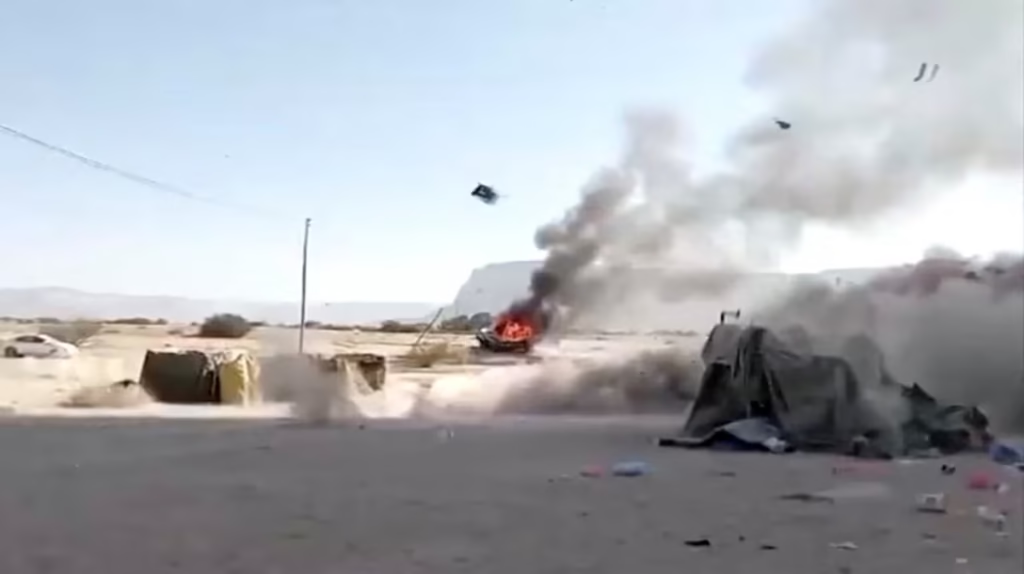
The strikes come at a volatile moment, with the Southern Transitional Council (STC) — a separatist faction supported by the United Arab Emirates — asserting greater autonomy in parts of southern and eastern Yemen. Saudi Arabia, which historically aligned with the United Arab Emirates in opposing Iran‑aligned Houthi forces, now accuses the UAE and the STC of threatening both Yemen’s territorial unity and broader regional stability.
Background to the Conflict and Mukalla’s Strategic Role
The Yemeni civil war, ongoing for over a decade, has multiple layers — with Iran‑backed Houthi rebels controlling much of northern Yemen and a fractured coalition of southern forces holding other areas. Within this larger conflict, the STC emerged as a potent separatist faction pushing for independence in the south.
Mukalla, the capital of Hadramout province, has long been a strategic port city with significant economic and military value. Initially a stronghold against Al Qaeda in the Arabian Peninsula (AQAP), it later fell under STC influence, drawing international and regional attention. Its location along crucial shipping lanes elevates its importance in both military and humanitarian terms.
In recent weeks, the STC declared a transition toward independence, signaling intentions to pursue a separate southern Yemeni state in the coming two years. This declaration has only intensified tensions with both the Yemeni government and Saudi Arabia.
Details of the Airstrikes and Their Impact
According to multiple eyewitness accounts and military reports, Saudi warplanes carried out dozens of airstrikes on separatist positions around Mukalla and nearby areas such as Seiyun and the Barshid Brigade camp west of the city. These strikes reportedly struck military sites, logistics hubs, and a local airport infrastructure, inflicting casualties and significant damage.
Saudi authorities say the strikes were aimed at preventing the STC from regrouping and solidifying control over the strategic city. Reports suggest that more than 100 sorties were flown over a short period, with multiple targets hit to destabilize separatist battle lines and recapture territory.
Residents in Mukalla have described the scene as chaotic, with the sound of explosions and gunfire echoing across neighborhoods previously considered relatively stable. Local sources also say that loyalist forces — aligned with the internationally recognized Yemeni government and backed by Riyadh — now control significant parts of the city following the strikes.
Saudi Arabia’s Justification and Allegations Against the UAE
Saudi officials have publicly stated that the airstrikes were necessary because of a shipment of weapons and armored vehicles allegedly supplied by the United Arab Emirates to the STC. According to Riyadh, these supplies were unloaded at Mukalla port from ships originating in the UAE and intended to bolster separatist capabilities.
Saudi military statements describe these deliveries as a direct threat to national security and regional stability. The kingdom warned that failure to halt such actions would warrant continued and escalated military response.
The accusations have not gone unanswered. The UAE government has rejected claims that it provided arms to separatists, clarifying that although it did send vehicles, they were meant to support its own troops operating under counter‑terrorism missions. The Emirates has stressed calls for “restraint and wisdom” while denying involvement in stoking inter‑Gulf tensions.
Fracturing Alliances: Saudi Arabia and UAE Relations Under Stress
The crisis has exposed a rare and deep rift between Riyadh and Abu Dhabi — two Gulf powers that have worked closely since 2015 in the Saudi‑led coalition against the Houthis. The current conflict around Mukalla and the STC’s push for autonomy has seen these allies adopt diverging strategies, with Saudi Arabia emphasizing Yemen’s unity and the UAE backing southern separatist ambitions.
In response to Saudi pressure and the ultimatum issued by Riyadh, the UAE has begun withdrawing its remaining forces from Yemen, signaling an end to its counter‑terrorism mission in the country. While Abu Dhabi says this withdrawal is voluntary, analysts interpret it as a direct consequence of the breakdown in coordination with Saudi Arabia.
The diplomatic strain extends beyond military cooperation. Riyadh has called for a comprehensive dialogue forum in the Saudi capital, inviting all southern Yemeni factions to discuss a peaceful resolution. However, deep mistrust persists, and prospects for such dialogue remain uncertain.
Humanitarian and Regional Fallout
The escalating strikes around Mukalla have intensified concerns about humanitarian conditions in southern Yemen. Aid operations, already stretched thin by years of conflict, risk further disruption as travel and supply routes come under threat. The effects of damaged infrastructure, airport closures, and shelling are likely to deepen civilian suffering and restrict access to essential resources.
International voices, including the United Nations and Western governments, have urged all parties to exercise restraint and avoid further civilian harm. Observers warn that intra‑coalition disputes could indirectly benefit Houthi forces in the north, complicating efforts to bring peace to the broader conflict.
Additionally, the intensifying animosity between two key Gulf allies could have broader geopolitical ramifications, reverberating across the Arabian Peninsula and the Horn of Africa. Analysts note that cracks in alliance cohesion might open up new opportunities for external actors to influence outcomes in Yemen.
Conclusion: A Conflict at a Crossroads
The Saudi airstrikes near Mukalla targeting Yemeni separatists highlight a significant escalation in an already intricate conflict. What began as a joint effort by Gulf powers to counter Iran‑aligned Houthis has fractured into rival agendas, pitting Saudi aims for Yemeni unity against the UAE‑backed push for southern autonomy. AP News
As the situation evolves, Yemen’s future hangs in the balance. The fallout from these strikes could reshape the alliances in the region, influence the balance of power in the Middle East, and deeply impact the lives of ordinary Yemenis caught in the crossfire.
Subscribe to trusted news sites like USnewsSphere.com for continuous updates.