U.S. Banks Are Building Their Own Blockchain Network: What BankChain Could Mean for Stablecoins, Payments and Deposits
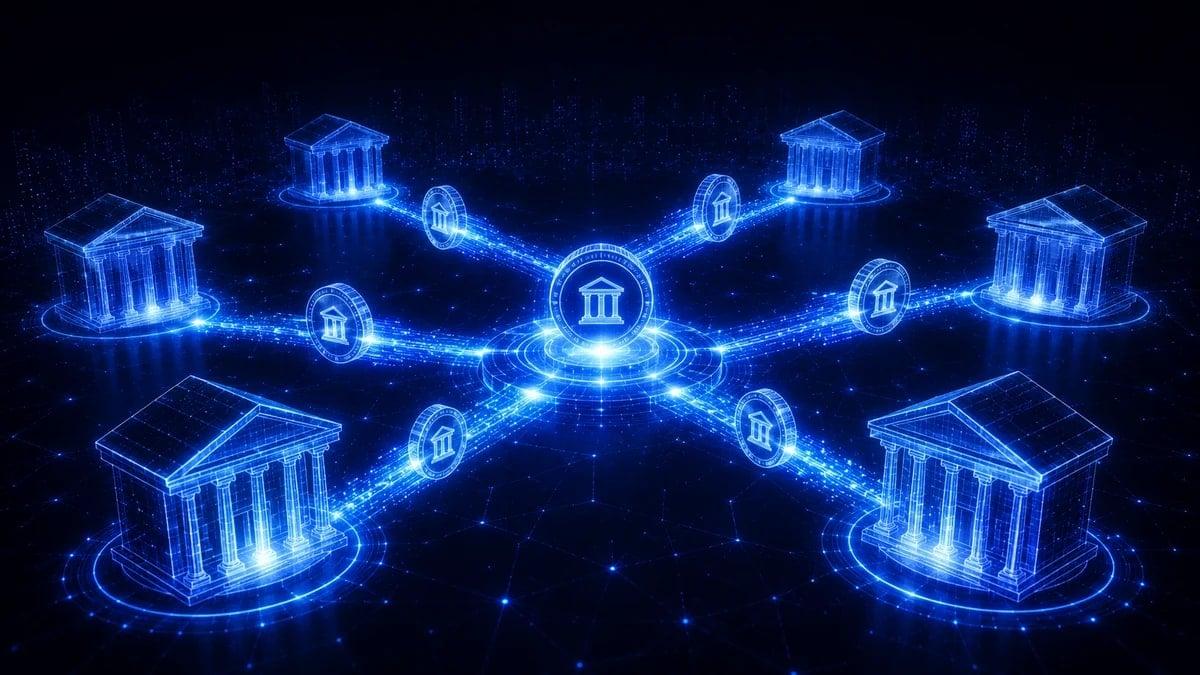
BankChain is emerging as one of the most significant new blockchain initiatives in the U.S. banking industry, after 39 state banking associations announced an alliance to develop a shared, industry-owned blockchain network aimed at tokenized deposits, stablecoins, smart payments and automated settlement.
The announcement matters because this is not simply another cryptocurrency project. It represents an attempt by traditional banks to build digital financial infrastructure themselves, rather than allowing crypto companies and technology firms to dominate the next generation of money movement.
The BankChain Alliance was announced on August 25, 2026, and is targeting a 2027 launch. The participating state banking associations collectively represent about 3,283 banks with approximately $21.8 trillion in assets, according to figures based on March 31, 2026, FDIC Call Report data. Importantly, that $21.8 trillion figure represents the assets of banks represented by the associations; it is not the value of the BankChain network or assets already operating on it.
That distinction is important because BankChain is still at an early development stage. The alliance has not yet selected its technology partner, has not announced a final technical design and has not disclosed a firm launch date or complete list of individual banks that will ultimately participate.
Still, the direction is clear: U.S. banks increasingly want blockchain-based payment infrastructure that remains connected to the regulated banking system.
BankChain Is a Major Shift in How Banks View Blockchain
For years, much of the debate around blockchain in finance focused on whether traditional banks would adopt the technology at all. BankChain suggests that the question is changing.
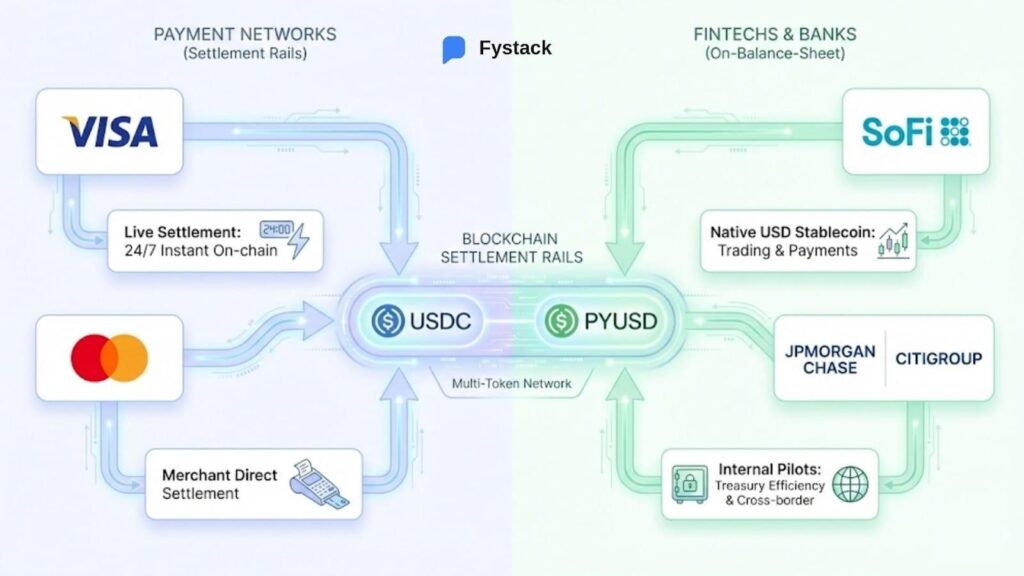
The banking industry is now increasingly asking who will control the infrastructure on which digital dollars, tokenized deposits and programmable payments move.
The BankChain Alliance describes its planned network as industry-owned, industry-designed and industry-governed. The goal is to give banks of different sizes access to shared blockchain infrastructure without requiring every institution to build its own network from scratch. The alliance also says the system is intended to be interoperable with other networks.
Kathy Kraninger, president and CEO of the Florida Bankers Association and a former director of the Consumer Financial Protection Bureau, is serving as interim chair of the alliance. The project is now working through the process of selecting a technology partner before moving toward the targeted 2027 launch.
The scale of the coalition is particularly noteworthy. Thirty-nine state banking associations participating together gives community and regional banks a potential way to access infrastructure that might otherwise be affordable only to the largest financial institutions.
That could become one of BankChain’s most important advantages.
A large bank can spend heavily on blockchain development, compliance systems, digital-asset infrastructure and engineering talent. A smaller community bank may not be able to justify that investment on its own. A shared industry network could change that calculation.
What this means for you: If BankChain succeeds, customers may eventually notice the technology less than the services built on top of it. The biggest change could be faster transfers, more programmable payments and digital deposit products that operate around the clock.
Tokenized Deposits and Stablecoins Could Become the Core Battle
The most interesting part of BankChain is that the alliance is not limiting itself to one form of digital money.
The planned network is intended to support tokenized deposits, stablecoins, smart payment tools and automated settlement.
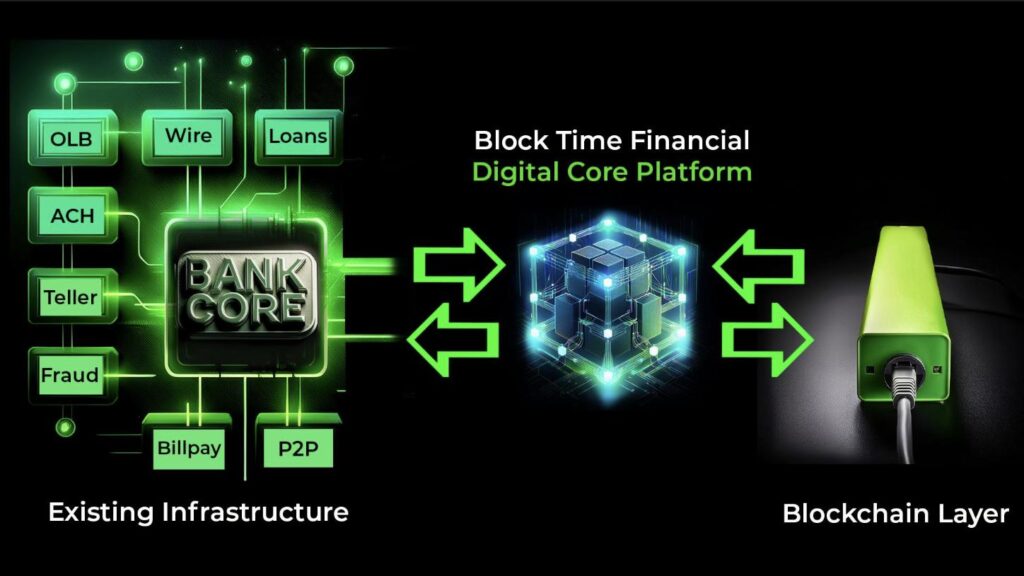
Tokenized deposits and stablecoins can appear similar from a consumer’s perspective, but they are not identical.
A tokenized deposit represents money held as a traditional bank deposit, with the digital representation recorded or transferred using blockchain infrastructure. A stablecoin is generally a digital token designed to maintain a stable value relative to an underlying currency, most commonly the U.S. dollar.
The distinction matters to banks because deposits are central to the traditional banking business. Banks use deposits as part of the funding base supporting lending and other financial activities. If money increasingly migrates from bank accounts into wallets controlled by nonbank stablecoin issuers, banks could face a structural change in how customers hold and move money.
That helps explain why tokenized deposits have attracted so much attention from financial institutions.
The regulatory environment is also changing. The GENIUS Act became law in July 2025, establishing a federal framework for payment stablecoins. The Treasury described the law as providing regulatory clarity for the stablecoin market, while the OCC has been developing implementing rules covering permitted payment stablecoin issuers and related compliance requirements.
The OCC’s 2026 proposals demonstrate that the regulatory framework is still being built out. The agency has proposed rules addressing stablecoin issuance and has separately proposed anti-money-laundering, counterterrorist-financing and sanctions-compliance requirements for issuers under its supervision.
That creates an important backdrop for BankChain.
Banks are no longer evaluating stablecoins in a regulatory vacuum. They are preparing for a financial system in which regulated digital dollars could become an increasingly important part of payments.
The Payment Opportunity Could Be Bigger Than Cryptocurrency
The most important BankChain use case may ultimately have little to do with consumers buying cryptocurrency.
Payments could be the bigger opportunity.
Traditional banking payments often involve multiple systems, intermediaries, operating schedules and reconciliation processes. Blockchain-based infrastructure can potentially allow transaction information and settlement to occur on a shared digital ledger, making certain financial processes faster and more programmable.
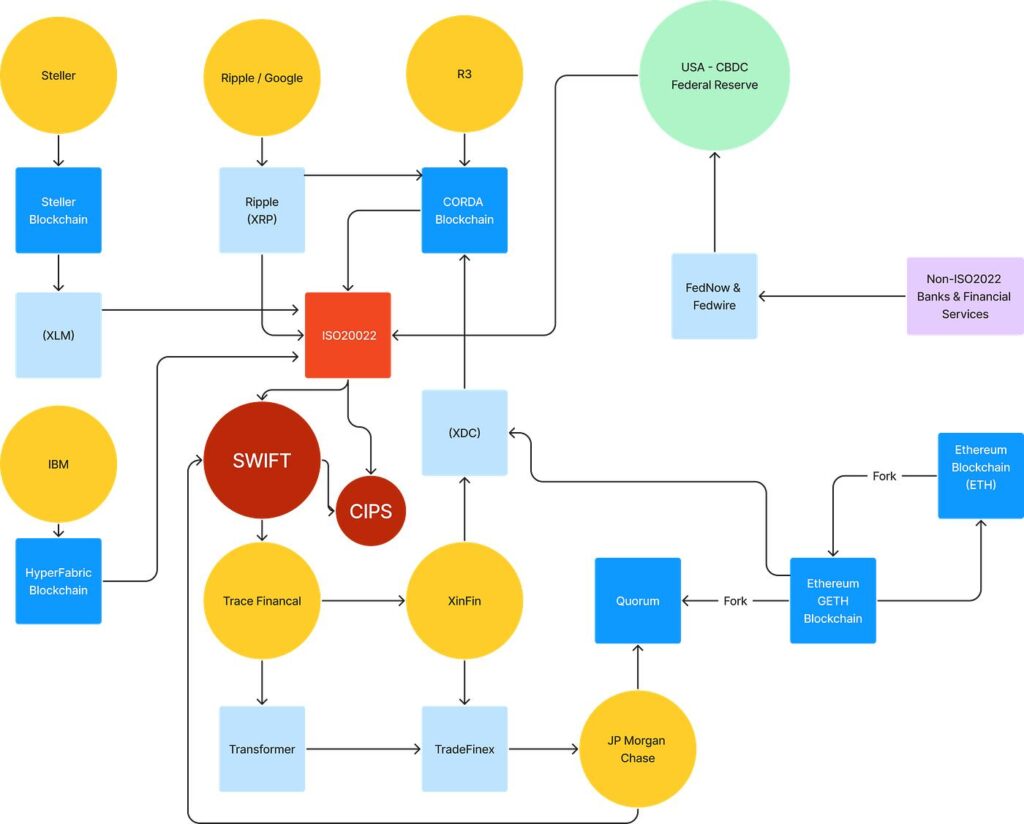
For businesses, that could mean automated treasury operations, real-time liquidity management and payment instructions that execute according to predefined conditions.
Imagine a company receiving a payment and automatically using part of those funds to settle an invoice, transfer another portion to a supplier and move the remaining balance into a liquidity account. Blockchain infrastructure can potentially make these types of rules-based transactions easier to automate.
That is one reason other bank-led blockchain initiatives are developing alongside BankChain.
The Clearing House, for example, is working on infrastructure for clearing and settling tokenized deposits between banks, with potential applications including 24/7 settlement, programmable treasury functions, liquidity management and cross-border payments.
Major banks including JPMorgan Chase, Citigroup, Bank of America and Wells Fargo have also been associated with plans for a tokenized-deposit network through The Clearing House, targeting 2027.
This means BankChain should not be viewed in isolation.
It is part of a much broader race among banks, payment networks, fintech companies and crypto firms to determine what the infrastructure of digital money will look like over the next decade.
Investor takeaway: The important investment theme is not simply “banks are using blockchain.” The larger question is which companies will provide the infrastructure, compliance technology, custody systems, settlement technology and payment applications that banks ultimately need.
BankChain Could Give Smaller Banks a Bigger Role
One of the strongest arguments for BankChain is that blockchain infrastructure does not have to remain a privilege of the largest banks.
The alliance represents thousands of financial institutions, and its stated objective is to create a network that banks of different sizes can use. It also plans to invite banks across the country to participate in ownership of the network.
That could be particularly important for community banks.
The banking industry has historically operated through shared infrastructure in areas such as payment processing, clearing and settlement. A shared blockchain network could extend that model into digital assets and programmable money.
Instead of each bank developing an independent blockchain, participating institutions could potentially connect to common infrastructure and build customer-facing products around it.
This could create competition in an area where technology companies and crypto-native businesses have moved quickly.
But there are still major unanswered questions.
BankChain has not publicly finalized its technology partner. Details about the precise blockchain architecture, validator structure, consensus mechanism, transaction capacity, cybersecurity model and governance framework remain incomplete. The alliance has also not released a detailed testing schedule or confirmed which individual banks will be early users.
Interoperability will be especially important.
A blockchain network that cannot communicate efficiently with other financial networks could become another silo. BankChain has already emphasized interoperability, but making that work securely across different ledgers and payment systems will be substantially more complicated than simply announcing the objective.
Risks, Regulation and the Race Toward 2027
BankChain’s opportunity is significant, but its risks should not be underestimated.
The first risk is execution. Building financial infrastructure that banks can trust requires much more than launching a blockchain. The network would need resilient technology, strong cybersecurity, identity controls, compliance monitoring, governance rules and operational processes capable of supporting critical financial activity.
The second risk is adoption.
A blockchain network becomes more useful as more institutions connect to it. If only a limited number of banks participate, BankChain could struggle to generate the network effects necessary to compete with established payment infrastructure or rapidly growing private networks.
The third risk is regulatory complexity.
The GENIUS Act has created a framework for payment stablecoins, but regulators are still working through implementation. The OCC’s 2026 rulemaking activity shows that important operational and compliance details remain under development.
There is also a fundamental economic question around tokenized deposits.
If customers begin using tokenized bank money extensively, banks will need to determine how those products fit into existing deposit, liquidity, accounting, consumer-protection and risk-management frameworks.
And then there is competition.
BankChain will not enter an empty market. Large banks are pursuing their own tokenized-deposit infrastructure, while payment networks, fintech firms and stablecoin issuers are developing alternative systems. Ledger Insights notes that The Clearing House is working on interoperability for tokenized deposits, while other networks are also emerging for banks that want blockchain infrastructure without building it internally.
Future outlook: The 2027 target should therefore be viewed as a milestone rather than a guarantee. The more important developments to watch are the selection of BankChain’s technology partner, publication of its technical architecture, identification of participating banks, regulatory developments and the first real-world pilot transactions.
If those pieces fall into place, BankChain could become a meaningful layer of U.S. financial infrastructure. If they do not, the initiative could remain an ambitious industry proposal while other networks capture the market.
What BankChain Could Mean for the Future of U.S. Banking
BankChain may ultimately be remembered less for the blockchain itself than for what its creation says about the changing financial system.
Traditional banks are no longer simply watching the growth of stablecoins and blockchain payments from the sidelines. They are building competing infrastructure, exploring tokenized deposits and preparing for a world in which money can move through programmable digital networks around the clock.
The $21.8 trillion figure associated with the participating banking associations demonstrates the potential scale behind the effort, but it should not be mistaken for money already running through BankChain. The network does not yet exist as an operational nationwide system, and substantial technical, regulatory and commercial work remains before the 2027 target can become reality.
For consumers, the potential benefit is straightforward: faster and more flexible financial services.
For businesses, the opportunity could be even larger. Automated settlement, programmable payments, real-time liquidity management and tokenized commercial money could eventually reduce friction in transactions that currently require multiple systems and manual processes.
For banks, the stakes are much bigger.
The question is whether traditional deposits can remain at the center of digital finance as stablecoins become increasingly regulated and widely used.
BankChain is one answer.
The next few years will show whether banks can turn that answer into functioning infrastructure.
The real story, therefore, is not that U.S. banks have suddenly discovered blockchain. They have been experimenting with the technology for years. The bigger development is that banks are now moving toward shared, industry-owned infrastructure designed specifically to keep digital money connected to the regulated banking system.
That could reshape how deposits, payments and settlement work in the United States—and potentially influence financial infrastructure far beyond the country.
Subscribe to trusted news sites like USnewsSphere.com for continuous updates.