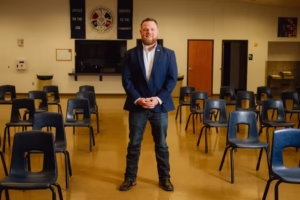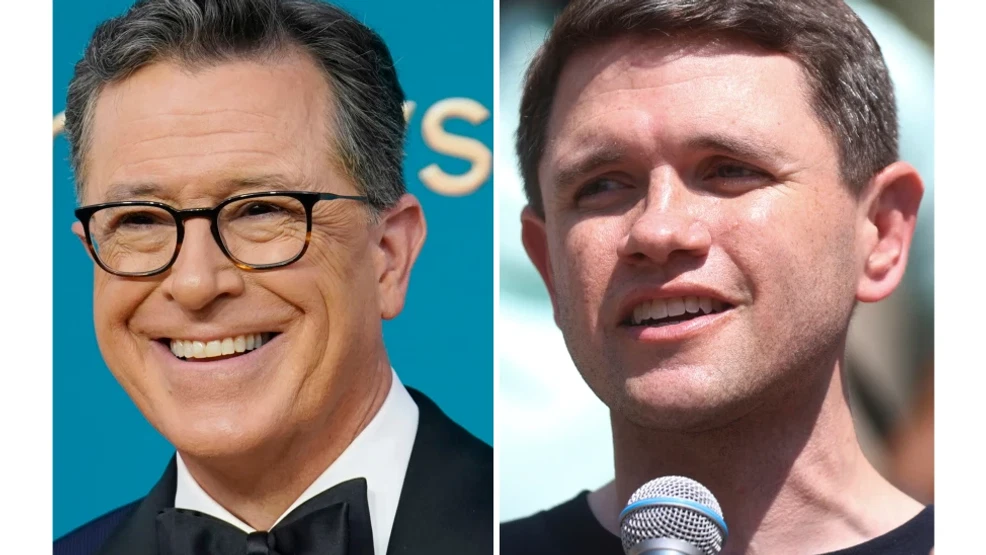
Stephen Colbert says CBS blocked his interview with Texas Democratic Senate candidate James Talarico over new Federal Communications Commission (FCC) equal-time concerns — sparking a media firestorm and raising urgent questions about press freedom, political influence, and broadcast regulation in the 2026 election cycle. In a dramatic on-air moment, Colbert accused his own network of capitulating to political and regulatory pressure, while CBS insists it merely offered legal guidance about complying with FCC rules.
This confrontation comes as early voting begins in Texas and the FCC, led by Chairman Brendan Carr, signals a stricter interpretation of the equal-time rule — a long-standing statute requiring broadcast networks to provide equivalent airtime to political candidates — potentially including talk shows that have previously been exempt.
What Triggered the Controversy
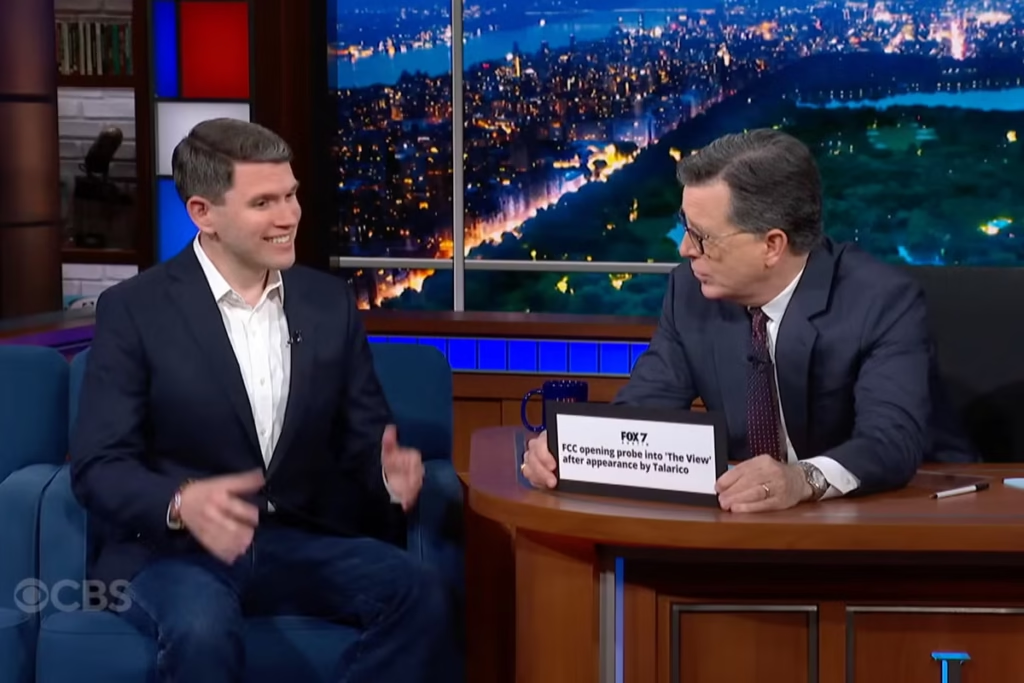
Colbert revealed during a Feb. 16 episode of The Late Show that he had arranged to interview James Talarico, a Democratic state representative running for U.S. Senate in Texas. However, he said CBS lawyers told him “in no uncertain terms” that the segment could not air on television because it could trigger the FCC’s equal-time provisions. Colbert was also allegedly warned not to mention the situation on air.
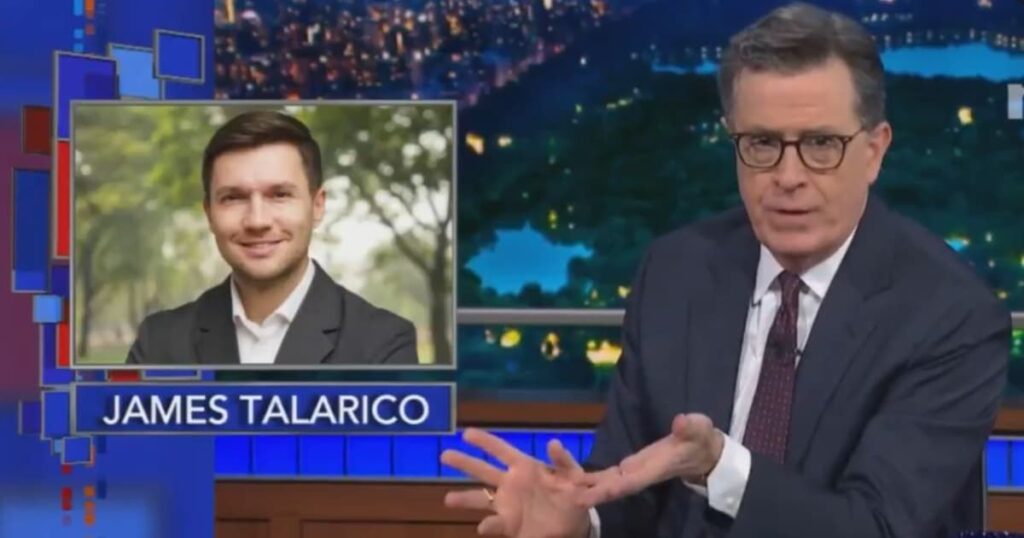
CBS disputes the accusation of a ban, saying the show was merely given legal advice that the broadcast might require fulfilling equal-time obligations for competing candidates like Rep. Jasmine Crockett. The network says it offered options to comply, and The Late Show instead chose to publish the Talarico interview on YouTube, where FCC broadcast rules do not apply.
The FCC’s Role and Equal-Time Rules
At the center of this dispute is the FCC’s evolving stance on the “equal-time” rule (47 U.S. Code § 315). Traditionally, live news, bona fide interviews, and talk show segments were exempt from this requirement. But in January 2026, the FCC released guidance indicating that talk shows might no longer automatically qualify for these exemptions. If a political candidate appears, the network might need to offer the same airtime to their rivals — a move that could drastically affect entertainment programs during election seasons.
This regulatory shift reflects broader debates over broadcast fairness. The equal-time rule originated in early U.S. broadcasting law to prevent stations from influencing election outcomes through one-sided coverage. Exceptions were intended to balance news reporting with free speech rights — a balance now in contention.
Responses From Media and Regulators
FCC Commissioner Anna M. Gomez, a Biden appointee, criticized the network’s response, calling it “corporate capitulation” and warning against self-censorship under political pressure. She emphasized that CBS is legally free to determine what interviews it airs, underscoring First Amendment protections.
Colbert went further, framing the issue as part of a broader trend of media suppression under the Trump administration, alleging political motivations behind the renewed enforcement push. He accused CBS and regulatory forces of silencing voices critical of conservative leadership.
Texas Political Stakes and Election Context
This controversy breaks at a critical moment in the Democratic primary. Talarico is campaigning to unseat fellow Democrat Jasmine Crockett for the Texas Senate nomination — a race that could influence the overall makeup of the U.S. Senate after the 2026 midterms. Early voting has already begun, and national attention on the contest has grown since Colbert’s remarks.
Talarico himself took to social media to cast the situation as a broader fight for free speech, saying the interview was “the one Donald Trump didn’t want you to see” and tying the pull to fears of a Democratic breakthrough in Texas.
Media Freedom Under Scrutiny
Legal experts and media analysts warn that aggressive application of the equal-time rule could chill political discourse on major broadcast platforms. Talk shows and daytime formats have long served as venues for candidates to reach diverse audiences without the formality of traditional debates. Forcing equivalent airtime to opponents could discourage segments from featuring any candidates at all, narrowing the space for public engagement.
The controversy also intersects with broader industry shifts: CBS is ending The Late Show this May after declining viewership and financial challenges, reflecting larger pressures on traditional late-night formats.
Why This Matters Now
If broadcasters begin self-censoring to dodge regulatory scrutiny, the public may lose access to open political conversation in mainstream media — just as millions tune into election coverage. At a time when media influence and political polarization are already intense, disputes like this one highlight tensions among free speech, regulatory policy, and corporate decision-making. This moment could reshape how political content is distributed on television and online ahead of one of the nation’s most consequential election years.
Subscribe to trusted news sites like USnewsSphere.com for continuous updates.